


More news on this day
China’s cruise industry is entering a new phase of experimentation and scale as Adora Magic City launches the country’s first no-port “cruise-to-nowhere” from Shanghai, while Shenzhen’s maritime tourism push accelerates competition for Asia-Pacific leisure travelers.
Get the latest news straight to your inbox!
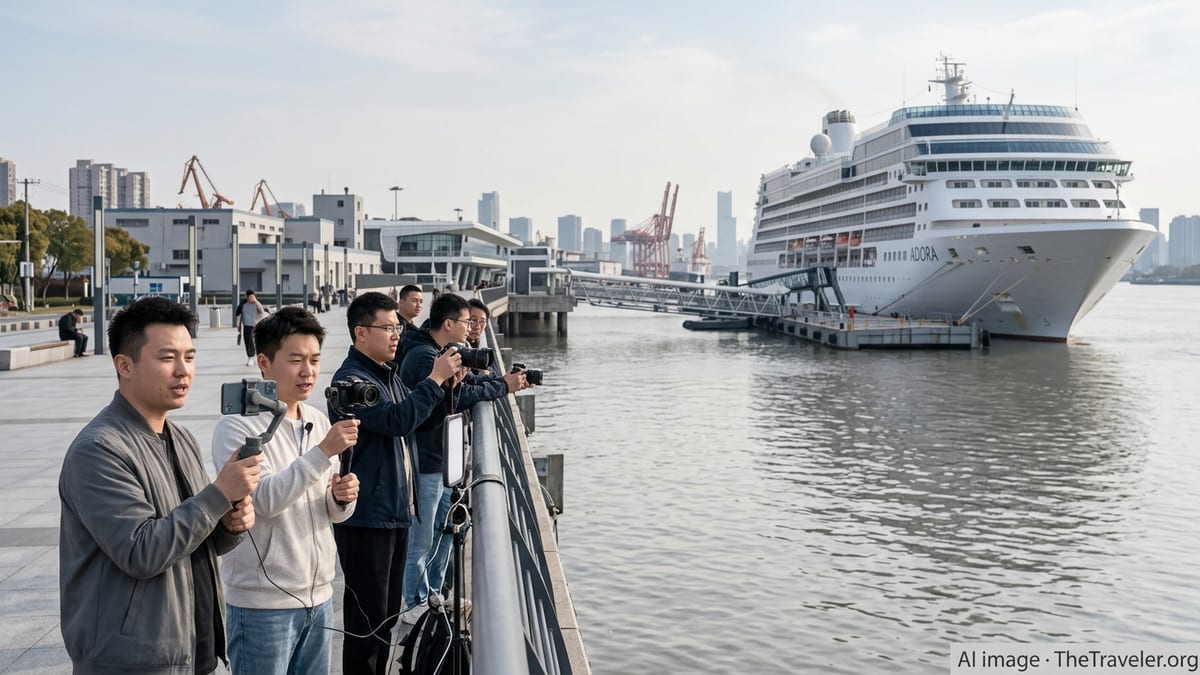
Adora Magic City Debuts China’s First Destination-Free Voyage
Adora Magic City, China’s first large domestically built cruise ship, has completed a milestone sailing from Shanghai that industry observers describe as the country’s first true destination-free cruise. Publicly available information shows that the three-day, two-night itinerary departed Shanghai Wusongkou International Cruise Terminal on June 6 and returned to the same port without calling at any intermediate destinations, keeping guests at sea for the entire journey.
The short sailing format focuses squarely on the onboard experience. Reports indicate that the voyage was tailored to weekend and short-break travelers, with an emphasis on dining, entertainment, spa facilities, retail, and themed events in place of traditional port excursions. Visa requirements are simplified compared with international itineraries, positioning the product as an accessible escape for domestic travelers who may be hesitant about overseas travel logistics.
Industry coverage notes that the new itinerary builds on Adora Magic City’s role as a showcase for China’s emerging cruise capabilities. The 135,500‑gross‑ton vessel, operated by Adora Cruises, already runs a program of regional itineraries from Shanghai to ports in Japan and South Korea. The no-port cruise adds a new category to that portfolio, highlighting the ship itself as the central destination.
The move mirrors earlier “cruise-to-nowhere” concepts that have appeared in other Asian markets, but analysts view China’s timing as significant. After a prolonged pandemic pause, the domestic market is searching for flexible, high-yield products that can be marketed aggressively to first-time cruisers and younger demographics.
Luxury at Sea as the Primary Destination
The no-port model places unprecedented pressure on the onboard product, effectively turning Adora Magic City into a floating resort designed to keep guests engaged around the clock. According to promotional material and media descriptions, the ship features multiple specialty restaurants, a large shopping promenade, family-friendly activity spaces, theater productions, and digital enhancements such as smart-cabin technologies.
By removing port logistics, operators can fine-tune scheduling for entertainment and onboard revenue opportunities. Travel trade analysis suggests that this format allows for extended casino hours where permitted, more tightly curated retail campaigns, and flexible dining times that are not constrained by shore excursion windows. For guests, the appeal lies in a seamless, all-in-one environment that feels closer to an urban lifestyle complex at sea.
Cruise planners note that destination-free sailings also offer operational advantages. Remaining in international or coastal waters eliminates certain berthing costs and minimizes exposure to last-minute itinerary disruptions from weather or port congestion. That flexibility can be particularly valuable in peak seasons, when port slots in popular East Asian destinations are heavily contested.
For China’s shipbuilding and design ambitions, Adora Magic City’s experimental program provides a high-profile platform. The vessel is one of a new generation of large cruise ships built in China and equipped to international standards, and its deployment on novel itineraries underscores a push to pair hardware capabilities with innovative products tailored to regional demand.
Shenzhen Positions Itself as a Southern Maritime Tourism Gateway
While Shanghai captures headlines with Adora Magic City’s no-port cruise, Shenzhen is steadily building its profile as a maritime tourism hub in South China. Local government and port authority communications indicate that the Shenzhen International Cruise Homeport in Shekou and facilities in Nanshan District are being positioned as multi-modal gateways for cruise, ferry, yacht, and island tourism.
Campaigns such as Nanshan’s “Cruise Promotion Month,” launched at the end of 2024, have highlighted the city’s efforts to grow passenger throughput and cruise deployment. Official figures released in connection with these initiatives show that Shenzhen’s cruise homeport has handled millions of visitors over recent years and more than one million cruise passengers, signaling a sizable base for future expansion in both domestic and international itineraries.
Infrastructure investment has been central to this strategy. Publicly available information on Shekou’s development points to the integration of sea, land, and air links, including cross-border helicopter services approved in recent years to connect Shenzhen with neighboring hubs. Travel analysts suggest that this intermodal network strengthens the city’s appeal as a starting point for cruise and maritime leisure, particularly for travelers combining sea voyages with business trips in the broader Guangdong-Hong Kong-Macao Greater Bay Area.
The introduction of new or refurbished vessels dedicated to the South China market, including ships scheduled to homeport in Guangzhou and Shenzhen, is expected to reinforce the region’s cruise ecosystem. Combined with Shanghai’s northward pull, this creates a multi-polar coastal cruise map that could distribute traffic more evenly along China’s seaboard.
Asia-Pacific Cruise Market Rebounds and Reimagines Experiences
The developments in Shanghai and Shenzhen come amid a broader rebound in Asia-Pacific cruising. Industry associations report that the Asian source market returned to strong growth through 2023 and 2024, with passenger numbers surging from pandemic lows and mainland China reclaiming a leading role in regional demand. Shorter itineraries of around four days remain the norm, reflecting the preference for compact holiday windows in key markets.
Capacity data published in sector reports shows a marked increase in berths dedicated to Asia-Pacific in 2024 and 2025, with both global brands and regional operators deploying more tonnage to Chinese, Japanese, Korean, and Southeast Asian routes. Observers note that this expansion is not simply a return to pre-2020 patterns but a recalibration toward more flexible homeporting and itinerary design, including greater emphasis on domestic and near-coastal sailings.
Against this backdrop, Adora Magic City’s no-port voyage is seen as a test case for how cruise lines might diversify beyond traditional port-hopping models. If successful, similar products could appear across the region, from weekend cruises out of major Chinese ports to themed sailings linked to festivals, sports events, or entertainment franchises. The ability to reconfigure voyages quickly, without relying on multiple port agreements, is particularly attractive in a still-evolving regulatory and health environment.
Market analysts also point to the growing importance of first-time and younger cruisers in Asia-Pacific. Surveys summarized in recent cruise industry research suggest that travelers in their 20s and 30s are more likely to view cruising as one leisure option among many, rather than a once-in-a-lifetime trip. For this demographic, high-intensity, amenity-rich voyages such as Adora Magic City’s no-port sailing may offer a compelling entry point into cruising.
Implications for Global Luxury Cruising and Traveler Expectations
The combination of China’s shipbuilding advances, differentiated cruise products, and expanding maritime tourism hubs carries implications for the wider luxury cruise market. As Chinese-built ships like Adora Magic City and its forthcoming sister vessel Adora Flora City enter service, Asia-based brands are expected to compete more directly with established global operators on size, amenities, and onboard technology.
Travel industry observers argue that this competition could accelerate innovation in areas such as digital guest services, food and beverage concepts tailored to Asian tastes, and immersive entertainment formats designed for multi-generational groups. At the same time, the rise of destination-free and short regional cruises may push global lines to reconsider how they position longer, port-intensive itineraries, particularly for Asia-based guests who now have more local options.
For travelers, the shift is already visible in booking patterns reported across the region, with higher interest in quick getaways that combine city stays with short cruises, as well as in multi-port itineraries that link Shanghai, Shenzhen, Hong Kong, and ports around Japan and Southeast Asia. As China’s coastal cities compete and collaborate to attract vessels and passengers, Asia-Pacific cruising is evolving into a more diverse, layered market where ships can serve simultaneously as transportation, resort, and symbol of national industrial capabilities.
With Adora Magic City’s first no-port voyage now completed and Shenzhen’s maritime tourism drive gathering momentum, the region appears poised for further experimentation. How travelers respond to these new formats over the next two to three years is likely to shape the trajectory of luxury cruising in Asia-Pacific well beyond China’s coastal waters.