


More news on this day
A Hornsey commuter is urging rail operators to explain how passengers were left trapped for hours on a packed train during a searing UK heatwave, as fresh questions emerge about how the network responds to extreme temperatures.
Get the latest news straight to your inbox!
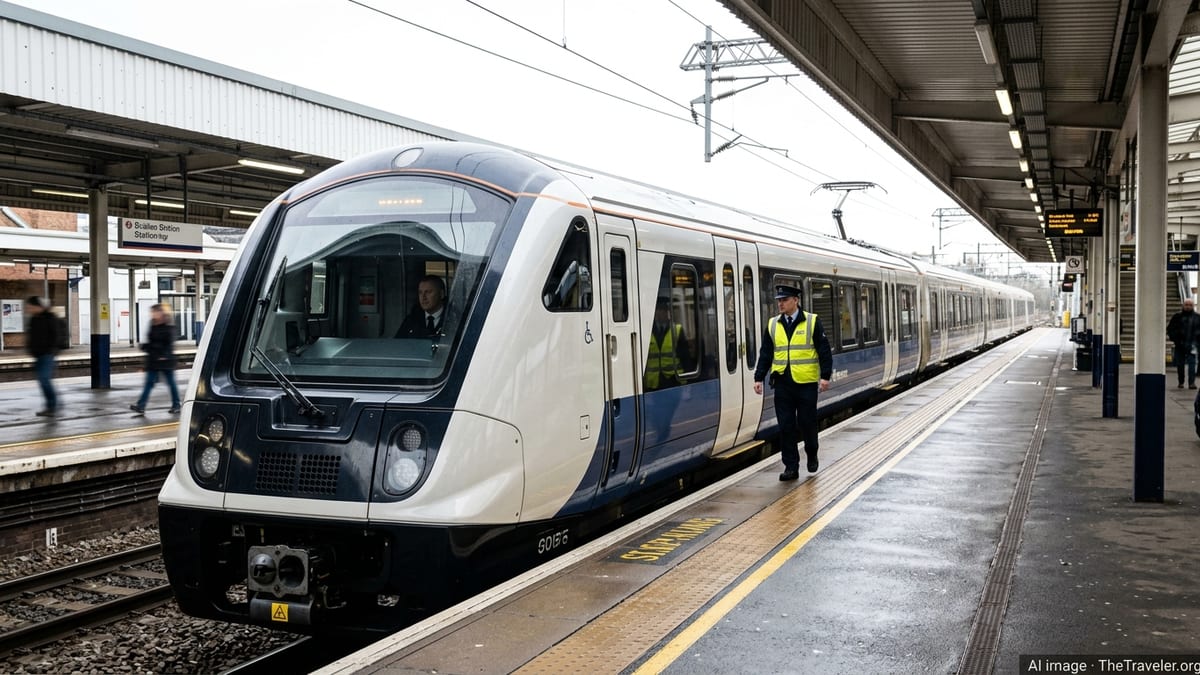
Hours stranded in soaring temperatures
Reports from north London indicate that dozens of passengers were left stuck for several hours on a train near Hornsey, with carriages growing increasingly hot as outside temperatures climbed during a summer heatwave. With limited ventilation and no air conditioning in some sections, travelers described conditions that quickly became uncomfortable and, for some, potentially unsafe.
Witness accounts shared through local forums and social media describe passengers running low on drinking water, fanning themselves with newspapers and clothing, and checking phones for weather warnings as the temperature continued to rise. Some reported that information from operator apps and station displays did not fully reflect the length of the disruption, adding to confusion onboard.
While the precise cause of the stoppage near Hornsey has not yet been fully detailed in public reports, similar recent incidents around the country have been linked to rail infrastructure struggling under prolonged high temperatures. Steel tracks can expand and buckle in extreme heat, prompting blanket speed restrictions, delays, and, in the worst cases, stalled trains between stations.
For the Hornsey commuter now demanding answers, the incident has become a focal point for wider frustrations about how the north London route copes with increasingly frequent spells of extreme weather.
Heatwave pressures on an already busy corridor
Hornsey station sits on the Great Northern route into central London, a busy commuter corridor where regular peak services connect the suburb with hubs such as Finsbury Park and Moorgate. Publicly available timetables and network data show that the line typically carries large volumes of passengers at morning and evening peak times, with standing room common on some services.
During heatwaves, however, operators across Britain routinely impose speed restrictions on exposed stretches of track to reduce the risk of heat-related damage. Recent statements from rail companies serving other regions have warned that journeys may take longer, timetables may be reduced, and sudden cancellations are more likely when temperatures stay high for several days in a row.
On the London suburban lines, those controls can cause a rapid build-up of delays, with trains stacking outside bottleneck stations and signal sections. In this latest Hornsey incident, passengers reported prolonged waiting with only intermittent indications of progress. For commuters already used to disruption around key interchanges, the prospect of being immobilised in high heat, far from a platform or assistance, has sharpened concerns.
The experience has highlighted how the combination of busy commuter loads, ageing rolling stock and climate-related stress on infrastructure can converge to create difficult conditions for passengers in a short space of time.
Passenger welfare and communication under scrutiny
The Hornsey commuter raising the alarm is questioning not only why the train was left stranded for so long, but also how passenger welfare was managed during the delay. Travelers in the affected service say they received limited updates about likely waiting times, and that any onboard water supplies were quickly exhausted in the heat.
National passenger-charter guidance emphasises that operators should prioritise access to drinking water, clear announcements and, where possible, alternative routes when trains are heavily delayed. Consumer groups note that the risks increase sharply when trains are halted away from platforms, where doors cannot be safely opened and medical assistance, shade and rest areas are out of reach.
Recent public discussion around other heatwave disruptions has also underlined the psychological strain of being confined in crowded, overheated spaces. While incidents rarely meet the threshold for formal evacuation onto the track, passengers say the sense of powerlessness and uncertainty can be intense, particularly for older travelers, children and people with underlying health conditions.
Calls are now growing for rail companies serving Hornsey and surrounding stations to review how they communicate with passengers during weather-related stoppages, including clearer explanations of delays, more frequent announcements, and better use of digital channels to keep those onboard informed.
Growing climate risks for UK rail travel
Climate projections for the UK indicate that episodes of extreme heat are likely to become more frequent and more intense over the coming decades. Recent summers have already brought record high temperatures, prompting emergency timetables, suspended services and pleas from operators for passengers to check before they travel.
Industry reports highlight that much of the rail network was designed for cooler, more predictable weather patterns, with track, overhead lines and older trains often ill-suited to repeated days of high heat. In the capital, deeply buried Underground lines and enclosed suburban trains can become particularly uncomfortable when ventilation and air conditioning are limited or absent.
The Hornsey incident fits into a wider pattern of weather-driven disruption that has affected lines across England in recent heatwaves. While operators stress that safety must take priority when infrastructure is under strain, passenger advocates argue that more investment is needed in resilient track, modern rolling stock and shaded or cooled waiting areas at busy commuter stations.
For residents along the Great Northern route, this latest episode has renewed debate about whether current adaptation plans are keeping pace with the speed of climate change, and whether enough is being done to protect people who rely on rail for daily travel.
Commuter calls for accountability and change
The Hornsey commuter at the centre of the story has framed their call for answers around three main concerns: the length of time passengers were left stranded, the conditions inside the train during the heatwave, and the clarity of information received from the operator throughout the ordeal.
In messages shared online, the commuter has urged rail managers to publish a clear account of what went wrong on the day and what would be done differently in similar weather conditions in the future. They have also encouraged fellow passengers to document their experiences, including timings, temperatures and any health impacts, in order to build a fuller picture of the risks involved.
Campaigners for improved rail services in north London say such testimonies can play a significant role in shaping future investment decisions, from prioritising air conditioned trains on busy commuter routes to upgrading signalling and track that are particularly vulnerable to heat. They also argue that detailed incident reviews help build public trust, by showing that lessons from severe disruptions are not being ignored.
For the thousands of people who pass through Hornsey and nearby stations each week, the episode is a stark reminder that as summers grow hotter, the reliability and resilience of everyday journeys will increasingly depend on how quickly rail operators adapt to a changing climate.