


More news on this day
American Airlines is reinstating nonstop service between Miami and Montevideo as a seasonal route, restoring a direct air link that Uruguayan tourism stakeholders view as critical for capturing peak summer demand from North America.
Get the latest news straight to your inbox!
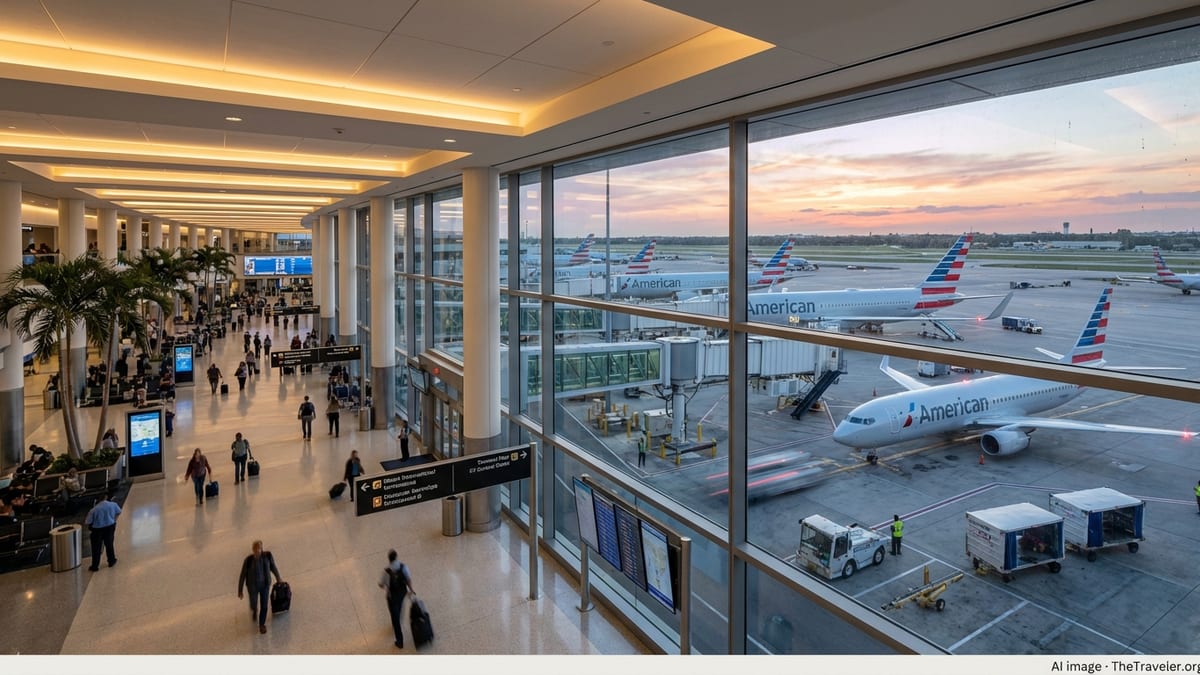
Seasonal Miami–Montevideo Flights Return
Publicly available route data for Montevideo’s Carrasco International Airport lists Miami as a seasonal destination served by American Airlines, indicating that the carrier is again operating or scheduling dedicated service between South Florida and Uruguay’s main international gateway. The listing identifies the Miami link as a seasonal operation using widebody aircraft, aligning with the pattern of previous winter-summer deployments on the corridor.
Information released by Corporación América Airports, the private operator of Carrasco, shows that American Airlines resumed its Montevideo–Miami route with multiple weekly flights during a recent high season, with frequencies ramping up as Southern Hemisphere summer progressed. The operator’s traffic updates describe the service as part of a broader lift in international connectivity at Montevideo, alongside new and expanded routes to Brazil, Chile and domestic destinations within Uruguay.
Industry reports describe the Miami link as a restoration rather than a first-time launch. American had withdrawn from the route earlier in the decade, after which other carriers briefly attempted nonstop connections between Uruguay and Florida. The return of the US airline’s own metal to the market is being interpreted by analysts as a signal of revived demand between North America and Uruguay and growing confidence in the country’s tourism outlook.
While exact start and end dates for the current season vary by schedule filing, available timetable information and airport disclosures indicate that the Miami–Montevideo service is concentrated around the Southern Hemisphere summer period, when inbound tourism to Uruguay’s beach destinations and outbound holiday travel by Uruguayans both peak.
Uruguay Targets Record-Breaking Summer Tourism
Traffic statistics from Carrasco’s operator show that passenger volumes in Uruguay have been setting or approaching all-time records, driven primarily by international travelers. The company reported that total passenger traffic in the country recently reached its highest annual level on record, underscoring the strength of demand during the latest summer season and the importance of international air links for the local economy.
Reports on Uruguay’s tourism sector highlight the continued appeal of destinations such as Punta del Este, Montevideo’s coastal neighborhoods and emerging wine and rural tourism corridors. Regional airlines have expanded seasonal operations into Punta del Este and added new connections from major South American hubs, reinforcing the perception of Uruguay as a premium, high-yield leisure market in the Southern Cone.
Industry commentary notes that the restoration of American’s Miami service adds a new layer to that growth story by giving Uruguay a direct connection into one of the world’s largest long-haul gateways. This enables more seamless itineraries for visitors from North American cities that feed into Miami, and it also improves access for travelers from markets in the Caribbean and other parts of the Americas that rely on Miami’s hub structure.
Analysts point out that high-end tourism, second-home ownership and event-driven travel are all significant components of Uruguay’s inbound market from the United States and Canada. A nonstop Miami link increases the country’s ability to attract these segments, particularly when flight timings are aligned with evening departures from Florida and morning arrivals in Montevideo that connect well with hotel check-in times and regional onward flights.
Miami’s Role as a South America Gateway
Miami International Airport is recognized in aviation data as one of the primary hubs for North American connections to South America, with American Airlines maintaining a large presence and extensive network across the region. Airport documentation lists Montevideo among Miami’s international destinations, reflecting the city’s integration into a broader South American portfolio that also includes major capitals in Argentina, Brazil, Chile and Peru.
For Uruguay, being reattached to Miami’s hub means more than a single point-to-point market. Passengers from Montevideo can connect via MIA to a wide range of US cities on American’s domestic network, as well as to select destinations in Europe and the Caribbean served from South Florida. Conversely, US travelers gain a one-stop path to Uruguay from many mid-size American cities that lack their own long-haul service.
Aviation industry analyses of American’s Miami strategy emphasize the importance of seasonal flexibility on long-haul routes. Rather than maintaining year-round daily flights on every secondary South American route, the airline often calibrates capacity according to peak travel windows, adjusting frequency as demand shifts. The Miami–Montevideo operation fits this pattern, with higher frequencies during the southern summer and a more limited schedule or pausing of service during shoulder periods.
This hub-and-spoke strategy allows American to capitalize on strong seasonal flows such as North American winter escapes to South America and Southern Cone residents traveling north during local school holidays. It also helps the airline manage aircraft utilization at a time when long-haul fleets remain tightly scheduled and widebody delivery timelines continue to influence route planning.
Competitive Landscape and Regional Connectivity
Uruguay’s air market has experienced a broader reshaping of services in recent years, with several carriers adjusting their strategies. Traffic updates and airport communications describe new routes from Brazilian and Chilean airlines into Montevideo and Punta del Este, as well as expanded seasonal operations aimed at capturing beach tourism demand along Uruguay’s Atlantic coast.
In this context, American’s restored Miami service competes not only with indirect itineraries through regional hubs such as São Paulo and Buenos Aires but also complements them by diversifying long-haul access points. Travelers from the United States and Canada can still reach Uruguay via connections through other South American hubs, but a nonstop flight from Miami reduces total travel time and removes one intermediate stop.
Industry observers also note that a direct Miami link may encourage more cruise and air-cruise combinations, with passengers using Miami as a gateway before or after sailings that include South American ports. Improved air connectivity can support such itineraries by making it easier to route passengers between cruise terminals in Florida and embarkation or disembarkation points near Uruguay.
The presence of multiple international carriers serving Uruguay, including regional competitors on routes to Brazil, Chile and Argentina, suggests that the market is becoming more competitive and diversified. American’s return adds a large US airline brand to that mix, potentially influencing pricing strategies, loyalty program dynamics and schedule coordination across the region.
Outlook for Future Seasons
Forward-looking commentary from airport operators and industry analysts indicates cautious optimism that Uruguay’s air traffic growth will continue, supported by both tourism and business travel. Record or near-record passenger numbers in recent reporting periods suggest that demand has not yet plateaued, even as global aviation faces capacity constraints and macroeconomic uncertainties.
The seasonality of Uruguay’s tourism demand, however, remains a defining feature. Research into airline pricing and scheduling patterns underscores how carriers use seasonal adjustments to adapt to peaks and troughs in leisure travel. The structure of the Miami–Montevideo service reflects this reality, concentrating capacity when beaches, festivals and cultural events draw the largest visitor flows.
Future seasons will likely test the durability of the restored American Airlines link. If load factors and yields remain strong, analysts consider it plausible that the airline could tweak frequencies, extend the operational window beyond the core summer months or deepen connectivity through additional codeshares and schedule refinements within the Miami hub.
For now, the return of the Miami–Uruguay route is being viewed across the aviation and tourism sectors as a timely response to rising demand, reconnecting Montevideo with one of its most important long-haul gateways and offering travelers on both sides of the hemisphere a more direct bridge between South Florida and the Uruguayan coast.