


More news on this day
A United Airlines Airbus A321neo operating a domestic service between Houston and Chicago on August 9 diverted from its planned route and ultimately returned to Houston, illustrating how quickly routine flights can be upended by fast-changing operational and weather conditions in one of the airline’s busiest corridors.
Get the latest news straight to your inbox!
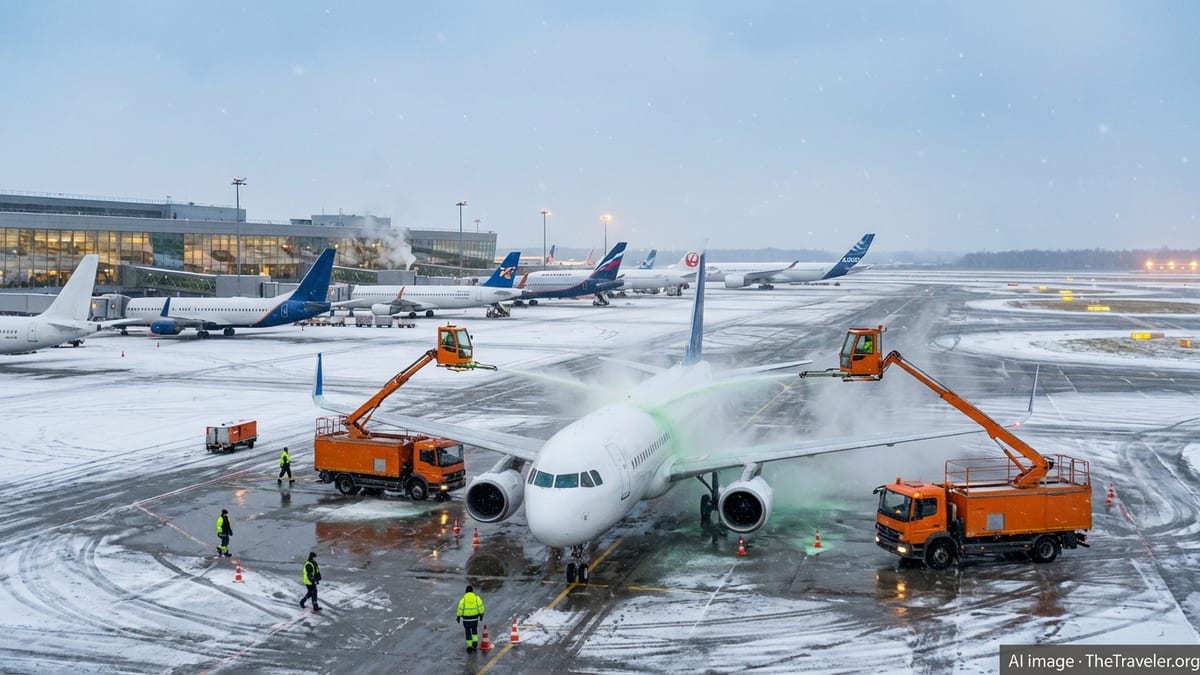
Disruption On A Busy Houston–Chicago Corridor
The flight, operated by one of United’s newest Airbus A321neo aircraft, departed George Bush Intercontinental Airport in Houston on the afternoon of August 9 with Chicago as its scheduled destination. Publicly available flight-tracking data show the aircraft climbing north from Houston along the standard route toward the Midwest before deviating from its planned track.
Instead of continuing to Chicago, the A321neo entered a holding pattern and then turned back toward Houston. The track data indicate that the aircraft remained in controlled flight at normal cruising altitudes and speeds, suggesting there was no immediate safety emergency on board. The decision to abandon the original destination and return to the departure airport points toward a combination of weather, air-traffic flow constraints, or operational requirements affecting the route into Chicago.
United has been steadily introducing the Airbus A321neo into key domestic markets such as Houston and Chicago, where the type’s fuel efficiency and higher seating capacity are suited to dense trunk routes. Industry data show that the carrier has been using the aircraft on a mix of hub-to-hub and high-demand leisure services, making any irregular operation on the type particularly visible to travelers tracking the rollout of the new fleet.
Weather, Congestion And Operational Limits
While precise factors behind a single diversion can vary, aviation records and wider operational patterns across the United States indicate that convective weather and airspace congestion around Chicago frequently disrupt traffic flows in August. Thunderstorms, low visibility, or strong crosswinds can prompt ground stops or arrival metering programs, slowing traffic into major hubs and forcing aircraft already airborne to hold or divert.
When extended holding is not feasible, airlines must weigh fuel reserves, crew duty times, and the likelihood of further delays at the destination airport. In this case, available data suggest the A321neo remained airborne long enough to assess conditions before turning back, which is consistent with a scenario in which continued holding or diversion to a secondary airport would have risked breaching fuel or crew time margins.
Operational literature on U.S. airline networks also shows that carriers often prefer returning to a large hub such as Houston rather than diverting to an unfamiliar or capacity-constrained field. Returning to the departure hub can make it easier to reassign aircraft, swap crews, and rebook passengers on alternative flights once weather or congestion eases, even if it represents a significant disruption for those on board.
Impact On Passengers And Subsequent Operations
For travelers, an airborne diversion followed by a return to origin can transform what should have been a short, routine sector into an all-day journey. Passengers on the August 9 flight would likely have faced missed connections in Chicago, potential overnight stays, and rebooking challenges as United worked to absorb the disrupted load into later departures. Similar events documented across the network show that such irregular operations can cascade through connecting banks at hub airports.
Once on the ground back in Houston, the A321neo would have required a new departure slot, crew duty-time checks, and potentially additional maintenance inspections before operating again. Publicly visible airline schedules often show subsequent legs for a diverted aircraft adjusted or canceled altogether, with other aircraft and crews reassigned to protect key departures from both Houston and Chicago.
United’s growing A321neo fleet gives the airline more flexibility to substitute aircraft on busy routes when irregular operations occur, but it also concentrates large numbers of passengers on single flights. As a result, disruptions on these aircraft can have a pronounced impact on seat availability later in the day, particularly during peak summer travel periods when most flights already operate close to full.
What The Incident Reveals About United’s A321neo Deployment
The diversion and return highlight how United is integrating the A321neo into some of its most operationally complex markets. Houston and Chicago are both major hubs for the airline, with dense schedules, connecting traffic, and frequent summer weather challenges. Deploying the A321neo on this corridor maximizes efficiency but also tests the aircraft and crews in real-world, high-stress scenarios typical of U.S. domestic operations.
United’s broader fleet plan envisions dozens of A321neo aircraft in service over the next several years, gradually replacing older narrowbodies and expanding capacity on high-demand routes. The type’s advanced avionics and performance characteristics are designed to offer better fuel burn and range, but diversions such as the one on August 9 show that even the latest aircraft remain subject to the same operational constraints that have long shaped airline reliability statistics.
For aviation observers, each diversion event offers a case study in how airlines respond when conditions deteriorate quickly. The Houston to Chicago market is sufficiently busy that any disruption can also provide insights into schedule resilience, spare capacity, and the robustness of contingency planning on routes where passengers expect multiple daily options and relatively seamless recovery from delays.
Broader Context Of Summer Flight Diversions
The August 9 diversion fits into a wider pattern of irregular operations reported across North American networks during peak summer months. Historical data and academic research into delay patterns show that afternoon and evening departures in August are particularly vulnerable to thunderstorms, convective weather cells, and the knock-on effects of ground stops at major hubs.
In this environment, diversions and returns to origin are not unusual, though they remain frustrating for passengers. Airlines increasingly use predictive tools and enhanced weather modeling to anticipate disruptions and adjust schedules in advance, but sudden storm development or longer-than-expected air-traffic restrictions can still force last-minute decisions like the one faced by the A321neo departing Houston.
For travelers, the incident serves as a reminder that even flights operated by brand-new aircraft on well-traveled routes can be affected by factors beyond the airline’s direct control. Understanding how diversions occur and why an aircraft might return to its departure point rather than continue or divert elsewhere provides useful context when disruptions appear sudden or arbitrary from a passenger’s perspective.