


More news on this day
Jodhpur’s newly inaugurated airport terminal is reshaping how visitors arrive in Rajasthan’s Blue City, combining traditional architectural cues with a scaled-up, digitally enabled gateway to one of India’s most visited desert regions.
Get the latest news straight to your inbox!
From Defence Enclave to Tourism Gateway
Jodhpur Airport has long operated as a shared facility between the Indian Air Force and civilian traffic, a constraint that limited terminal capacity even as tourist arrivals to Rajasthan steadily increased. Publicly available information shows that the existing terminal handled just over one million passengers in the 2024–25 financial year, placing it among India’s mid-sized airports but highlighting mounting pressure on space and services.
To address this, the Airports Authority of India and the state government advanced a land transfer and expansion plan that enabled construction of a new civil terminal adjacent to the air force base. Budget documents and tender notices indicate that work on the new complex has been treated as an ongoing multi-year project with dedicated capital allocations for terminal construction, baggage systems and security infrastructure.
The new terminal, inaugurated on 4 July 2026 alongside the launch of the latest phase of India’s regional connectivity scheme, marks a transition from a constrained defence-linked enclave to a fuller-fledged civil gateway. It is intended to serve not only domestic leisure travellers bound for Jodhpur’s forts and havelis, but also business and diaspora traffic moving across western India.
Industry coverage describes the project as part of a broader effort to strengthen second-tier airports in tourist centres, with Jodhpur positioned as a complement to the more heavily trafficked hubs of Jaipur and Udaipur. The upgraded infrastructure is expected to absorb higher flight frequencies and larger aircraft types during Rajasthan’s peak winter season.
Terminal Design: Rajasthan Motifs in a Contemporary Shell
Visual material released by government channels and design-focused discussions online highlight a terminal that leans into Jodhpur’s identity while adopting a relatively minimalist exterior. The new building features a broad, sweeping roof canopy and glass frontage, punctuated with patterns and textures that echo traditional Jodhpur stonework and jaali screens.
Inside, publicly shared images suggest a palette of neutral flooring and timber accents, with decorative elements referencing the city’s blue-washed old quarters and nearby desert landscapes. Check in, security and boarding zones are laid out in a linear sequence intended to streamline circulation, contrasting with the tighter, more fragmented layout of the previous facility.
Architecture enthusiasts commenting on the project have described the terminal as an attempt to balance budgetary limits with regional character. While some commentary points to a restrained aesthetic compared with more sculptural terminals elsewhere in India, others note that the design leaves scope for future expansion as passenger numbers grow.
Passenger discussions on social platforms prior to the opening frequently criticised the ageing terminal building for cramped interiors, limited seating and dated amenities. The new facility seeks to respond to those concerns through larger public halls, additional gates and more natural light, providing a more fitting first impression for a city marketed for its heritage hotels and restored palaces.
Passenger Experience: More Space, More Services
The new Jodhpur terminal has been developed with a focus on handling higher volumes of domestic traffic while offering an upgraded passenger experience. Tender documentation and project descriptions highlight the installation of a modern baggage handling system, expanded security screening lanes and added CCTV coverage, all aimed at reducing bottlenecks at peak hours.
Within the departures area, the enlarged footprint allows for additional retail and food outlets compared with the former terminal, which had only a handful of basic concessions. Early feedback on community forums indicates interest in whether the mix of services will include regional handicraft stores and local food counters, seen by many travellers as part of the wider Rajasthan experience.
Improved landside access is another feature of the project. The new terminal forecourt is designed to accommodate a more organised flow of taxis and private vehicles, which frequent flyers had previously identified as a pain point at the old building. How effectively on-ground operators adapt to higher volumes and changing traffic patterns is expected to shape first impressions for many arriving visitors.
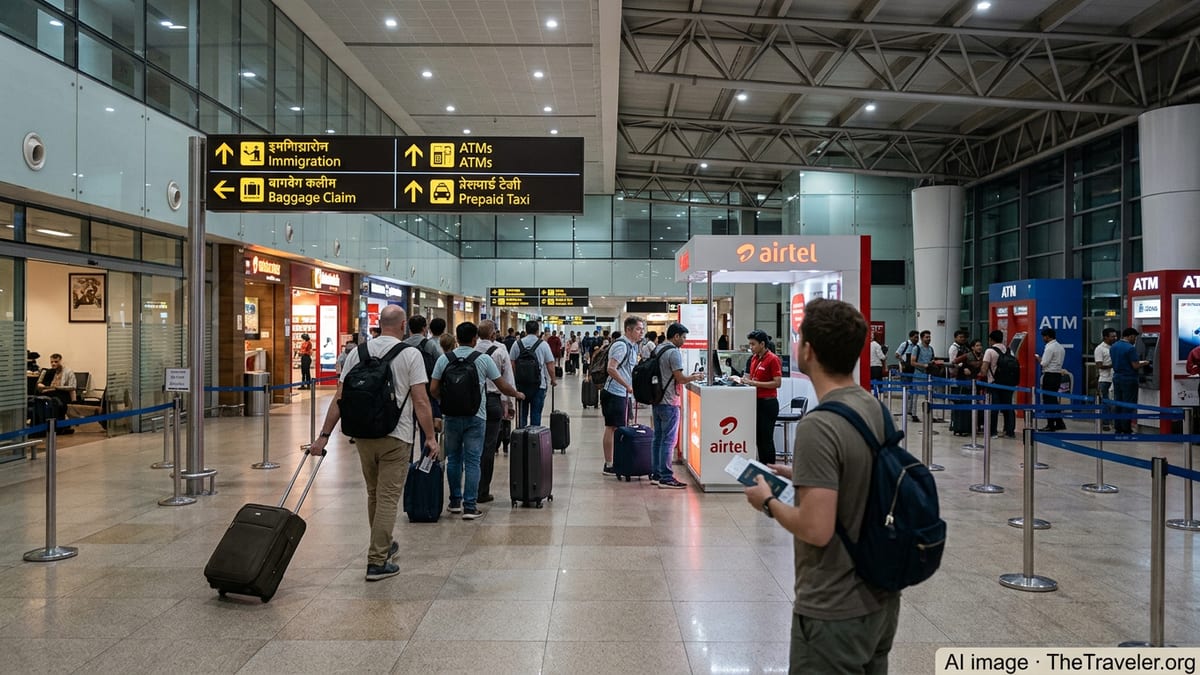
Passengers are also watching for digital upgrades such as additional self check in kiosks, clearer wayfinding displays and more charging points in seating areas, elements that have become standard at larger Indian airports. While full details of these features continue to emerge as operations ramp up, the intent is to align Jodhpur’s offering more closely with the expectations of metro airport users.
Connectivity Boost Under the Modified UDAN Framework
The opening of the new terminal coincides with a policy push to deepen regional connectivity across India through a modified iteration of the UDAN scheme. Government briefings describe this next phase, branded in recent communications as a strengthened framework, as targeting better viability for airlines on smaller city routes while encouraging additional frequencies and new point to point links.
Jodhpur features prominently in this narrative as both a tourism hub and a growing secondary city in western India. By pairing a modernised terminal with financial and regulatory incentives for airlines, the aim is to add more connections from Jodhpur to cities beyond the established trunk routes. This could include enhanced links to metro hubs as well as to emerging regional airports, improving options for multi destination Rajasthan itineraries.
The broader UDAN programme has, over several rounds, supported hundreds of regional routes across the country, according to data released by the Airports Authority of India and the Ministry of Civil Aviation. The modified version launched from Jodhpur is framed as an evolution of that model, with refinements intended to ensure more consistent operations on awarded routes and better alignment with local demand patterns.
For Jodhpur, this policy backdrop means the new terminal is not simply an aesthetic upgrade, but a platform for deeper integration into India’s domestic air network. Tourism operators and hospitality businesses are closely tracking how quickly new routes materialise and how airlines deploy capacity into the city during peak travel months.
Strategic Role in Rajasthan’s Tourism and Air Network
Rajasthan’s tourism strategy has long relied on a circuit approach, encouraging visitors to combine cities such as Jaipur, Jodhpur, Udaipur and Jaisalmer in a single trip. Stronger air connectivity into each node is seen as critical to sustaining that model, particularly for international travellers who prefer to minimise long surface transfers after arriving in India.
In this context, the upgraded Jodhpur terminal is expected to play a dual role: relieving pressure on road and rail corridors in western Rajasthan, and creating new entry and exit points for visitors moving across the state. Improved flight options can shorten travel times between desert destinations and larger metros, making shorter, higher-value trips more feasible.
Industry analysis also points to a broader trend of investment in tier two and tier three airports across India, with Jodhpur’s expansion cited alongside recent upgrades in cities such as Ayodhya and Kanpur. These projects collectively signal a shift toward a more distributed aviation network rather than one dominated solely by a few mega hubs.
As Jodhpur’s new terminal settles into regular operations in the coming months, attention is likely to focus on operational reliability, cleanliness and the consistency of passenger services. The way the airport manages these day to day details will determine whether the blend of royal Rajasthan aesthetics and modern aviation infrastructure translates into a gateway that matches the city’s growing profile on India’s tourism map.