


More news on this day
A SkyWest-operated United Express flight from Michigan’s Upper Peninsula to Chicago diverted to Milwaukee on August 9, after operational disruptions and challenging weather around Chicago O’Hare led the crew of Flight UA5082 to reroute the regional jet.
Get the latest news straight to your inbox!
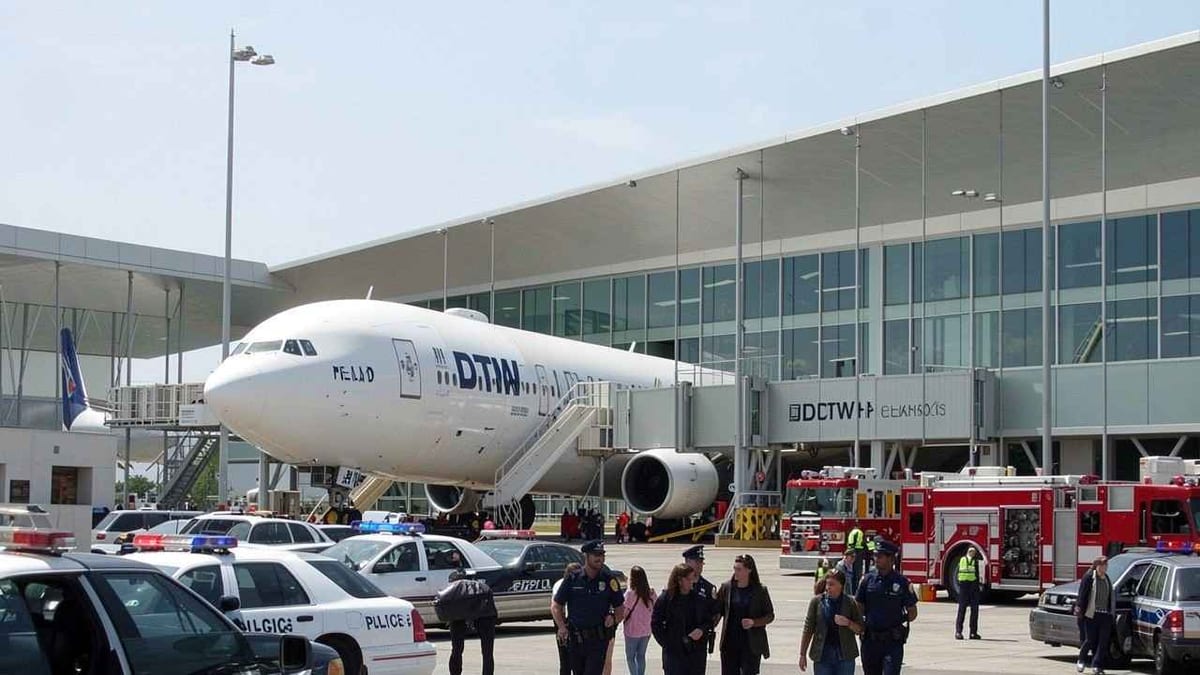
Routine Hancock to Chicago Hop Interrupted
According to publicly available flight-tracking information, United Airlines Flight UA5082 was scheduled to operate on August 9 as a United Express service between Houghton County Memorial Airport in Hancock, Michigan, and Chicago O’Hare International Airport. The route forms part of the Essential Air Service network linking the western Upper Peninsula with a major hub, and is contracted to SkyWest Airlines using a 50-seat Mitsubishi CRJ-200LR regional jet.
Data for the August 9 operation indicate that the aircraft departed Hancock broadly on schedule and initially tracked south toward Chicago, following its usual routing over Wisconsin. The flight is one of a small number of daily links between Hancock and Chicago, making it an important feeder for both local residents and connecting passengers heading to destinations across the United States and beyond.
On this particular evening, however, weather and traffic complexity in the Chicago area created difficult operating conditions. Reports from the Midwest on August 9 pointed to a combination of storms and congestion in the region, factors that often translate into holding patterns, airborne delays and, in some cases, diversions for arrivals into O’Hare.
With the aircraft approaching southern Wisconsin and facing further delays, the crew of UA5082 requested and received clearance to divert to Milwaukee Mitchell International Airport, roughly 70 miles north of Chicago. The diversion placed the flight on the ground at an airport with better short-term availability of runway, ramp and fuel resources than were immediately accessible at O’Hare during the disruption window.
Safe Landing in Milwaukee and Onward Arrangements
Flight-tracking records show that the CRJ-200LR landed safely in Milwaukee after breaking off its approach track toward Chicago and turning northeast toward the Lake Michigan shoreline. The decision to divert avoided the need for prolonged holding near O’Hare as arrival flows were adjusted, and ensured the regional jet remained within conservative fuel-planning margins.
Once on the ground in Milwaukee, the aircraft joined a number of diverted flights that had been routed there during the same weather system. Reports from travelers transiting through Mitchell International on the morning and evening of August 9 described unusually busy concourses and multiple aircraft on remote stands, reflecting the airport’s role as a pressure valve when operations tighten at O’Hare.
Passengers from UA5082 were expected to be accommodated under United’s standard disruption handling, which can include rebooking on later services, ground transportation back to Chicago or, where practicable, continuation of the diverted aircraft to its original destination once conditions improve. The specific handling can vary depending on gate availability, crew duty limits and the broader state of the network at the time of the diversion.
Publicly available operational guidance for United and its regional partners indicates that diversions are typically used only when holding is no longer feasible, when fuel reserves require a landing, or when an extended delay is anticipated at the destination. In this case, routing the Hancock flight into Milwaukee allowed SkyWest and United operations teams to reassess options while keeping passengers on the ground at a fully equipped commercial airport.
Essential Air Service Link Highlights Regional Vulnerability
Hancock’s connection to Chicago under the federal Essential Air Service program underscores how critical a single daily route can be for remote communities. Department of Transportation documents selecting SkyWest to continue serving Hancock outline a multi-year subsidy to maintain regular flights to O’Hare, recognizing the airport’s role as a lifeline for business, health care, education and tourism across the sparsely populated Keweenaw Peninsula.
The use of the Mitsubishi CRJ-200LR on this route reflects a common pattern in U.S. regional aviation, where smaller 50-seat jets are deployed on thin but strategically important sectors. While these aircraft provide necessary connectivity, their size and operating economics can make schedule disruptions more acute, as there is limited spare capacity and fewer alternative flights each day compared with major trunk routes.
When a diversion occurs on such a service, the impact for passengers can be disproportionate. Missed connections may cascade into overnight stays, rebookings via other hubs or longer surface journeys to reach final destinations. For Hancock-area travelers, that can mean extended trips at both ends of the route, especially during the busy late-summer travel period when alternative flights are heavily booked.
Nevertheless, industry data and academic research on U.S. airline operations suggest that diversions remain relatively infrequent events, even in weather-prone regions. They tend to cluster around days of severe convective activity or widespread thunderstorms, when traffic management initiatives and flow restrictions push crews to seek nearby alternates such as Milwaukee to maintain safety margins and regulatory compliance.
Weather, Fuel Planning and Regional Jet Operations
The Milwaukee diversion of UA5082 illustrates typical decision-making pressures faced by flight crews operating regional jets into congested hubs. When storms approach a major airport like O’Hare, air traffic control may impose arrival metering, requiring inbound flights to reduce speed or hold at waypoints while departure and arrival sequences are adjusted. This process can rapidly consume fuel reserves that were initially forecast with normal sequencing in mind.
Standard fuel planning for regional jets includes provisions for reaching the destination, flying to a designated alternate airport and holding for a specified period. As conditions deteriorate, crews dynamically assess whether continued holding remains compatible with those reserves. If not, diverting to a pre-planned alternate becomes the conservative choice, even if the ultimate goal remains delivering passengers to the original hub as soon as feasible.
Milwaukee’s position north of Chicago, its multiple runways and its staffing as a medium-sized commercial airport make it a frequent alternate for O’Hare arrivals. When multiple flights are diverted there during a single weather event, short-term congestion can shift from the sky to the ground, with ramp space, gates and available staff determining whether flights can continue quickly or must await coordination from airline operations centers.
For travelers, these behind-the-scenes calculations are often invisible, surfacing only as notifications of diversions, new boarding times or revised connection plans in airline apps. For crews, however, they represent a series of time-sensitive decisions structured around safety first, regulatory requirements second and schedule recovery third.
Growing Attention on Disruption Management Across Networks
The UA5082 diversion also fits into a broader conversation about how U.S. carriers manage irregular operations on regional networks. Analyses of airline route structures and delay patterns in recent years have highlighted the complexity of balancing reliability, environmental impact and access for smaller communities served primarily by regional partners.
Studies examining United’s pre-pandemic route network and more recent datasets from the Bureau of Transportation Statistics note that smaller airports like Hancock rely heavily on a single carrier or operating partner, amplifying the effect of each disruption event. When a flight diverts or cancels, the options for rerouting passengers are inherently narrower than at large hubs, and recovery can require creative use of alternates, ground transport and interline arrangements.
At the same time, airlines and regulators have placed renewed emphasis on maintaining fitness and reliability standards for Essential Air Service providers. Recent Department of Transportation orders reaffirm SkyWest’s role at Hancock through the latter part of the decade, citing the carrier’s continued ability to operate the contracted schedule and its importance in sustaining regional connectivity despite the broader challenges facing U.S. regional aviation.
For passengers on UA5082 on August 9, the diversion to Milwaukee translated into an unexpected extra stop on a short-haul journey. For the route itself, the event serves as a reminder of how weather, network congestion and operational constraints can reshape even the most familiar flights across the Upper Midwest.