


More news on this day
Flights to and from Dubai and other key Middle Eastern hubs are facing renewed disruption as European aviation authorities update conflict-zone guidance for Gulf airspace, prompting airlines to reroute services, trim schedules and extend existing suspensions.
Get the latest news straight to your inbox!
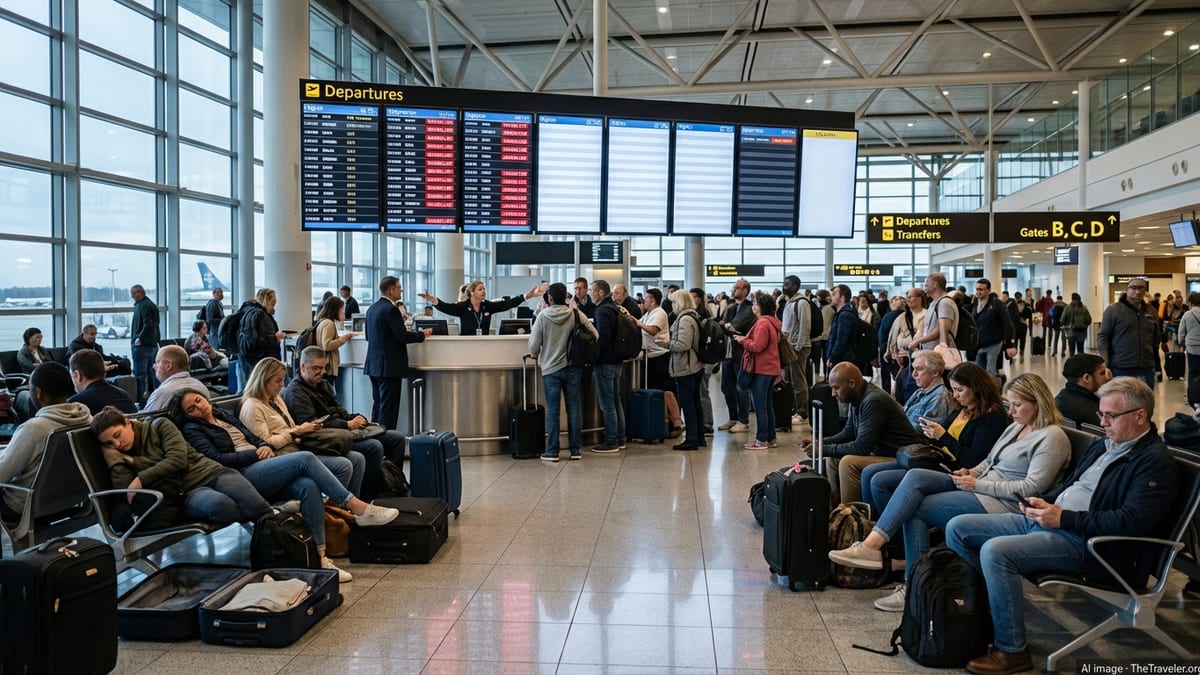
Fresh Gulf airspace guidance adds pressure on regional routes
According to recent updates from the European Union Aviation Safety Agency, airlines under European oversight are being urged to avoid or severely limit use of large portions of Gulf airspace, particularly over the waters controlled by Bahrain, Kuwait, Qatar, Oman and the United Arab Emirates. Publicly available bulletins describe elevated risks linked to renewed tensions between the United States and Iran, including potential military activity and air defence operations along key traffic corridors.
The latest conflict zone information bulletins build on a series of advisories first issued on 28 February 2026, when hostilities in the wider Middle East prompted rapid airspace closures and diversions. Subsequent revisions have refined the focus of the guidance, with separate high risk notices for the airspace of Iran, Iraq and Lebanon and medium level warnings for parts of the Persian Gulf and Gulf of Oman. The result is a complex patchwork of restrictions that airlines must factor into route planning between Europe, the Gulf and Asia.
Risk assessments published by specialist aviation outlets indicate that European operators are now encouraged to avoid over water segments of Gulf airspace wherever possible, using inland corridors over Saudi Arabia or more northerly routes instead. This shift adds distance and time to many flights that would typically overfly Bahrain, Qatar or the UAE on direct tracks between European cities and hubs such as Dubai, Doha and Muscat.
For passengers, the advisory does not mean that airports such as Dubai International or Abu Dhabi International have closed, but it does influence how and when European carriers can reach them. Each airline is required to integrate the guidance into its own safety and security assessments, which in practice has translated into a mixture of reroutings, extended flight times and temporary schedule reductions.
Dubai services feel impact of rerouting and suspensions
Dubai International remains one of the busiest global long haul hubs, yet its connectivity has been reshaped repeatedly since late February as foreign airlines respond to the changing advisory picture. Public timetables and airline statements show that several European and Central Asian carriers have suspended or reduced Dubai operations into the autumn, citing operational complexity and airspace limitations around the Strait of Hormuz and the wider Gulf.
Coverage from regional business media indicates that airlines including Aegean Airlines and Air Astana have cancelled or suspended Dubai routes at least through the end of August, with some services returning only gradually from October. Other carriers have opted to restore flights but on thinner schedules, prioritising routes where alternative routings add the least time and cost. Travellers connecting between Europe and Dubai on non Gulf based airlines are therefore more likely to encounter limited seat availability or indirect routings through third country hubs.
Dubai based airlines, which are not directly bound by European regulation but still monitor international risk assessments, have focused on maintaining core schedules while adjusting flight paths to avoid the most sensitive segments of airspace. Publicly available tracking data shows long haul flights that once flew almost straight across the central Gulf now bending south across Saudi Arabia or farther west before turning toward the UAE, adding flight time and fuel burn without changing departure or arrival airports.
With Dubai International handling tens of millions of passengers a year, even modest changes in routings and frequencies can ripple quickly through the network. Airlines have been advising passengers via their websites and booking channels to reconfirm departure times, allowing additional time at the airport and watching for same day schedule changes as airspace notices are updated.
Regional carriers juggle security, schedules and demand
Beyond Dubai, airlines across the Middle East are grappling with similar pressures as they balance security assessments, regulatory guidance and commercial demand. Gulf based carriers such as Emirates, Etihad Airways and Qatar Airways resumed the bulk of their long haul operations earlier in the year following an initial wave of cancellations, but published route maps show continued adjustments on services touching higher risk airspace, particularly around Iran, Iraq and Lebanon.
European long haul airlines have generally taken a more conservative approach. Industry reporting suggests that parts of the Lufthansa Group, among others, have extended pauses on certain Middle East destinations into October 2026, even as some routes to cities like Tel Aviv and Amman return on limited frequencies. This uneven recovery reflects the additional compliance obligations on European carriers that must follow EASA advisories when planning flights that traverse multiple conflict affected flight information regions.
Smaller regional airlines have been affected in different ways. Some have pulled back entirely from routes that require long over water segments in the central Gulf, while others have integrated additional technical stops to refuel on safer routings. Freight operators and express carriers using converted passenger aircraft have reported longer transit times through major European gateways as cargo flights are funneled into a narrower set of corridors skirting restricted areas.
Travel industry analyses note that these changes are layered on top of broader capacity constraints that were already affecting the Middle East, including aircraft delivery delays and strong post pandemic demand for leisure and visiting friends and relatives traffic. The renewed focus on Gulf airspace risk has therefore tightened supply further on some of the region’s highest yielding routes, with knock on effects for fares and seat availability.
What passengers flying via the Gulf should expect
For travellers booked on flights to or through Dubai and other Gulf hubs in the coming weeks, the primary consequence of Europe’s updated airspace guidance is likely to be schedule uncertainty rather than outright cancellations. Publicly visible flight data over recent days shows most services operating, but often with longer flight times or altered routings that can affect connection windows at busy hubs.
Airlines are typically offering flexible rebooking options when schedules change by a set threshold, especially on tickets issued after early March 2026 when the latest phase of the crisis began. Some carriers serving the Gulf have published waivers allowing one free date change for travel within defined periods, although the specific terms vary by airline and booking class. Passengers are being encouraged through airline communication channels to use mobile apps or online tools to track real time gate and departure information.
Travel agents and corporate travel managers report that itineraries which once relied on tight connections in Dubai or Doha are being built with larger buffers to account for potential rerouting delays. Long haul passengers might find that journey times between European cities and destinations in Asia or Australasia via the Gulf are scheduled at 30 to 90 minutes longer than equivalent services earlier in the year, even when departure and arrival airports remain unchanged.
For now, publicly available information does not point to imminent closure of Gulf airports for civil traffic, but the evolving security situation around Iran and the Gulf of Oman means that airspace configurations can change at relatively short notice. Travellers planning new trips through Dubai and neighbouring hubs are therefore advised, by airlines and travel advisers alike, to check the latest schedule details close to departure and to remain prepared for last minute adjustments as safety advisories are revised.
Ongoing monitoring as risk assessments evolve
European and international aviation bodies continue to review conditions in the Middle East, issuing updates to conflict zone bulletins and information notes as circumstances shift. An announcement in early July 2026 confirmed that the original broad regional bulletin for the Middle East and Persian Gulf had been replaced with a combination of targeted bulletins and an information note outlining residual medium level risks, signalling that the immediate crisis phase had eased but that caution remained necessary.
Subsequent advisories have maintained strict do not operate guidance for the airspace of Iran and Iraq, with additional warnings for Lebanon and selective cautionary language covering Saudi Arabia and Jordan. Maps produced by European aviation risk units illustrate how these overlapping notices constrain available routings for flights between Europe and Asia, even when airlines are free to operate into major Gulf airports.
Industry observers highlight that any renewed escalation could prompt further tightening of guidance, potentially expanding the areas that European carriers are advised to avoid or introducing altitude based restrictions that complicate flight planning. Conversely, a sustained reduction in regional tensions could eventually lead to a relaxation of some advisories, allowing airlines to shorten routings and restore more direct tracks over the Gulf.
Until such a shift occurs, passengers using Dubai and other Middle Eastern hubs can expect a travel environment shaped as much by evolving airspace diagrams and safety bulletins as by traditional drivers such as demand and pricing. The situation remains fluid, and the most reliable information for individual journeys will continue to come from live airline schedule updates and airport operational notices on the days leading up to departure.