


More news on this day
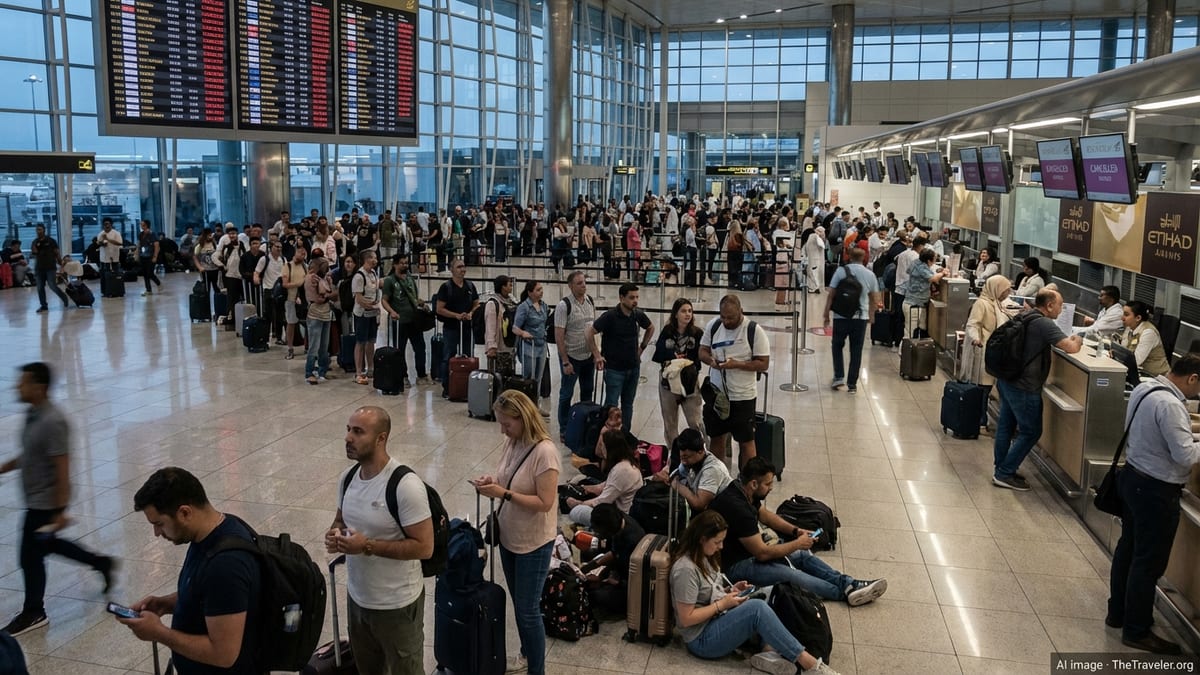
Israel has begun organizing repatriation flights from the United Arab Emirates to bring home hundreds of travelers stranded after a violent cockpit attack on a FlyDubai jet led to the suspension of regular air links between the two countries.
Get the latest news straight to your inbox!
Special flights begin as commercial services remain curtailed
According to publicly available information from Israel’s airport authority and media in both countries, the first repatriation services from the United Arab Emirates to Tel Aviv began operating late Friday and into the early hours of Saturday. These flights are designed to return Israeli travelers who were left without a way home after FlyDubai halted its Israel routes in the wake of the attack on flight FZ1073.
Reports indicate that Arkia was among the first Israeli carriers to operate a one-way service from Dubai to Tel Aviv, with a flight departing late Friday and landing at Ben Gurion Airport shortly after 1:00 a.m. local time on Saturday. Passenger manifests focused on Israelis and other travelers whose original bookings were disrupted when FlyDubai suspended operations to Israel.
Israeli media coverage notes that Israir has also received approval to mount similar flights from Dubai, while El Al initially announced special operations but later scaled back some of its planned services after last-minute changes to landing permissions. The overall program is being coordinated with aviation and security authorities on both sides, following an agreement between Israel and the UAE to prioritize the return of stranded passengers.
Published reporting suggests that hundreds of travelers were affected when direct commercial links were abruptly reduced, with some estimates from travel industry representatives indicating that at least 1,700 Israelis per day would be left in the UAE if the suspension were to continue without replacement flights. The new repatriation services are intended as a short-term bridge rather than a full restoration of the pre-incident schedule.
Background: FlyDubai cockpit attack and emergency diversion
The repatriation effort follows an incident on September 30 in which a FlyDubai Boeing 737 MAX operating as flight FZ1073 from Dubai to Tel Aviv was forced to make an emergency landing in Tabuk, Saudi Arabia. According to widely reported accounts, the Omani co-pilot is suspected of attacking the captain inside the cockpit, stabbing him and putting the aircraft into a steep, uncontrolled descent.
Data cited in international reporting show that the plane dropped roughly 14,000 to 17,000 feet in a very short period before the dive was arrested. Passengers described intense g-forces, unsecured objects hitting the cabin ceiling and a sense that the aircraft was moments from catastrophe. The jet ultimately diverted safely to Tabuk, where the injured captain and co-pilot were taken for medical care and passengers were disembarked.
Subsequent coverage from regional and global outlets has identified the co-pilot as an Omani national who, according to several reports, had previously faced restrictions in his home country over concerns about extremist views. The United Arab Emirates has opened a formal investigation, as the state where the airline is based and where the aircraft is registered, while Israel has treated the episode as a suspected terrorist attack aimed at an aircraft carrying mostly Israeli passengers.
Passengers from the diverted flight were later transported on another aircraft to Ben Gurion Airport, where images showed some arriving with visible bloodstains and bandages. The event has intensified scrutiny of vetting procedures for cockpit crew and highlighted the potential vulnerabilities involved when airlines operating international routes recruit pilots from states that do not maintain ties with certain destinations.
Israeli carriers step in to plug a critical travel gap
With FlyDubai suspending its Tel Aviv services pending the outcome of the investigation, direct connectivity between Israel and the UAE was suddenly reduced to a fraction of its usual capacity. Before the incident, several daily flights linked Dubai and Abu Dhabi with Tel Aviv, serving both business traffic and a steady stream of Israeli tourists drawn to the Gulf’s hotels, shopping and winter sunshine.
Publicly available timetables and airline statements show that Arkia and Israir have been granted permission to operate one-way repatriation flights from Dubai to Tel Aviv, focusing on passengers whose return legs on FlyDubai were canceled. These flights generally depart from Dubai International Airport and land at Ben Gurion, with aircraft flying outbound mostly empty before returning with stranded travelers.
Israeli media reports indicate that El Al, the country’s flag carrier, initially planned several special services but later canceled or postponed some departures after changes to clearances from UAE authorities. By contrast, Arkia’s first aircraft was able to land in Dubai, board passengers and depart back to Israel, marking the practical launch of the repatriation program despite the ongoing adjustments.
Travel industry representatives quoted in regional coverage have warned that, if FlyDubai’s suspension persists, the limited number of repatriation flights will not fully meet demand from tourists and business travelers currently in the UAE. As a result, seat availability has tightened sharply, and some passengers have been advised to consider indirect routings through third countries, such as Egypt or Jordan, if immediate seats on direct specials are unavailable.
Diplomatic sensitivities over the term “rescue flights”
While Israel has described the new operations as repatriation or “rescue” flights, commentary from sources close to the UAE government reflects discomfort with that language. According to regional coverage, Emirati interlocutors have argued that the term could misleadingly suggest a state of war or internal emergency in the UAE, a country that continues to function as a major global transit hub despite the specific suspension of routes to Israel.
Reports indicate that this semantic dispute has played out alongside detailed technical talks over landing slots, aircraft types and security arrangements. Israel’s Transportation Ministry has publicly emphasized the need to bring home its citizens quickly, while the UAE has sought to underline that the FlyDubai incident is under investigation and that aviation links with the rest of the world remain intact.
These tensions have not prevented practical cooperation on the ground. The agreement allowing Israeli airlines to operate from Dubai to Tel Aviv reflects the still-functioning framework of normalization that began with the signing of the 2020 accords between Israel and the UAE. However, analysts cited in international coverage note that the episode underscores how security incidents can quickly become politically charged in a region where travel and diplomacy are closely intertwined.
For travelers currently in the UAE, the terminology debate has had little immediate effect compared with the concrete questions of flight availability, schedules and ticketing. Many have turned to their tour operators, airlines and travel agents to secure seats on the new services or to arrange alternative itineraries home.
What stranded travelers need to know
For passengers caught in the disruption, publicly available schedules and airline notices suggest that options are currently concentrated on a small number of daily or near-daily repatriation departures, rather than the full pre-incident timetable of regular services. Travelers whose return bookings were on FlyDubai are generally being advised, through media reports and airline statements, to contact their carrier or travel provider rather than going directly to the airport without a confirmed seat.
Israeli carriers have indicated that priority is being given to travelers whose journeys began before the cockpit attack and whose original tickets can be verified. Some flights are configured as one-way services from Dubai to Tel Aviv, while others may involve aircraft repositioning from Israel with minimal passengers on the outbound leg. Fares and rebooking conditions vary by airline, and published information shows that some travelers may need to pay fare differences or seek reimbursement later from insurers or the original carrier.
Where direct repatriation seats are unavailable, regional reporting highlights that some passengers have already begun using alternative routings through neighboring countries that maintain land border crossings with Israel. In practice, this can involve flying from the UAE to destinations such as Aqaba or Taba, then continuing overland toward Israel. Such options involve longer travel times and additional border formalities but can provide a back-up for those unable to secure seats on the limited Dubai to Tel Aviv specials.
Authorities in both countries have not yet provided a clear timeline for the full restoration of regular commercial services between the UAE and Israel. Until a safety review is complete and FlyDubai clarifies its plans for Israel routes, the repatriation flights operated by Arkia, Israir and, potentially, El Al are expected to remain the primary lifeline for stranded passengers hoping to get home.