


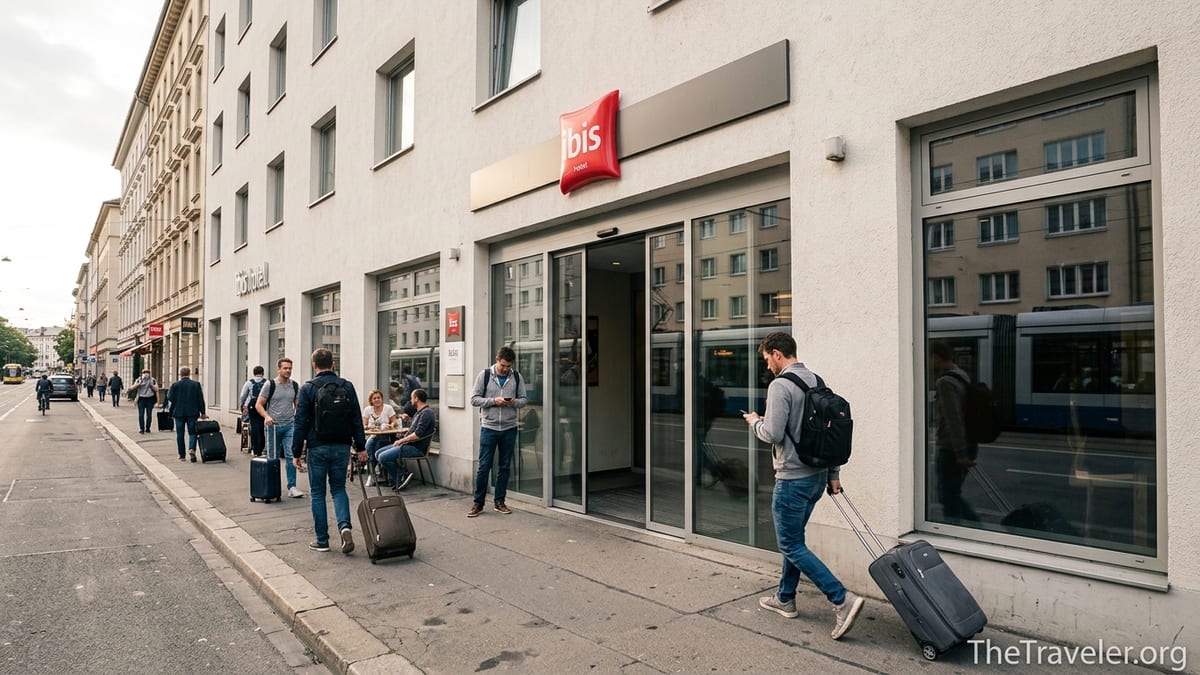
For many budget travelers, the red ibis logo has become as familiar as a backpack and a boarding pass. Operated by French hospitality giant Accor, the ibis family spans thousands of properties from São Paulo to Singapore, promising clean, standardized rooms at prices that should undercut classic midscale chains. But as hotel rates rise globally and “budget” becomes a moving target, how much does ibis actually cost in 2026, and does it still deliver good value compared with other options on the ground?
Get the latest updates straight to your inbox!
Understanding the ibis Family: ibis, ibis Styles and ibis budget
The first ibis hotel opened in Bordeaux in 1974 with a simple idea: provide reliable, standardized comfort at a price ordinary travelers could afford. Today the ibis name covers a vast economy portfolio with three related sub-brands: classic ibis, ibis Styles and ibis budget. All sit in the economy or budget tiers of Accor’s global brand ladder, below midscale names like Novotel and Mercure.
Classic ibis is the core brand you see most frequently in city centers and transport hubs. Rooms are compact but functional, with the Sweet Bed by ibis, a small work area and an en suite bathroom as standard. ibis Styles offers fully equipped rooms too, but leans into playful, themed design and often includes extras like complimentary breakfast and family-friendly layouts. ibis budget is the most stripped-back concept, aimed at travelers who want the lowest possible rate in exchange for basic, no-frills comfort.
Across the network, ibis properties are typically smaller than full-service hotels and rarely feel luxurious. Instead, they compete on predictability and location: think an ibis Budget near a motorway outside Lyon, an ibis Styles in a colorful converted building in Lisbon, or a classic ibis attached to a terminal at an Asian or European airport. This range within one family means prices can vary widely, even though all three logos are marketed as economy choices.
For budget travelers, the key is understanding where each sub-brand sits on the spectrum. In simple terms, ibis budget is usually the cheapest tier, classic ibis sits in the middle as a standard economy pick, and ibis Styles is positioned as a slightly more fun, design-forward option that may cost a bit more but sometimes bundles in enough extras to make it better value.
Typical Price Ranges by Region in 2026
Average hotel prices have climbed steadily across most regions since the pandemic era, and ibis is not immune to those pressures. In major Western European capitals in 2026, it is common to see classic ibis rates fall in the broad band of around 90 to 170 euros per night for a flexible rate, depending on season, city and how far in advance you book. In cities like Paris, Amsterdam or Zurich, it is no longer unusual to see weekend rates at flagship locations squeeze closer to 200 euros during peak events or festivals, at which point ibis is competing directly with midscale chains rather than budget guesthouses.
In contrast, smaller European cities often show why ibis still resonates with cost-conscious travelers. In secondary markets such as Porto, Kraków or Lille, advance purchase rates at ibis or ibis Styles can hover in the 60 to 100 euro range for much of the year, which compares favorably with independent three-star hotels that sometimes lack brand-level standards or consistent reviews. In these places, paying slightly more than a bare-bones hostel can buy you a reliable private room, climate control, 24-hour reception and a recognizable brand behind the operation.
Outside Europe, pricing is even more varied. In Southeast Asia, ibis and ibis Styles can sometimes be found in the equivalent of 45 to 80 US dollars per night bracket in major cities when booked ahead, with ibis budget falling lower in the 30 to 55 dollar range in less central areas. In India, travelers have reported ibis airport and business-district hotels ranging widely from approximately 60 to more than 200 US dollars per night on sold-out dates, driven largely by demand spikes and limited competition near terminals. In North America, where the ibis footprint is still small, locations in gateway cities can command rates that feel high for a brand marketed as economy, especially during conference or holiday periods.
The important point is that ibis does not exist in a vacuum. Prices float with demand in each micro-market. In some cities an ibis may be the cheapest clean, branded hotel by a wide margin. In others, especially where local guesthouses or apartments remain abundant, cheaper alternatives can undercut ibis even while offering similar or better space. Comparing ibis with actual on-the-ground competition in each destination is essential.
What You Actually Get for the Price
To evaluate value, it helps to look at the concrete components of an ibis stay. Most classic ibis rooms come with the brand’s proprietary Sweet Bed mattress and blackout curtains, which many repeat guests cite as the main reason they return. For a solo traveler arriving on a late train in Brussels or Warsaw, knowing that the room will be small but quiet, clean and equipped with a decent mattress has real practical value, especially after a long journey.
Bathrooms at ibis and ibis Styles are typically compact prefabricated units with a walk-in shower, basic toiletries and functional lighting. ibis budget especially is known for tiny, highly efficient layouts where the shower may open directly into the room area and storage is limited to a few open shelves. For travelers used to full wardrobes, bathtubs or large countertops, this can feel spartan. For backpackers or short-stay business travelers, the tradeoff is usually acceptable if the nightly rate is meaningfully lower than nearby midscale properties.
Public spaces are where ibis has invested heavily in recent years. Many renovated properties feature open-plan lobbies with casual coworking tables, a bar serving simple drinks and snacks, and a 24/7 corner offering microwavable meals or light bites. In practice, a guest at an ibis in Berlin or Madrid might check in at a combined bar-reception counter, grab a beer and work on a laptop at a communal table. This kind of environment can be a step up from more old-fashioned budget hotels with closed, uninviting reception desks and no shared space, especially for solo travelers who value a bit of social atmosphere.
Breakfast is an important part of the value equation. At many ibis and ibis Styles hotels in Europe, the breakfast buffet is charged separately and typically priced in the region of 10 to 18 euros per person. The spread is usually simple but respectable: bread, pastries, cereals, yogurt, cold cuts, cheese and a few hot items such as scrambled eggs or sausages. At ibis Styles, breakfast is often included in the room rate, which can tilt the value proposition in its favor when comparing like-for-like rates with classic ibis or independent two-star hotels that charge extra.
When ibis Offers Strong Value for Budget Travelers
The clearest value sweet spot for ibis appears in destinations where the gap between hostel-style accommodations and midscale hotels is wide. In cities like Munich or Copenhagen during shoulder season, a shared hostel dorm bed might cost 35 to 50 euros, while midscale chains can ask 180 euros or more for a standard room. In that context, finding an ibis or ibis Styles in the 90 to 120 euro range can be a smart middle ground for two people sharing, offering privacy, brand standards and better sleep quality at a price that still undercuts the full-service competitors.
Transport convenience is another situation where ibis shines. Many airports, from Europe to Asia, feature an on-site or adjacent ibis, sometimes physically connected to terminals. Paying a slightly higher rate for an ibis at the airport rather than a cheaper hotel 30 minutes away by taxi can represent real savings once you factor in late-night transport costs, the value of extra sleep and the reduced stress of catching early flights. Similarly, ibis properties directly next to major train stations or metro hubs can save both time and money on urban transport, especially on short city-break weekends.
Families and small groups also benefit in certain ibis Styles hotels where family rooms and included breakfast translate into better per-person value. For example, a family of four in a European capital might find a family room at an ibis Styles for 150 euros including breakfast. Compared to booking two separate twin rooms without breakfast at a midscale chain, the all-in cost can look attractive. The bright, playful design that defines many ibis Styles properties may also appeal to children more than standard corporate-style decor.
Finally, ibis can offer strong value for travelers plugged into Accor’s loyalty ecosystem. The ALL loyalty program and region-specific paid products such as Accor Plus or similar offers in Europe can deliver member discounts in the range of roughly 5 to 15 percent off standard flexible rates, plus occasional promotional sales. Over a multi-night trip or a series of work stays across cities like Lyon, Milan and Vienna, these small discounts can add up and effectively bring ibis pricing back down closer to what travelers traditionally expect from an economy brand.
When ibis Can Feel Overpriced or Poor Value
On the other side of the ledger, there are clear moments when ibis no longer feels like a budget choice. High-demand periods are the main culprit. Major concerts, trade fairs and sporting events can push dynamic pricing to levels that surprise even regular guests. It is not uncommon to see rates at busy airport ibis properties or city-center ibis hotels in Europe or India surge to figures that rival or exceed nearby four-star options, particularly when availability tightens. In those moments, the small room size and limited amenities can make guests feel they are paying midscale prices for an economy experience.
Another weak spot arises in destinations where local guesthouses, pensions or independent budget hotels remain strong. In parts of Southern Europe, North Africa or Southeast Asia, a traveler might find a charming, family-run hotel with larger rooms, balconies and cooked-to-order breakfasts for less than the cost of a standardized ibis room. In such markets, the premium for brand consistency and loyalty points may not justify itself unless you highly value the reassurance of a global chain or are traveling to multiple cities on the same trip.
For longer stays, ibis can also be less compelling than aparthotels, serviced apartments or extended-stay brands. Few ibis hotels offer kitchenettes or laundry facilities beyond paid external services. If you are spending a week in Warsaw or Bangkok, a compact ibis room with limited storage and no cooking options may begin to feel cramped compared with a slightly more expensive studio with a small kitchen and a workspace. When calculating value, looking beyond nightly rate to include practical comforts over a longer period is crucial.
Finally, some travelers criticize inconsistency across older properties in the ibis portfolio. Because many hotels are owned by different franchisees and updated at different times, the gap between a recently renovated ibis in a business district and a tired, aging property on the outskirts of a European city can be stark. If you stumble into one of the latter at a high nightly rate, the sense of poor value will be much stronger than the brand’s marketing suggests. Reading recent reviews and checking renovation dates does more to protect value than simply trusting the red logo.
Comparing ibis with Other Budget Options
From a budget traveler’s perspective, ibis usually competes with three broad categories: other international economy brands, independent two- or three-star hotels, and hostels or shared accommodations. In Europe, direct competitors include brands like B&B Hotels or easyHotel, which sometimes undercut ibis on price by stripping away public spaces and offering ultra-compact rooms. In Asia and Latin America, domestic chains and newer regional brands frequently match ibis on price while offering localized design or amenities such as in-room kettles, slippers and more generous toiletries.
Independent hotels form the largest pool of alternatives. In many mid-sized cities, you might have a choice between an ibis at roughly 80 euros with standardized rooms and a local three-star hotel at 65 euros with larger but more dated rooms and variable service quality. Here the decision boils down to your risk tolerance and priorities. Travelers who prize consistency, 24-hour staffing and clear brand accountability often lean towards ibis. Those who enjoy discovering local quirks, larger rooms or balconies and perhaps more charm may be happy to save money with a well-reviewed independent option.
Hostels and shared accommodation still offer the cheapest per-person lodging in many destinations, but the price gap with economy hotels has narrowed. Where a clean hostel dorm might be 30 euros per person in a Western European city, two people can sometimes split an ibis room for 90 euros and enjoy privacy and better rest. Solo travelers, on the other hand, may find ibis too expensive compared with a high-quality hostel, especially when traveling for longer than a few days.
Short-term rentals such as apartments can complicate the comparison. In cities that have tightened regulations, like some major European and North American destinations, apartment availability has shrunk and prices have climbed, making ibis more competitive. In markets where home rentals remain widespread and affordable, budget-conscious travelers might still find more space and kitchen facilities in a small apartment than in an ibis room for the same nightly rate. The tradeoff involves check-in flexibility, cancellation policies and the security of dealing with a global chain.
Tips for Getting the Best Value from ibis
Maximizing value at ibis is partly about timing and partly about how you book. Flexible travelers can monitor prices across several dates and often save significantly by shifting a stay even one night earlier or later, especially in cities with heavy conference or event calendars. Booking early for popular weekends in places like Paris, Barcelona or Munich can lock in rates before demand drives them up, while midweek stays outside of trade fairs can sometimes be surprisingly affordable.
Joining Accor’s free loyalty program is a straightforward way to unlock small but meaningful savings. Members often see slightly lower rates on the official booking channels than on third-party sites, and periodic sales targeted at loyalty members can temporarily push ibis rates back into what many travelers instinctively think of as the “budget” zone. Travelers who return frequently to regions like Europe or Asia may also benefit from paid regional passes or discount products that bundle a percentage discount at ibis, ibis Styles and ibis budget with restaurant or late-checkout benefits.
On the ground, small choices can also stretch your budget. If breakfast is not included and seems expensive relative to local cafes, consider opting for a room-only rate and grabbing coffee and pastries nearby. In many European neighborhoods, a bakery and coffee bar within a few minutes’ walk will cost less than the hotel buffet. Similarly, choosing a slightly less central ibis that is still near a fast transport link can shave 20 or 30 euros per night off your bill compared with the most prime, tourist-heavy location.
Finally, always weigh ibis against realistic alternatives in the same destination. Check the prices of independent two- and three-star hotels with strong recent reviews, local budget chains and, where legal and practical, small apartments. If ibis is only marginally more expensive yet offers a better location, stronger air conditioning, a more comfortable bed and 24-hour staff, it likely represents good value. If it is significantly more expensive than comparable local options, its main advantages become loyalty points and brand familiarity rather than pure price-to-comfort ratio.
The Takeaway
In 2026, ibis remains one of the most recognizable names in budget and economy accommodation worldwide, but the word “budget” does not always mean cheap. Nightly rates at ibis, ibis Styles and ibis budget now span a wide spectrum, from genuinely low-cost motorway and suburban properties to city-center and airport locations that price in line with midscale competitors when demand peaks. For travelers who understand this range and choose carefully, ibis can still represent solid value.
The brand delivers consistent core strengths: reliable beds, generally clean rooms, basic but functional bathrooms, and convenient locations near transport hubs. Its weakest points tend to be small room sizes, limited amenities for long stays and the risk of hitting very high dynamic prices in popular cities or during major events. In destinations where independent hotels or apartments remain plentiful and affordable, ibis may no longer be the automatic choice for those stretching every last dollar or euro.
For budget-conscious travelers, the smartest way to approach ibis is to treat it as one tool in the broader accommodation toolkit. Compare its rates against actual local alternatives each time, factor in breakfast and transport costs, consider whether brand consistency and loyalty benefits matter to you, and read recent reviews to avoid under-renovated properties. When the numbers line up, an ibis stay can still offer exactly what the brand set out to provide more than fifty years ago: a good night’s sleep, at a fair price, without unwelcome surprises.
FAQ
Q1. Are ibis hotels always cheaper than other hotel brands?
Not always. ibis is positioned as an economy brand, but dynamic pricing means that in busy cities or during major events its rates can match or even exceed nearby midscale or independent hotels, so it is important to compare options in each destination.
Q2. What is the main difference between ibis, ibis Styles and ibis budget?
Classic ibis offers standard economy rooms with a focus on comfort and efficiency, ibis Styles adds design themes and often includes extras like breakfast, while ibis budget strips back space and amenities to deliver the lowest possible rate within the family.
Q3. Are ibis rooms too small for longer stays?
Rooms at ibis brands are generally compact, designed with short city breaks or overnight stops in mind. For stays longer than three or four nights, some travelers find them cramped and may prefer aparthotels or serviced apartments with more storage and kitchen facilities.
Q4. Is breakfast at ibis good value for money?
Breakfast can be good value if you appreciate convenience and eat a full meal, especially when it is included in ibis Styles rates. If you prefer a light bite, local cafes or bakeries nearby often cost less than the hotel buffet.
Q5. How can I get the lowest rates at ibis hotels?
Booking early, being flexible with dates, joining Accor’s loyalty program and watching for member-only sales are practical ways to secure lower rates. Avoiding major local events and considering slightly less central locations can also reduce the price.
Q6. Are ibis hotels safe options for solo travelers?
ibis hotels generally provide 24-hour staffed receptions, keycard access to rooms and standardized safety procedures, so they are often seen as a reassuring choice for solo travelers, especially close to major train stations or airports.
Q7. Do ibis hotels charge extra fees that affect value?
Most ibis hotels keep pricing relatively transparent, but you may encounter additional charges for city taxes, breakfast, late checkout or parking. Checking the full cost breakdown during booking helps you understand the true total.
Q8. Is it worth staying at ibis just to earn Accor loyalty points?
If you travel frequently and stay within the Accor network, earning and redeeming points can add up to meaningful savings. For occasional travelers, points are a bonus rather than a reason on their own to choose ibis over a much cheaper alternative.
Q9. How does ibis compare with hostels for budget travelers?
Hostels can still be cheaper, especially for solo travelers willing to share a dorm. ibis becomes competitive when two people share a room, when you prioritize privacy and sleep quality, or when hostel prices in a city have risen close to budget hotel levels.
Q10. Are older ibis hotels worse value than newly renovated ones?
Older ibis properties can feel dated and less comfortable, especially if rates are high. Newly renovated hotels usually offer better bathrooms, improved beds and more modern lobbies, so reading recent reviews and looking at photos can help you choose properties that deliver better value for the price.