


Remote, wild places are easier to reach than ever, but choosing how to get there is not. Travelers eyeing Antarctica, the Galapagos, Alaska or Svalbard often face a big decision: book a curated small-ship voyage with a company like Lindblad Expeditions, or stitch together a self-planned expedition using local guides, small operators and their own research. Both paths can unlock extraordinary encounters with ice, wildlife and far‑flung cultures, but the trade‑offs around cost, control, safety and depth of experience are significant. This guide breaks down those differences with real-world examples so you can decide which style fits your ambitions, budget and risk tolerance.
Get the latest updates straight to your inbox!
What Lindblad Expeditions Actually Offers
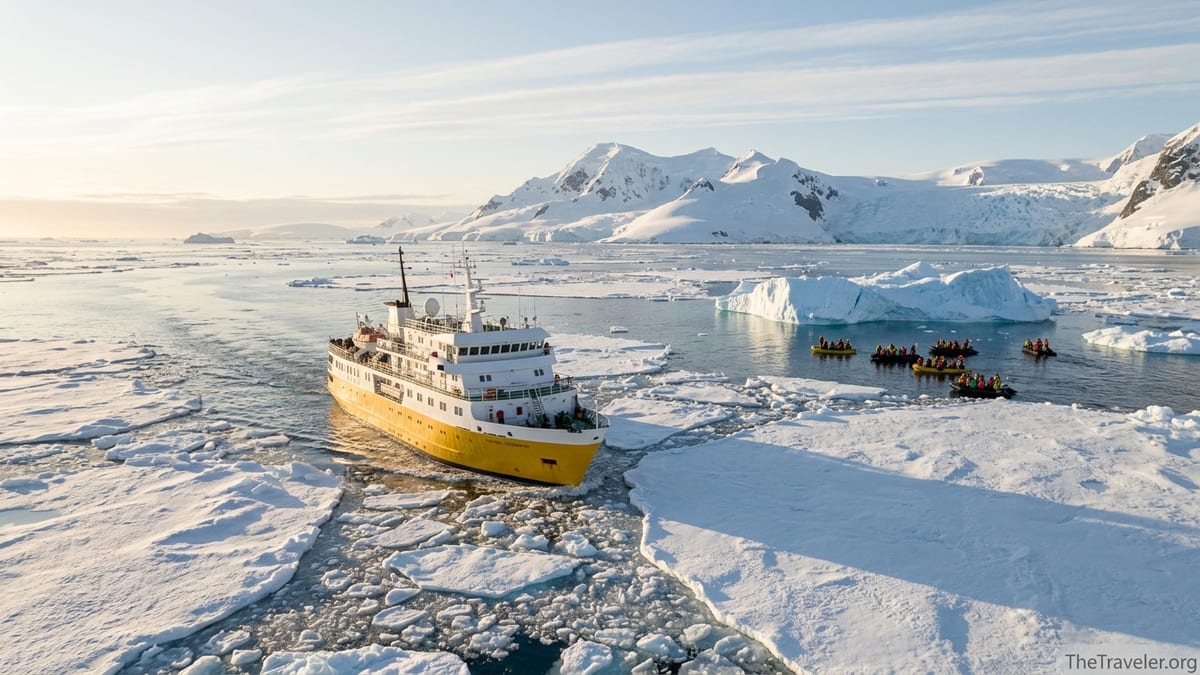
Lindblad Expeditions is one of the longest established names in small-ship expedition cruising, operating a fleet of roughly a dozen vessels that typically carry between about 50 and 150 guests. Through a partnership with National Geographic that dates back to 2004 and is currently extended through at least 2040, their voyages emphasize science, conservation and photography alongside comfort. A typical Lindblad ship in Antarctica or the Arctic is ice-strengthened, has Zodiacs for shore landings, carries kayaks and sometimes remote-operated cameras, and hosts a full expedition team that can include biologists, historians and professional photographers.
In practical terms, that means guests step aboard in a port like Ushuaia, Reykjavik or Juneau and find that logistics are largely handled. Cabins, meals, landings, daily briefings, landing permits, and on most itineraries charter flights to remote embarkation points are packaged into one price. For example, a 10-day "fly the Drake" style Antarctica voyage with a Lindblad National Geographic ship often bundles the Punta Arenas to King George Island flight, expedition gear loan, and all landings into a single fare, which can easily run into the high four or low five figures per person depending on cabin category and season.
On an Alaska coastal wilderness itinerary, guests might spend a week exploring Glacier Bay, the Inian Islands and remote fjords on a 62 to 100 guest vessel rather than a 3,000 passenger mainstream cruise ship. Daily options typically include Zodiac cruises near tidewater glaciers, guided hikes through temperate rainforest and kayaking among sea otters, with naturalists narrating everything from humpback feeding behavior to Tlingit cultural history. For many travelers, the combination of small group size, access to restricted areas and expert interpretation is the core value Lindblad brings.
The brand also positions itself upmarket compared with many local operators. Ships have comfortable, if not ultra‑luxury, cabins, strong food and beverage programs, and thoughtful touches such as gear lockers and camera tables. The trade‑off is price: you are paying not just for the logistics, but for a mature operation with deep expertise and a polished onboard product.
What a DIY Expedition Really Looks Like
Planning your own expedition-style trip usually does not mean chartering an icebreaker and sailing into the Ross Sea on your own. For most travelers, DIY means independently piecing together flights, local guides, permits and small-scale operators instead of booking a single packaged voyage. In the Galapagos, that might be arranging park-approved day boats from Santa Cruz and San Cristobal islands, booking your own guesthouses and ferries, and hiring naturalist guides as needed. In Patagonia or Iceland, it could mean renting a 4x4, hiring glacier guides for specific days and staying in refugios or lodges along trekking routes.
Take Svalbard as an example. Rather than boarding an expedition cruise, a DIY-minded traveler might fly to Longyearbyen, stay in a simple guesthouse, and book day or overnight trips with local outfitters for glacier hiking, wildlife-spotting by small boat, or snowmobile excursions in winter. Costs per day can be significantly lower than a high-end cruise, but you piece together three or four different companies and shoulder the burden of coordinating schedules, understanding seasonal closures and judging each operator’s safety standards.
In Antarctica, true DIY is essentially off the table for most people. Visitor rules under the Antarctic Treaty system mean you must travel with an operator that is part of a recognized body and uses permitted vessels and guides. Where DIY thinking does apply is in choosing a lesser-known expedition operator, a lower-category cabin and arranging your own flights to the gateway port, instead of buying a premium packaged product like Lindblad. You might, for instance, book a berth with a leaner, more bare-bones expedition company that focuses on getting you ashore safely without the layers of brand-name experts and onboard amenities.
DIY expedition planning offers more freedom and often lower headline prices, but it also demands more time, research and comfort with uncertainty. If you are used to comparing avalanche forecasts in Chamonix or reading ice charts for spring kayaking in Greenland, that may be part of the fun. If you are new to remote travel, the learning curve can be steep.
Cost Comparison: Package Premium vs Patchwork Savings
Lindblad’s pricing reflects its position in the premium expedition market. Exact fares shift with the currency, fuel costs and season, but you should expect many itineraries to start around the high four figures per person and climb quickly into the five figures for polar regions or longer voyages. For instance, a weeklong small-ship Alaska cruise with Lindblad that includes guided hikes, kayaking and Glacier Bay access will typically cost several thousand dollars per person at brochure rates, before factoring in flights to the embarkation port and optional pre- or post-trip hotel nights.
Antarctica and the Arctic are more expensive still. Industry surveys of 2025 and 2026 expedition offerings show that a 10 to 14 day polar cruise with a premium operator often falls somewhere in the 10,000 to 20,000 US dollar range per traveler depending on cabin type and how many internal charter flights are involved. Lindblad tends to price toward the upper end of that spectrum, reflecting its National Geographic collaboration and relatively high staff-to-guest ratios. Solo travelers will often face either a single supplement or the option to share a cabin with another solo guest, which can roughly halve the cost but sacrifices privacy.
By contrast, a DIY expedition-style trip to a destination like the Galapagos, Iceland or coastal Patagonia can undercut those prices substantially, though not always as much as many hopeful planners expect. Consider a 10-day independent Galapagos itinerary: flights from the mainland, park fees, island-hopping ferries, decent midrange lodging, and a series of guided day trips with small boats and naturalists quickly add up. While you might still come in below the fare for a week on a fully catered small expedition ship, the gap narrows once you build in the quality of boats, length of time in remote corners and the convenience factor.
In some non-polar destinations, the savings of DIY can be dramatic. A two-week self-planned trekking and wildlife trip in Patagonia, combining Torres del Paine in Chile and Los Glaciares in Argentina, can be done using local buses, park refugios and a handful of guided day hikes for a fraction of the cost of a high-end expedition cruise that briefly calls at the same region. The key is that you are trading onboard comforts, seamless logistics and continuous expert guiding for a more rough-edged, sometimes less predictable but often more immersive land-based experience.
Safety, Permits and Environmental Standards
Safety is one of the strongest arguments for choosing a reputable expedition operator in very remote or highly regulated regions. Lindblad’s ships sailing to Antarctica, the Arctic and other sensitive ecosystems are ice-strengthened, carry experienced polar captains, and operate under strict international rules that limit how many people can land at a site at one time. Expedition staff undergo polar and wilderness training, and medical personnel are onboard. The company also adheres to environmental guidelines around wildlife distances, biosecurity and waste management that are central to its marketing and conservation messaging.
For the typical traveler, this means fewer decisions in the field and a significantly reduced chance of inadvertently violating local regulations, whether that is tracking seeds into a fragile sub-Antarctic island on your boots or approaching a sleeping walrus too closely in Svalbard. It also means that when conditions deteriorate, such as heavy ice or sudden katabatic winds, there is a professional team making sometimes conservative calls about canceling landings or altering routes in the name of safety.
In a DIY context, the responsibility shifts towards you and the local outfits you choose. In places like the Galapagos or many national parks, regulations effectively require visitors to be accompanied by certified guides on specific routes, which offers some built‑in protection. However, when you assemble a trip from multiple small vendors, standards can vary. One boat operator may be rigorous about lifejackets and briefing passengers before landings; another may treat them more casually. Permits for trekking routes, camping or climbing can also be complex, with quotas that sell out months in advance.
If your ambition is a true expedition in challenging conditions, such as ski touring on Greenland’s east coast or attempting remote volcano ascents in Kamchatka, safety concerns and the need for specialized rescue plans argue strongly for either a top-tier guiding company or an expedition ship with substantial resources. In such cases, the premium you pay for an outfit that operates at the level of Lindblad can be seen less as a luxury and more as insurance that risk is being thoughtfully managed.
Depth of Experience: Experts vs Independent Discovery
A core promise of Lindblad’s voyages is interpretation. The small ships often carry teams of naturalists, geologists, historians and photographers who lead daily lectures, join shore landings and are available in informal settings on deck or in the lounge. On an Antarctica voyage, that might translate to an evening talk on penguin breeding strategies following a day spent among a rookery, or an impromptu session in the chart room discussing sea ice forecasts after a dramatic passage through pack ice. Guests interested in photography can join on-deck sessions with professionals as whales surface near the bow or as auroras ripple over the Greenland Sea.
That depth of guided interpretation can be difficult to replicate on an independently planned trip, especially if your language skills are limited. A local guide in Iceland leading a day hike on Skaftafell glacier will typically offer strong safety skills and solid natural history commentary for a few hours, but they are unlikely to be part of a multi-day narrative that ties in marine ecology, local politics, climate science and regional history in the way a full expedition team can. On a ship like National Geographic Resolution, there may be scientists actively gathering data or photographers editing work from previous expeditions who share their projects with guests.
However, DIY travel can offer its own kind of depth. Lingering for a week in a single Patagonian town, chatting with the same café owner each morning and hiking on your own in the hills, may yield a level of cultural connection that a ship-based itinerary, which often touches several places for only a day each, cannot. Renting a car in Iceland’s Westfjords and spending long, unscheduled days following your curiosity up side roads can shift the tone of a trip from lecture-led learning to personal exploration.
The right choice depends on how you like to engage. If you thrive on structured learning, daily briefings and having complex environments unpacked by experts, a Lindblad-style expedition will feel rich. If you value serendipity and unmediated encounters, planning it yourself and accepting some gaps in formal interpretation may be more satisfying.
Who Should Choose Lindblad, and Who Should Go DIY?
Travel style, risk tolerance and time are usually more decisive than budget alone. Lindblad Expeditions tends to suit travelers who value seamless logistics, in-depth expert guidance and a comfortable baseline level of service. It fits particularly well for people with limited vacation time, those who are new to remote or polar travel, and multigenerational groups where grandparents, parents and older children travel together. Having one clearly defined point of contact and a predictable daily structure can reduce stress and family friction.
It is also a strong option for solo travelers who prioritize community and safety over maximum savings. Organized expeditions naturally create a social environment, with shared meals, lectures and shore landings, and staff are accustomed to including solo guests in activities. While the single supplements can be significant, especially in higher cabin categories, the trade-off is that you do not need to shoulder the full mental load of planning and troubleshooting in remote locations on your own.
DIY expedition-style travel is better suited to experienced travelers who enjoy research and are comfortable making decisions with incomplete information. If you have planned complex trekking routes in the Himalaya, navigated self-drive safaris in southern Africa or handled last-minute route changes due to weather on previous trips, you may find the challenge invigorating rather than stressful. It can also be a good fit for younger travelers with more time than money, or for photographers and writers who want the freedom to linger in one spot rather than move on with a ship’s schedule.
Finally, hybrid approaches are worth considering. Some travelers book a Lindblad voyage for a complex segment, such as Antarctica or the high Arctic, then add self-planned time before or after in gateway regions like Patagonia, Tierra del Fuego or Iceland. Others do the reverse, building mostly independent itineraries but occasionally joining a short, high-quality local expedition cruise, such as a three-night Galapagos small-ship circuit or a four-day Amazon river voyage, to reach areas impractical to visit independently.
The Takeaway
Choosing between a Lindblad Expeditions voyage and planning an expedition trip yourself is ultimately less about which option is objectively superior and more about matching your temperament, goals and resources with the right style of travel. Lindblad wraps remote wilderness in a carefully managed experience, pairing small ships and expert teams with a strong safety culture and polished logistics. It is expensive, but for many travelers the convenience and depth of interpretation justify the premium, particularly in fragile polar and marine environments where mistakes can have outsized consequences.
DIY expedition planning opens up a different set of rewards. You may save money, especially outside the polar regions, and you will gain a sense of ownership over your journey that package travel rarely delivers. You can stay longer in places that move you, change plans on a whim and build relationships with local guides and hosts on your own terms. The cost is time, uncertainty and a greater responsibility for understanding safety, regulations and environmental impact.
For travelers drawn to the ends of the earth, one practical rule of thumb is to match the complexity of the environment with the level of support you buy. In Antarctica or high Arctic sea ice, a top-tier operator like Lindblad is often the wisest course. In national parks, archipelagos and mountain regions with good infrastructure, a carefully researched self-planned expedition can be every bit as rewarding. Many travelers will find that alternating between the two over the course of their lives delivers the richest long-term relationship with the planet’s wild places.
FAQ
Q1. Is a Lindblad Expeditions trip worth the higher cost compared with other operators?
Lindblad generally charges a premium because of its long track record, strong safety culture, National Geographic partnership and high staff-to-guest ratios. For travelers who value expert interpretation, small ships and polished logistics, that premium can feel justified, especially on complex polar itineraries. If you mainly want to see a destination and are less focused on onboard programming, a simpler expedition operator or a well-planned DIY itinerary may deliver better value.
Q2. How far in advance do I need to book a Lindblad voyage?
Popular seasons and cabin categories often sell out many months in advance. For peak-time Antarctica, Galapagos or Alaska departures, planning 12 to 18 months ahead is common, especially if you need specific dates or connecting cabins. Shoulder-season sailings and less in-demand regions can have availability closer to departure, but you will have fewer choices of cabin and itinerary.
Q3. Can I plan my own Antarctica expedition instead of booking with Lindblad?
In practice, no. Antarctica is heavily regulated and visitors must travel with an approved operator that provides appropriate ships, guides and permits. Your choice is not between Lindblad and truly independent travel, but between Lindblad and other expedition companies. DIY thinking can still apply in choosing flight routes, pre- and post-trip stays and the level of onboard comfort you want, but the core Antarctic component will be with a professional operator.
Q4. How do the cabins and onboard comfort on Lindblad compare to mainstream cruise ships?
Lindblad’s ships are designed as expedition vessels first and cruise ships second. Cabins are comfortable, with good beds and practical storage, but tend to be smaller and less opulent than those on large mainstream ships. Public spaces emphasize observation and learning, with large windows, libraries and lecture spaces. If your priority is entertainment, casinos and multiple specialty restaurants, a big-ship cruise line will offer more. If you care more about quiet decks, easy access to Zodiacs and time with naturalists, Lindblad’s style will be a better fit.
Q5. How much can I realistically save by planning a DIY expedition-style trip?
Savings vary widely. In destinations with good infrastructure, such as Iceland, Patagonia or the Galapagos, a self-planned trip using guesthouses, rental cars and local day tours can sometimes cost half or two-thirds of a premium small-ship package. In polar regions, the difference is narrower because you still need an expedition ship and specialized support. You may save by choosing a more basic operator and arranging your own flights, but you are unlikely to cut costs to backpacker levels while maintaining reasonable safety and environmental standards.
Q6. Is Lindblad a good choice for families with children?
Yes, especially for older children and teenagers interested in wildlife and science. Many voyages include family-friendly programming, such as junior explorer activities, kid-focused briefings and hands-on experiences like plankton sampling or photography workshops. The small-ship environment also makes it easier for parents to give kids some supervised independence on board. Families with very young children should check minimum age policies and consider whether long travel days and cold climates will be enjoyable for everyone.
Q7. What kind of traveler is best suited to a DIY expedition?
A DIY expedition-style trip works best for travelers who enjoy research, have some experience in remote or outdoor settings, and are comfortable adapting plans when weather or logistics shift. It suits people who prioritize flexibility and immersion over convenience and who do not mind handling details like permits, insurance, gear rentals and route planning. If that sounds energizing rather than stressful, DIY may be a rewarding path.
Q8. How do I evaluate the safety of local operators if I plan my own trip?
Look for operators with clear safety information, up-to-date equipment, qualified guides and transparent policies on group size, weather decisions and emergency response. Check whether they hold relevant certifications, follow local regulations and have recent, detailed reviews that mention safety practices. When in doubt, send specific questions about guide training, guide-to-guest ratios and contingency plans. If responses are vague or slow, consider that a warning sign.
Q9. Can I combine a Lindblad voyage with independent travel before or after?
Yes, and many travelers do exactly that. You might, for example, spend a week independently hiking in Patagonia or road-tripping in Iceland, then join a Lindblad expedition for the more remote sea-based portion of your journey. When planning, leave buffer days at both ends of the voyage to account for flight disruptions, weather-related schedule changes and any required charter connections organized by the operator.
Q10. How should I decide between Lindblad and another expedition cruise brand?
Compare more than just headline price. Look at ship size, staff-to-guest ratios, the balance between comfort and adventure, guest reviews, environmental commitments and the style of onboard programming. Some brands emphasize ultra-luxury touches, others focus on hard adventure, and some, like Lindblad, lean into science and education. Clarify whether you care most about cabin amenities, maximum time ashore, scientific content or cost, then choose the operator that aligns most closely with your priorities.