


For travelers who have moved beyond the occasional charter flight, Flexjet sits near the top of the private aviation world as a long-established provider of fractional ownership, leasing and membership-style access to business jets. Yet from the outside, its different programs can feel opaque, wrapped in glossy branding and bespoke terminology. If you are trying to decide whether Flexjet could be a fit for your travel pattern, it helps to strip the offering down to the fundamentals and walk through real-world scenarios of how membership and ownership actually work day to day.
Get the latest updates straight to your inbox!
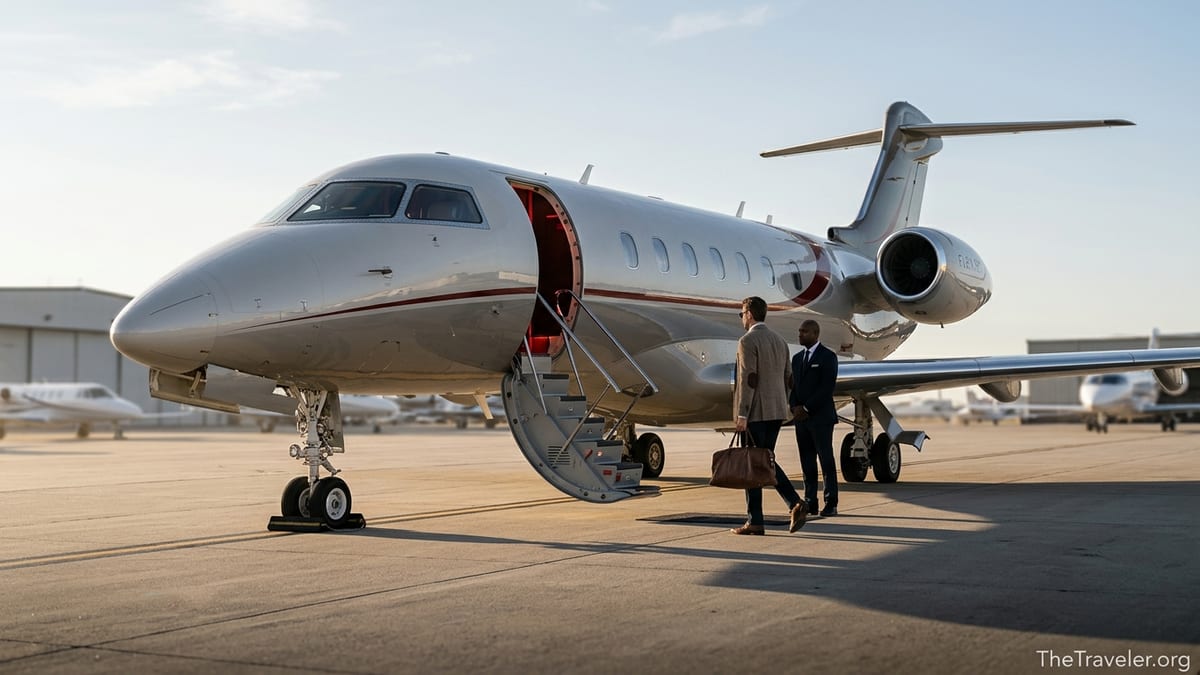
Who Flexjet Is Aimed At and How Its Ecosystem Fits Together
Flexjet has been in the fractional private jet market since the mid-1990s and today positions itself at the very top end of business aviation, competing most directly with NetJets and VistaJet. Its core business is selling access to a fleet of mid-size, super-midsize and large-cabin aircraft through fractional ownership and long-term leases, complemented by shorter-commitment options such as the Flexjet 25 jet card. Travelers are typically business owners, senior executives, family offices and ultra-high-net-worth individuals who fly anywhere from 25 to 300 plus hours per year.
Although Flexjet’s advertising talks about ownership, most clients are really buying time and certainty rather than an emotional attachment to a specific tail number. You are paying to know that if you call within a defined notice period, you will have an aircraft of a specified size, age and cabin standard available at a fixed hourly rate. Behind the scenes, Flexjet manages the complex tasks of crewing, maintenance and fleet positioning, and in exchange you accept long-term contracts, deposits and detailed program rules.
Flexjet also sits inside a wider aviation group that includes Sentient Jet for jet cards and other affiliates focused on on-demand charter and aircraft management. In practice that means a Flexjet fractional owner who occasionally needs an aircraft type outside the core fleet, or who wants to supplement hours during an unusually busy quarter, will often be offered solutions sourced through these sister companies while still interacting through a single point of contact.
From a traveler’s perspective, the key question is not whether Flexjet is “better” than charter in the abstract, but whether the predictability and service level you gain from its programs justify the upfront capital and ongoing commitments relative to the number of hours you expect to fly over several years.
Understanding Flexjet Fractional Ownership in Practical Terms
Fractional ownership with Flexjet means you buy a share of a specific aircraft type in the fleet, usually expressed as a fraction such as 1/16, 1/8 or 1/4. Each share corresponds to an annual number of flight hours. Flexjet’s own materials describe share sizes starting around 50 flight hours per year and scaling up to 800 hours for very heavy users. In simple terms, a 50-hour share in a super-midsize jet such as the Challenger 350 may suit a family that flies New York to Florida once a month, plus a few ski trips and occasional business hops.
To join, you sign a multi‑year contract, frequently five years, and pay an acquisition cost for the share of the aircraft. Public examples and market data suggest that a 1/16 share in a light jet across the industry can start above 300,000 dollars, with larger aircraft costing meaningfully more. In the super-midsize or large-cabin categories that Flexjet specializes in, acquisition costs can run into the high six figures or low seven figures depending on aircraft type, age and share size. You then pay two broad categories of ongoing costs: a fixed monthly management fee that covers crew, hangar, insurance and much of the maintenance, and a variable occupied hourly rate every time you fly, which typically includes fuel, routine maintenance reserves and catering.
Imagine a company based in Dallas that routinely sends a small team to client meetings on the US West Coast, with occasional transatlantic flights to London. They might commit to a 100-hour annual share in a super-midsize jet, which is capable of flying Dallas to San Francisco non‑stop and can stretch to shorter transatlantic segments with a fuel stop if necessary. The acquisition cost is booked as a capital asset on the company’s balance sheet, depreciated over several years, while the management fees and hourly charges are treated as operating expenses. Compared with full aircraft ownership, the company offloads residual value and maintenance risk and avoids tying up capital in an entire aircraft it will only use part time.
At the end of the contract term, owners typically have the option to renew, upgrade to a different aircraft type, or sell their share back based on a formula or appraisal agreed in advance. Because Flexjet handles the resale, owners are insulated from the day-to-day complexities of remarketing a business jet, though they remain exposed to market movements in residual values, which can move sharply with changes in demand or regulatory rules.
Leasing and the Flexjet 25 Jet Card: Lower-Commitment Paths In
Not every traveler is ready to write a seven-figure check for a fractional share. Flexjet therefore offers alternatives such as aircraft leasing and the Flexjet 25 jet card to capture customers whose flying patterns are significant but not yet heavy enough to justify ownership. Leasing mirrors fractional ownership in many ways but replaces the acquisition fee with structured monthly payments, avoiding a large upfront capital outlay and leaving liquidity available for other investments.
A typical Flexjet lease client might be an entrepreneur who flies 75 to 100 hours per year but prefers to invest available cash in their business rather than tying it up in an aircraft share. Under a lease, the traveler still locks in a specific aircraft category and a defined number of annual hours, plus similar guarantees on availability and service. They pay a monthly lease payment, a management fee and an occupied hourly rate when flying. From a cash‑flow perspective, this can feel similar to leasing a high-end vehicle rather than buying it outright, though the absolute numbers are obviously much higher.
For travelers who are closer to the 25 to 50 hour per year range, Flexjet markets the Flexjet 25 jet card as a bridge between on‑demand charter and longer-term commitments. The card is typically sold in 25‑hour increments on a specific aircraft category, with an all‑inclusive hourly rate that bakes in many of the surcharges that frustrate charter customers, such as repositioning fees or certain peak‑day premiums. A family that does four round‑trip flights per year from New York to Aspen in a super-midsize jet might find a 25‑hour card gives exactly the level of commitment and predictability they need without stepping into a full fractional contract.
Compared with third‑party charter, these membership-style products trade some flexibility for certainty. The hourly rates may be higher than hand‑shopping charter quotes for each trip in a soft market, but there is comfort in knowing that the cost of a midweek Christmas ski flight is set by contract rather than last‑minute market spikes, and that recovery options are defined if the aircraft experiences a maintenance issue on the day of travel.
How Flying Actually Works Day to Day
Regardless of whether you are a fractional owner, lessee or jet card member, the day‑to‑day experience with Flexjet is designed to feel similar. Once onboarded, you work with a dedicated account team that learns your route preferences, catering habits and ground transportation needs. When you want to travel, you call or message with your departure and arrival points, date, approximate time and passenger count. In most programs there is a minimum call‑out period, often measured in hours rather than days, with shorter notice available for a premium or on a best‑efforts basis.
A practical example: a Los Angeles based investor with a 50‑hour share in a large‑cabin jet may regularly commute to New York for board meetings. They can book an outbound flight for a 9 a.m. meeting at a Manhattan office, arriving at a New York‑area business aviation terminal early that morning, and schedule a same‑day return that evening. Because the share is in a large‑cabin aircraft, the cabin configuration allows them to work en route with a meeting table and lie‑flat seats, and there is enough baggage capacity for rolling cases, garment bags and presentation materials without compromise.
On the day of travel, the passenger typically arrives at a private terminal 20 to 30 minutes before departure, with security screening and boarding procedures streamlined compared with commercial aviation. Many Flexjet aircraft feature the company’s Red Label cabin design, with custom interiors and a crew that is dedicated to that specific aircraft rather than rotating across a fleet. That structure helps create a more consistent service experience: travelers often see the same pilots and cabin attendant on repeat flights, which in turn allows small details such as preferred wines or cabin temperatures to be remembered without repeated briefing.
If weather or air traffic delays affect the schedule, one of the core benefits of the fractional model becomes obvious. Because Flexjet operates a large fleet under its own control, it has more options to reposition aircraft or swap in substitutes than a smaller charter operator. While no provider can fully eliminate disruptions, travelers who routinely fly during congested holiday periods often value the additional margin of recovery that comes with a fractional fleet.
Key Cost Components and How to Think About Value
When travelers first look at Flexjet quotes, the number of line items can feel daunting: acquisition or lease cost, monthly management, occupied hourly rates, fuel surcharges, catering and airport‑specific fees. The right way to evaluate these is to reduce everything to a cost per flight hour across the entire term of your planned relationship and compare that with the realistic alternatives of on‑demand charter or ownership of an entire aircraft. Industry data points show that a 1/16 share of a light jet can start above 300,000 dollars in acquisition cost, with larger aircraft and share sizes climbing steeply from there, so being honest about your actual usage is critical.
For example, a family that flies 25 hours per year but buys a 50‑hour fractional share will pay twice as much in fixed costs as they effectively use, driving their effective hourly rate far above what a jet card or charter solution would have delivered. Conversely, a business that commits to a 100‑hour share but routinely flies 150 hours will end up either chartering additional capacity at spot rates or buying supplemental hours that may not be as cost‑efficient as scaling up the initial share. Careful analysis of the last two or three years of flight activity, including both commercial and private segments, often reveals patterns that are not obvious from memory alone.
Value is not only about the raw hourly rate. Many Flexjet clients weigh the time savings and reliability against what those hours could earn in their businesses or personal lives. An executive team that can visit two manufacturing plants and still sleep at home that night, or a family that can arrive at a remote vacation property without a commercial connection and multi‑hour drive, may see returns well beyond the purely financial. That is one reason fractional and membership programs often appeal most strongly to travelers whose schedules are demanding and whose personal or corporate finances can absorb volatility in aviation costs.
To reduce uncertainty, many prospective owners work with aviation consultants or accountants familiar with fractional programs to build multi‑year cost models before signing. These models typically assume conservative estimates for fuel, maintenance and residual values and then compare those scenarios with continued use of charter or acquisition of a wholly‑owned pre‑owned jet. For some, especially those flying 50 to 100 hours per year with flexible dates, charter remains the rational choice. For others operating 150 to 300 hours with tight schedules, Flexjet’s guarantees can justify the higher all‑in spend.
Red Label, Fleet Choices and Service Nuances
One of Flexjet’s distinguishing features is its Red Label program, a suite of aircraft that receive custom interior design, enhanced cabin features and crews who are exclusively dedicated to that aircraft. In practice this means that if you are a fractional owner in a Red Label aircraft, you are likely to see the same pilots and cabin attendant on most of your flights, and the interior will have a distinct, residential feel rather than a standard corporate layout. Travelers who use jets frequently often describe this as feeling closer to a “personal aircraft” experience without the burden of full ownership.
The Flexjet fleet includes well‑known models from manufacturers like Bombardier, Embraer and Gulfstream, covering everything from mid-size jets suitable for regional hops to long‑range large‑cabin aircraft capable of nonstop intercontinental missions on many city pairs. A transatlantic traveler might choose a Gulfstream large‑cabin aircraft for London–New York and Dubai–Europe routes, while a US‑based executive who mostly flies between Chicago, Atlanta and Houston might find a super‑midsize jet like the Challenger 350, with its blend of range and operating economics, to be the sweet spot.
Importantly, most programs allow for cabin category flexibility. A fractional owner in a super‑midsize jet who needs a shorter regional hop with just two passengers might be able to “downgrade” to a smaller cabin type for that trip at a different hourly rate, while someone who mostly owns in a mid-size category may sometimes “upgrade” to a large‑cabin aircraft for a family holiday to Hawaii. These swaps are governed by program rules and aircraft availability, but they give practical flexibility that many owners come to rely on as their travel patterns evolve.
Service nuances also appear in small operational choices. For example, Flexjet emphasizes its in‑house maintenance network and the tenure of its leadership team as signals of stability and safety culture. For a traveler deciding between providers, these details may feel abstract on paper, but they can translate into fewer last‑minute cancellations, more transparent communication about delays and clearer options when something does go wrong away from home.
When Flexjet Makes Sense Compared With Other Options
From a traveler’s standpoint, the key is to match your flying profile to the right tool. For 10 to 20 hours of annual leisure flying, often with flexible dates, on‑demand charter or even premium commercial cabins will almost always make more sense than a Flexjet program. Between roughly 25 and 50 hours, especially on predictable routes such as second‑home commutes or seasonal business travel, a jet card like Flexjet 25 can provide budget predictability and service consistency without locking up large amounts of capital.
Once you cross into the 75 to 150 hour per year range, especially if flights often involve short‑notice departures, peak periods or international legs, the calculus shifts. This is where fractional ownership or leasing with Flexjet begins to compete strongly against both charter and whole aircraft ownership. The predictable hourly rates, guaranteed aircraft availability with relatively short call‑out times, and recovery commitments begin to justify the acquisition or lease costs for many corporate users and wealthier families.
At the very high end, when annual usage approaches 300 or more hours, some travelers look seriously at owning an entire aircraft and then outsourcing operations to a management company, sometimes chartering the aircraft when not in use. In this segment, Flexjet can still be a contender for those who value hassle‑free service and are wary of the complexities of managing a single tail number’s utilization and maintenance over time. Others may graduate from Flexjet to full ownership as their travel demands and risk appetite change.
It is common for sophisticated travelers to blend solutions. A business might maintain a 100‑hour Flexjet fractional share for C‑suite and mission‑critical travel while continuing to charter ad‑hoc aircraft for irregular group movements, or a family with a second home might hold a 25‑hour Flexjet card but still book occasional one‑off charter flights from regional operators when the itinerary falls outside card rules. Flexjet’s place in that mix is strongest wherever reliability, cabin quality and concierge‑style service rank higher than pure cost minimization.
The Takeaway
Flexjet’s membership and fractional ownership programs are built for travelers who want private aviation to feel as predictable and polished as any other essential service in their lives. Rather than shopping each flight, they are willing to commit capital and sign multi‑year agreements in exchange for guaranteed access to a curated fleet, consistent crews and cabins, and a single support team that understands their preferences.
For a traveler considering Flexjet, the most important step is to start with a clear view of your recent and anticipated flying hours, typical routes and schedule constraints. From there, you can test scenarios across jet cards, leases and fractional shares, ideally with professional advice, to see where the numbers and service benefits intersect. For some, that analysis will point toward remaining in the charter market a bit longer. For others, especially those whose lives already revolve around tight schedules and complex itineraries, a Flexjet program can become an integral part of how they move through the world, turning time spent in transit into a predictable, private extension of home or office.
FAQ
Q1. How many hours per year do I need to fly before Flexjet fractional ownership makes sense?
For most travelers, fractional ownership only begins to make sense once annual private flying reaches roughly 75 to 100 hours, with predictable routes and schedules. Below that level, a jet card or on‑demand charter is often more cost‑effective because fixed ownership costs are spread over fewer flight hours.
Q2. What is the difference between a Flexjet fractional share and a Flexjet 25 jet card?
A fractional share involves buying or leasing a portion of an aircraft for several years, with acquisition or lease costs, monthly management fees and an hourly rate. The Flexjet 25 jet card is a shorter‑term commitment sold in 25‑hour blocks at an all‑inclusive hourly rate, aimed at travelers flying closer to 25 to 50 hours per year who want predictable pricing without long contracts.
Q3. Can I choose the exact aircraft I fly on as a Flexjet owner?
As a fractional owner you buy into a specific aircraft type and cabin category, but you usually do not control the exact tail number for every flight. If you participate in a program like Red Label you are more likely to see the same aircraft and crew repeatedly, but scheduling, maintenance and positioning needs mean Flexjet reserves the right to assign equivalent aircraft in the same category when needed.
Q4. How far in advance do I need to book flights with Flexjet?
Booking windows vary by program and cabin category, but many Flexjet contracts specify guaranteed availability with notice measured in hours rather than days on non‑peak dates. For example, you might be guaranteed an aircraft of your category with 10 to 24 hours’ notice, while peak travel days and holidays require more advance booking or are subject to separate rules.
Q5. What happens if my Flexjet aircraft has a mechanical issue on the day of travel?
One of the main advantages of the fractional model is that providers like Flexjet operate sizeable fleets and can often substitute another aircraft of the same or higher category if a mechanical issue arises. While no provider can eliminate delays entirely, owners and cardholders generally receive defined recovery provisions in their contracts, which may include substitute aircraft, rebooking assistance or other accommodations depending on circumstances.
Q6. Are there tax benefits to Flexjet fractional ownership?
For business users, some or all of the acquisition, lease, management and hourly costs may be deductible as business expenses if the aircraft time is genuinely used for business purposes and properly documented. However, tax treatment depends heavily on jurisdiction, corporate structure and usage patterns, so travelers should work with aviation‑savvy tax advisers rather than relying on generic assumptions.
Q7. Can I upgrade or downgrade aircraft size within my Flexjet program?
Most Flexjet programs allow some flexibility to switch cabin categories on a trip‑by‑trip basis, subject to availability and specific program rules. A super‑midsize owner might downgrade to a smaller jet for a short hop with one or two passengers, or upgrade to a large‑cabin aircraft for a long‑range family holiday, with hourly rates adjusted accordingly.
Q8. Is Flexjet cheaper than chartering private jets on the open market?
Flexjet is not usually the lowest‑cost option on a per‑hour basis compared with shopping individual charter quotes, especially in soft markets. Its value lies in guaranteed availability, fixed contract pricing, cabin consistency and a higher level of service. For heavy users with tight schedules, those benefits can outweigh the additional cost compared with opportunistic chartering.
Q9. What kind of commitment length should I expect with Flexjet fractional ownership?
Fractional ownership contracts commonly run around five years, though specifics vary by program and aircraft type. During that term you are committed to the share size and associated costs, with contractual options at the end to renew, change aircraft type or sell the share back under agreed valuation methods.
Q10. How do I decide between leasing, fractional ownership and a jet card with Flexjet?
The right choice depends on how many hours you expect to fly, how much capital you are comfortable tying up, and how important guaranteed access is to you. If you fly 25 to 50 hours per year and value flexibility, a jet card is often a good starting point. If you are closer to 75 to 150 hours and want stronger guarantees, leasing or fractional ownership may be more appropriate. Building a multi‑year cost comparison with help from an advisor can clarify which structure best matches your actual travel needs.