


More news on this day
Dubai’s aviation sector is entering a new phase of global network recovery as flydubai accelerates its expansion, now serving around 125 destinations and reinforcing the city’s position as one of the world’s most connected hubs.
Get the latest news straight to your inbox!
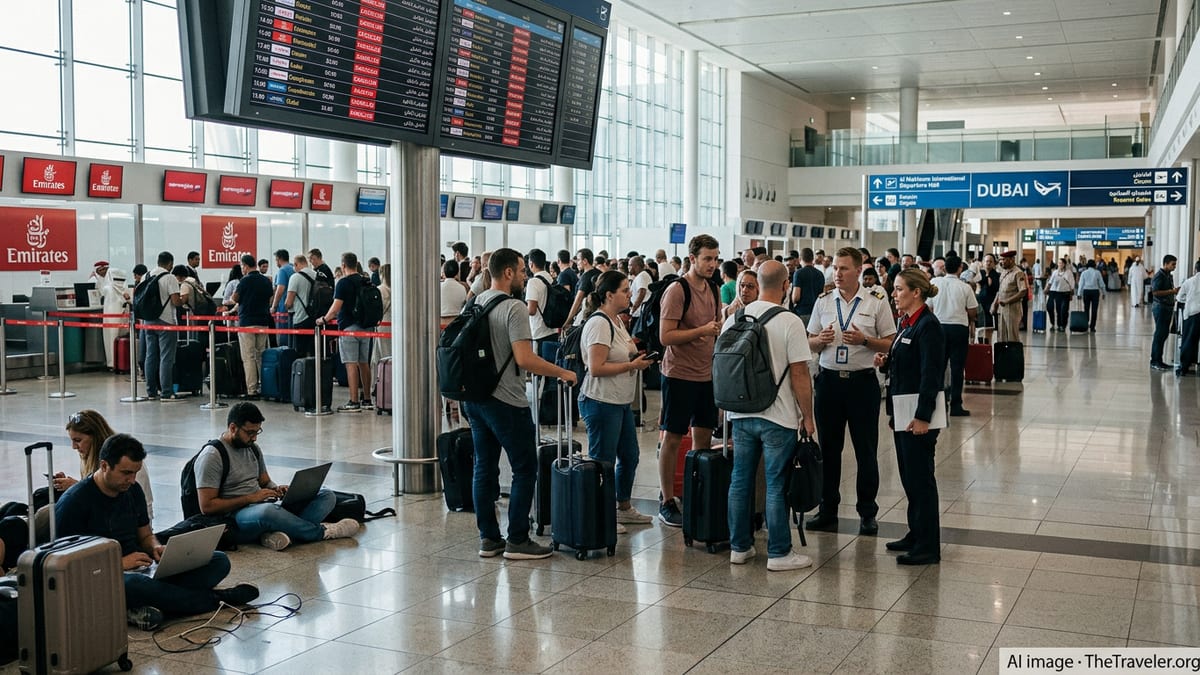
A 125-Destination Network Anchoring Dubai’s Connectivity
Publicly available data shows that flydubai has grown from a regional low-cost carrier into a key connector in the United Arab Emirates’ aviation portfolio, with a network that has reached about 125 destinations across more than 55 countries. Industry and government reporting indicates that this places the airline among the main contributors to the UAE’s national carriers collectively serving over 600 destinations worldwide, underscoring Dubai’s influence in global travel flows.
Reports on the UAE’s aviation sector highlight that flydubai’s routes stretch across Africa, Central Asia, the Caucasus, Central and South-East Europe, the Gulf, the Middle East, the Indian subcontinent and South-East Asia. This network design is geared toward funneling traffic through Dubai International and, increasingly, Dubai World Central, turning point-to-point demand from emerging cities into a steady stream of passengers feeding the wider global system.
Coverage of recent schedule additions notes that many of flydubai’s routes either did not previously have direct air links to Dubai or were not served by a UAE national carrier. This focus on underserved or secondary cities has helped open new corridors for tourism, trade and investment, supporting Dubai’s ambition to draw visitors from fast-growing markets rather than relying solely on traditional long-haul flows.
Seasonal and year-round services to destinations in Europe, Africa and Asia are being layered into this network, with new launches such as Red Sea leisure gateways and additional Eastern European capitals illustrating how the airline is filling gaps that larger full-service carriers sometimes overlook. As global travel demand normalizes and then exceeds pre-pandemic levels, these city pairs are increasingly important to Dubai’s role as a multi-directional transfer point.
Fleet Expansion, Retrofits and a New Phase of Growth
According to flydubai’s own fleet disclosures and recent corporate reporting, the airline is in the midst of a significant long-term growth cycle. By 2025 the carrier had taken delivery of a wave of Boeing 737 MAX 8 aircraft, lifting its fleet close to the 100-aircraft mark with an average age of around five and a half years, placing it among the younger fleets in its peer group.
Financial and annual reports for 2024 and 2025 point to double-digit growth in revenue and pre-tax profit, which has helped support further investment in aircraft and cabins. The airline’s current order book includes more than 100 additional Boeing 737 aircraft and, for the first time, a substantial commitment for 787 Dreamliner widebodies from later this decade, signaling an intent to move deeper into longer-haul markets while retaining its narrow-body strength.
Alongside new deliveries, flydubai has embarked on a multi-year retrofit program for its existing Boeing 737-800 fleet. Company updates describe a comprehensive cabin refresh, including new seats and updated interiors, scheduled to continue into 2026. This approach allows the carrier to align the onboard experience more closely across different aircraft types, while extracting more value from its earlier-generation jets.
Industry analysis notes that the combination of new aircraft, cabin upgrades and rising passenger yields has positioned flydubai to capture demand both from cost-conscious travelers and from passengers seeking a more premium narrow-body product. That blend is particularly important on thinner routes where deploying widebody aircraft is not economical but expectations for comfort and connectivity have risen.
Strategic Role in the UAE’s Post-Pandemic Travel Recovery
As international travel recovered from the pandemic shock, Dubai’s policy focus on aviation and tourism provided a platform for rapid rebuilding. Sector-wide data indicates that UAE national airlines have increased their collective destination count over the past several years, with flydubai’s 125-destination footprint forming a critical part of that rebound.
Published coverage of the airline’s performance shows that passenger numbers have grown steadily since 2023, with tens of millions of travelers carried annually. Analysts point out that flydubai’s agility, relatively lean cost base and ability to open new routes with narrow-body aircraft allowed it to pivot quickly as border restrictions eased and new travel patterns emerged.
In practice, this meant ramping up frequencies to resilient markets around the Gulf and the Indian subcontinent while gradually restoring and expanding services to Europe, Central Asia and Africa. Dubai’s status as a visa and transit-friendly stopover amplified this effect, as more travelers used the city as a bridge between regions previously linked by fewer direct options.
The broader result, according to regional aviation studies, is that Dubai has consolidated its position as a major global transfer hub even as other cities compete for the same flows. flydubai’s growth into secondary and emerging cities complements the long-haul networks of other UAE carriers, creating a layered system in which passengers can connect from smaller markets onto intercontinental flights and vice versa.
Network Strategy: Underserved Cities and New Tourism Corridors
flydubai’s route strategy is built on connecting Dubai with cities that often sit just outside the main long-haul grids. Reports on the airline’s network evolution show a deliberate push into mid-sized and niche destinations such as Red Sea resorts, secondary Eastern European capitals and growing regional centers in Central Asia and East Africa.
By linking these cities directly with Dubai, the airline is helping to diversify the emirate’s visitor base. Tourism boards and market studies cited in regional media coverage point to rising arrivals from countries that until recently sent relatively small numbers of travelers to the Gulf. For these markets, a single direct flight to Dubai can unlock access not only to the city itself but also to onward connections across the Middle East, Asia and beyond.
This focus on underserved routes also supports trade and investment. Improved air connectivity typically correlates with higher volumes of business travel, cargo movements and cross-border services. For exporters and small businesses in newly connected cities, the ability to reach Dubai’s logistics and financial infrastructure with a same-day flight can be transformative.
At the same time, the airline’s growing presence in leisure destinations feeds into Dubai’s own tourism offer, with package holidays, stopover stays and multi-destination itineraries becoming easier to assemble. Travel industry commentary suggests that this will be especially important as travelers increasingly seek flexible, multi-city trips rather than simple point-to-point journeys.
Challenges, Competition and the Road Ahead
Despite the strong trajectory, flydubai’s expansion comes with challenges. Global aircraft manufacturers continue to face supply-chain issues and regulatory scrutiny, particularly around narrow-body jets, which can delay deliveries and complicate fleet planning. Sector analysts note that carriers relying heavily on new Boeing 737 MAX aircraft must maintain contingency plans, including retrofits and short-term leasing, to keep capacity aligned with demand.
Competition across key markets is also intensifying. Other Gulf and regional carriers are growing their own networks, while low-cost and hybrid airlines in Europe, Asia and Africa are targeting many of the same secondary cities. Industry observers point out that success for flydubai will depend on maintaining operational reliability, disciplined pricing and a consistent onboard experience as the network becomes more complex.
Looking ahead, publicly available information on aircraft orders and airport development suggests that Dubai’s long-term aviation strategy anticipates even higher traffic volumes, particularly as operations gradually expand at Dubai World Central. In that context, flydubai’s 125-destination network can be seen as a foundation layer for a much larger system that will take shape over the next decade.
For travelers, the immediate impact is already visible: more non-stop options to and from Dubai, greater choice beyond the traditional major hubs and a wider range of price points. As global network recovery enters a new era shaped by shifting demand and new aircraft technology, flydubai’s growth is playing a central role in how Dubai remains one of the world’s most dynamic crossroads.