


More news on this day
UK holidaymakers heading to parts of Europe will benefit from a temporary reprieve from new biometric border checks, after the European Union allowed nine countries to delay full implementation of its post-Brexit Entry/Exit System for British travellers.
Get the latest news straight to your inbox!
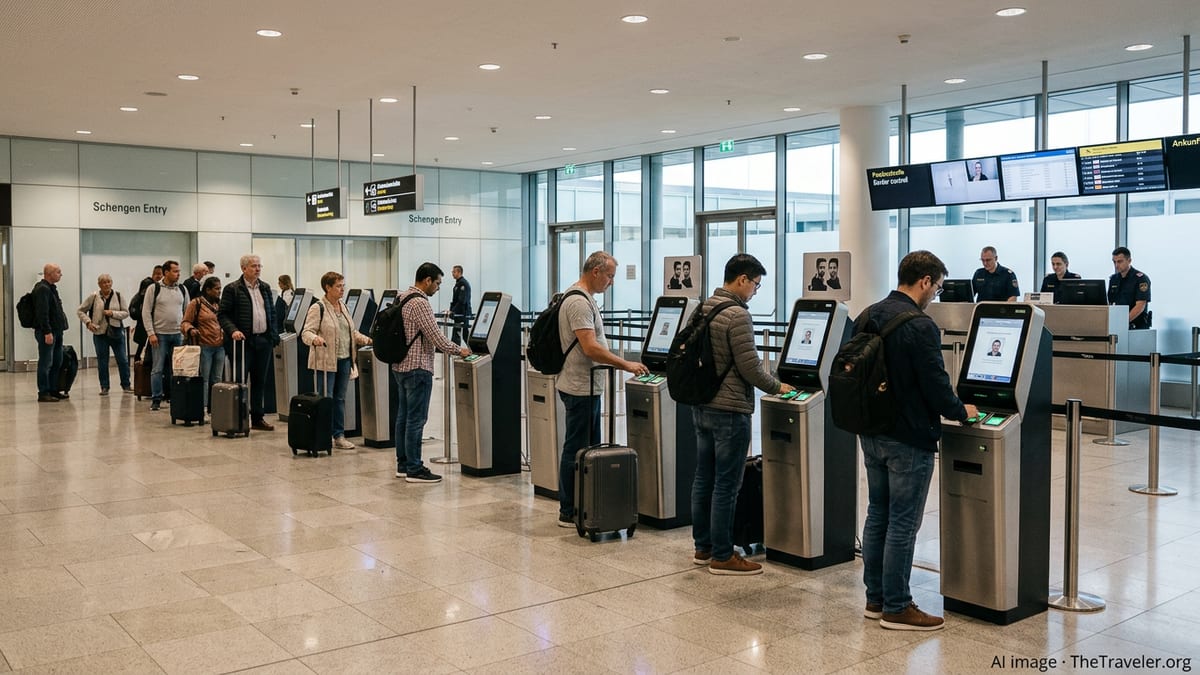
Targeted delay to ease pressure on frontline borders
According to recent European and UK media coverage, nine EU and Schengen states have been granted permission to pause or significantly scale back biometric checks on most short-stay visitors from the UK. The move is intended to prevent a repeat of the long queues and bottlenecks seen at several airports and land crossings when the EU’s new Entry/Exit System, known as EES, became fully operational earlier this year.
The temporary relief allows border authorities in the affected countries to rely more heavily on visual passport checks and simplified procedures instead of systematically enrolling every first-time traveller’s facial image and fingerprints. Reports indicate that the exemption focuses on high-volume holiday hubs where British visitors make up a large share of non-EU passenger flows.
Publicly available information suggests that the nine countries include a mix of popular Mediterranean destinations and key transit points within the Schengen zone. While the core EES rules remain in place across the bloc, these states have been given limited flexibility to apply them in stages, particularly at peak times when arrival halls risk becoming overwhelmed.
EU institutions have previously underlined the security benefits of the new digital system, but recent reporting highlights a growing recognition that the rollout needs to balance border control objectives with the practical realities of handling millions of tourists during busy seasons.
What the delay means for UK tourists this season
For British travellers, the targeted postponement does not remove the basic post-Brexit requirements, but it is expected to make journeys through certain airports and ferry ports noticeably smoother over the coming months. UK passport holders will still be treated as non-EU visitors, subject to the 90-days-in-180 rule and routine checks on entry and exit, yet many will avoid the full biometric enrolment experience at the busiest locations, at least for now.
In practical terms, passengers flying into participating countries are more likely to encounter conventional booths where officers inspect passports and verify length-of-stay eligibility, instead of being directed in every case to fingerprint scanners and dedicated EES kiosks. Travel industry commentary indicates that this can shave valuable minutes off each processing time, which becomes significant when aircraft arrive in rapid succession.
However, the relief is not uniform. Travellers are being advised by airlines and tour operators, based on publicly available guidance, to check the latest information for their specific destination and route. Some airports in the same country may apply the flexibility differently, depending on staffing, infrastructure and the volume of non-EU passengers.
For those entering the Schengen area via juxtaposed controls in the UK, such as cross-Channel rail and ferry terminals, reports suggest that EES equipment remains in place and that local authorities are pressing ahead with enrolments where capacity allows. As a result, some UK holidaymakers may still undergo the full biometric process before boarding, even if their final destination is in one of the nine states benefiting from the temporary easing.
Background: the EU’s Entry/Exit System and post-Brexit checks
The EU’s EES was conceived long before the United Kingdom left the bloc, but Brexit has sharply increased its visibility for British travellers. Under the system, each short-stay visit by a non-EU national is logged digitally, replacing the old practice of stamping passports. When fully applied, first-time visitors are required to provide biometric data at the border, which is then checked against future movements.
Parliamentary briefings and European Commission material describe EES as a security and migration-management tool designed to help authorities spot overstays, detect document fraud and speed up checks for repeat visitors already in the database. For frequent travellers, the system should, in theory, reduce time spent at passport control once the initial enrolment has been completed.
In practice, the introduction of EES has coincided with staff shortages, aging infrastructure and surging demand for travel within Europe. As non-EU nationals since 2021, UK tourists are now processed in the same category as visitors from other third countries, which means longer, more detailed checks than when they had access to EU or EEA passport lanes before Brexit.
During the first full season of EES operation, European media and travel forums reported queues stretching for hours at several major airports and land crossings, particularly on days with heavy inbound traffic from the UK and other long-haul markets. These early difficulties prompted calls from airlines, airport associations and tourism bodies for a more flexible approach.
Airlines and tourism sector welcome breathing space
Industry groups have broadly welcomed the EU’s decision to allow a delay in nine countries, framing it as a necessary adjustment rather than a rollback of the digital border project. Statements and commentary from airlines and travel trade bodies highlight concerns that poorly managed queues risk discouraging visitors and undermining Europe’s attractiveness as a destination.
Some carriers and tour operators have already adjusted schedules and passenger communications in response to EES, encouraging travellers to arrive earlier at airports and to keep documents ready for inspection. The latest reports suggest that, with the partial pause in place, companies are cautiously optimistic that average processing times will improve in the immediate term, especially at holiday hotspots frequented by British families.
Tourism boards in Mediterranean destinations have also been monitoring the situation closely. Several have publicly emphasised the importance of keeping entry procedures as smooth as possible, particularly for repeat visitors from the UK who contribute significantly to local economies. The easing of biometric requirements in selected locations is being interpreted as a sign that Brussels is listening to these economic concerns while persevering with its broader border-modernisation agenda.
Nonetheless, travel businesses continue to warn that the reprieve is time-limited and that more investment in infrastructure, training and passenger information will be needed if full EES checks are to be reintroduced without renewed disruption in future seasons.
Next steps and what travellers should watch for
The current flexibility agreed for nine countries is widely described as a temporary measure, linked to specific operational pressures rather than a long-term exemption from EU rules. Further decisions are expected as European institutions review data from the summer and early autumn travel periods, weighing the impact on queues and border security.
Observers note that the experience of the nine participating states could shape how the EU manages EES in other parts of the Schengen area. If the targeted delay delivers shorter waiting times without a significant increase in overstays or security incidents, it may strengthen arguments for more discretion at local level during peak travel windows.
For now, UK holidaymakers are being encouraged by consumer groups and travel commentators to keep monitoring official travel advice for their destinations, to allow extra time at airports and ferry terminals, and to ensure that their passport validity and permitted-stay calculations are in order. Even with the partial pause, the underlying legal framework of post-Brexit border checks remains unchanged.
As the EU refines its approach, the experience of British travellers over the coming months is likely to be closely watched by both governments and the tourism industry. The way the bloc balances efficient border management with a welcoming visitor experience will help determine how attractive European destinations remain for UK tourists in the next peak seasons.