


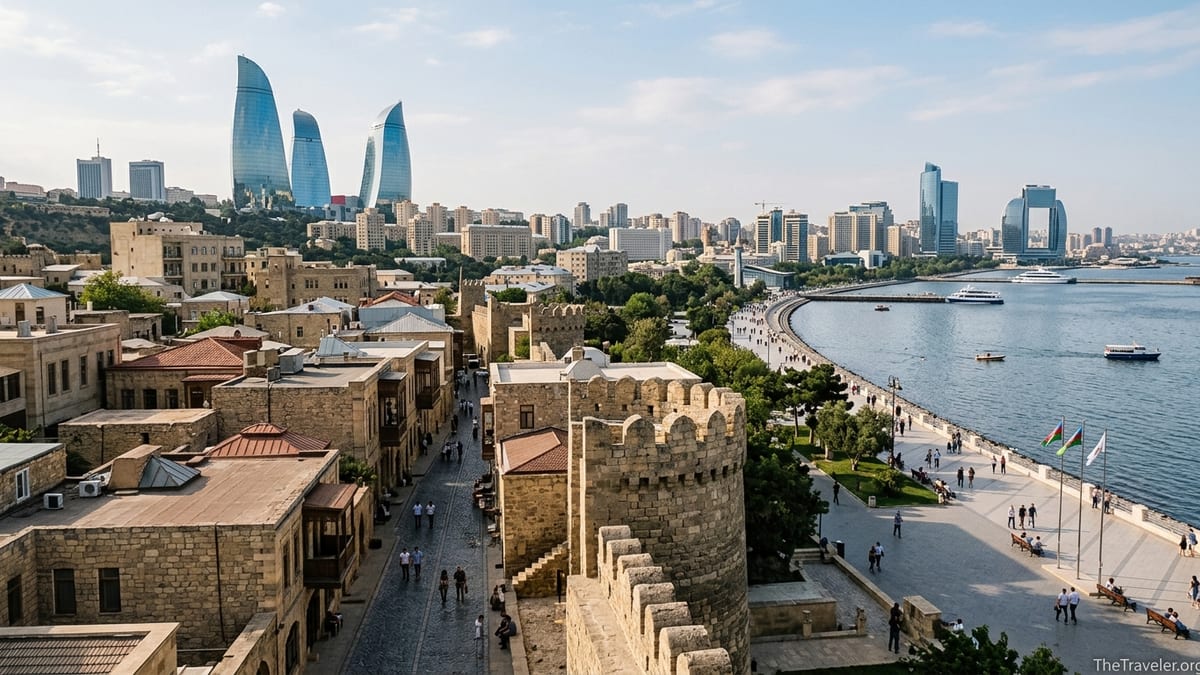
Baku is a city of contrasts, where a UNESCO-listed medieval core sits beside glass skyscrapers and a sweeping Caspian Sea promenade. Many first-time visitors agonize over the same question: how many days do you actually need in Baku to see the highlights without feeling rushed? The honest answer depends on whether you want to focus purely on the city or add nearby day trips, but for most travelers the sweet spot falls between two and four full days in and around the Azerbaijani capital.
Get the latest updates straight to your inbox!
How Many Days in Baku: The Short Answer
If your goal is to see Baku’s main urban highlights – the Old City, the Caspian promenade, the Flame Towers skyline and the Heydar Aliyev Center – plan on a minimum of two full days in the city. This gives you enough time to walk the historic core, enjoy the waterfront and experience the modern architecture without racing from sight to sight.
Three days is a more comfortable standard city break. With three full days you can explore Baku at a gentler pace, linger in tea houses inside the Old City, spend an unhurried afternoon at the Heydar Aliyev Center’s exhibitions and perhaps fit in a short evening cruise or a ride on the Baku Ferris Wheel along the seafront.
To see both Baku and its most famous nearby landscapes – like the rock carvings at Gobustan and the natural gas flames at Yanar Dag – you will want at least four days, ideally five. Many organized itineraries and community travel recommendations suggest spending two or three days in Baku itself and using the remaining days for out-of-town excursions to the Absheron Peninsula or the mountains further inland.
Anything less than 24 hours in Baku means you will only get a surface-level impression: a walk along Baku Boulevard, perhaps a quick spin through the Old City and a distant look at the Flame Towers after dark. It is doable on a tight schedule, especially as a stopover, but you will be sampling rather than truly experiencing the city.
What You Can See in 1, 2, 3 and 4 Days
With just one full day, focus tightly on the central core. You might start your morning at the UNESCO-listed Old City, known locally as Icherisheher, wandering its stone lanes and visiting at least one major monument such as the Maiden Tower or the Palace of the Shirvanshahs. After lunch at a nearby restaurant serving local dishes like plov or qutab, you could stroll down to Baku Boulevard to walk along the waterfront, see the Carpet Museum’s distinctive building from outside and watch families riding bikes under the plane trees. As evening falls, a taxi or the funicular up to Highland Park gives you a panoramic view of the Flame Towers lighting up over the bay.
Two full days let you add modern Baku’s showpiece architecture. On your second morning you could visit the Heydar Aliyev Center, Zaha Hadid’s fluid white building that has become one of the city’s defining icons. The center is not just about the exterior curves: inside you may find design exhibitions, classic car collections or cultural displays, so many visitors spend several hours there. In the afternoon, you might explore newer districts along Heydar Aliyev Avenue, detouring past skyscrapers like SOCAR Tower and Baku Tower that showcase the city’s contemporary skyline before heading back to the center for dinner.
With three days you gain space to add museums and neighborhoods. You could spend more time inside the Maiden Tower museum learning about Baku’s history, step into the Azerbaijan National Carpet Museum to see traditional carpet designs, or visit mosques and caravanserais scattered through the Old City. In the evening, you could join a guided architecture or food walk, which usually last three to four hours and typically include stops for Azerbaijani sweets, tea and local snacks along the way.
Four days mean you can comfortably include at least one out-of-town excursion while still enjoying evenings back in Baku. A commonly chosen option is a half-day or full-day trip to Gobustan National Park, known for its ancient petroglyphs and nearby mud volcanoes, combined with a stop at Yanar Dag, the hillside where natural gas has burned from the ground for decades. Many local operators and ride-hailing drivers offer this as a combined route from Baku, so you can leave in the morning and be back on the boulevard for a late dinner.
Key Baku Highlights That Shape Your Itinerary
Planning how many days you need starts with understanding what most people come to Baku to see. The Old City is usually the first priority. Within its walls you find the 12th-century Maiden Tower, caravanserais that now house restaurants and shops, and the Palace of the Shirvanshahs, a complex of royal buildings that reflects the city’s medieval importance. Even travelers who say they are not “museum people” tend to spend several hours simply wandering its alleys, browsing small carpet boutiques and pausing at rooftop terraces for views across the Caspian.
Just outside the Old City walls stretches Baku Boulevard, a long waterfront park with tree-lined paths, cafes and recreational areas. Walking from the Old City down to the Caspian is an easy downhill stroll, and many visitors spend an afternoon here, watching ferries and small cruise boats move across the water. Attractions along the promenade include a modern Ferris wheel offering aerial views over the bay, the International Mugham Center and the striking glass-like structure of the Carpet Museum.
Dominating the skyline above both the Old City and the boulevard are the Flame Towers. These trio of skyscrapers, entirely covered in LED screens that simulate moving flames at night, have become a symbol of modern Baku. The best vantage points are from Highland Park, reached by stairs or a funicular from near the seafront, where you can look down on the Old City’s walls and across the curved bay. Even travelers staying just one night typically plan their schedule around seeing the towers lit up after dark.
A short drive from the center lies the Heydar Aliyev Center, regarded as one of the most distinctive buildings in the region. Its white, wave-like form stands out clearly when you approach along Heydar Aliyev Avenue. The expansive lawn around the building is popular with locals for evening walks and photo sessions. Inside, there are multiple exhibition halls; depending on current programming you might find anything from Azerbaijani cultural displays to international art or design shows, which can easily fill a half-day visit.
Suggested Itineraries by Trip Length
For a brisk two-day visit, a practical pattern is to devote Day 1 to the Old City and Baku Boulevard, and Day 2 to modern architecture. On your first morning, you could start inside Icherisheher, climbing the Maiden Tower for a 360-degree view, then stepping into the Palace of the Shirvanshahs complex. After lunch at a restaurant tucked inside a caravanserai courtyard, walk out through the Old City gates to the seaside promenade, perhaps taking a short Caspian boat ride if the weather is calm. As night falls, head up to Highland Park to watch the Flame Towers light show.
On Day 2 of a two-day stay, you might travel to the Heydar Aliyev Center soon after it opens, allowing several hours for the exhibitions and the building itself. Around midday, you could explore nearby modern districts by taxi, taking in views of contemporary office towers and residential complexes that illustrate Baku’s rapid development. In the late afternoon you would return to the center for a final stroll through the Old City or along the boulevard, depending on which part of the city you enjoyed most.
With three days you can slow down the pace and layer in more local experiences. For instance, Day 1 could focus on the Old City, including time for tea in a traditional chaikhana. Day 2 might combine the Heydar Aliyev Center with the Carpet Museum and a relaxed evening at a seafront cafe. Day 3 could be flexible: perhaps visiting additional museums, shopping for souvenirs like copperware and pomegranate products in the bazaars, or joining a food-focused walking tour that introduces you to dishes such as dolma and piti.
For travelers with four days or more, a balanced plan is to spend two full days in Baku proper and use the remaining days for excursions. One common four-day outline is to follow the three-day city schedule above, then reserve Day 4 for Gobustan and the Absheron Peninsula, visiting the rock art site, the mud volcanoes and Yanar Dag before returning to Baku for a final evening among the Old City’s rooftop restaurants. If you have five or more days, you could add further trips to inland regions, but that moves beyond a Baku-focused itinerary.
Transport, Distances and How They Affect Your Stay
Travel times within Baku are generally manageable, which is good news for short stays. The distance from the Old City to the Flame Towers viewpoint area is roughly a 20-minute uphill walk, or a short ride on the funicular from near the seafront. Reaching the Heydar Aliyev Center from central hotels around Fountain Square or the Old City typically takes 10 to 20 minutes by taxi, depending on traffic, or longer by bus and metro with a transfer.
If you are arriving by air, Baku’s main airport sits east of the city. Official airport taxis operate on a fixed-price system to the center, with recent guides reporting fares in the range of roughly 30 to 35 Azerbaijani manats for the ride to downtown, equivalent to around 18 to 20 US dollars. Some visitors instead use ride-hailing apps, which may offer slightly lower or variable prices, especially outside peak arrival times. Factoring in airport transfer time and potential traffic, it is wise not to count your arrival or departure day as a full sightseeing day unless your flight times are extremely favorable.
Within the city, most travelers rely on taxis and ride-hailing services, supplemented by the metro and buses. The BakuCard smart system, known as BakiKart, is used on metro and BakuBus services. A reusable plastic card costs a small fee and can be topped up with credit at machines in metro stations and major bus stops, while disposable paper cards allow a limited number of rides. Metro rides are inexpensive by international standards, and the system connects key areas such as the central districts and some parts of the waterfront.
The relatively compact size of the historic center means that once you check into a centrally located hotel or guesthouse, you can cover much of the core on foot. This helps even short stays feel more substantial, since you will spend less time in transit and more time at the sights themselves. Staying near the Old City walls or along Baku Boulevard is especially efficient if you are working with only two or three days.
Day Trips From Baku and Extra Days to Consider
Deciding whether you need more than three days in Baku often comes down to whether you want to add day trips. One of the most popular is Gobustan, a UNESCO-recognized area southwest of the city where stone slabs are covered with ancient petroglyphs depicting animals, hunters and symbolic figures. Nearby, clusters of mud volcanoes bubble and occasionally spurt cold mud from conical mounds, creating a stark, lunar-like landscape. Many local drivers and tour companies offer combined Gobustan and mud volcano excursions lasting around six to eight hours, departing Baku in the morning and returning by late afternoon.
Another widely visited site is Yanar Dag on the Absheron Peninsula, where natural gas seeps through the rock and burns steadily along a low hillside. After sunset the flames are clearly visible, and some evening tours combine Yanar Dag with visits to Ateshgah, the historic fire temple associated with Zoroastrian worship. These destinations are all within roughly an hour’s drive of Baku, making them highly feasible additions if you have an extra day or two.
For travelers with five or more days in the region, Baku can also serve as a base for overnight or long day trips to inland mountain villages and spa towns. Places such as Sheki and Lahij require several hours’ drive each way and usually merit at least one overnight stay, which extends your itinerary beyond a purely Baku-focused trip. Many visitors planning a week in Azerbaijan choose to spend three days in Baku, two days in one of these regional destinations and the remaining days divided between travel and flexible time back in the capital.
These options mean that while two days is sufficient for Baku’s highlights, adding a third or fourth day can transform your experience from an urban city break into a broader introduction to Azerbaijan’s landscapes and history. When weighing how many days you need, it helps to decide early whether you are content staying within the city limits or want to glimpse mud volcanoes, burning hillsides and mountain scenery as well.
Budget, Season and Travel Style: How They Influence Duration
Your travel style and budget also play a role in how many days in Baku make sense. If you are a museum enthusiast and architecture fan, you may find that even three days in the city feel short, especially if you want to explore the full range of exhibitions inside the Heydar Aliyev Center and spend time at multiple museums around the city. On the other hand, if you prefer relaxed walks, cafe stops and only a few carefully chosen sights, two days can be perfectly satisfying.
Costs on the ground are generally moderate compared with many Western European capitals, which can make longer stays more realistic for budget-conscious visitors. Basic taxi rides within the city center usually fall well below the price of similar trips in major Western cities, and metro tickets are inexpensive. Mid-range hotels or guesthouses inside or just outside the Old City walls offer good value compared with equivalent accommodation in many other capitals, especially if you book outside major holidays and large international events.
The time of year you visit also shapes what you can realistically do in a given number of days. In high summer, daytime temperatures can climb well above 30 degrees Celsius, so you may prefer to plan sightseeing for early morning and evening, using the hottest hours to rest indoors. This can slow the pace, making three or four days feel more comfortable than trying to compress everything into two extremely hot days. In shoulder seasons like late spring and early autumn, milder temperatures encourage longer walks, which can make a two-day schedule feel less rushed.
Finally, your arrival and departure times matter. Many travelers underestimate how tiring a late-night arrival or very early departure can be, particularly when combined with a time difference. If your flight lands close to midnight, count the next day as your first full day, not the day of arrival. Similarly, if you have an early morning departure on your final day, avoid planning any major sightseeing then and think of your stay in terms of the number of full days sandwiched between travel days.
The Takeaway
For most first-time visitors, two full days in Baku are enough to see the essential highlights: the Old City with its Maiden Tower and palace complex, the Caspian waterfront promenade and the modern skyline anchored by the Flame Towers and the Heydar Aliyev Center. Three days provide a more relaxed rhythm, allowing room for extra museums, food experiences and unhurried evenings in tea houses or seafront cafes.
If you want to combine Baku with its most famous nearby excursions, such as Gobustan’s rock art, the mud volcanoes and the burning hillside of Yanar Dag, aim for at least four days, with two or three of those focused squarely on the city itself. Travelers with a week or more can treat Baku as a gateway to wider Azerbaijan, but that becomes a different trip entirely.
When deciding how many days you personally need, consider not only the checklist of sights but also your preferred travel pace, the season, your arrival and departure times and whether you want to venture beyond the city limits. With even a short stay, Baku’s blend of historic streets and futuristic architecture leaves a strong impression, but giving yourself an extra day or two unlocks a richer understanding of the city and the country it represents.
FAQ
Q1. Is one day in Baku enough to see the highlights?
One day lets you see the Old City, walk along Baku Boulevard and view the Flame Towers from Highland Park, but you will not have much time for museums or the Heydar Aliyev Center.
Q2. How many days should I spend in Baku if I only care about the main sights?
If your focus is strictly on the main city highlights, plan on two full days. That is usually enough for the Old City, waterfront, Flame Towers views and a visit to the Heydar Aliyev Center.
Q3. Is three days in Baku too long?
For most travelers three days is ideal rather than too long. It gives you time to revisit favorite spots, linger in cafes and add museums or a guided walk without rushing.
Q4. How many days do I need in Baku if I want to visit Gobustan and Yanar Dag?
To see both the city and nearby sites like Gobustan and Yanar Dag, aim for at least four days in total, with two or three days devoted to Baku itself and one or more for excursions.
Q5. Can I do Baku as a quick stopover?
Yes. If you have a long layover or one-night stop, focus on the Old City, an evening walk along the seafront and a night-time view of the Flame Towers before continuing your journey.
Q6. Where should I stay in Baku for a short trip?
For a short stay, choose accommodation near the Old City, Fountain Square or Baku Boulevard. From these areas you can walk to many major sights and minimize transit time.
Q7. Do I need a car to see Baku’s highlights?
No. You can comfortably see Baku’s main attractions using taxis, ride-hailing apps, the metro and walking. A car is more relevant if you plan multiple day trips outside the city.
Q8. How does the season affect how many days I should spend?
In hot summer months, you may appreciate three or four days so you can sightsee in cooler hours and rest at midday. In milder seasons, two or three days usually feel sufficient.
Q9. Is Baku a good base for exploring the rest of Azerbaijan?
Baku makes a convenient base for day trips to Gobustan and the Absheron Peninsula. For more distant regions like Sheki, it is better used as a starting and ending point rather than a constant base.
Q10. If I have a week in Azerbaijan, how many of those days should be in Baku?
With a full week, many travelers spend about three days in Baku, two or three days in another region such as the mountains or interior towns, and the remaining time for travel days and flexibility.