


Baku is a city that changes character with the seasons. In summer, the Caspian breeze rolls over busy seaside cafés and late-night promenades. In winter, the Old City’s limestone walls sit under a cool, sharp wind from the north. If your goal is comfortable temperatures and relaxed, rewarding sightseeing rather than simply lying on a beach, choosing the right month to visit Baku matters more than you might expect.
Get the latest updates straight to your inbox!
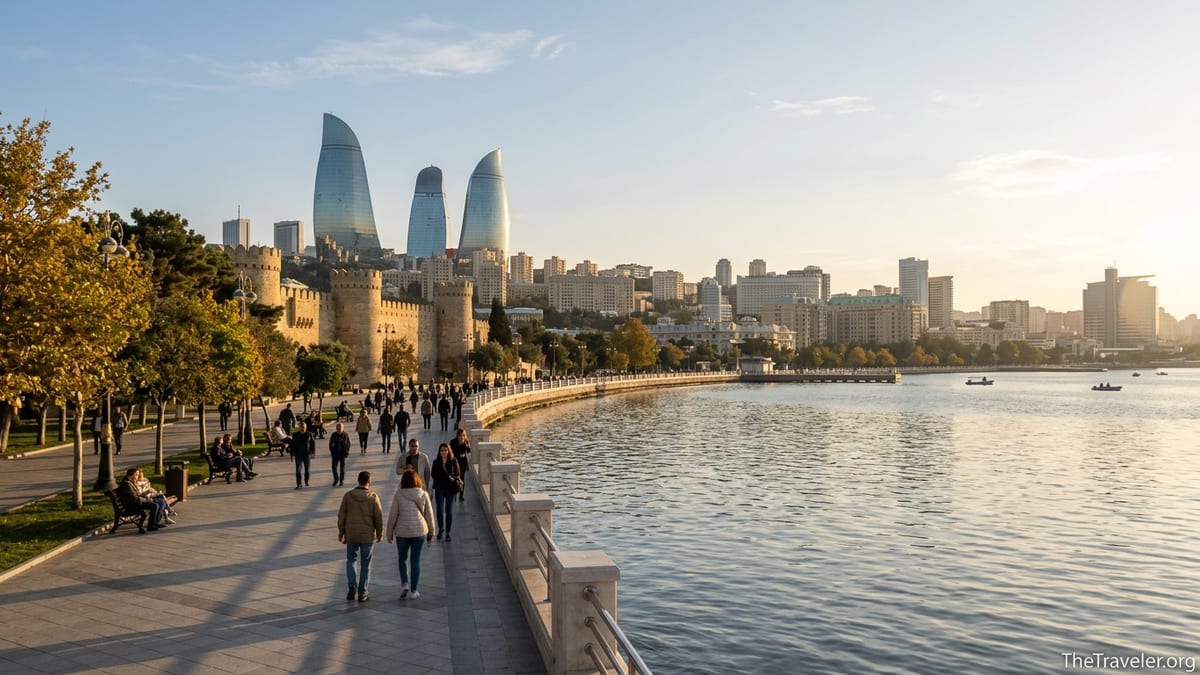
Understanding Baku’s Climate Before You Book
Baku sits on the Absheron Peninsula on the western shore of the Caspian Sea and has a semi-arid climate: hot, very dry summers and cool, comparatively damp winters, with relatively low rainfall overall. What catches many first-time visitors by surprise is not the temperature but the wind. Baku’s nickname, the “City of Winds,” is well earned, as strong northern and southern winds can quickly make a mild day feel chilly along the seafront.
Average daytime highs gradually climb from around the mid single digits Celsius in January to the high 20s by July and August, before easing back again through autumn. Rainfall is modest year-round, with a slight peak in late autumn, which means you are statistically more likely to get dry days than not. This is good news for anyone planning to spend long hours on foot between the Old City, Baku Boulevard and modern districts like the Flame Towers and the Heydar Aliyev Center.
Sea temperatures lag behind the air, warming through late spring and peaking in August. If swimming is important to you, you will want to favor late June to early September. If your priority is wandering through UNESCO-listed Icherisheher (the Old City), climbing the narrow staircase of the Maiden Tower or photographing the curves of the Heydar Aliyev Center without sweating through your shirt, then spring and autumn are far more forgiving.
The most pleasant sightseeing months overall tend to be from mid‑April to early June and again from mid‑September to late October. During these shoulder seasons, Baku usually offers comfortable daytime temperatures, softer light for photography, and fewer package-tour crowds than in the peak of summer, while most attractions and cafés operate on full schedules.
Spring in Baku: Blossoms, Festivals and Comfortable Days
Spring, particularly late March through May, is arguably the best season for visitors who want both comfortable weather and a sense of local life. By late March, daytime highs often reach the low to mid teens Celsius, rising toward the low 20s by May. Layers are still useful in the evenings, but you can comfortably spend most of the day outside without worrying about intense heat or heavy rain.
One of the highlights of spring is Novruz, Azerbaijan’s New Year, which falls around 20–21 March and is celebrated for several days. In central Baku, you are likely to see temporary stages and stalls on Fountains Square, traditional pastries like shekerbura and pakhlava in bakery windows, and families strolling along Baku Boulevard. For travelers, this period offers rich cultural experiences but also higher demand for hotels, so it is wise to book central stays such as mid-range business hotels near the Boulevard or guesthouses inside the Old City at least a month or two ahead.
By April and May, city parks and the seafront promenade come into their own. This is a good time to join walking tours of the Old City, as cobbled lanes and heritage sites like the Palace of the Shirvanshahs feel pleasant rather than stifling. You can comfortably combine indoor and outdoor stops in one day: perhaps starting at the Azerbaijan Carpet Museum on the Boulevard in the morning, then crossing town to photograph the Heydar Aliyev Center’s flowing white structure in the afternoon light, without needing a midday break to escape the heat.
Prices in spring are generally moderate. A coffee at a modern café on Nizami Street might cost only slightly more than in winter, and you can often find competitive midweek room rates at international chain hotels aimed at business travelers. However, for the weeks around Novruz and any large international events, expect a bump in both flight and hotel prices and be prepared for busier restaurants in the evening.
Summer: Long Days, Hot Sun and the Caspian Coast
From mid‑June through August, Baku slides into a distinctly summer rhythm. Daytime highs often reach the high 20s to low 30s Celsius, and with strong sun and relatively low humidity in the city center, sightseeing in the middle of the day can feel draining, especially on exposed streets or when walking Baku Boulevard for long stretches.
These months suit travelers who want to combine limited city sightseeing with time at nearby beaches or seaside clubs on the Absheron Peninsula. Resorts and beach clubs north of the city, in areas like Bilgah or Mardakan, typically open fully by late May and stay active into early September. A common pattern among visitors in summer is to spend the morning in an air-conditioned museum such as the National Museum of History, then take a taxi out to a beach club in the afternoon to escape the city heat, returning downtown for dinner after sunset.
Summer also brings some of Baku’s highest visitor numbers thanks to school holidays and large events. The Azerbaijan Grand Prix, a Formula 1 race held on the Baku City Circuit that runs through downtown streets, typically takes place in September in current calendars, but preparations and related events can affect hotel availability and prices from late summer onward. Even outside race dates, weekends in July and August see more regional tourists, so waterfront hotels and apartments with sea views sell out first.
If summer is your only option and you still want to prioritize sightseeing, consider adjusting your daily schedule. Start early to explore the Old City before 10 a.m., take a long lunch indoors around midday, and resume outdoor walking tours after 5 p.m. Carry sunscreen, a hat and water; many locals retreat to shaded teahouses or indoor malls like Port Baku Mall during the hottest hours, and following their lead can make a big difference to your comfort.
Autumn: Golden Light and Relaxed Sightseeing
Autumn, especially from mid‑September through late October, rivals spring as the sweet spot for travelers interested in architecture, museums and day trips. Early September can still feel summery, with daytime highs in the mid‑20s Celsius and warm evenings ideal for outdoor dinners in the pedestrian streets near Fountain Square. By October, temperatures usually dip into the high teens during the day, creating perfect walking conditions.
For photographers, this is one of the best times to capture Baku. The sun sits lower in the sky, creating warmer tones on the limestone facades of Icherisheher and softer shadows around the Flame Towers and other modern glass buildings. A late afternoon photo walk that starts at the Maiden Tower, continues along Baku Boulevard, and ends at the funicular up to Highland Park can deliver sweeping, comfortable views over the bay without the harsh glare common in July.
Autumn is also a good time to combine Baku with nearby excursions. Day trips to the mud volcanoes and petroglyphs of Gobustan National Park or to the Ateshgah Fire Temple and the burning hillside of Yanar Dag are more pleasant when you can stand outside for an hour without extreme heat or cold. Tour operators that run small-group minibus tours from Baku tend to operate at full capacity in these months, so you will have plenty of departure times to choose from while still enjoying relatively calm roads and sites.
The main caveat in autumn is occasional rain and the timing of major events. October is statistically one of the wetter months, though showers are typically brief rather than all-day downpours. In years when the Formula 1 Grand Prix or other major international events are scheduled for September, hotel prices around the race weekend can spike noticeably, particularly for properties overlooking the circuit or near the Boulevard. If your aim is tranquil sightseeing, consider arriving at least a week before or after such events.
Winter and Early Spring: Quiet Streets and Lower Prices
From December through early March, Baku experiences its coolest weather, with average daytime highs often in the single digits Celsius and colder wind chills along the seafront. While snowfall in the city is relatively rare and usually light, the northern wind can make it feel significantly colder than the thermometer suggests, especially near the water and in open squares.
These months are not ideal if you dream of long, leisurely walks on Baku Boulevard every day, but they do offer some advantages for certain types of travelers. Budget-conscious visitors often find lower room rates in modern hotels and more last-minute availability in centrally located apartments. International business hotels that are busy midweek may offer attractive weekend deals, and indoor attractions like the Carpet Museum, Heydar Aliyev Center’s exhibition halls and local galleries are comfortably heated.
Winter can also suit travelers whose primary focus is indoor culture, food and photography of architecture without crowds. The Old City feels atmospheric in cool, crisp air, and cafés around Nizami Street or the Torgovaya pedestrian zone are less crowded than in summer. You will simply need a warm coat, scarf and gloves, particularly if you plan to stay out after dark to photograph the illuminated Flame Towers or the reflections on the Caspian.
By late March, conditions begin to improve noticeably, but early spring is still variable. You might experience a string of sunny, mild days followed by a spell of wind and drizzle. If you plan a visit between early March and mid‑April, consider flexible indoor options for days when the weather turns: for example, substituting a planned trip to Gobustan with more time at the National Museum of Azerbaijan History or a cooking class focused on local dishes like plov and dolma.
Matching Baku’s Seasons to Your Travel Style
The right time to visit Baku depends on what you want most from your trip. If your priority is relaxed sightseeing with minimal weather-related stress, the late spring window from around mid‑April to early June and the early to mid‑autumn window from mid‑September to late October offer the best balance. During these weeks you can spend most of the day outside without strong heat or deep cold, and you can comfortably arrange full-day itineraries that mix the Old City, museums, and coastal walks.
Travelers focused on contemporary architecture and urban photography may favor slightly cooler months such as April, early May, late September or October. In those periods, the curved white facade of the Heydar Aliyev Center, the reflective glass of the Flame Towers and the blend of 19th-century oil-boom buildings with Soviet-era and modern structures are easier to photograph without heat haze or extreme shadows. You can also linger at viewpoints like Highland Park or the rooftop terraces of central hotels without the discomfort of peak summer sun.
If you are drawn to Baku for its position on the Caspian Sea and plan to spend at least a couple of days by the water, you might accept hotter air temperatures in exchange for warmer seas. In that case, late June through early September are your likely targets, with the understanding that you will arrange your sightseeing around the heat. Many visitors in this category split their stay, booking two or three nights in the city center and then shifting to a resort hotel out on the Absheron Peninsula to take advantage of pools, private beaches and spa facilities.
Event-focused travelers, especially motorsport fans, may time their visit around the Azerbaijan Grand Prix in September. On race weekend, the city is lively: stages for live music appear along the Boulevard, fan zones distribute merchandise and food stalls, and spectators spill out of stands into bars and restaurants after sessions. This is not the calmest time for museum visits or quiet Old City walks, but for some visitors the combined energy of F1 and the city itself is the main attraction. If you fall into this group, you will want to book race tickets and accommodation several months ahead and accept higher prices near the circuit.
Practical Planning Tips for Pleasant-Weather Sightseeing
When planning your Baku itinerary around weather, think in terms of daily rhythms rather than just monthly averages. In warmer months, schedule major outdoor sights for morning and late afternoon, keeping midday for lunch, shopping in air-conditioned malls or long visits to museums. In cooler seasons, reverse that pattern: enjoy your longest outdoor walks around midday, when the sun offers some warmth, and move your indoor stops to early morning and evening.
Clothing choices should adapt to the wind as much as the temperature. Even in April or October, a day that starts mild can feel cold by late afternoon when the wind picks up along the Caspian. A light windproof jacket, a scarf and a thin hat that you can easily stow in a daypack will significantly improve your comfort. In summer, breathable fabrics and a wide-brimmed hat will be more useful than heavy layers, particularly if you plan to walk between the Old City, Fountain Square and Baku Boulevard rather than relying solely on taxis.
Where you stay can also shape how you experience the weather. A hotel or apartment within a 10–15 minute walk of both the Old City and the Boulevard allows you to take short indoor breaks when needed, whether that is to escape a sudden gusty wind in March or the midday sun in July. Many central properties offer on-site cafés or lounges where you can sit with tea or Azerbaijani coffee while watching the weather shift outside, turning what might otherwise be “lost time” into part of the experience.
Finally, keep some flexibility in your plans. Even in the most reliable months, weather can vary from the average. Building in a spare half-day gives you room to swap activities: you might bring forward a visit to the gobustan rock art site to a particularly sunny day, or delay a long walk along Baku Boulevard if a cool wind makes the seafront less pleasant. Apps that show hourly forecasts can help you decide which blocks of the day are best for open-air experiences.
The Takeaway
For travelers whose main goal is pleasant weather and rewarding sightseeing, the best time to visit Baku is during the shoulder seasons of late spring and early autumn. From mid‑April to early June and again from mid‑September to late October, temperatures are usually comfortable, the city feels lively but not overwhelmed, and you can explore both historic Icherisheher and modern landmarks without battling either intense heat or biting cold.
Summer offers warm seas and a festive atmosphere, especially when major events fill the calendar, but requires more careful planning around heat and higher prices. Winter, meanwhile, delivers quiet streets, atmospheric views and good value, but is better suited to indoor culture and shorter outdoor walks. By matching your travel dates to your priorities, packing with Baku’s famous winds in mind, and staying flexible day to day, you can make the most of this Caspian capital in any season.
FAQ
Q1. What is the single best month to visit Baku for sightseeing?
The most reliable month for pleasant sightseeing weather is often May, when daytime temperatures are usually mild, greenery is abundant and most attractions operate on full schedules.
Q2. Is July too hot for walking around Baku?
July can feel hot for extended walking, especially at midday, but early mornings and evenings are manageable. Plan indoor breaks, use taxis between distant sights and focus longer walks on Baku Boulevard when the sun is lower.
Q3. When is Baku least crowded but still has decent weather?
Late April, early June and most of October typically see fewer crowds than peak summer while still offering comfortable temperatures for walking and outdoor dining.
Q4. Is winter a bad time to visit Baku?
Winter is cold and often windy, so it is not ideal for long seafront walks, but it can be good for budget-conscious travelers focused on indoor museums, cafés and architecture photography without crowds.
Q5. Are beaches near Baku usable outside summer?
Beach clubs and resorts mainly operate from late May to early September. Outside that window, you can still visit the coast for views and walks, but sea temperatures and services are less suitable for swimming.
Q6. How does the Formula 1 Azerbaijan Grand Prix affect visiting Baku?
During Grand Prix week in September, central streets and the seafront circuit area become busier, some roads close, and hotel prices near the track rise, but the city gains a lively festival atmosphere that some visitors specifically seek out.
Q7. What should I pack for a spring trip to Baku?
For spring, bring light layers, a windproof jacket, comfortable walking shoes and a scarf. Days are usually mild, but wind and cooler evenings mean you will appreciate the flexibility of layering.
Q8. Is rain a major problem for sightseeing in Baku?
Baku is relatively dry, though autumn and late winter can bring more showers. Most rain is light and short-lived, so a compact umbrella or light waterproof jacket is usually enough to keep sightseeing on track.
Q9. Can strong winds disrupt travel plans?
Wind rarely cancels activities outright, but it can make the seafront feel colder and less comfortable. On particularly gusty days, you may prefer more time in museums, malls and indoor cafés rather than long walks along the Boulevard.
Q10. How many days do I need in Baku in pleasant weather?
Three full days is a good minimum in mild seasons, giving you time for the Old City, modern architecture and Baku Boulevard, plus at least one day trip to places like Gobustan or Ateshgah.