


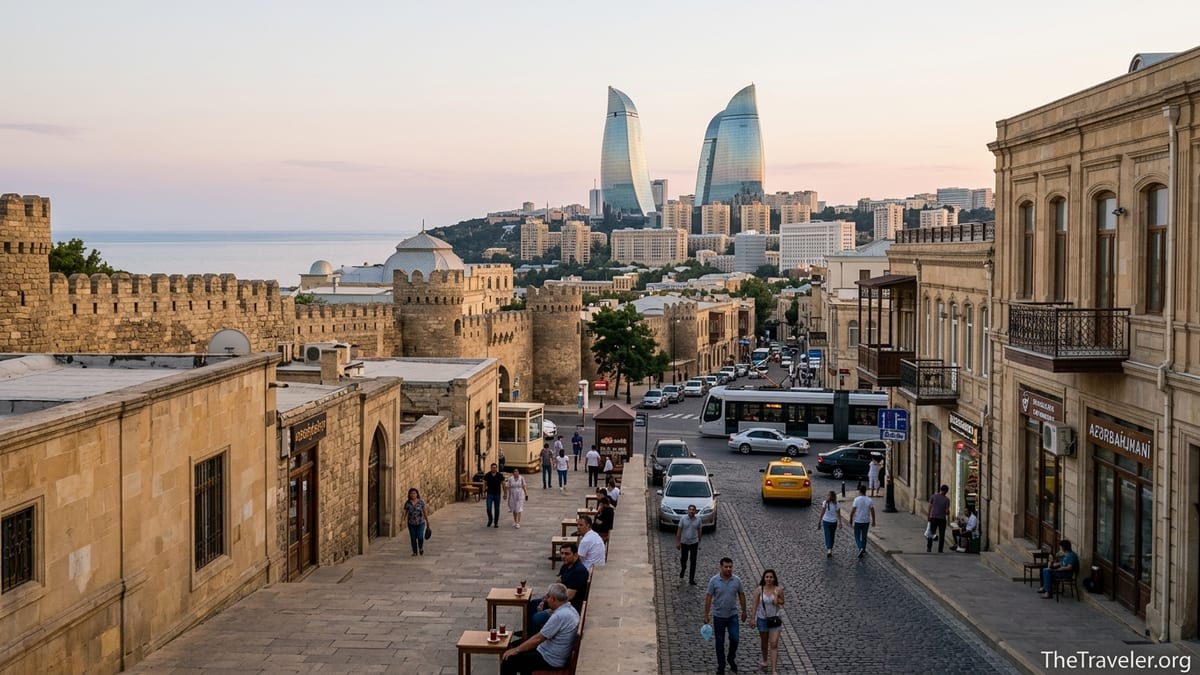
Baku often surprises first-time visitors. On social media it appears as a futuristic skyline of glass towers and a perfectly restored Old City beside the Caspian Sea. On the ground, the city is indeed striking, but it is also more complex, more conservative in some ways, and more practical in others than many travelers expect. Understanding those nuances before you land at Heydar Aliyev International Airport can mean the difference between a smooth, rewarding stay and a frustrating one.
Get the latest updates straight to your inbox!
Visas, Borders and Paperwork That Catch People Out
Many visitors assume Azerbaijan works like nearby Georgia, where most nationalities simply stroll through passport control without preparation. In reality, most travelers need an electronic visa approved before boarding a flight to Baku. The official e-visa platform usually processes applications in around three working days, but approvals can take longer around big events, so last minute applications are risky. Travelers who show up at check in without a valid visa are often denied boarding, and there is no visa desk at Baku airport to rescue you.
The rules also change frequently. At the time of writing, over 90 nationalities can apply online for a single entry e-visa valid for a short stay, while a smaller group of countries enjoy visa free access or special temporary exemptions announced for particular events. Because of these moving parts, experienced visitors always check their exact nationality and passport type on the official government site, then print the approved e-visa and carry a spare copy in a separate bag. Airline staff at departure and border officers in Baku sometimes ask to see a printed copy rather than accepting only a phone screen.
Another detail that catches people is the registration requirement. Travelers staying more than a short period in Azerbaijan may need to register their address with the migration authorities. Larger hotels routinely handle this automatically, but guests in small guesthouses or apartments are expected to do it themselves online. Forgetting can lead to awkward conversations or a fine on departure. If you plan to stay more than a couple of weeks, ask your host in writing whether they will register you and keep a confirmation email or screenshot.
Finally, be aware that previous travel to certain regions can complicate your entry. Visitors who have Armenian entry or exit stamps have historically entered Azerbaijan without issue, but those who have visited disputed territories in the past have sometimes faced questioning. The safest approach is to answer all questions calmly and factually, to allow extra time at passport control, and to avoid carrying any politically sensitive material on your devices.
First Impressions: Airport, Money and Getting into the City
Most travelers meet Baku in the early hours of the morning, as many flights land around midnight or later. Heydar Aliyev International Airport is modern and efficient but quieter than major European hubs, and services thin out overnight. There are ATMs in the arrivals hall dispensing Azerbaijani manat, and it is wise to withdraw some cash there. Small purchases in town, such as tea in a neighborhood café or a short bus ride, still often require cash even though midrange restaurants and hotels usually accept cards.
For many visitors, the first surprise is the cost and comfort of getting into the city. The AeroExpress bus runs between the airport and the central 28 May area for a modest fare, using modern, air conditioned coaches with luggage space. It takes around 30 to 40 minutes in light traffic, and tickets are paid using the same BakuCard that works on buses and the metro. You can buy or top up this card from machines near the bus stop using cash or sometimes cards. Travelers who do not know about the bus often step straight into a taxi and pay several times more than necessary for only a little extra convenience.
Ride hailing apps like Bolt and local competitors are widely used in Baku, and regular visitors strongly recommend them. A typical ride from the airport to the city center booked in an app might cost far less than a fare negotiated on the spot with a driver waiting outside arrivals. Street taxis parked near Icherisheher metro station, Fountains Square or the Boulevard often quote unmetered prices several times higher than the local rate. Using an app locks in a fair estimate and avoids long discussions about money in a language you may not speak.
Inside the city, the metro and buses are inexpensive and straightforward once you understand the system. You tap your BakuCard to pass the gates and rides cost the local equivalent of a few dozen cents. However, signage inside the metro remains primarily in Azerbaijani, with English only on some maps and announcements. Visitors often take a smartphone screenshot of the metro map before going underground so they can track where to change lines. Rush hour can be very crowded, and some central stations lack elevators, so travelers with heavy luggage or mobility issues may prefer to stay above ground and use cars.
Costs, Cash, and What “Cheap” Really Means in Baku
Baku looks expensive, with its flame shaped towers, polished promenades and luxury boutiques, but day to day costs can be lower than in Western Europe if you spend like a local. A simple lunch of kebab, fresh herbs, bread and a pot of black tea in a neighborhood eatery might cost only a few US dollars equivalent. A seat in a midrange restaurant in the trendy Port Baku area or overlooking the sea on the Boulevard, on the other hand, can come with prices closer to those in Prague or Barcelona.
Visitors are often surprised by how many places still operate on a cash first basis. Metro rides, small groceries, traditional bakeries selling hot tandir bread, and most market stalls in the Old City prefer cash. Larger supermarkets, chain coffee shops and better known restaurants are more likely to accept Visa and Mastercard, but it is not guaranteed, especially if there is a temporary connection issue. That is why repeat visitors usually keep a mix of small denomination banknotes for everyday use and a card for hotels and big purchases.
Another point many travelers wish they had known is that certain seemingly minor services are priced differently for tourists. A short taxi ride hailed from the street between the Maiden Tower and the Carpet Museum may cost a local the equivalent of a couple of dollars, but a visitor who asks “how much?” without agreeing in advance can easily be quoted four or five times that amount. In carpet shops and souvenir stores, first offers are often dramatically inflated. Seasoned visitors take this in stride, treat bargaining as part of the culture, and walk away politely if the price does not return to a reasonable level.
Accommodation covers a wide range. A simple guesthouse slightly away from the Old City walls can be very good value, while international chains and design hotels around the Flame Towers charge premium rates, especially during events, Formula 1 races or conferences such as COP29. The key is understanding that Baku’s prices move sharply with demand. Planning ahead during any major event, and booking cancellable rates where possible, gives you flexibility if prices suddenly shift.
Tap Water, Food Hygiene and What Is Safe to Eat
One of the most common questions about Baku is whether the tap water is safe to drink. Officially, city water is treated and meets local standards, and some sources now state that Baku’s tap water is safe. In practice, however, many residents still buy bottled water due to concerns about aging pipes and taste. Tour companies that regularly operate in Azerbaijan tell guests to be cautious, particularly if they have a sensitive stomach, and recommend bottled or filtered water for drinking while accepting tap water for showering and brushing teeth.
A practical compromise many experienced visitors follow is to drink bottled water, which is widely sold and inexpensive, and to use tap water only after boiling if they plan to stay longer and want to reduce plastic waste. Well known local brands, as well as imported waters, are available in convenience stores and supermarkets throughout the city. Hotels often supply a couple of complimentary bottles per day, and it is easy to pick up larger bottles in corner shops for your room.
Food hygiene in Baku’s established restaurants is generally good. Traditional dishes such as plov, dolma, grilled meat and fresh vegetable salads are served in a style similar to neighboring countries. The main risk tends to come from street food or very cheap eateries that handle high volumes of customers with limited refrigeration. Travelers who are not used to the local bacteria sometimes experience mild stomach upsets, especially after eating salads washed in tap water or ice of unknown origin. Choosing busy places with a fast turnover, preferring cooked dishes over raw items and carrying basic medication for minor stomach issues is usually enough for most people.
Vegetarians and vegans often wish they had researched more before arriving. While Baku has a growing number of modern cafés and international restaurants that cater to dietary restrictions, traditional Azerbaijani cuisine is heavy on meat and dairy. Many menus are not clearly marked, and staff may not always understand the distinction between vegetarian and vegan. Practical strategies include learning a few key food phrases in Azerbaijani or Russian, bookmarking one or two plant friendly spots near your hotel, and being flexible enough to combine side dishes such as rice, grilled vegetables and salads into a full meal when there are no dedicated vegetarian options.
Scams, Safety and the Reality of Walking Around Baku
Baku often feels safer than many European or North American cities, especially in central districts like the Old City, Fountains Square, and the Boulevard along the Caspian. Police are highly visible, especially in tourist areas and near government buildings, and violent crime against visitors is rare. Solo travelers, including women, frequently report feeling comfortable walking around the center late into the evening, helped by good street lighting and a constant flow of people on the promenade during the warmer months.
The main problems visitors report are not about personal safety but about money. Taxi overcharging is the most common complaint. A driver might start the journey without turning on the meter and then demand a large sum at the destination, or quote a seemingly modest price in local currency that turns out to be much higher than expected. The simplest defenses are to use ride hailing apps whenever possible, to insist politely on the meter being switched on before the car moves, or to agree a fixed fare in advance in writing on your phone screen if language is a barrier.
Another issue is the “friendly invitation” that leads to unexpected bills. In the streets around Fountains Square and Nizami Street, strangers may approach solo travelers, striking up conversation in English and suggesting a drink at a nearby café or bar. Once inside, menus may be missing or prices hidden, and the final bill can be many times the real value. In some stories, staff become intimidating when guests refuse to pay. Regular visitors avoid going to unknown bars recommended by people they have just met, stick to venues they have chosen themselves, and walk away from persistent invitations with a firm but polite “no.”
Petty theft is less common than in some tourist cities, but it is still wise to follow basic precautions. That means keeping your phone and wallet out of back pockets in crowded metro trains, zipping up bags when walking in markets, and using hotel safes or hidden money belts for passports and spare cards. Photography of certain buildings such as military sites, some government offices and parts of the oil industry is restricted. Security staff occasionally ask visitors to delete images if they feel sensitive sites have been captured from across a fence or road, so avoid photographing anything that clearly looks official or strategic.
Cultural Norms, Dress Codes and Language Expectations
On the surface Baku can resemble a European city, with fashionable boutiques, rooftop bars and a prominent café culture. At the same time, Azerbaijan is a predominantly Muslim country with its own social norms, and visitors who recognize that have an easier time. Dress in central Baku is relatively liberal, especially among young people, but extremely revealing clothing still attracts attention, particularly away from the seafront and tourist districts. For both men and women, smart casual clothing that covers shoulders and knees is broadly accepted everywhere and causes the least friction.
Inside mosques and certain religious sites, modest dress is expected. Women are generally asked to cover their hair and wear clothing that covers arms and legs. Some popular mosques keep spare scarves and long skirts near the entrance for visitors, but it is more comfortable to carry your own lightweight scarf or shawl. Shoes are removed before entering prayer areas. Observing how locals behave and quietly following their lead goes a long way toward avoiding unintentional offense.
Language is another area where expectations and reality diverge. English is now widely spoken in international hotels, modern restaurants, some shops and among younger people in central Baku. However, in smaller guesthouses, local cafés, supermarkets and on public transport, Azerbaijani and Russian dominate. Visitors who arrive expecting English to be understood everywhere are often frustrated when trying to resolve small problems such as topping up a travel card or clarifying a menu item. Learning a handful of basic phrases in Azerbaijani, such as greetings and simple polite expressions, often earns a smile and more patient help even when you then switch back to gestures and translation apps.
Social interactions tend to be polite and formal at first. A friendly but reserved manner, no loud arguments in public, and respect for elders are all appreciated. Public displays of affection are common among younger couples in central Baku but may be frowned upon in more conservative neighborhoods or in smaller towns beyond the capital. Same sex couples should be discreet, particularly outside modern bars and hotel environments, as attitudes can be significantly more conservative than in Western Europe or North America.
Neighborhoods, Day Trips and How Far Things Really Are
First time visitors often underestimate the size of Baku and the distances between key sights. Icherisheher, the walled Old City, is compact and walkable, with the Maiden Tower, Shirvanshah’s Palace and the city walls all within a short stroll of each other. Directly outside the walls lie Fountains Square and Nizami Street, dense with cafés, restaurants and shops. The waterfront Boulevard, lined with parks, museums and modern architecture, stretches for several kilometers along the Caspian Sea, and walking its length can take an hour or more.
The iconic Flame Towers stand on a hill above the city and look close from the Old City but are a steep walk away. Many travelers start to tackle the climb on foot and then realize halfway that the gradient is sharper than it appeared. A practical approach is to take a taxi or bus up to the Highland Park viewpoint and then walk back down through the terraced parks and stairways, stopping for photos as you descend. The Heydar Aliyev Center, with its sweeping contemporary design, lies further out and is best reached by metro and a short taxi, or by taxi alone, rather than on foot.
Day trips are another area where expectations matter. Gobustan’s ancient petroglyphs and nearby mud volcanoes are among the most popular excursions from Baku. On a map they look close, but reaching them involves 40 to 60 minutes by car in one direction, plus time on rough access roads to the volcanoes themselves. Organized tours bundle transport, entrance fees and a guide into a half day or full day package, while independent travelers often arrange a private driver or shared taxi. Wind and dust can be strong on the open plains, so visitors who turn up in light city shoes and no layers sometimes regret not bringing sturdier footwear and a windproof jacket.
The Absheron Peninsula is dotted with other sites that sound nearby but require planning, such as the Ateshgah Fire Temple and the burning hillside at Yanardag. Public transport does reach some of these areas, but buses can be slow and schedules thin in the evening. Many return visitors either join a combined tour that links several sights in one day or hire a car with a driver for a fixed period at an agreed price, which saves time and avoids confusion about the final bill.
The Takeaway
The single biggest difference between visitors who leave Baku delighted and those who leave frustrated is preparation. Those who arrive with their e-visa printed, a ride hailing app installed, a basic sense of prices in manat and a realistic understanding of cultural norms tend to find a welcoming, visually striking city that feels safe and interesting to explore. Those who arrive expecting everything to function exactly like a Western European capital are more likely to feel tripped up by language gaps, cash only moments and occasional inflated tourist prices.
On the positive side, Baku rewards curiosity. Wander beyond the obvious photo spots and you will find quiet backstreets of the Old City with traditional courtyard houses, neighborhood bakeries selling hot bread each morning, and teahouses where older men spend hours playing backgammon. Plan for small practical challenges such as water, taxis and paperwork, and you are free to enjoy the contrasts that make Baku memorable: the sight of medieval stone walls reflected on the glass of futuristic towers, the taste of strong black tea sipped beside the Caspian, and the sound of call to prayer echoing over a brightly lit modern skyline.
FAQ
Q1. Do I need a visa to visit Baku as a tourist?
Most nationalities do need a visa to visit Azerbaijan, and the process is usually handled through an official electronic visa system before you travel. Some neighboring countries and a limited number of others enjoy visa free access, and occasional temporary exemptions are announced around major events. Always check the latest rules for your nationality well before booking flights and print your approved e-visa to show at check in and on arrival.
Q2. Is Baku safe to visit, including for solo travelers?
Central Baku is generally considered very safe, with a strong police presence in tourist areas and low levels of violent crime against visitors. Solo travelers, including women, commonly report feeling comfortable walking in the main districts at night. The main risks involve petty crime and financial scams, particularly taxi overcharging and overpriced bars. Using trusted transport, avoiding invitations from strangers to unknown venues, and following normal urban precautions is usually sufficient.
Q3. Can I drink the tap water in Baku?
City tap water is treated, but many locals and experienced visitors prefer bottled or filtered water for drinking because of concerns about old pipes and taste. Most travelers use tap water for showers and brushing teeth but stick to bottled water for drinking, which is inexpensive and sold everywhere. If you plan a longer stay, boiling tap water or using a small travel filter can reduce plastic waste while still managing risk.
Q4. How do I get from Baku airport to the city center?
The most economical option is the AeroExpress bus, which connects the airport with the central 28 May area using modern coaches. You pay with a Baku transport card, available from machines at the stop. Ride hailing apps like Bolt are a popular alternative, offering door to door service at transparent prices that are usually lower than hailing a taxi from outside arrivals. Agreeing a fare with a street taxi in advance or insisting on the meter reduces the chance of overpaying.
Q5. Is English widely spoken in Baku?
English is common in international hotels, modern restaurants, some shops and among younger people in central areas. However, Azerbaijani and Russian are the main languages in local cafés, small shops, markets and on public transport. You cannot rely on English everywhere. Learning a few key phrases, carrying your destination written in Azerbaijani, and using translation apps offline will make daily interactions much easier.
Q6. What should I wear in Baku, especially as a woman?
In central Baku, people dress in a modern, fairly liberal style, and smart casual clothing that covers shoulders and knees is accepted almost everywhere. Very revealing outfits will attract attention, particularly away from the seafront and tourist hotspots. When visiting mosques or religious sites, women are expected to cover hair, arms and legs, and men should avoid shorts and sleeveless tops. Carrying a light scarf or shawl makes it easy to adapt as needed.
Q7. How expensive is Baku compared with Europe?
Everyday costs can be noticeably lower than in Western Europe if you choose local style places. Simple meals, metro rides and basic services are inexpensive. However, upscale restaurants, bars in trendy districts, and international chain hotels charge closer to central European prices. Many tourist services, such as taxis hailed in the street or souvenir shops in the Old City, start with inflated prices for visitors, so it helps to know rough local costs and be ready to negotiate or walk away.
Q8. What are the most common scams tourists should watch for?
The most reported issues are inflated taxi fares and “friendly” invitations to bars or cafés that end with an extremely high bill. To avoid problems, use ride hailing apps or insist on the meter, check menu prices before ordering anywhere, and decline unsolicited invitations from strangers to venues you do not know. Carpet shops and souvenir stalls in touristy areas may also quote very high initial prices, so treat the first offer as a starting point rather than a fixed cost.
Q9. Are day trips from Baku, like Gobustan and the mud volcanoes, easy to do?
Yes, but they take more time than many people expect. Sites such as the Gobustan rock carvings, mud volcanoes, Ateshgah Fire Temple and Yanardag are within one to two hours of the city, but access roads can be rough and public transport limited. Many travelers find it easiest to join a small group tour or hire a car with a driver for the day at an agreed price, which simplifies logistics and ensures you can see several places without worrying about return buses.
Q10. Is Baku suitable for vegetarian or vegan travelers?
Baku is becoming more accommodating, with a growing number of cafés and international restaurants that offer vegetarian and sometimes vegan options. Traditional Azerbaijani cuisine is still very meat focused, and many menus are not clearly labeled. Vegetarians can usually combine salads, grilled vegetables, rice and breads into satisfying meals, while strict vegans may need to plan more carefully, research specific venues in advance and explain their requirements clearly using local language phrases or translation apps.