


How long do you actually need in Copenhagen to feel like you have seen the city properly? Opinions range from a rushed weekend to a full week, and tour operators often slot in four or five days for “the essentials.” In reality, the right number of days in Denmark’s capital depends less on a magic figure and more on how you like to travel, what you want to see, and how fast you move. This guide breaks it down using real examples, current 2026 prices, and practical scenarios so you can choose the right length for your own trip.
Get the latest updates straight to your inbox!
Understanding Copenhagen’s Scale and Pace
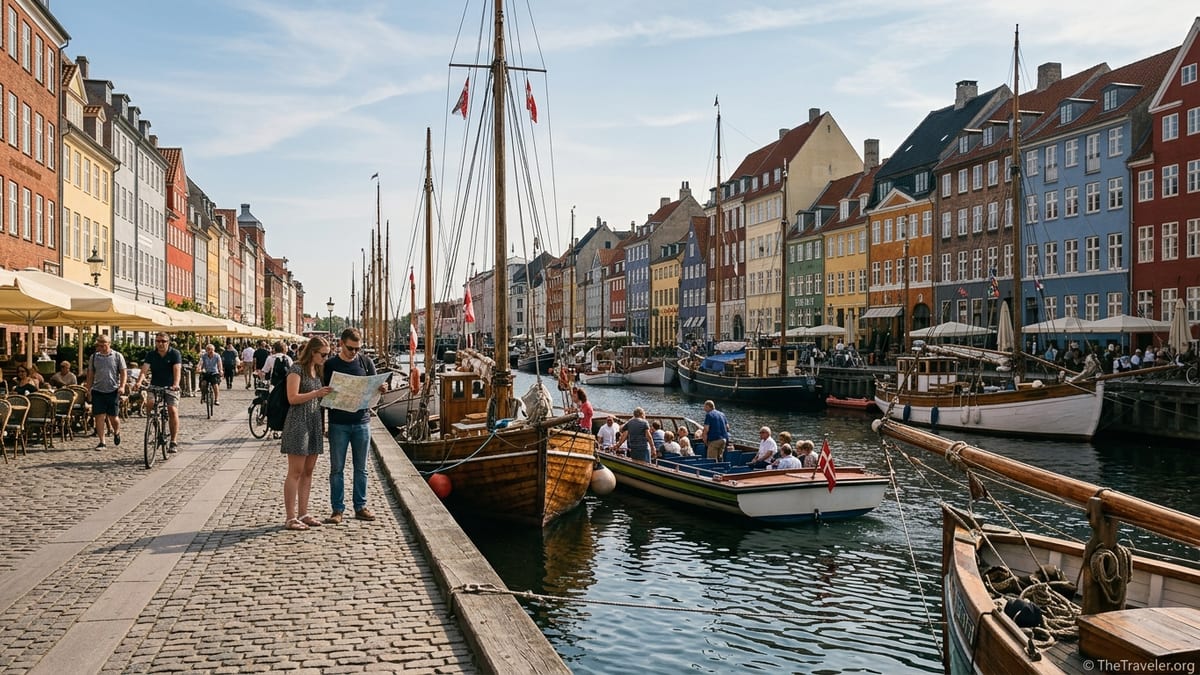
Copenhagen looks small on the map compared with London or Paris, and in many ways it is. Most major sights in the historic center sit within a compact area: Nyhavn’s colorful houses, the Strøget pedestrian shopping street, Christiansborg Palace, the Round Tower, and the canals are all within a 15 to 20 minute walk of each other. The metro connects the airport to the city center in about 15 minutes, and driverless trains run every few minutes, even late in the evening. That makes short stays technically feasible, because you do not lose much time to transfers.
What surprises many first-time visitors is the slower pace of life. Locals linger over coffee in neighborhoods like Vesterbro and Nørrebro, spend afternoons at harbour baths in summer, and use bikes instead of rushing underground. If you arrive planning to “conquer” every sight in two days, you may find that keeping up an aggressive schedule feels at odds with the city’s relaxed rhythm. A realistic plan balances the efficiency of public transport with enough unscheduled time to sit by the canals or wander side streets.
The other key factor is daylight and season. In July, you can sightsee from early morning until late evening with long golden hours along the harbour. In January, you may only have about seven hours of usable daylight, which naturally reduces how much you can comfortably fit into a short stay. A two day winter break simply cannot cover the same amount as two days in midsummer, and it is worth factoring that into how many nights you book.
What You Can See in 2 Compact Days
Two full days in Copenhagen is the classic weekend break scenario. It works best for travelers who are happy to walk 15 to 20 kilometers a day, eat on the go, and prioritise a few headline sights. With this timing you can comfortably see Nyhavn, take a canal tour, walk past The Little Mermaid, explore at least one palace, and spend an evening at Tivoli Gardens if it is open in your travel month.
A typical 48 hour visit might look like this in practice. On Day 1 you check into a hotel near Copenhagen Central Station around midday, drop your bags, and walk through City Hall Square onto Strøget. You climb the Round Tower for a view over the rooftops, wander down to Nyhavn, then join a one hour canal cruise that passes Christianshavn, the Opera House and the Little Mermaid. After dinner at a casual place in the Meatpacking District, you ride one metro stop back to your hotel and sleep. On Day 2 you tour Christiansborg Palace’s reception rooms and ruins in the morning, spend an hour at Rosenborg Castle to see the crown jewels, then finish the trip with an afternoon and evening inside Tivoli, which is especially atmospheric when lit up after dark.
Costs for a short stay add up quickly, which is another reason many visitors limit themselves to two nights. In 2026 it is common to pay the equivalent of roughly 200 to 300 US dollars per night for a central midrange hotel room in summer. Dining at modern Nordic bistros can easily cost 40 to 60 US dollars per person for a main course and a drink, while more casual options such as food halls or street food markets bring that down. If you are only in town for two days, a City Pass small (covering the airport and inner zones) for 48 hours is usually enough for metro, buses, and S train travel at a fixed price, and you may decide to skip more expensive tourist cards because you only have time for one or two paid attractions.
The trade off with a two day trip is that there is almost no room for neighborhoods beyond the historic core, nor for day trips to places like Kronborg Castle or the Louisiana Museum of Modern Art on the coast. If you like to soak up café culture, shop for design objects, or simply sit by the lakes people watching, two days will feel thin. It works best either as a “taster” visit or as a city break attached to a longer Scandinavian itinerary.
Three Days: The Sweet Spot for First Timers
Three full days, or roughly 72 hours on the ground, is often the most balanced option for a first visit. Travel forums and recent trip reports are full of itineraries that use three days to cover the main sights without feeling frantic. With this amount of time you can see the historic center, tour two or three major museums or palaces, and dedicate a half day to one or two contrasting neighborhoods, all while enjoying unhurried meals.
Imagine landing at Copenhagen Airport on a Friday morning and activating a 72 hour City Pass as soon as you step off the plane. On Day 1, you ride the metro into town, check into a hotel in Indre By, then explore the canals, Nyhavn and Amalienborg Palace at an easy pace. Day 2 becomes your “museum and palace” day: Rosenborg Castle in the morning, perhaps the National Museum or Glyptotek for art and history in the afternoon, and Tivoli Gardens in the evening. On Day 3, you rent bikes from a shop in Vesterbro or use city bikes to ride around the lakes, explore Nørrebro’s cafés and independent shops, and cross back to Refshaleøen for a late lunch at a food market housed in a former industrial space.
From a budgeting perspective, this is also the point at which a tourist pass like the Copenhagen Card starts to make financial sense for many visitors. In 2026 the card is sold in durations from 24 to 120 hours and typically includes free entrance to more than 80 attractions along with unlimited public transport in the Copenhagen region. If you plan to visit two or three paid sights per day, such as Tivoli, Christiansborg Palace, and a canal tour, the combined ticket value can quickly approach or exceed the cost of a 72 hour card, especially in high season. The exact break even point depends on your mix of attractions, but it is worth comparing individual ticket prices when planning.
Three days also create enough space for weather hiccups. If a day of wind and rain hits, you can switch plans and spend more time indoors at museums without worrying that your whole checklist will collapse. In summer, you can devote part of one day to swimming at a harbour bath or renting kayaks on the canals without feeling that you are sacrificing “serious sightseeing.” For many travelers who like a balance of culture and everyday life, three full days is the minimum that feels both efficient and enjoyable.
Four or Five Days: Adding Depth and Day Trips
If you have four or five days, Copenhagen changes from a quick city break into a more rounded city stay. You still cover the core highlights by day three, but you gain time to explore less central districts and to take at least one day trip without turning your schedule into a race. Many travelers who spent four nights in recent years used the extra time for short rail journeys to Helsingør for Kronborg Castle, Roskilde for its UNESCO listed cathedral and Viking Ship Museum, or Hillerød for Frederiksborg Castle set on a lake.
A concrete example: with five days you might dedicate Days 1 and 2 to the central area and classic sights, then on Day 3 take the coastal train north to Humlebæk to visit the Louisiana Museum of Modern Art, known for its sculpture park overlooking the Øresund. The train ride takes about 35 minutes from Copenhagen Central Station, and entrance plus a café lunch can easily fill most of the afternoon. On Day 4 you could head to Helsingør to tour Kronborg Castle, sometimes called “Hamlet’s Castle,” then walk through the small harbour town before returning to the city for dinner. Day 5 becomes a flexible buffer for shopping, bike rides, or simply repeating your favorite places.
With this length of stay, a 96 or 120 hour Copenhagen Card often becomes more attractive, because it typically covers public transport to many of these out of town sites as well as their entrance tickets in one package. Trains to Roskilde, Helsingør or Humlebæk are all part of the same regional network, and having a card or City Pass Large means you can simply board without buying additional tickets at each station. For families, there is an extra advantage: both the Copenhagen Card and regional passes usually allow one or two children under 12 to travel free with each paying adult, which significantly simplifies costs for larger groups.
Four or five days also give you the freedom to live a little more like a local. You might spend a lazy breakfast in Østerbro, browse interior design showrooms and small galleries, and then sit by the lakes with takeaway smørrebrød rather than lining up for every famous museum. You can time your visit to a neighborhood wine bar or natural wine spot in the late afternoon, or book a sauna session followed by a cold plunge at a harbour bath in winter. None of these experiences require tickets or long checklists, but they do require time, which longer stays naturally provide.
When a Week or More Makes Sense
Staying seven days or longer in Copenhagen is less common for first time visitors, but it can make a lot of sense if the city is your base for a broader region or if you are working remotely. With a week, you can comfortably spend three or four days inside the city itself and then use the remaining days for side trips without feeling that you are constantly in transit. Regular suburban and regional trains connect to coastal towns, beach areas, and smaller cities that give you a feel for everyday Danish life beyond the capital.
One realistic weekly pattern would be to book an apartment in a residential district like Nørrebro, Vesterbro, or Islands Brygge and settle in. You might use mornings for work or slow starts, then in the afternoons pick a single highlight: perhaps biking out to the architectural cluster around the Opera House and Copenhagen Contemporary on one day, taking the train to Roskilde on another, and spending a whole day at the amusement park and forest at Dyrehavsbakken, just north of the city. In summer, you could build in entire days for the beach at Amager Strandpark or the coastal towns north of Copenhagen, which are popular with locals when the weather cooperates.
Budget wise, longer stays magnify Copenhagen’s already high accommodation and dining costs, so apartments with kitchens become particularly attractive. Shopping at local supermarkets and cooking some meals at home, buying pastries from neighborhood bakeries, and visiting food halls where you can share plates can bring the daily cost down significantly compared with eating every meal at sit down restaurants. A weekly public transport solution, such as a longer City Pass or commuter style ticket, can also reduce costs compared with single rides, especially if you are making regular regional trips.
A week is especially worthwhile if you are visiting in winter or shoulder seasons and want to explore the city’s “hygge” side without rushing. Short days in November or February invite long afternoons in cafés, design museums, and candlelit restaurants. With plenty of time, you can explore lesser known spots such as the Cisternerne underground exhibition space in Søndermarken, smaller local museums, or community saunas and baths that rarely fit into a fast paced three day plan.
Matching Days to Your Travel Style and Budget
Choosing how many days to spend in Copenhagen ultimately comes down to your personal travel style. If you prefer fast, checklist oriented trips and are mainly interested in seeing the postcard sights and taking photos, you might be perfectly satisfied with two packed days. You would prioritize a hotel near the central station or metro, buy a short City Pass for practical transport, and accept that you will not experience much of the neighbourhood atmosphere beyond the main streets.
If you lean toward slower travel, enjoy local food and coffee culture, and like to explore on foot or by bike, three to four days is usually a more comfortable minimum. This window allows you to build in unscheduled time each day, perhaps an hour in a park, half an afternoon sitting by the harbour with a drink, or a spontaneous detour into a side street shop. Because you are not racing, you can adjust plans when you discover somewhere you like, whether that is a wine bar in Vesterbro or a record shop in Nørrebro.
Your budget is the other big variable. Copenhagen is consistently ranked among Europe’s pricier capitals. In 2026, a simple cappuccino in a specialty café often runs around the equivalent of 5 to 7 US dollars, while a standard main course in a midrange restaurant might be 30 to 40 US dollars before drinks. Museum entrance fees are comparable to other Western European cities. For example, major palaces and museums often charge somewhere in the 20 to 25 US dollar range per adult, give or take. If you multiply that by several days, you can see why some travelers cap their stay at three days and then head to a country where daily expenses are lower.
A practical strategy is to decide first what experiences you care most about, then calculate how many days those realistically require. If your must sees include Nyhavn, a canal tour, Tivoli, at least one palace, and a coastal day trip, squeezing everything into two days will feel stressful. If your list is short and you are mainly in town to meet friends or attend an event, you might be fine with a quick visit. Once you build a rough day by day outline, you will usually see quite clearly whether you need to add or subtract a night.
Practical Timing Tips for 2026 Visitors
Trips in 2026 come with a few practical considerations that can influence how many days you allocate. First, Copenhagen’s public transport continues to encourage digital tickets. Multi day tickets such as City Pass small or large can typically be bought in the official Rejsebillet app and are valid for 24 to 120 hours, counting from the activation time. For many short city stays, this offers a simple way to cover both airport transfers and daily travel without worrying about zones every time you board a train or bus.
If you are considering a Copenhagen Card, check current prices for your travel dates and compare them to the regular entrance fees for your chosen attractions. The card’s value depends on how many museums, castles and paid sights you fit into each day. For example, if you plan a four day trip with two major attractions per day, plus regional train trips to Helsingør and Roskilde, the bundled access may easily outpace the cost of buying everything separately. On the other hand, if you see only one paid museum per day and otherwise walk the city, a simple City Pass plus individual tickets may be cheaper.
Seasonal opening times can also shape how you distribute your days. Tivoli Gardens has distinct summer, Halloween, and Christmas seasons, with closure periods in between. Some smaller museums and attractions operate shorter hours outside summer. Before you lock in dates, it is wise to look at the calendars for key places you want to visit, especially if going to Tivoli or doing a specific canal tour is non negotiable for you. In cooler months, cluster outdoor sights in the middle of the day to maximise daylight and keep museum visits or cosy café time for evenings.
Finally, remember that Copenhagen sits in a dense network of rail and road connections. If you have a week in the region, you do not necessarily need to spend all of it sleeping in the capital. You could, for example, spend three nights in Copenhagen to see the highlights, then move on for a few nights in Aarhus on Jutland, Odense on Funen, or even hop across to Malmö in Sweden by train. Thinking in terms of a wider regional route can help you decide whether it makes sense to extend your Copenhagen stay or to split your time between several cities.
The Takeaway
There is no single perfect answer to how many days you “should” spend in Copenhagen, but patterns emerge once you look at real itineraries. Two days work as a fast paced introduction focused on headline sights. Three days offer a more balanced first visit that covers the historic core, a couple of major museums or palaces, and at least one neighborhood beyond the center. Four or five days let you add depth and day trips, while a week turns the city into a relaxed base for exploring Zealand and the Øresund region.
The right choice depends on your travel style, budget, and season. If cost is a primary concern and you are happy to move quickly, a tightly planned 48 or 72 hour stay can be very satisfying. If you value slow mornings, long café stops, and the chance to see how people actually live, investing in an extra night or two pays off. Use the examples and realistic pacing in this guide as a framework, sketch your own must see list, then adjust your number of days until your plan feels ambitious but not exhausting. That balance is where Copenhagen shines.
FAQ
Q1. Is 2 days in Copenhagen enough to see the highlights?
Two full days are enough for a quick introduction. You can see Nyhavn, take a canal tour, visit one palace, and spend an evening at Tivoli if it is in season, but you will not have much time for neighborhoods or day trips.
Q2. How many days do most first time visitors spend in Copenhagen?
Many first time visitors find that three days is the sweet spot, giving them time for the historic center, a few key museums or palaces, and at least one neighborhood like Nørrebro or Vesterbro without rushing.
Q3. If I have 4 days, should I include a day trip outside the city?
With four days, a day trip is very realistic. Popular choices include Kronborg Castle in Helsingør, the Viking Ship Museum and cathedral in Roskilde, or the Louisiana Museum of Modern Art in Humlebæk, all reachable by regional train.
Q4. Is the Copenhagen Card worth it for a 3 day visit?
The Copenhagen Card can be good value for three days if you plan to visit several paid attractions each day and use regional trains. If you only visit one museum daily and mostly walk, a simple City Pass plus individual tickets may be cheaper.
Q5. How long do I need in Copenhagen if I want to see everything at a relaxed pace?
If you want to cover the main sights, explore multiple neighborhoods, and take one or two day trips without hurrying, plan on four to five full days. This allows room for weather changes and spontaneous discoveries.
Q6. Is Copenhagen too expensive for a longer stay?
Copenhagen is undeniably expensive, but longer stays can be managed by renting an apartment, cooking some meals, using public transport passes, and focusing on free experiences like parks, harbours, and neighbourhood walks.
Q7. How does the season affect how many days I should stay?
In summer, long daylight hours make it easier to fit more into each day, so shorter trips work better. In winter, shorter days and colder weather mean you may need an extra day to see the same amount comfortably.
Q8. Can I see Copenhagen and Malmö in 3 days?
It is technically possible to spend two days in Copenhagen and a half or full day in Malmö by train, but that makes for a busy schedule. If you want to include Malmö, adding a fourth day is more comfortable.
Q9. Is it better to stay all week in Copenhagen or split time with another Danish city?
If you enjoy big city life and day trips, a week in Copenhagen works well. If you prefer variety, consider three or four nights in Copenhagen and the rest in another Danish city such as Aarhus or Odense to see a different side of the country.
Q10. How many days do I need in Copenhagen if I am traveling with children?
For families, three to four days is usually ideal. That gives you time for child friendly highlights like Tivoli Gardens, canal tours, parks, and perhaps a castle day trip without overloading younger travelers.