


Choosing between Copenhagen and Stockholm is the kind of pleasant travel dilemma that can keep you browsing flight searches late into the night. Both Nordic capitals are safe, stylish, set on the water and consistently ranked among the world’s most liveable cities. Yet the experience on the ground does feel different. If you only have time and budget for one, which city gives you more for your trip right now?
Get the latest updates straight to your inbox!
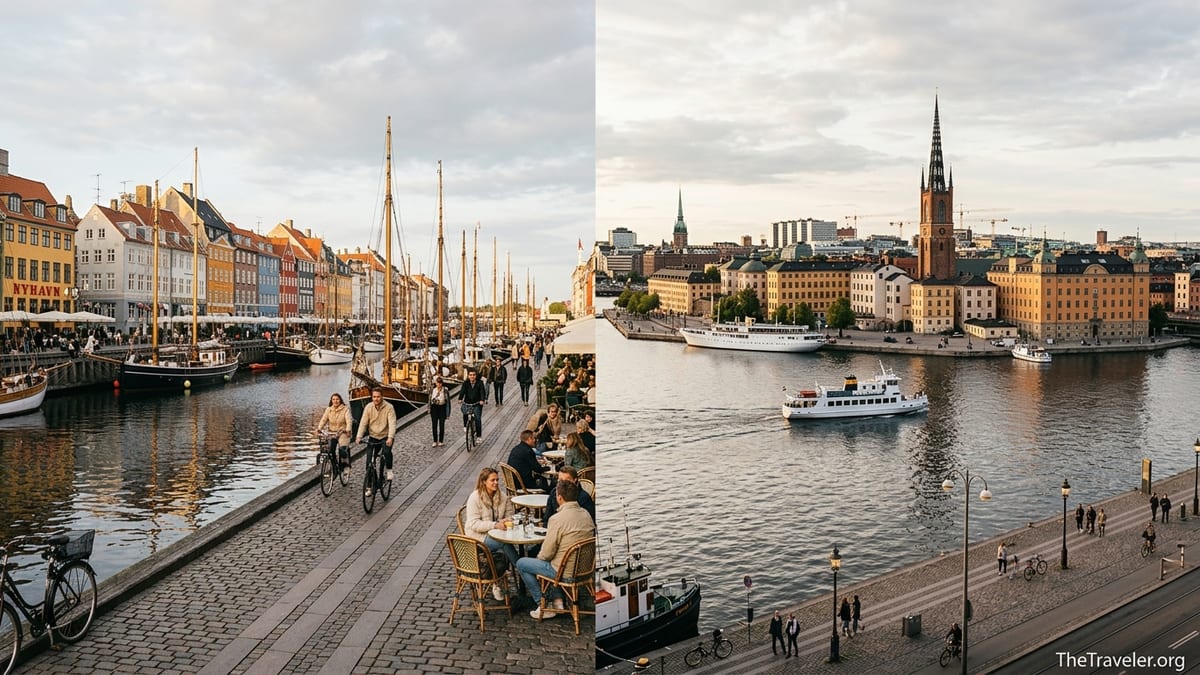
First Impressions: Vibe, Layout and How Each City Feels
Copenhagen and Stockholm share some surface similarities: both are compact capitals with historic cores, lively waterfronts and excellent public transport. But the mood in each city is distinct from the moment you step out of the airport train or metro.
Copenhagen often feels intimate and human scaled. The core neighborhoods around Indre By, Vesterbro and Nørrebro are flat, tightly knit and easy to cross on foot or by bike in 15 to 20 minutes. Cafes spill out onto cobbled streets, cyclists vastly outnumber cars at rush hour, and you are never far from the water, whether it is Nyhavn’s postcard harbor or the modern canals of Islands Brygge.
Stockholm, by contrast, is a city of islands and vistas. Built across a web of bridges, it has more varied topography: viewpoints in Södermalm look across the water to the royal palace, while ferries link Gamla Stan’s medieval lanes with museum packed Djurgården. Distances between neighborhoods like Östermalm, Vasastan and Södermalm are walkable, but visitors quickly find themselves hopping on the tunnelbana or taking a short commuter ferry to avoid long detours around inlets.
If you imagine yourself biking between cafes and design shops and swimming from city harbor baths, Copenhagen will likely feel like an instant fit. If you want grander cityscapes, island hopping and more of a classic capital aura, Stockholm’s skyline of spires and waterfront palaces is hard to beat.
Value for Money: Where Your Budget Stretches Further
Neither Copenhagen nor Stockholm is a budget destination, but there are real differences in how far your money goes. Cost of living comparisons generally put Copenhagen a bit higher overall, often by a few percentage points for everyday expenses like cafe meals and local transport.
For accommodation, sample midrange hotels in central areas tell a story. A standard double at a well located design hotel near Copenhagen’s City Hall Square or in Vesterbro can easily run to the upper mid hundreds of dollars per night in high season, even before breakfast. In Stockholm, an equivalent property in Norrmalm or Södermalm may still be pricey, but it is often slightly less, and deals outside peak summer are easier to find.
Museum and attraction pricing is similar in absolute terms, but the structure of city passes affects value. The official Copenhagen Card, updated for 2026, starts around the high 70s in euros for 24 hours and includes unlimited public transport plus entry to 80 or more attractions, from Tivoli Gardens to Rosenborg Castle and the National Aquarium. Longer versions up to 120 hours bring the daily cost down for travelers planning several paid sights each day. ([bonjourcopenhague.com](https://bonjourcopenhague.com/copenhagen-card/?utm_source=openai))
Stockholm’s main all inclusive pass products, marketed under the Go City Stockholm umbrella, bundle entry to more than 60 or even 70 attractions, including heavy hitters like the Vasa Museum, Skansen open air museum, the Royal Palace and several canal tours. Recent price examples for a 1 to 5 day Stockholm pass put a 1 day adult pass in the low 80s in euros, with per day rates decreasing with longer durations. ([stockholm.net](https://www.stockholm.net/stockholm-pass?utm_source=openai)) For a traveler who wants boat tours and multiple museums in a short time frame, both cities’ passes can offset high pay as you go prices, but in practice Stockholm often offers slightly more included boat and bus options, which can add perceived value.
Getting Around: Transport, Bikes and Airport Access
On sheer convenience of arrival, Copenhagen is hard to fault. The driverless metro runs from the airport to the city center in around 15 minutes, and trains are frequent throughout the day. Ticketing has been evolving, but visitors can still rely on simple paper tickets, the Rejsekort system or app based options like single and 24 hour tickets sold through regional transport apps. Official guidance in 2026 shows that metro tickets can be bought from machines at all stations, and common visitor tickets cover the airport zone and central city without much fuss. ([m.dk](https://m.dk/en/travel-with-the-metro/tickets/?utm_source=openai))
Copenhagen’s size and flat terrain mean that many visitors barely use public transport once checked in. Renting a bike from a shop in Vesterbro or using hotel loaner bikes is common, and segregated bike lanes make cycling between Nyhavn, Christianshavn and Nørrebro feel accessible even to casual riders. Tourists frequently report feeling comfortable cycling within a day, something less true in many capitals.
Stockholm’s airport access depends on which airport you use. Arlanda, the main international gateway, is linked to the city by the premium priced Arlanda Express train as well as slower, cheaper commuter trains and airport buses. Once in the city, the SL public transport network covers metro, commuter trains, buses and some ferries. The metro is efficient and easy to understand, and a single ticket generally covers 75 minutes across modes within the main zones, with longer term travelcards available. Regional authorities recently confirmed moderate fare increases through 2025 but no major changes to the basic structure of the 30 day pass or standard tickets, which matters more for longer stays than short city breaks. ([en.wikipedia.org](https://en.wikipedia.org/wiki/Connecting_Stockholm?utm_source=openai))
For a three or four day visit, Copenhagen’s compact layout and bike culture often translate into lower local transport costs and less time underground. Stockholm’s system, however, shines if you value the experience of the metro itself, with its art filled stations, and if you plan to explore suburbs, viewpoints and outer islands that would be slower to reach by bike.
Things to Do: Sights, Culture and Signature Experiences
If you measure value in high quality experiences rather than just prices, both cities deliver, but in different flavors. Copenhagen’s top attractions skew toward design, royal history and urban lifestyle. With a Copenhagen Card you can walk into Tivoli Gardens, the atmospheric 19th century amusement park that inspired early theme parks, without buying a separate gate ticket. From there it is a short stroll to the National Museum, the Ny Carlsberg Glyptotek art museum and the canal tours leaving Nyhavn.
Stockholm’s must sees cluster around maritime history and open air culture. The Vasa Museum, showcasing a 17th century warship raised from the harbor, consistently ranks as one of Europe’s standout museums. Nearby, Skansen layers traditional Swedish buildings with a small zoo, while the Nordic Museum, ABBA Museum and Gröna Lund amusement park add options for varied budgets. Many of these are covered by Stockholm’s pass products, and canal tours around the city islands or out into the archipelago are often included too. ([stockholm.net](https://www.stockholm.net/stockholm-pass?utm_source=openai))
Day trips broaden the comparison. From Copenhagen, a popular outing is the Louisiana Museum of Modern Art on the coast, reachable in about an hour by regional train, where sculpture gardens overlook the Øresund. Another option is a quick hop across the bridge to Malmö in Sweden, where coffee bars on Lilla Torg provide a more budget friendly taste of Scandinavia. Stockholm, on the other hand, offers full day archipelago cruises to islands like Vaxholm or Sandhamn, where swimming, walking trails and simple seafood lunches deliver a coastal experience that feels far from the city despite being only an hour or two away.
If your definition of “more for your trip” is the number of distinct, memorable experiences accessible within a short stay, Stockholm arguably edges ahead thanks to the combination of world class museums and island excursions. Copenhagen, however, may feel richer if you are most interested in everyday city life: cafe culture, canal swimming and time spent people watching from the seat of a bicycle rather than ticking off big ticket sights.
Food, Nightlife and Everyday Costs
On the dining front, both capitals punch far above their size, with globally known New Nordic restaurants at the top and a deep bench of casual spots underneath. Ultra high end venues, from former names like Noma in Copenhagen to Frantzén in Stockholm, sit well beyond most visitors’ budgets, but their trickle down influence is visible in smaller bistros and wine bars.
For everyday meals, Copenhagen often feels marginally more expensive. A simple cafe lunch of smørrebrød and a drink in the inner city can easily land in the mid teens in euros per person, while a casual dinner with a shared starter and mains at a midrange restaurant may climb into the mid 30s or more before drinks. One way visitors save is by eating at food markets like Torvehallerne, where you can mix lower cost takeaway options with treats like fresh fish or gourmet porridge.
Stockholm’s cafes and restaurants are not cheap, but visitors frequently note that grocery prices and some midrange meals feel gentler. A standard lunch menu in a neighborhood bistro often includes coffee and bread, and supermarket prepared foods in chains like Coop and ICA give budget conscious travelers options to picnic in parks or along the waterfront. As in Copenhagen, tap water is excellent and free, so you rarely need to buy bottled drinks.
Nightlife is strong in both cities, though structured slightly differently. Copenhagen’s bars and craft beer scene cluster in Vesterbro and Nørrebro, and it is common to hop between small natural wine bars, live music venues and microbreweries. Stockholm’s nightlife stretches across Södermalm and parts of Stureplan, where cocktail bars and clubs sit alongside more relaxed pubs. Alcohol taxes make bar drinks expensive everywhere, but you may find slightly better happy hour deals in Stockholm’s student friendly areas compared to Copenhagen’s polished city center.
Seasons, Weather and Trip Timing
Weather can dramatically shape how much value you feel you get from either city. In high summer, roughly late June through August, Copenhagen’s harbor baths, outdoor cafes and long evenings make it easy to pack your days with low cost or free activities. You can swim at Islands Brygge, laze in the King’s Garden, rent a kayak in Christianshavn or simply wander without needing to duck indoors for warmth. That said, hotel prices rise sharply and popular attractions like Tivoli and canal tours are crowded.
Stockholm’s summer may offer even more of a feeling of escape, especially if you factor in the archipelago. Long, light evenings on Djurgården or ferry rides out to island villages make the city feel like a gateway to nature. A simple picnic dinner on a rock outcrop overlooking the water can feel like one of the best value experiences of your trip, costing little more than a grocery store visit and a transit ticket.
In shoulder seasons such as May, early June and September, both cities are attractive, with fewer crowds and slightly softer prices on flights and accommodation. Copenhagen’s coastal winds can make it feel cooler than the temperature suggests, but cafe culture and indoor attractions remain strong. Stockholm in spring and autumn feels more dramatic, with shifting light on the water and crisp air making city walks and museum visits appealing.
Winter is where the two diverge more starkly. Copenhagen can feel atmospheric in December with Christmas markets and Tivoli’s lights, but the short days and damp cold sometimes limit the appeal of biking and outdoor cafe terraces. Stockholm’s winter is colder but arguably more suited to snowy cityscapes and cozy interiors. For a dedicated winter city break with a side of Nordic atmosphere, you may feel Stockholm’s combination of snow, saunas and museum hopping gives more seasonal value, particularly if you are already prepared for sub zero temperatures.
Which City Suits Which Traveler?
Ultimately, “more for your trip” is a question of match rather than a purely financial calculation. Travelers who fall in love with Copenhagen often describe how quickly they felt part of the city’s everyday rhythm. If your ideal day is renting a bike, grabbing coffee in Nørrebro, browsing independent design shops, then swimming at a harbor bath before a casual dinner at a wine bar, Copenhagen might offer more intangible value per day than any number of included museum entries.
Stockholm tends to win hearts among visitors who enjoy structured sightseeing and varied landscapes. Families, for example, often find that a Stockholm pass covering the Vasa Museum, Skansen, a canal tour and an amusement park day at Gröna Lund gives a clear sense of getting their money’s worth. Travelers who value big views, island hopping and iconic museums frequently report that Stockholm felt like a fuller “capital city” experience.
Online discussions from recent years echo this split. Some Scandinavians themselves point out that Sweden as a whole can feel more affordable than Denmark, with one Stockholm based commenter even recommending Copenhagen mainly as a good base for a side trip to slightly cheaper Malmö. ([reddit.com](https://www.reddit.com/r/femaletravels/comments/1s5bg58/copenhagen_or_stockholm/?utm_source=openai)) Others suggest starting in Copenhagen, where the airport is particularly convenient, then taking the direct train to Stockholm for a longer stay focused on museums and the archipelago. ([reddit.com](https://www.reddit.com/r/travel/comments/1i8jc38?utm_source=openai))
If you are planning a single first time Nordic city break and want a blend of lifestyle, walkability and easy logistics, Copenhagen is arguably the better fit. If you prioritize iconic attractions, boat trips and a strong sense of place shaped by islands and water, Stockholm will likely feel like the city that gave you more.
The Takeaway
On paper, Stockholm usually gives you slightly more for your money in absolute terms: hotels can be a touch cheaper, city passes include a generous list of museums and boat tours, and everyday costs from groceries to some transport tickets trend lower than in Copenhagen. In practice, though, how much value you feel you get will depend less on passes and prices and more on whether you want to live like a local for a few days or focus on classic sightseeing.
Copenhagen shines for compactness, cycling, cafe culture and a strong sense of everyday design. A long weekend here can feel rich even if you visit only one or two paid attractions, as simply moving through the city is part of the pleasure. Stockholm rewards travelers who want a packed itinerary with headline museums, panoramic viewpoints and adventurous day trips into the archipelago.
If you truly cannot choose and have a week or more, consider splitting your time and linking the two by train across the Øresund and southern Sweden. But if you have to pick one Nordic capital for a first visit and are asking which city gives you more in 2026, the answer is this: go to Copenhagen if your priority is lifestyle and ease; go to Stockholm if your priority is variety of sights and dramatic waterfront scenery. Either way, you are unlikely to feel short changed.
FAQ
Q1. Which city is generally cheaper for a short city break, Copenhagen or Stockholm?
For most visitors, Stockholm works out slightly cheaper, especially on accommodation and some everyday costs, though both cities are expensive by global standards.
Q2. If I only have three days, should I choose Copenhagen or Stockholm?
If you prefer walking and biking through neighborhoods with fewer big ticket sights, choose Copenhagen; if you want museums and boat tours, Stockholm is likely better.
Q3. Do I need a city pass in either Copenhagen or Stockholm to get good value?
No, but passes help if you plan to visit several paid attractions each day. For slower itineraries focused on walking and cafes, paying individually may be cheaper.
Q4. Which city is easier to get around without using public transport much?
Copenhagen is more compact and flat, so you can do more by foot or bike. Stockholm’s island layout often makes using the metro or ferries more time efficient.
Q5. Where will I find better food on a midrange budget?
Both cities have excellent food scenes. Copenhagen can feel pricier, while Stockholm often offers slightly better value in everyday bistros and supermarkets.
Q6. Which city suits families with children more?
Stockholm’s combination of the Vasa Museum, Skansen and amusement parks works very well for families, though Tivoli Gardens and Copenhagen’s harbor baths are also family friendly.
Q7. Is it realistic to visit both Copenhagen and Stockholm on one trip?
Yes. Many travelers spend two or three days in Copenhagen, then take the direct train to Stockholm for four or more days, especially on longer Nordic itineraries.
Q8. Which city is better in winter?
Stockholm offers a more traditionally wintry atmosphere with snow and cozy interiors, while Copenhagen’s damp cold can feel harsher, though December markets are charming.
Q9. Where will my money go further if I like nightlife?
Alcohol is expensive in both cities. Stockholm’s student friendly areas can offer slightly better deals, but the difference is modest; plan for high bar prices either way.
Q10. If I love architecture and design, which city should I prioritize?
Copenhagen is stronger for contemporary design, cycling infrastructure and street level architecture, while Stockholm impresses with waterfront palaces, grand views and historic districts.