


Copenhagen is one of those cities that feels completely different depending on when you visit. Long, luminous summer evenings on the harbour have very little in common with the candlelit hygge of a February cafe or the bustle of Tivoli’s Christmas market in December. Choosing the right moment can mean the difference between queueing behind coach groups on Nyhavn and having whole canal views almost to yourself. This guide breaks down the best times to visit Copenhagen for a smart balance of weather, events and fewer crowds, with concrete examples of what the city actually feels like month by month.
Get the latest updates straight to your inbox!
Understanding Copenhagen’s Seasons at a Glance
Copenhagen has a cool coastal climate, with relatively mild but dark winters and short, often pleasantly warm summers. Average daytime highs climb from around the low single digits Celsius in January to the low 20s by July and August, before sliding back toward 5 to 8 degrees in November and December. That means your packing list and your tolerance for drizzle and wind will shape when the city feels most enjoyable.
Daylight makes an even bigger difference than temperature. Around midwinter Copenhagen can have only about seven hours of usable daylight, while in June and early July you can experience roughly seventeen hours between sunrise and sunset. In practice, that means in January you might be eating breakfast in the dark and coming out of an early dinner to night again, while in June you can sit on the quay at Islands Brygge at 10 pm and still see streaks of pale light over the water.
For travelers, the sweet spots tend to be late spring and early autumn, when daylight is generous but tourist numbers are still moderate. May and September are particularly good for a first visit: cafe terraces are active, bike lanes are busy but not overwhelming, and hotel rates are usually lower than at the absolute peak of July. Winter, on the other hand, is a niche choice that rewards visitors who are more interested in cosy interiors, design museums and winter festivals than in packing a schedule with outdoor sightseeing.
Because Copenhagen’s visitor numbers are heavily concentrated in summer and around December weekends, you can use timing strategically. A three‑night break from Sunday to Wednesday in early May will feel very different from a Friday to Monday stay in late July, even though the temperatures might not be that far apart. The following sections walk through each part of the year in more detail, including real events that push crowds and prices up.
Late Spring (April to early June): Best Overall Balance
From mid April through early June Copenhagen often offers the best combination of manageable crowds, comfortable temperatures and an active cultural calendar. Daytime highs typically range from about 10 to 18 degrees Celsius in April and May, climbing toward the low 20s by early June. You will still need a jacket and perhaps a scarf in the evenings, but you can comfortably sit outdoors with a blanket at places like Broens Gadekøkken street food market or on the benches along Nyhavn.
Tour groups and cruise passengers do begin to arrive in this period, yet the city does not feel saturated in the way it can on a sunny Saturday in late July. For example, on a weekday morning in early May you can often walk straight onto a Netto-Bådene canal tour from Gammel Strand without a long wait, and the queues to enter the Round Tower or Rosenborg Castle are usually modest. Hotel prices are often noticeably lower than during the core school‑holiday weeks, and you are more likely to find last‑minute rooms at centrally located mid‑range properties around Vesterbro or Nørreport.
Late spring is also race and festival season, which can be a draw or a reason to adjust your dates. The Copenhagen Marathon typically takes place in May and brings tens of thousands of runners and spectators to the streets, particularly around Islands Brygge, the Inner City and Frederiksberg. On that weekend, rooms with views of the harbour or easy access to the course sell out early and prices rise, so if you are not here for the race consider arriving midweek before or after. Beyond the marathon, you will find outdoor events at venues like Refshaleøen and early seasonal openings of harbour baths, all without the heaviest summer pressure.
If your priority is cycling, this is arguably the ideal window. Bike lanes are already busy with locals commuting, but you will not yet be dealing with peak tourist bike traffic. Renting a classic upright city bike from a shop near Central Station in May and taking a loop out through leafy Frederiksberg and back along the lakes is far more pleasant than navigating packed lanes in July when many visitors are wobbling along on rental bikes for the first time.
High Summer (mid June to August): Long Days, Bigger Crowds
From mid June through August, Copenhagen enjoys its famous long days and the warmest weather of the year. Average daytime highs sit around 20 to 23 degrees Celsius, with some hotter spells. This is the season when locals flock to urban beaches such as Amager Strandpark and to harbour swimming zones at Islands Brygge and Kalvebod Brygge. Cafes drag tables out onto cobbled streets, and locations like Nyhavn, Tivoli Gardens and the Latin Quarter are at their most colourful.
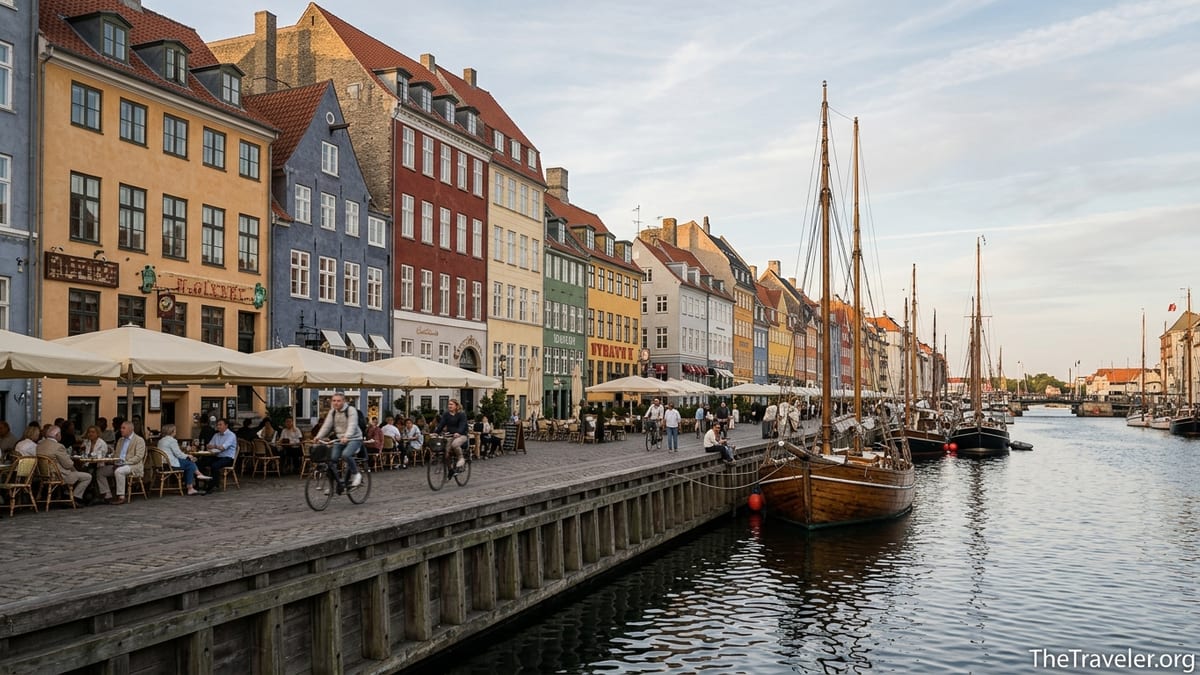
The trade‑off is that this is also when Copenhagen is at its busiest. Cruise ships dock regularly, and you will see coach groups lining up along Kongens Nytorv, particularly on clear days. Nyhavn’s south quay, with its colourful 17th‑century houses, can feel shoulder‑to‑shoulder from late morning through early evening, especially on weekends. If you want that iconic harbour photo without crowds, aim for around 7 am in July, when only joggers and delivery vans are out and the low sun gives the buildings a soft glow.
Prices respond accordingly. Central hotels around Indre By, Vesterbro and Christianshavn typically charge their highest nightly rates during peak summer weeks. Booking a simple double room at a design‑focused budget hotel near Central Station can cost significantly more in late July than the same room in March or November. Restaurant reservations become more important too; if you want a coveted outdoor table at a waterfront restaurant in Nyhavn or on Ofelia Plads for a Saturday night, you may need to book several days ahead.
If you want the benefits of summer without its worst congestion, consider bracketing the season. The last week of June and the final days of August often feel slightly quieter than the school‑holiday core, particularly midweek. Another tactic is to base yourself slightly outside the most touristed core, for example in Østerbro or Islands Brygge, and use the metro or bicycle to dip into the centre for specific sights early or late in the day.
Autumn (September to early November): Culture and Softer Light
Autumn in Copenhagen is an underrated time to visit, especially for travelers focused on museums, food and feeling the city at a slower pace. September typically offers mild temperatures, with average daytime highs often in the mid teens Celsius, and around 13 hours of daylight at the start of the month. Trees along the lakes and in Frederiksberg Gardens turn golden, and the evening light over the harbour takes on a softer, more subdued quality compared with the harsh brilliance of July.
By October, you will notice cooler days and more frequent rain, but also significantly fewer visitors. Major attractions like the National Museum, Designmuseum Danmark and Glyptoteket are much calmer. On a Tuesday afternoon in October you might find yourself wandering galleries almost alone, something that rarely happens in July. Cafes in neighbourhoods like Nørrebro and Vesterbro, such as those lining Jægersborggade or Istedgade, are busy with locals but see fewer suitcases parked by the door.
Pricewise, autumn can be friendlier than summer. Many hotels drop their midweek rates after the peak season ends, and you may be able to find short‑notice deals at boutique properties near the Meatpacking District or by the lakes. At the same time, Copenhagen’s restaurant scene is in full swing, with seasonal menus featuring early autumn produce. Booking is still advisable for popular spots, but you are more likely to secure a table at a sought‑after bistro or new natural wine bar than during July.
The main caveat is daylight. By early November the city has only about eight to nine hours between sunrise and sunset, and days can feel short, particularly if skies are overcast. If you want to combine decent daylight for walking or cycling with calmer streets, aim for the first half of October or the month of September, and build in a few indoor options for rainy spells, such as the indoor food market at Torvehallerne or the sauna and spa facilities at one of the harbourfront bathhouses.
Winter (late November to March): Hygge, Lights and Very Few Crowds
Winter in Copenhagen divides opinion. From late November through March, temperatures are generally low, with daytime highs often hovering between freezing and around 5 degrees Celsius, and nights colder. Days are short; in December you may have only around seven hours of daylight, and the sun often sits low behind clouds. However, for travelers who enjoy atmospheric cities in winter mode, this period can be rewarding, with far fewer crowds at classic sights and a distinctive focus on cosiness.
Late November and December bring the most visitors of the winter months, thanks largely to Tivoli Gardens’ Christmas season and the city’s holiday markets. Tivoli transforms into a dense landscape of lights, wooden stalls and seasonal decor, and can be very busy on December weekends. If you want to enjoy the park without intense crowds, it is wiser to visit on a weekday afternoon in late November or early December, arriving early so you can see the transition from daylight to darkness. Outside Tivoli, several Christmas markets spring up around the city, including in Nyhavn and on Kongens Nytorv, though these can vary in quality and atmosphere from year to year.
January and early February, by contrast, are among the quietest times for tourism. Many Danes retreat indoors after the holidays, and you may notice that some smaller restaurants or bars take staff holidays during these weeks. For visitors, the upside is space. You can stroll through Nyhavn and sometimes see more locals walking their dogs than tour groups, and museum queues are minimal. Hotel rates tend to be at their lowest, especially midweek, making this a cost‑effective time to book a centrally located property that might feel out of reach in summer.
Winter also has its own marquee events. The Copenhagen Light Festival typically runs from late January into February, turning the harbourfront, canals and key city spaces into a large outdoor exhibition of light installations each evening. You might find illuminated artworks along the waterfront from Nordhavn to Ørestad, and guided tours by canal boat or even by kayak run after dark. Experiencing the city this way gives you a different perspective, particularly when the air is crisp and the reflections of colour ripple across black water. If your priority is to see Copenhagen at its quietest while still having a signature event to anchor your trip, timing a visit for the festival can be a smart move.
Key Events That Affect Crowds and Availability
Several recurring events have a noticeable impact on crowds and hotel availability in Copenhagen, and planning around them can improve your experience. The Copenhagen Marathon in May is one of the largest, drawing tens of thousands of runners and spectators. Its route weaves through central neighbourhoods like Indre By, Østerbro, Nørrebro and Frederiksberg, creating rolling road closures and enthusiastic street parties. On marathon weekend, expect elevated hotel rates, especially in properties close to the course, and busier restaurants in the evenings as runners celebrate or refuel.
Summer also brings sporting and cultural events that concentrate visitors. Large running and cycling events, including elite races and city‑wide rides, often take advantage of the flat city streets and waterfront vistas. When such events coincide with sunny weekends, central areas like the harbour, the lakes and bridges such as Dronning Louises Bro can feel particularly lively. If you are sensitive to crowds, consider checking the city’s official event calendar before finalizing dates, particularly for May through September stays.
On the cultural side, watch for major festivals and performance seasons. Tivoli Gardens runs themed periods across the year, including a long summer season, Halloween events in autumn and the aforementioned Christmas period. Each brings surges of visitors, especially on Friday and Saturday evenings. Similarly, big concerts or cultural festivals at venues like Royal Arena, DR Koncerthuset or the Refshaleøen event grounds can fill specific neighbourhoods with people, even if the wider city remains relatively calm.
Finally, day‑to‑day patterns matter. Weekends are consistently busier than weekdays, and Saturdays in particular can feel crowded in Nyhavn, Strøget and Tivoli, regardless of season. If you have flexibility, anchoring your visit from Sunday to Wednesday or Monday to Thursday will usually deliver fewer crowds at the same sights than a Friday to Monday stay, and often at a lower accommodation cost.
Strategies to Find Fewer Crowds in Any Season
Even if you can only travel during peak periods, there are practical ways to experience a quieter Copenhagen. Time of day is the simplest lever. Popular outdoor spots such as Nyhavn, the Little Mermaid statue and the main harbourfront promenades are significantly calmer before 9 am and after 9 pm on summer days. For example, walking from Nyhavn to the Little Mermaid around 7:30 am in July can feel almost contemplative, with joggers and commuters vastly outnumbering tourists. By late morning, the same route may be dense with guided groups and selfie stops.
Location is another tool. Many first‑time visitors cluster within a small triangle between Central Station, Nyhavn and the lakes. By staying or spending more time in adjacent neighbourhoods like Christianshavn, Østerbro or Islands Brygge, you can experience the same canals and harbour views with more breathing room. A cafe on a side street in Christianshavn, a few minutes’ walk from the metro, may have seats available at lunchtime even on a busy August Saturday, while the cafes directly on Nyhavn’s main quay are packed.
Expectations around key attractions also help. Tivoli Gardens, for example, tends to be most crowded on weekend evenings and school holidays, especially in December and during summer concerts. If you are not tied to fireworks or specific shows, entering when the gates open in the late morning or early afternoon can give you several calmer hours before local families arrive after work. Similarly, planning indoor sights during typical peak outdoor hours can smooth your day: visit museums or design shops in the early afternoon, then walk the harbour and canals in the evening when many coach groups have departed.
Booking ahead where it matters reduces the stress of crowds. Reserving a table at a mid‑range restaurant in Nørrebro or Vesterbro, or booking a time slot for a guided canal tour, allows you to focus on enjoying the city rather than queuing or improvising under time pressure. This is particularly valuable during major events and school holidays, when walk‑in options become more limited in the most popular dining areas.
The Takeaway
There is no single “best” time to visit Copenhagen, but there are better times for different types of travelers. If you want the broadest mix of pleasant weather, long enough days and manageable crowds, late April through early June and the month of September are hard to beat. You will have an active city, cafe terraces in use and a full cultural calendar, without quite the intensity of peak July and August.
If you prefer atmosphere and intimacy over warm temperatures, consider winter, especially outside the busiest December weekends. You may trade sunshine for candlelight and wool blankets, but you will gain quieter museums, more affordable central hotels and the chance to see events such as the Copenhagen Light Festival transform the city after dark. For families seeking rides and lights, timing a visit around Tivoli’s summer or Christmas seasons can be magical, provided you plan for crowds and book ahead.
Ultimately, Copenhagen is a city that rewards thoughtful timing. Look at daylight hours, scan the calendar for major events and decide whether you would rather share Nyhavn with a festival crowd or with a handful of early risers on a cool spring morning. With a bit of planning, you can match your visit to the version of Copenhagen that fits you best, whether that means canal swims at 9 pm in July or hot chocolate by a harbour window in February while the city glows with light art.
FAQ
Q1. What is the single best month to visit Copenhagen for good weather and fewer crowds?
Many travelers find May the best compromise, with mild temperatures, long days, active cafe life and fewer visitors than in July and August, especially on weekdays.
Q2. When is Copenhagen least crowded overall?
January and early February are generally the quietest, followed by parts of November and early March, when you will find fewer tourists at main sights and lower hotel rates.
Q3. Is July too crowded to enjoy Copenhagen?
July is busy, especially in Nyhavn, Tivoli and central shopping streets, but you can still enjoy the city by visiting popular spots early or late in the day and spending more time in neighbourhoods like Østerbro or Islands Brygge.
Q4. Are the Christmas markets in Copenhagen worth planning a trip around?
The Christmas season, particularly Tivoli Gardens’ Christmas market, is very atmospheric and draws many visitors; it is worth a trip if you enjoy festive decor and lights and do not mind crowds.
Q5. Does it snow a lot in Copenhagen in winter?
Copenhagen can see snow in winter, but conditions vary year to year; you are more likely to encounter cold rain, wind and occasional light snow than continuous deep snow cover.
Q6. Is the Copenhagen Light Festival a good time to visit?
Yes, the light festival in late January and February adds a distinctive evening experience with illuminated artworks along the harbour and canals, and visitor numbers are still relatively low compared with summer.
Q7. How far in advance should I book a hotel for a May or September trip?
Booking one to three months ahead is usually sufficient for May or September, though you may want to book earlier if your dates coincide with major events like the marathon or large concerts.
Q8. Is biking in Copenhagen comfortable for visitors year round?
It is possible to bike all year, but most visitors find conditions most comfortable from late April through October; in winter, cold, wind and early darkness make cycling less appealing for some.
Q9. Are attractions closed in winter?
Most major attractions, including museums, castles and Tivoli’s seasonal openings, operate in winter, though opening hours can be shorter and some smaller venues may close for short breaks.
Q10. What is the best time to visit Copenhagen on a tighter budget?
January, February, early March and parts of November often offer the lowest accommodation prices, especially midweek, while still providing access to key sights and indoor attractions.