


Riding NJ Transit between New Jersey and New York for the first time can feel intimidating. The network includes commuter trains, buses, and light rail, all feeding into major New York hubs like Penn Station and the Port Authority Bus Terminal. With a little advance understanding of how tickets, routes, and transfers work, however, first-time riders can move between the two states confidently and avoid common pitfalls that slow down unprepared travelers.
Get the latest updates straight to your inbox!
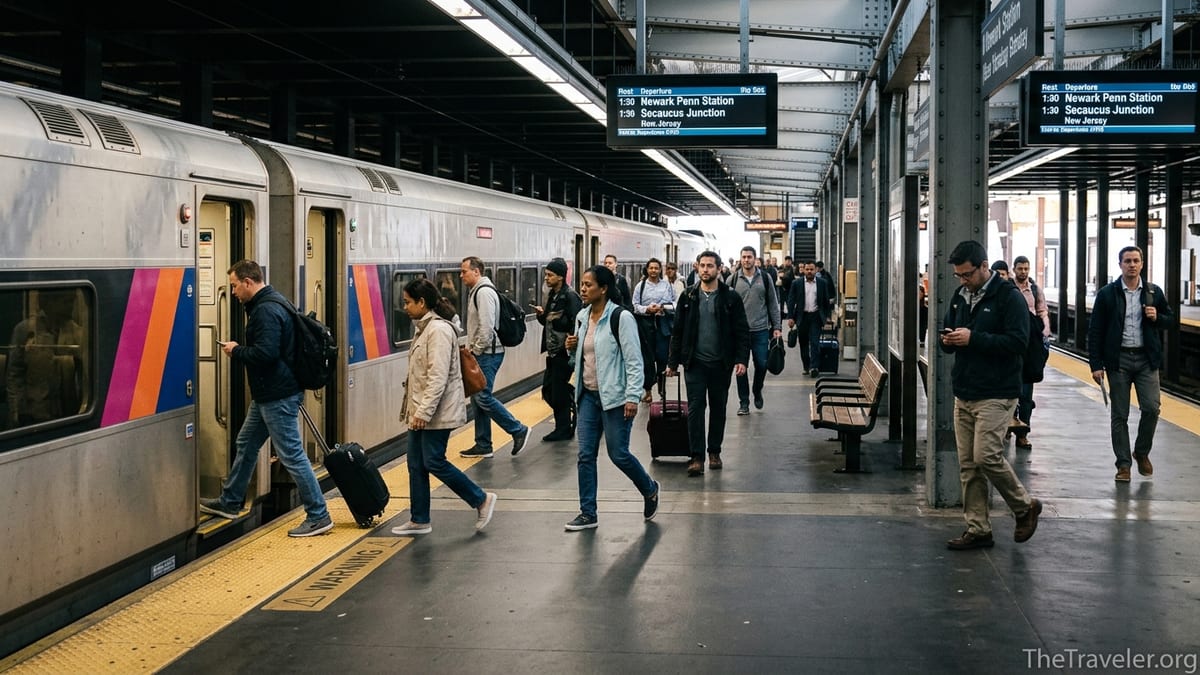
What NJ Transit Actually Is and Where It Goes in New York
NJ Transit is New Jersey’s statewide public transportation system. For most first-time visitors focused on getting into Manhattan, the key pieces are the commuter rail lines and the large network of commuter buses that cross the Hudson River. Trains primarily serve New York Penn Station in Midtown Manhattan, while buses focus on the Port Authority Bus Terminal, also in Midtown. A smaller number of buses and joint services also serve the George Washington Bridge Bus Station and Lower Manhattan, but most new riders will be using Penn Station or Port Authority.
On the rail side, several NJ Transit lines run directly into New York Penn Station, including the Northeast Corridor, North Jersey Coast Line, Morris & Essex Line (via a junction), and the Raritan Valley Line during certain hours. A typical first-time trip might be from Newark Penn Station or Secaucus Junction into New York Penn. For example, a one-way adult ticket from Newark Penn Station to New York Penn Station generally costs under 10 dollars in 2026, depending on fare updates, and the ride takes about 20 to 25 minutes. That short hop is one of the most common first-time NJ Transit rail journeys.
NJ Transit buses, meanwhile, funnel huge numbers of riders from towns all over North and Central New Jersey into the Port Authority Bus Terminal in Manhattan. This terminal sits near Times Square and handles a dense cluster of NJ Transit routes numbered mostly in the 100 series for interstate commuter service. For example, routes like the 126 from Hoboken and the 130-series and 140-series routes from Route 9 corridors in Middlesex and Monmouth counties all use Port Authority as their Manhattan end point. For a new rider staying at a hotel near Times Square, these buses offer a direct door-to-door style ride from many New Jersey suburbs.
Because NJ Transit is a statewide system, not everything goes all the way into New York. Some trains terminate in Hoboken or Newark and require a transfer to another train or to a separate system such as PATH or a ferry to reach Manhattan. First-time riders should look closely at whether their train is labeled “New York Penn Station” or “Hoboken” to avoid ending up on a train that does not cross under the Hudson River.
Key New York and New Jersey Hubs You Need to Know
For cross-Hudson trips, three hubs matter most for first-time riders: New York Penn Station, the Port Authority Bus Terminal, and Secaucus Junction. Understanding how each works will help you choose the simplest route from your New Jersey starting point.
New York Penn Station is the primary rail gateway. NJ Transit trains arrive on the same underground level as Amtrak and Long Island Rail Road services. If you are staying in Midtown near Herald Square, the Garment District, or the Empire State Building, New York Penn is the most convenient arrival point. A first-time rider coming from Newark Airport, for example, will typically take the AirTrain to Newark Liberty International Airport Station and then board an NJ Transit train to New York Penn Station, following clear signage for “NYC Trains.” That entire rail trip from the airport station to Manhattan usually takes less than 30 minutes once you are on board.
The Port Authority Bus Terminal is the main bus hub for NJ Transit in Manhattan. Located near Times Square, it is an enormous multi-level terminal that handles the majority of NJ Transit’s interstate bus routes between New Jersey and New York. New riders arriving on a commuter bus from towns such as Clifton, Fort Lee, or Old Bridge will be dropped inside this terminal, then follow signs to street exits for 8th Avenue or 9th Avenue. The facility can be confusing to navigate the first time, with long corridors and multiple concourses, but departure boards list NJ Transit routes by number and lane, and there are staffed information booths during the day.
Secaucus Junction, in New Jersey, is a major transfer hub rather than a final destination. Many riders from western or northern New Jersey board a local train into Secaucus and then change to another train headed into New York Penn Station. For instance, a traveler from Ridgewood on the Bergen County Line might ride into Secaucus Junction, walk upstairs through the fare gates, and then follow signage for a Northeast Corridor or North Jersey Coast Line train marked “New York.” Tickets are priced by origin and destination rather than by segment, so a ticket purchased from Ridgewood to New York already includes the Secaucus transfer at no extra charge.
Understanding Tickets, Passes, and How Much You Will Likely Pay
NJ Transit uses distance-based fares on both trains and many bus routes. The farther you travel, the more you pay. For trains, tickets are tied to origin and destination pairs; for buses, fares are structured around zones and route types. First-time riders can buy one-way tickets, round-trips on certain routes, or monthly passes if they will be commuting regularly for an extended stay.
As of mid 2026, a typical one-way adult ticket between Newark Penn Station and New York Penn Station on NJ Transit costs in the mid single digits to just under 10 dollars, while trips starting farther out on the Northeast Corridor, such as from Metropark or New Brunswick, climb into the low to mid teens. For example, going from Metropark to New York Penn is noticeably more expensive than from Newark, reflecting the longer distance. On the bus side, a commuter route from a park-and-ride in central New Jersey to Port Authority can run into the low teens one-way, but local cross-Hudson routes from towns just across the river, such as Union City or North Bergen, typically cost much less.
There are also discounted options. Seniors, riders with disabilities, and some other eligible groups often receive reduced fares, which can be roughly half the regular adult ticket price on many services. Monthly passes are attractive if you expect to ride into New York almost every weekday; the cost for a monthly rail pass from a mid-distance station like Metropark to New York can be several hundred dollars, but still cheaper than buying 40 individual one-way tickets at full price. For short visits, most first-time riders will stick with one-way or, where available, same-day round-trip tickets.
One important nuance is that NJ Transit removed broad off-peak discounts within New Jersey to New York Penn in recent years, focusing instead on special off-peak round-trip products tied to certain lines and partnerships with other agencies. As a result, a train that leaves at 11 a.m. from Newark to New York generally costs the same as one at 8 a.m. A first-time visitor planning a Saturday sightseeing day in Manhattan should not expect a big price break just because it is the weekend. When in doubt, checking the current fare in the official app or at a ticket machine before travel remains essential because prices can change with new fare policies.
Buying Your Ticket: Machines, Windows, and the NJ Transit App
First-time riders have three main ways to buy NJ Transit tickets: station ticket windows, ticket vending machines, and the NJ Transit mobile app. At major stations such as Newark Penn, New York Penn, Hoboken Terminal, and Secaucus Junction, you will find multiple large red or blue NJ Transit ticket machines. These machines allow you to choose your origin and destination, select one-way or other available products, and pay with major credit cards, some debit cards, or cash. On the bus side, some large New Jersey bus terminals and park-and-ride facilities also have ticket machines for certain routes, though many local buses still rely on onboard payment.
The NJ Transit mobile app has become the easiest option for many visitors. After creating an account and adding a payment method, you can buy digital tickets, which live in a “MyTix” section. For a first-time train trip from Newark Penn to New York, you would select your origin, destination, and ticket type, purchase it in advance, and then tap “Activate” shortly before boarding. Conductors scan or visually inspect the active ticket on your screen. This approach removes the need to locate a machine in a busy station and is particularly useful at smaller New Jersey stations that do not have staffed ticket windows.
On NJ Transit commuter buses into Manhattan, payment methods vary by route. Many longer-distance commuter routes to Port Authority use paper tickets or passes purchased from machines or ticket agents, which you then present to the driver. Local routes that cross the Hudson from places like Jersey City or Union City often accept exact cash fare at the farebox when boarding. It is common for first-time riders on local buses to hold up boarding while searching for small bills and coins, so having exact cash ready or buying tickets in advance, where possible, saves time and embarrassment.
One crucial rule for new riders: buying a ticket from a conductor onboard without a valid reason usually costs more. If you board at a station with open ticket machines and no clear outage, the conductor can charge an onboard surcharge when selling you a ticket on the train. That extra fee is meant to encourage riders to buy tickets before boarding. Only if machines are out of service or a small station lacks them entirely should you expect to pay the regular price onboard without penalty.
Planning Your Route and Reading Schedules as a First-Timer
At first glance, NJ Transit schedules can look like a wall of numbers. Each rail line has its own printed or downloadable timetable that lists all stations, with columns showing the times of each train. For example, the Northeast Corridor schedule lists trains from Trenton through intermediate stations like Princeton Junction, New Brunswick, Metropark, and Newark Penn to New York. You find your origin row, your destination row, and then match them to the columns of departure and arrival times that work best for your plans.
In practice, many first-time riders rely less on printed timetables and more on trip planning tools in the NJ Transit app, third-party apps, or the “plan a trip” feature on official traveler information sites. A typical search might be “Elizabeth to New York Penn on Saturday morning,” which then proposes specific departure times and informs you whether a transfer is required, usually at Newark or Secaucus. On the bus side, Port Authority and NJ Transit publish route maps and basic frequency information, but mobile apps that provide live bus tracking and next departures are often easier for newcomers to understand.
When traveling into New York during weekday rush hours, schedules can include distinctions such as “express” or “local” trains. An express train from Metropark to New York might stop at fewer intermediate stations and save 10 or more minutes compared with a local. For example, a morning express could run Metropark, Newark Airport, Newark Penn, then New York, while a local might make several additional stops. First-time riders should read the station list carefully so they do not accidentally board an express that skips their intended station.
Delays and crowds are a reality. On rainy weekday evenings, for instance, Port Authority’s bus lanes can back up, adding 20 to 40 minutes to a normally 45-minute bus ride from central New Jersey. Similarly, an incident in a rail tunnel can cascade across multiple NJ Transit lines serving New York. New riders should build in extra time, particularly for airport connections or Broadway shows, and should monitor service alerts in the NJ Transit app or on station screens before committing to a specific departure.
What to Expect On Board: Trains vs Buses
NJ Transit commuter trains and buses offer very different on-board experiences, and first-time riders often choose between them based on comfort, reliability, and the location of their starting point. Trains typically offer more space to move around, onboard restrooms on many longer-distance sets, and power outlets on some newer or refurbished cars. A morning Northeast Corridor train from New Brunswick to New York, for example, may be crowded during peak hours, with many riders standing until Newark, but off-peak trains often have plenty of seats and a calmer atmosphere.
On buses, the experience varies with route type. Long-distance commuter buses from park-and-ride lots, such as those in central New Jersey suburbs, usually use highway coaches with high-backed seats, under-floor luggage compartments, and sometimes onboard Wi-Fi. A rider boarding a coach at a Route 9 park-and-ride headed to Port Authority may enjoy a quiet, mostly seated ride until reaching Midtown traffic. By contrast, short cross-Hudson routes from towns like Union City or North Bergen use city-style buses with more standing room, frequent stops, and shorter runs across local streets and the Lincoln Tunnel. These buses can be very crowded during rush hour.
Boarding procedures also differ. For trains, doors open at platforms and conductors typically allow boarding through multiple cars. You simply step on, find a seat or standing space, and have your ticket ready for inspection soon after departure. For buses at Port Authority, riders line up in specific “lanes” or gates for each route. Electronic displays and overhead signs show the route number and destination. When the bus arrives and the gate opens, you file on, show or insert your ticket if required, or pay cash at the farebox. Regular commuters instinctively form a queue well before the bus arrives, and first-timers should look for these informal lines to avoid cutting in unintentionally.
Noise and personal space can surprise some first-time travelers. In the evening peak, a New York bound train from Secaucus or a bus leaving Port Authority may be standing-room-only. Headphones, a small backpack instead of large rolling luggage, and an understanding that you may need to stand for parts of the trip will make the experience smoother. That said, outside of core commuting windows, many NJ Transit trips between New Jersey and New York are relaxed, reasonably quiet, and well-suited to visitors and families.
Common First-Time Mistakes and How to Avoid Them
A handful of predictable missteps trip up many first-time NJ Transit riders. The most common is boarding the wrong train. For example, a rider at Newark Penn intending to go to New York may accidentally board a southbound train toward Trenton or a train headed for Hoboken instead of New York Penn. To avoid this, always check the overhead screens for both the destination and track number, and confirm that the train’s external signs or announcements say “New York Penn Station” before boarding.
Another frequent mistake involves tickets. New riders sometimes buy tickets to the wrong destination, such as purchasing a Newark to Secaucus ticket when they actually need Newark to New York. Others activate a mobile ticket too early, forgetting that NJ Transit mobile tickets usually expire shortly after activation. A good practice is to buy tickets in advance but wait to activate train tickets until you are standing on the platform and see your train posted. If you realize you purchased the wrong origin or destination, station agents at major locations can often help correct it as long as the ticket is unused.
On buses, a classic first-timer problem is not realizing that some routes have both local and express variants with similar numbers. For instance, a route might have a regular version that makes many intermediate stops and an express version that skips several towns but has a nearly identical route number. A rider from a mid-route town who accidentally boards the express can find themselves whisked past their intended stop and straight into Manhattan. Before boarding, look for “express” or “local” indicators on the front sign, and ask the driver if the bus stops at your specific town or park-and-ride.
Finally, timing connections can be tricky. A traveler landing at Newark Airport with a tight Broadway curtain time may assume that a posted 30-minute NJ Transit schedule to New York is guaranteed. In reality, airport transfers, crowds at the ticket machines, and potential delays in the rail tunnels can stretch that journey. Building at least an extra 30 to 45 minutes of buffer for important events, and an hour or more for flights, is a wise strategy for anyone using NJ Transit across the Hudson for the first time.
The Takeaway
For first-time riders, NJ Transit is less mysterious when broken into its main pieces: trains to New York Penn Station, buses to Port Authority Bus Terminal, and transfers at hubs like Secaucus and Newark. Understanding the difference between these services, how tickets are priced by distance, and how to buy and activate those tickets through machines or the mobile app takes care of most of the learning curve.
By focusing on a specific example trip, such as Newark Penn to New York Penn by train or a commuter coach from a Route 9 park-and-ride to Port Authority, new riders can practice on a straightforward route before tackling more complex itineraries with transfers and multiple modes. Keeping an eye on route numbers, destination signs, and station departure boards, and allowing extra time during peak commuting windows, helps avoid the common mistakes that frustrate unprepared newcomers.
In the end, NJ Transit exists to move large numbers of people between New Jersey and New York every day, and it does so with a mix of rail and bus options that can work well for visitors once they understand the basics. With a bit of preparation and realistic expectations about crowds and delays, first-time riders can use NJ Transit as a reliable, cost-effective link between New Jersey neighborhoods, airports, and hotels and the heart of Manhattan.
FAQ
Q1. Do I need a reservation for NJ Transit trains between New Jersey and New York?
Reservations are not required for NJ Transit commuter trains. You simply buy a ticket for your origin and destination and board any appropriate train serving that route.
Q2. How early should I arrive before my train or bus departure?
For routine trips, arriving 10 to 15 minutes early is usually enough. For first-time riders, those with luggage, or during rush hour, plan 20 to 30 extra minutes to find platforms, buy tickets, and navigate crowds.
Q3. Is it cheaper to travel at off-peak times?
For many NJ Transit trips into New York Penn Station, fares are generally the same throughout the day, though some special off-peak products exist on certain lines. It is safest to assume your price will not drop dramatically just because you travel midday or on a weekend.
Q4. Can I use the same ticket for both NJ Transit and the New York City subway?
No. NJ Transit tickets are separate from New York City subway fares. If you arrive at Penn Station or Port Authority and then ride the subway, you will need to pay a separate subway fare using a method accepted by the Metropolitan Transportation Authority.
Q5. What happens if I board the wrong NJ Transit train?
If you realize quickly, get off at the next possible station and speak to a conductor or station agent about how to backtrack. You may need a new ticket if your original ticket does not cover your revised route.
Q6. Are NJ Transit trains and buses safe at night?
Generally, yes, but conditions vary by line, time, and station. Common-sense precautions apply: stay in well-lit areas, ride in busier cars, keep valuables out of sight, and check service hours so you are not stranded after the last departure.
Q7. Can I bring luggage on NJ Transit?
Small and medium luggage is common on both trains and buses, especially for airport trips. On trains, place bags in overhead racks or on the floor without blocking aisles. On buses, larger items may go in under-floor compartments on highway coaches, subject to driver instructions.
Q8. Does NJ Transit run 24 hours between New Jersey and New York?
Service is frequent but not truly 24 hours on most routes. Some rail and bus lines have late-night and early-morning trips, but gaps do exist. Always check the specific schedule for your route, especially if traveling after midnight.
Q9. How do I know which side of the platform to wait on?
Electronic signs and audio announcements at stations indicate whether the next train is inbound to New York or outbound to New Jersey. When in doubt, ask a fellow passenger or staff member, and confirm with the conductor as you board.
Q10. What if the ticket machines are not working at my station?
If all machines are visibly out of service and no ticket window is open, you can usually buy a ticket from the conductor on the train without paying the normal onboard surcharge. Take a photo of the out-of-service machine if you are concerned, and explain the situation politely to the crew.