


If you are new to New Jersey or just visiting, NJ Transit can feel like a puzzle designed to be solved only by long‑time commuters. Station names repeat, there are multiple "Penn Stations," maps show a web of color‑coded lines, and the ticket options can look strangely specific. Yet talk to almost any daily rider and you will hear the same story: once you understand a few key concepts, NJ Transit turns from intimidating maze into an essential, reliable backbone for getting around the region. This article unpacks why it feels confusing at first, and how, with real‑world examples, it soon becomes one of the most useful tools in your travel toolkit.
Get the latest updates straight to your inbox!
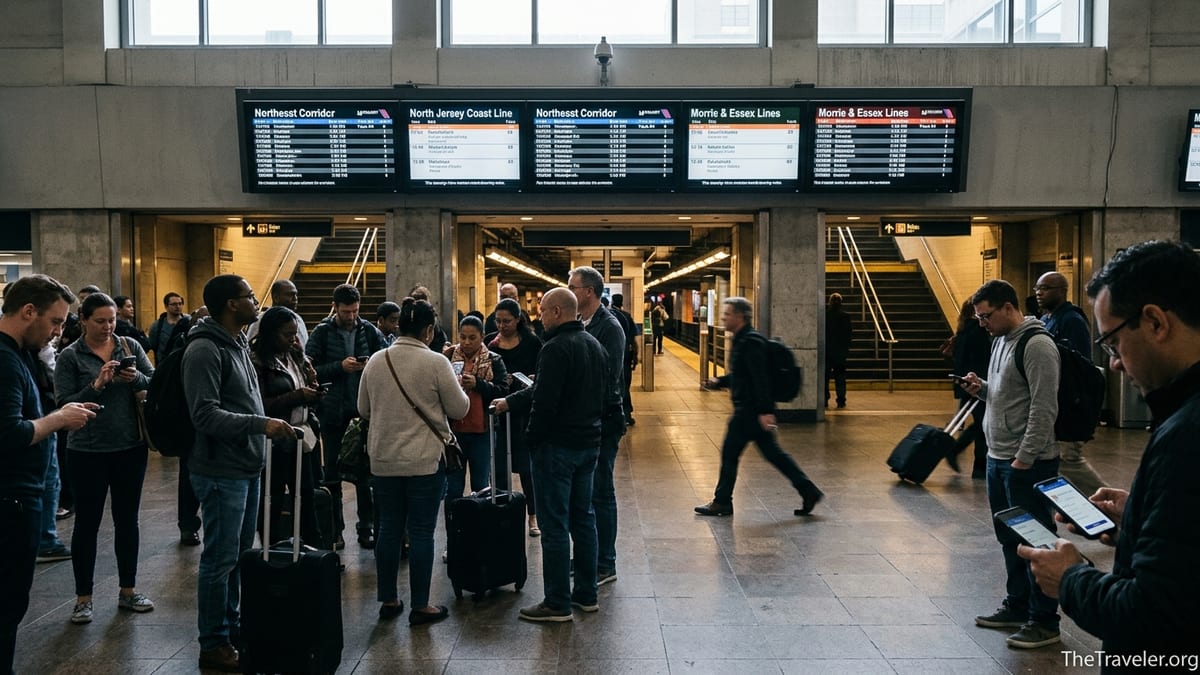
Why NJ Transit Overwhelms First‑Time Riders
Part of what makes NJ Transit disorienting at first is its sheer scale. The system runs 12 commuter rail lines, three light rail systems, and hundreds of bus routes across one of the most densely populated states in the United States, all funnelling into major hubs such as New York Penn Station, Newark Penn Station, Hoboken Terminal, and Secaucus Junction. For a traveler used to a simple subway map or a single regional rail line, seeing line names like Northeast Corridor, North Jersey Coast Line, Morris & Essex, and Raritan Valley overlapping on a single diagram can feel like stepping into air‑traffic control.
The confusion often starts with something as simple as the destination label. Someone flying into Newark Liberty International Airport might open the NJ Transit app and see options for Newark Airport, Newark Penn Station, and Newark Broad Street, plus routes that continue to New York Penn Station and Hoboken. Each is a different stop in a different place, and choosing the wrong one can mean a time‑consuming detour.
Another shock is that NJ Transit sits alongside other systems that share stations but use separate fares, such as Amtrak, PATH, and local subways. At New York Penn Station, for example, NJ Transit trains share a concourse with Amtrak and Long Island Rail Road, while upstairs the New York City subway runs on its own payment system. A first‑time rider following signs for “Trains to New Jersey” might find themselves staring at multiple sets of ticket machines and departure boards, unsure of which applies to them.
Add in crowds, especially around rush hours, and it is easy to see why many newcomers describe their first encounter with NJ Transit as stressful or even intimidating. Yet underneath the complexity is a fairly consistent logic that makes the system powerful once you learn how it works.
Decoding the Geography: Lines, Hubs, and Those Multiple Penn Stations
One of the biggest mental hurdles is understanding how NJ Transit maps onto real‑world geography. The core of the system is a set of radial lines that fan out from New York Penn Station, Newark Penn Station, and Hoboken Terminal. The busiest of these is the Northeast Corridor Line, which runs from New York Penn through Newark Penn, Metropark, New Brunswick and Princeton Junction down to Trenton. This line alone carries more riders than many entire regional rail systems, and it is the default route for people going between New York City and central New Jersey.
Layered on top of that are lines that split to serve different regions. The North Jersey Coast Line runs down through places like Long Branch and Asbury Park to Bay Head, serving the Jersey Shore. The Morris & Essex Lines and Montclair‑Boonton Line connect New York and Hoboken with suburban towns such as Montclair, Morristown, Maplewood, and Summit. To a newcomer seeing these on a system map, it may not be obvious which line is “yours,” especially because several of them share track segments through busy corridors near Newark and Secaucus.
The “Penn Station problem” adds another layer of confusion. There is New York Penn Station in Manhattan, Newark Penn Station in New Jersey, and historical references to other cities’ Penn Stations. A typical example: a visitor staying in Manhattan searches their phone for “Penn Station” and sees simply that label, without “New York” attached. When they buy a ticket on NJ Transit, they may worry they have chosen the wrong one, or that the NJ Transit conductor expects them to know which Penn is implied. In practice, for most NJ Transit rail riders heading into Manhattan, “Penn Station” on the app or ticket means New York Penn Station, while “Newark Penn” is clearly marked as such. Once you internalize that, a major source of anxiety disappears.
Secaucus Junction is also famously baffling until you have used it once or twice. Officially a single station, it functions like two stacked stations: lower‑level platforms handling trains between New Jersey and New York Penn, and upper‑level platforms serving trains heading to or from Hoboken and northern New Jersey. A traveler going from Newark Airport to a town on the Main Line might have to ride to Secaucus, go up escalators through fare gates, check departure boards for their connecting train, and then go back down to a different set of platforms. The first time, this can feel like threading a maze; by the third time, it is simply “how you change trains.”
Tickets, Zones, and Routes: Why Buying the Right Fare Feels So Tricky
Even once you understand roughly where you need to go, the ticketing system can look opaque. NJ Transit uses a zone‑based structure for rail fares. Instead of a simple dollar amount per ride, prices depend on both your origin and destination. A one‑way ticket from Newark Penn to New York Penn, for example, usually costs under ten dollars depending on the latest tariff and whether you buy on the app or at a ticket vending machine. The same length of ride on a different part of the network might cost slightly more or less based on how many zones you cross.
New riders sometimes assume they must pick a specific train departure, as with intercity services, but NJ Transit tickets are generally flexible within a defined origin‑destination pair. If you buy a ticket from Clifton to New York Penn, you can typically use it on any appropriate NJ Transit train serving that route that day rather than being locked into, say, the 7:42 a.m. departure. This flexibility is a major advantage for commuters whose schedules can shift by a few minutes each day, but it is not always clearly explained to visitors reading the app for the first time.
Another source of confusion is the “via” field that appears when buying some tickets. A visitor traveling from Newark Airport to Hoboken might see choices such as “via Newark” or “via Secaucus.” The app is asking you to choose your transfer point: do you ride to Newark Penn Station and switch to PATH or another NJ Transit train, or do you transfer at Secaucus Junction and continue to Hoboken? That distinction affects both the price and which gates you can use. To someone unfamiliar with New Jersey geography, it can look like an arbitrary extra question.
There are also subtle differences in fares for services that NJ Transit operates on behalf of Metro‑North Railroad, such as trains to Port Jervis and Spring Valley in New York State. Those lines sometimes have off‑peak round‑trip discounts or other ticket types that do not apply elsewhere in the system, because they follow Metro‑North’s tariff rules even though the trains themselves often say NJ Transit on the side. For a traveler who simply wants to get from a New Jersey suburb to Manhattan, this kind of fine print can easily feel like information overload.
Real‑World Trips That Feel Hard the First Time, Then Easy
Consider a typical scenario: you land at Newark Liberty International Airport on a weekday afternoon and need to reach a hotel near New York Penn Station. For a first‑timer, the options include an NJ Transit train, an Amtrak train, an airport shuttle, or a taxi or ride‑share into Manhattan. The NJ Transit option requires you to follow signs to the AirTrain, ride it to the Rail Link station, buy an NJ Transit ticket to New York Penn, and board either a Northeast Corridor or North Jersey Coast Line train that lists “New York” as its destination. The ride itself takes around 25 minutes, and the fare is modest compared with a taxi that can easily run to many times more once tolls and traffic are added.
On paper this is straightforward, but in reality you may be dealing with luggage, jet lag, and unfamiliar signage. The AirTrain platform signs refer to “Newark Airport Rail Station,” the NJ Transit app lists station names slightly differently, and departure boards alternate between multiple train lines stopping at the same platform. That first transfer from airplane to NJ Transit can feel like a test you are not fully briefed for.
The second or third time you make the same journey, the friction largely disappears. You know that any NJ Transit train marked “Northeast Corridor” or “North Jersey Coast Line” with New York as its final destination will work. You recognize which ticket machines belong to NJ Transit and which are for Amtrak. You may even time your walk from the AirTrain to the platform to catch a specific departure. What once felt like a gauntlet becomes a routine, budget‑friendly way to get between airport and city.
The same pattern plays out on purely local trips. A new resident of Montclair commuting to a job in Jersey City might initially spend an evening untangling options: take the Montclair‑Boonton Line into New York Penn and then the subway, ride into Hoboken Terminal and switch to the PATH train, or mix buses and light rail. The first week, each leg requires double‑checking track numbers and reading station announcements carefully. After a month, the commuter has a favorite pattern, knows roughly where to stand on the platform in Secaucus or Hoboken, and treats small delays or track changes as minor annoyances rather than crises.
The Tools and Habits That Make NJ Transit Click
What transforms NJ Transit from confusing to essential for many riders is a combination of tools and habits. The official NJ Transit mobile app is the most important of these. It allows you to buy and store tickets on your phone, see basic schedules, and sometimes receive alerts about service changes. For a commuter riding daily between, say, New Brunswick and New York Penn, keeping a monthly pass in the app eliminates the need to stop at vending machines or worry about losing paper tickets.
Third‑party tools help fill in gaps. General mapping apps can plot routes that combine NJ Transit with PATH or local subway lines, which is particularly useful for trips that do not end at a major hub. For example, someone staying in Jersey City and attending an event in Morristown can use a map service to see that a combination of PATH, NJ Transit rail on the Morris & Essex Lines, and a short walk will get them there quicker than a car in evening traffic, even if the number of steps looks intimidating at first glance.
On the ground, experienced riders learn to read departure boards and listen for certain phrases in announcements. At New York Penn Station, the key is to focus on the column listing final destinations and intermediate stops. If you are heading to Princeton Junction, you look for a Northeast Corridor train that prominently lists Trenton or Jersey Avenue but also shows Princeton Junction as a stop. If your train suddenly changes to a new track moments before boarding, you follow the crowd heading to that number rather than standing frozen in front of an older display.
Small habits also make a disproportionate difference. Arriving a few minutes early, positioning yourself near the correct end of the platform to be closer to exits at your destination, and carrying a mental list of “backup trains” in case one is canceled are all strategies veteran riders use daily. They are the kinds of tricks that no map or app fully conveys, but that you start to acquire almost automatically after a handful of trips.
Why NJ Transit Becomes Indispensable for Daily Life
Once you push through the initial confusion, it becomes clear why so many people consider NJ Transit a lifeline. Commuters from suburban towns such as Maplewood, Summit, New Brunswick, or Long Branch rely on regular trains into New York Penn or Hoboken to reach jobs, schools, and appointments. For many of them, driving would mean hours lost in traffic and the cost of parking in Manhattan or downtown Newark. A monthly rail pass makes budgeting simpler, and the ability to read, work, or simply rest on the train recalibrates what a long commute feels like.
For travelers, NJ Transit opens up leisure options far beyond what a rental car might make comfortable. On summer weekends, North Jersey Coast Line trains carry beachgoers from New York and Newark to towns like Asbury Park and Point Pleasant Beach, where riders walk a few blocks from the station to the boardwalk. In the fall, trains on the Morristown Line bring day‑trippers to leafy historic towns and hiking areas. The fact that these trips rely on the same set of rules you have already learned for your work commute means the barrier to spontaneous exploration is relatively low.
NJ Transit is also a key connector between systems. The transfer at Secaucus Junction links trains that would otherwise terminate at different places; the Newark light rail ties together Newark Penn Station, Broad Street Station, and local neighborhoods; and bus routes fan out from rail hubs to communities without stations. Once you see the rail lines as the spine and the buses and light rail as ribs, the map starts to make sense on a structural level. The system might still have quirks and occasional frustrations, but it becomes a powerful network rather than an unsolvable riddle.
Perhaps most importantly, familiarity with NJ Transit gives you a sense of regional freedom. Moving from Jersey City to Montclair for a new job, deciding to attend a concert in Manhattan on a weeknight, or choosing a weekend at the shore instead of staying close to home all feel more feasible when you know how to navigate schedules and transfers. What begins as a challenge to master becomes part of how you experience and enjoy the New Jersey and New York region.
The Takeaway
NJ Transit feels confusing at first because it sits at the intersection of dense geography, overlapping transit systems, and a zone‑based fare structure that is not immediately intuitive. New riders must learn to distinguish multiple Penn Stations, interpret line names like Northeast Corridor and Morris & Essex, and navigate transfer hubs such as Secaucus Junction and Newark Penn Station, often while dealing with crowds and time pressure.
Yet that same complexity is what makes NJ Transit so valuable once you learn it. The system connects airports, beaches, historic towns, bedroom communities, and major business districts in a way few other networks do. A traveler who once worried about picking the wrong ticket from Newark Airport quickly becomes someone who casually strings together NJ Transit rail, PATH, and local buses to move around the region with confidence. A commuter who initially feels overwhelmed by maps and timetables ends up treating the train as a predictable, even comforting part of daily life.
If you are just starting to use NJ Transit, give yourself permission to be confused the first few times. Study a system map long enough to identify your home line and transfer points, download the official app, and, if possible, take a practice trip when you are not in a rush. Very quickly, you will find that the questions which once felt daunting become second nature. At that point, NJ Transit is no longer just a maze to survive; it is an essential tool that quietly expands where you can live, work, and explore.
FAQ
Q1. What is the simplest way to figure out which NJ Transit line I should use?
The easiest method is to start with your destination town and work backward. Look it up in the NJ Transit app or a system map, note which rail line serves that station, and then identify the major terminal that line connects to, such as New York Penn, Newark Penn, or Hoboken. Once you know your “home line,” schedule and ticket choices become much clearer.
Q2. How do I avoid confusing New York Penn Station with Newark Penn Station?
Always pay attention to the full station name. On tickets and in the app, New York Penn Station is typically described as “New York Penn” or “NY Penn,” while “Newark Penn” is clearly labeled with “Newark.” If you are staying in Manhattan, you almost always want New York Penn; if you are connecting to flights or downtown Newark, you are likely going to Newark Penn.
Q3. Do I have to choose a specific NJ Transit train when I buy my ticket?
For most regular rail trips, no. A standard one‑way or monthly ticket between two stations is usually valid on any appropriate NJ Transit train serving that route on the same day, subject to any printed restrictions. This flexibility is one reason the system is popular with commuters whose exact departure time can vary.
Q4. Why does the app sometimes ask me to choose “via Newark” or “via Secaucus”?
That “via” field is asking where you prefer to transfer between lines. For example, a trip from Newark Airport to Hoboken might be routed via Newark Penn Station or via Secaucus Junction. Each option uses different trains and sometimes different fares. If you are unsure, choose the route that shows fewer transfers or shorter total travel time.
Q5. Is NJ Transit cheaper than taking a taxi or rideshare into Manhattan?
In most cases, yes. A typical NJ Transit rail ticket from Newark Airport or Newark Penn to New York Penn costs well under what you would pay for a taxi or rideshare once tolls, traffic, and possible surge pricing are included. For solo travelers or couples, NJ Transit is usually the better value; larger groups might weigh costs more carefully.
Q6. How early should I arrive at the station before my train?
For everyday commuting from a local station, arriving five to ten minutes before departure usually works, especially if you already have your ticket on the app. At large hubs such as New York Penn, Newark Penn, or Secaucus Junction, adding a few extra minutes is wise so you have time to find your platform, handle any last‑minute track changes, and navigate crowds.
Q7. What happens if I miss my train or there is a cancellation?
If you miss a particular departure, you can typically board the next NJ Transit train that serves your route using the same ticket, as long as it is still valid. In cases of cancellations or significant delays, NJ Transit usually posts updated information on station boards, public‑address announcements, and its app. Many regular riders keep a mental list of alternative trains or routes in case their usual one is disrupted.
Q8. Is the NJ Transit mobile app required, or can I still use paper tickets?
You can absolutely use paper tickets if you prefer. Most staffed stations and many smaller stops have ticket vending machines that sell one‑way tickets and passes. However, the mobile app is convenient because it lets you buy, store, and activate tickets on your phone and can reduce time spent queuing at machines, especially during busy periods.
Q9. How do transfers at Secaucus Junction work in practice?
At Secaucus Junction, you exit your arriving train, follow signs up to the main concourse, and pass through fare gates using your valid ticket. You then check the departure boards for your connecting train and head down to the correct platform. It can feel complex the first time, but after one or two trips you will recognize the layout and flow, and transfers become fairly straightforward.
Q10. Is NJ Transit safe to use late at night or on weekends?
Many people ride NJ Transit safely late at night and on weekends, especially along busy corridors. As with any large transit system, it is sensible to stay aware of your surroundings, keep valuables secured, and sit near other passengers or in staffed areas when possible. Trains and major stations typically have staff and security presence, and service patterns on weekends are posted in advance so you can plan around less frequent schedules.