


More news on this day
Greece was already enjoying record-breaking visitor numbers when Christopher Nolan’s new epic “The Odyssey” arrived in cinemas this July. Now, early travel data and industry reactions suggest the film is turning an already hot destination into one of the world’s buzziest big-screen-inspired getaways.
Get the latest news straight to your inbox!
Record tourism sets the stage for a Hollywood boost
Greece heads into the “Odyssey” frenzy from a position of unusual strength. Recent statistics from Greek and European tourism bodies indicate that 2024 marked a new high point for the country, with international arrivals and tourism receipts both surpassing pre-pandemic levels for the third consecutive year. Revenue from foreign visitors has been estimated in the tens of billions of euros annually, underscoring how central tourism has become to the Greek economy.
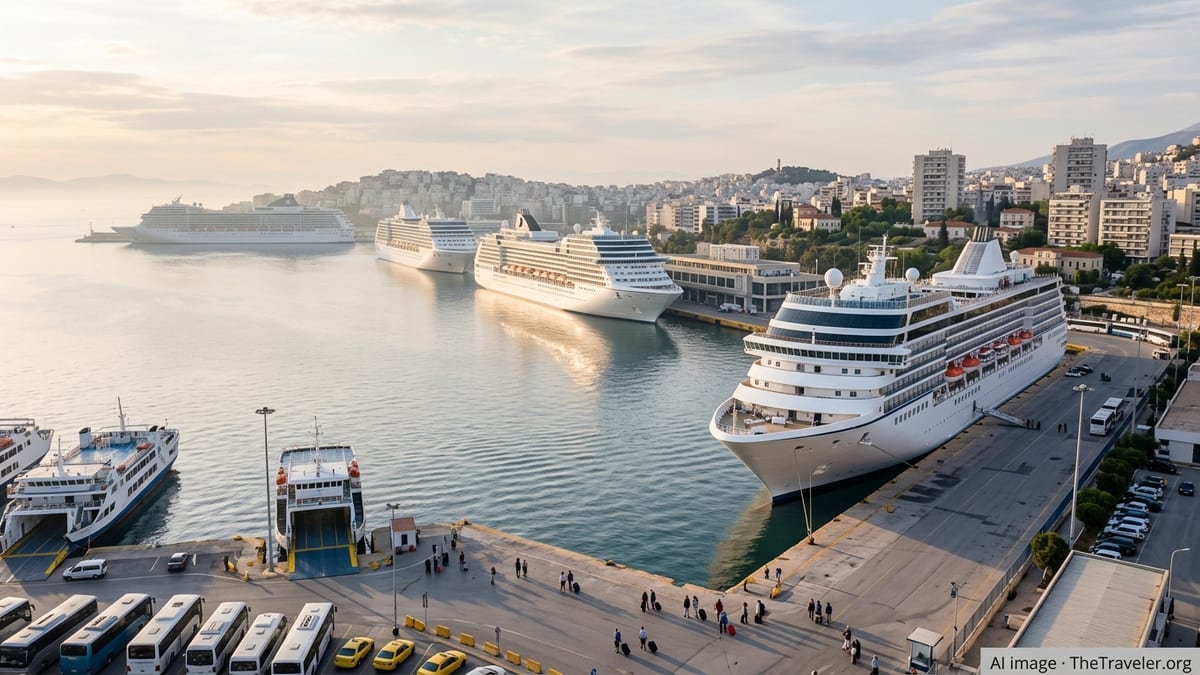
Travel analysts describe a broad-based surge that extends far beyond classic hotspots such as Santorini and Mykonos. Islands in the Ionian and Aegean Seas, as well as mainland regions like the Peloponnese and Epirus, have reported rising hotel occupancy and a longer season, with visitor flows stretching deeper into spring and autumn. Cruise traffic has also expanded, adding fresh pressure to ports and popular islands.
This backdrop matters for understanding the new wave of interest triggered by “The Odyssey.” Rather than rescuing a struggling market, the film appears to be amplifying a tourism boom already underway, accelerating trends toward higher-spending visitors, shoulder-season travel and more diffuse demand across lesser-known islands.
Local tourism boards and destination marketing groups are watching closely to see whether the current year will set yet another record, as bookings for late summer and early autumn continue to build following the film’s mid-July global release.
Data points to a post-release surge in U.S. demand
One of the clearest early signals of the “Odyssey effect” is emerging from flight search and booking platforms. New figures from online agencies tracking U.S.-origin interest in Greece show a sharp uptick in searches and reservations for departures after the film’s July 17 release date, particularly to Athens and island gateways in the Ionian and Aegean Seas.
Reports indicate that certain destinations associated with the film’s narrative and promotional campaign are seeing standout growth. Kefalonia, Ithaca and Corfu, all linked in the public imagination with Homer’s seafaring hero, appear among the notable gainers in recent U.S. search and booking data. Industry observers interpret these patterns as a textbook example of so-called “set-jetting,” in which travelers choose their next vacation based on locations they have seen on screen.
Tour operators are moving quickly to capitalize. A number of international group-tour brands and niche agencies have begun promoting special itineraries that follow “in the footsteps of the Odyssey,” combining archaeological sites with coastal villages and lesser-known beaches. One major operator has unveiled a 12-day small-group route uniting Kefalonia, Ithaca and Corfu, explicitly framed around the renewed fascination with Homeric landscapes.
Airlines serving Greece from North America and Europe are also expected to track the trend over the coming months, adjusting capacity where demand warrants. If the booking momentum holds into 2027, “Odyssey” could help cement Greece as one of the standout long-haul leisure stories of the decade for U.S. travelers.
Filming locations and incentives put Greece on cinema’s map
The heightened interest generated by “The Odyssey” builds on years of work to position Greece as a film-friendly destination. Publicly available information from the Hellenic Film Commission and related agencies shows that international productions shooting in the country have multiplied over the past decade, aided by generous cash rebate schemes and an expanding network of local crews and studios.
Nolan’s production is widely seen as a flagship project within this strategy. Greek and international coverage notes that Greece provided substantial financial incentives for the film and hosted large-scale shoots across several regions, from the Peloponnese to island settings chosen for their dramatic coastlines and light. Studies commissioned within the country suggest that such productions generate a multiplier effect, with each euro of incentive spending associated with several euros of local economic impact.
Beyond immediate spending by film crews, the longer-term payoff is visibility. Locations that feature prominently in cinema often become shorthand for a nation’s image abroad, something Greece has experienced before with titles ranging from “Zorba the Greek” and “Captain Corelli’s Mandolin” to “Mamma Mia!” and more recent European television dramas set on islands. “The Odyssey,” with its global marketing push and strong box-office start in Greece itself, appears poised to introduce a new generation of viewers to coastal towns, coves and landscapes that may not yet be household names.
Tourism businesses in filming areas are already adjusting their offerings, adding references to the movie in excursion descriptions, walking tours and local storytelling. Industry observers expect a growing number of “Odyssey”-themed experiences, from sailing routes inspired by the myth to photo stops at recognizable vantage points used on screen.
Set-jetting trend meets Greece’s mythic brand
The impact of “Odyssey” lands at a moment when screen-inspired travel is gaining momentum worldwide. Surveys by major card issuers and travel companies in recent years have consistently found that a large share of younger travelers pick destinations based on films or series they have watched, often sharing their trips back to the same digital platforms where the content first caught their eye.
Greece is particularly well positioned to benefit from this pattern because the country’s tourism brand is already rooted in myth, storytelling and visually distinctive coastlines. The overlap between cinematic imagery and long-standing cultural narratives makes it easy for viewers to project themselves into Homeric seascapes, whitewashed villages and hilltop ruins after leaving the cinema.
Recent examples underscore the power of this formula. The success of romantic dramas and serialized television filmed on Greek islands has previously lifted interest in destinations such as Paros and Crete, with local accommodation providers reporting surges in bookings from fans keen to recreate on-screen scenes. “The Odyssey,” with its blend of high-budget spectacle and familiar ancient themes, extends that pattern to a wider audience and a broader geographic canvas.
Travel planners note that many “Odyssey”-inspired itineraries also dovetail with existing trends toward experiential and slow travel. Visitors drawn by the film are being encouraged to linger in small ports, sample regional food and wine, and explore lesser-known archaeological sites rather than racing through a checklist of postcard landmarks.
Balancing opportunity with overtourism and climate concerns
Even as “Odyssey” stokes demand, Greek destinations face mounting questions about how much additional growth they can absorb. Environmental groups and local communities on heavily visited islands have raised concerns in recent years about water scarcity, waste management and pressure on housing, particularly where short-term rentals have proliferated.
Government policy has begun to reflect these challenges. Public documents and official strategy papers outline efforts to spread visitors more evenly across the country and calendar, promote lesser-known regions, and encourage higher-value, lower-impact tourism models. There is also a growing emphasis on climate resilience after a series of intense heatwaves and wildfires in recent summers, which have periodically disrupted travel plans and dominated international headlines.
Within this context, the “Odyssey effect” is likely to be judged not only by visitor numbers but by how and where that demand materializes. Industry experts argue that steering film-driven interest toward islands and regions with stronger infrastructure, or toward shoulder seasons rather than peak weeks, could help maximize benefits while mitigating strain.
For now, Greece appears to be leaning into its dual identity as both a real-world destination and the stage for one of literature’s most enduring journeys. If current trends continue, Homer’s ancient tale, reframed for modern cinema, may turn out to be one of the most powerful tourism campaigns the country has ever seen.