


More news on this day
When an evening flight from Denver to New York vanished from the departures board without warning, it looked like another air-travel horror story. Instead, it became a test of how far the United States’ strengthened refund rules can stretch, and how one ordinary traveler turned a disrupted trip into nearly $700 back in cash and credits.
Get the latest news straight to your inbox!
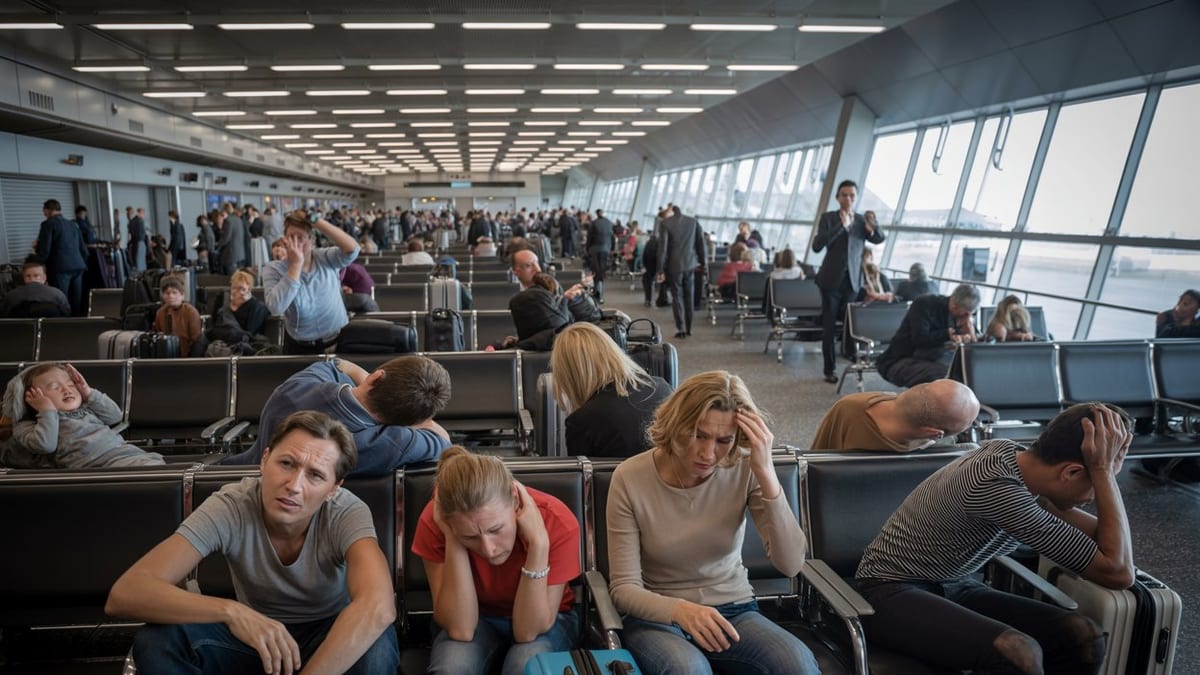
From sudden cancellation to knowing a refund was owed
The problems started with a familiar pattern: rolling delay notifications, followed by a last-minute cancellation notice in the airline’s app. The carrier blamed an unspecified “operational issue,” offered rebooking on a next-day flight, and prominently pushed a travel credit button on its app. Buried further down the screen was a less obvious option: request a refund.
Recent changes in U.S. law and Department of Transportation rules mean that when a flight to, from or within the United States is canceled and the passenger chooses not to travel, airlines must provide a full cash refund of the fare and certain fees if no acceptable alternative is taken. Public guidance from transportation regulators states that this applies to nonrefundable tickets as well, as long as the passenger declines the rebooked flight or any voucher and instead asks for their money back.
In this case, the cancellation meant the trip would no longer serve its purpose, so the traveler chose not to continue. Rather than accepting the airline’s default rebooking, they selected the refund option for the ticket, including paid seat selection and a checked bag, and documented the interaction with screenshots in case of later disputes.
Within a week, the airline issued a refund for the full ticket price back to the original credit card. That first step returned just over $430. It was the beginning, not the end, of what could be recouped.
New rules turn extras and delays into real money back
Beyond the base fare, new federal rules have expanded what counts for reimbursement when trips go wrong. Transportation department materials detailing a 2024 refund rule explain that airlines are now required to return ancillary fees for services that were paid for but never provided, such as seat selection, early boarding or checked bags that did not travel. Guidance also notes that when a flight is canceled or significantly changed and the traveler chooses not to fly, those add-ons must be refunded along with the ticket price.
On the Denver flight, the traveler had paid for priority boarding, a preferred aisle seat and one checked suitcase. Because the cancellation occurred before boarding and the traveler chose not to take any alternative flight, those services were never rendered. When the initial refund confirmation email did not mention the extras, the traveler went back to the airline’s customer service form, cited the itemized receipt and requested a separate refund for ancillary fees that were not used.
After a review, the carrier returned an additional $85 for the seat and boarding fees and committed to refunding the bag charge when the system caught up. Regulators’ compliance guidance specifies that refunds must be “prompt,” generally within seven business days for credit card purchases, a timeline that matched the refund posting on the account.
At this point, the traveler had recovered more than $500 simply by insisting on money back instead of accepting the default offer of an electronic credit. But there were more avenues to explore, particularly for out-of-pocket costs that federal rules do not require airlines to cover.
When airline policy, not law, covers hotels and meals
Unlike the European Union, the United States does not mandate cash compensation or automatic hotel and meal coverage for most flight cancellations, even when they are within the airline’s control. Consumer advocates and travel law resources note that under U.S. rules, refunds are focused on what passengers already paid the airline, not on what they had to spend when things went wrong.
However, individual carriers publish service commitments that can be more generous than the legal baseline. Publicly available information on several major U.S. airlines shows that when disruptions are caused by issues such as maintenance or crew scheduling, some will provide hotel vouchers, meal credits or ground transportation assistance, even though they are not required by statute to do so.
In this case, the Denver cancellation meant the traveler needed a last-minute airport hotel, dinner and breakfast. At the customer service desk, airline staff initially offered only rebooking, reiterating that hotels were not guaranteed. Instead of walking away, the traveler calmly asked the agent to check the carrier’s published customer service plan for controllable cancellations. After a brief consultation with a supervisor, the agent produced a hotel voucher that covered most of the room cost and a modest meal credit for use at airport restaurants.
The hotel voucher reduced a potential $210 overnight bill to about $60 plus taxes. Combined with the meal credit, that represented roughly $150 in value, on top of the cash refunds already secured. None of it was guaranteed by federal law, but it was available for travelers who knew to reference the airline’s own stated policies.
Leveraging credit card protections and travel insurance
The final part of the nearly $700 recovery came from looking beyond the airline. Many travel-focused credit cards and some general rewards cards include built-in trip interruption and delay benefits. Benefits guides from issuers typically explain that if a common carrier delay or cancellation forces an unplanned hotel night or extra meals, cardholders can be reimbursed up to a stated limit, as long as the ticket was purchased with that card.
The Denver traveler had used a credit card that covered reasonable expenses for cancellations and long delays. After saving receipts for the remaining hotel balance, rideshare costs and meals not covered by the airline voucher, they filed a claim through the card issuer’s online portal. Within a few weeks, the claim was approved, and a statement credit of around $160 appeared, offsetting the leftover costs of the disrupted trip.
For travelers who purchase standalone travel insurance, similar protections may apply. Policy summaries often list trip interruption and trip delay coverage that can reimburse lodging, meals and incidental expenses when a covered disruption forces an unplanned stay. The key, as in this case, is thorough documentation: copies of the cancellation notice, proof of payment for extra costs, and records of what the airline did and did not provide.
With the credit card reimbursement added to the airline’s cash refund and vouchers, the total value recovered from the single canceled flight approached $700. Much of that would have been lost if the traveler had accepted the default airline credit and walked away.
Why knowing the rules matters for the next cancellation
Recent U.S. changes have quietly shifted the balance in favor of passengers when flights are canceled or significantly changed. Federal law now requires full refunds for nonrefundable tickets in those situations, as long as travelers choose not to take a replacement flight or accept a voucher. Regulations further clarify that ancillary fees for unused services must be returned and set deadlines for how quickly airlines must pay money back.
At the same time, there are limits. Current rules do not generally entitle U.S. passengers to extra cash compensation for inconvenience, stress or wasted vacation days. Hotels, meals and ground transportation after a disruption still depend heavily on individual airline policies, credit card benefits and any travel insurance a passenger may carry.
The Denver cancellation shows how these overlapping layers can add up. By declining a rebooked flight, requesting a full fare refund, following up for seat and bag fee reimbursements, asking for hotel and meal support under the airline’s own customer service plan, and finally turning to credit card protections, a single traveler turned a frustrating experience into nearly $700 in recovered value.
For travelers facing their own cancellations, the lesson is not that every disrupted trip will end in a windfall, but that new federal standards and existing private protections give more leverage than many realize. The difference often comes down to whether a passenger taps “accept credit” in an app or takes a few extra steps to insist on the cash and benefits they are already entitled to receive.