


Seoul Incheon International Airport is consistently ranked among the world’s best airports, but its size and multiple terminals can feel overwhelming if you do not know how security, immigration, and customs work. Whether you are landing in Korea, making a tight connection, or flying out after a city break in Seoul, understanding each step will help you move faster and avoid surprises at the border.
Get the latest updates straight to your inbox!
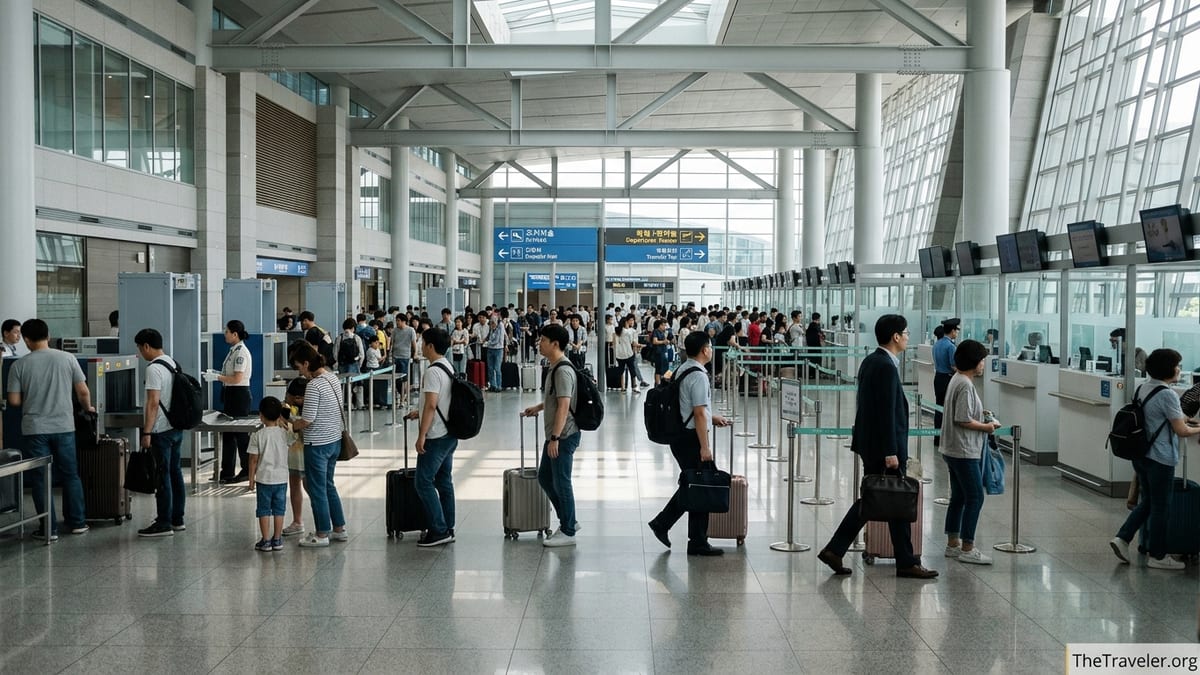
Understanding Incheon’s Layout and What It Means for Controls
Incheon International Airport has two main terminals used by most international airlines, plus a concourse connected to Terminal 1. Terminal 1 is the larger and older building used by airlines such as Asiana, Finnair, Emirates, and many low cost carriers, while Terminal 2 is home base for Korean Air and many of its SkyTeam partners like Delta and Air France. Transfer passengers can move airside between the main building and concourse of Terminal 1 using an automated underground train, and between Terminal 1 and Terminal 2 using shuttle buses and the airport rail system.
The basic sequence for arriving passengers is the same in both terminals. You leave the aircraft into the arrivals level, follow signs for “Arrivals / Immigration,” pass through a document check and biometric gates, collect your luggage from the baggage hall, then clear customs before exiting into the public arrivals area. Departing passengers do the reverse: check in and drop bags in the public check in hall, go through security screening, clear passport control, and then reach the duty free and boarding gate area. Even if the design feels different between terminals, the control steps are almost identical.
Transit passengers who stay airside do not go through full immigration or customs. Instead, they follow yellow or purple “Transfer” signs straight from the arrival gate to a dedicated transfer security checkpoint. Only after security do they re-enter the international departures zone. This separation between “arrivals to Korea” and “international transfers” is clearly marked throughout the airport, but choosing the wrong corridor can force you through immigration when you only wanted to transfer, so it is important to read the overhead signs carefully as soon as you leave the jet bridge.
Because Incheon is a major hub for connections between North America, Europe, and the rest of Asia, flows can change quickly throughout the day. Overnight and early morning banks tend to be full of long-haul arrivals from the United States and Europe, which can stretch immigration queues, while late evening can be busy on the departure side. Planning your route with these patterns in mind makes a noticeable difference in how long you spend in line.
Arrivals: From Aircraft Door to Immigration Counter
Once you step off the plane at Incheon, your first decision is whether you are entering Korea or connecting to another international flight. If Korea is your final destination, follow the large “Arrivals” and “Baggage Claim” signs. In both terminals, these signs lead you down an escalator or along a corridor to the immigration hall. There are separate lanes for Korean nationals, registered automated gates users, and foreigners. Within the foreigners area you may see additional lanes reserved for APEC Business Travel Card holders, crews, or certain priority categories.
Typical walking time from a long haul gate on the far end of Terminal 1 or Terminal 2 to immigration is around 10 to 15 minutes at a normal pace. During peak banks of arrivals from North America and Europe, some travelers report waiting close to 60 to 90 minutes in the immigration queue, while at off peak times late morning or early afternoon you might clear in under 20 minutes. Electronic arrival cards and pre-checked data help, but the main factor is how many flights landed within the previous hour. If you are booking onward trains from the airport to Seoul Station or beyond, avoid cutting it too close and allow at least two hours from scheduled landing to walking out with bags on a busy morning.
At the immigration counter you will present your passport and, if required, your K-ETA approval or visa. Most visitors also provide basic information in a digital or paper arrival card, though some nationalities are now exempt from filling out separate forms when their details are captured electronically. Border officers may ask where you are staying in Korea, to show a return or onward ticket, or to confirm that you understand your permitted length of stay. It is routine for them to check hotel names like a Myeongdong business hotel or a guesthouse in Hongdae, so keeping your accommodation address and phone number easily accessible on your phone is helpful.
If you are traveling as a family, officers often prefer that one parent approaches the booth with all passports while the other manages children slightly behind the line. Strollers are allowed into the hall and can usually stay with you through immigration, which makes life easier after a long flight with infants or toddlers. For elderly passengers or those needing assistance, airport staff can provide wheelchairs and escort services that take you directly from the aircraft door through immigration to the arrivals area, though these should be booked in advance through your airline.
Entry Requirements, K-ETA, and Transit Rules
Immigration formalities at Incheon are shaped by South Korea’s broader visa policy. Many nationalities, including travelers from a number of European countries and others, currently benefit from temporary visa waiver or electronic travel authorization exemptions that have been extended through late 2026. However, rules continue to change and can differ sharply depending on your passport. A traveler from France flying into Incheon for a week in Seoul may be waved through with just a passport and arrival data, while a traveler from another region may need to show a pre approved visa or K-ETA confirmation number before they are even allowed to board their flight.
It is important to distinguish between entering Korea and simply transiting through Incheon. For most passengers who remain airside on a through ticket, no visa, K-ETA, or e-arrival card is required for transit of less than about 24 hours, provided they stay within the sterile international area and do not pass the immigration desks. This is common for connections such as Los Angeles to Bangkok via Seoul on Korean Air, or Helsinki to Osaka via Incheon with Asiana. In these cases, after landing you follow “Transfer” signs straight to transit security, then head for your next gate without ever having your passport stamped.
By contrast, self transfers on separate tickets often require you to enter Korea. For example, if you buy a low cost carrier ticket from Manila to Incheon on one booking and a separate long haul ticket from Incheon to New York on another airline with no interline agreement, you will almost certainly need to clear immigration, collect your luggage, walk to the departure hall, and check in again. In that scenario, any visa or K-ETA requirement that applies to normal visitors will also apply to you, even if you never plan to leave the airport physically. Travelers have missed onward flights because they assumed that “transit” always meant staying in the secure zone when in reality they had booked two independent journeys.
South Korea has also introduced an e-Arrival system that gradually replaces paper forms for some nationalities, and some airlines allow you to submit entry information in advance during online check in. Even so, you should always verify the latest visa and K-ETA rules directly with official Korean government sources or your airline before departure, since exemptions and eligible countries lists can be updated with relatively little notice. Airline staff at check in will usually be the first line of enforcement and can deny boarding if your travel documents do not match current Korean entry rules.
Security Screening for Departures and Transfers
Security at Incheon for departures follows a familiar international pattern but has a few local particularities. After checking in and dropping any hold luggage, you proceed to the centralized security checkpoints that serve all departure gates in each terminal. There is no TSA PreCheck or similar expedited lane branded under American programs. Instead, all passengers follow standard security screening managed by Korean authorities. Lanes are separated into regular and, at busy times, sometimes premium lanes for first and business class or certain elite frequent flyers, but even premium lanes share essentially the same screening procedures.
You will be asked to place coats, laptops, liquids, and larger electronic devices into trays. Liquids should be in containers of 100 ml or less, grouped into a transparent bag, similar to rules in Europe and many Asian airports. Unlike a handful of European hubs that are beginning to relax liquid restrictions thanks to new scanners, Incheon continues to apply conventional 100 ml limits in practice, so finishing large bottles of water and transferring cosmetics into travel sized containers remains wise. Duty free liquids purchased in sealed security bags at other airports are usually accepted when you are transiting, but security officers may ask to see the original receipt and check that the bags are still unopened.
Transit passengers do security slightly differently. Instead of going to the public check in hall, they follow the transfer signs from their arrival gate to a dedicated transfer security point. There, their carry on bags are scanned again before they re-enter the main departures area. This means that even if you were screened at your origin airport, any liquids or duty free you are carrying must still comply with local rules when you pass through Incheon’s transfer checkpoint. It is common for people connecting from airports with more relaxed duty free bag sealing practices to have oversized bottles or unsealed bags questioned at this stage.
Security wait times vary by time of day and terminal but are generally considered efficient compared with many busy hubs. Travelers departing on mid morning flights to regional Asian destinations often report clearing security in under 15 to 20 minutes from joining the line, while evening long haul banks can stretch that closer to 30 or 40 minutes when multiple wide body departures cluster around similar times. The airport publishes approximate current waiting times on information screens throughout the terminal, and staff with hand held signs sometimes redirect passengers to less crowded lanes if one checkpoint becomes congested.
Collecting Luggage and Clearing Customs
After immigration, you descend into the baggage claim area, where carousels are clearly numbered and labeled with flight numbers in both Korean and English. If you are arriving on a long haul from North America or Europe, there is usually a short wait before the first bags arrive, often around 15 to 25 minutes after leaving the aircraft. Incheon has a reputation for relatively reliable baggage delivery, but tight turns during peak hours can still cause delays, so avoid planning tight domestic bus or train connections from the airport if your schedule is inflexible.
Customs formalities start as you exit the baggage hall. South Korea uses the familiar green lane and red lane system. If you have nothing to declare and your purchases are within duty free limits, you walk through the green channel. If you exceed allowances or carry restricted items such as large amounts of cash, commercial samples, or professional equipment, you go to the red lane and make a declaration. Officers use both uniformed staff and X ray scanners placed just past the exit doors to spot check luggage from both lanes.
Duty free allowances into Korea are relatively generous for typical leisure travel but still catch people out. In broad terms, an adult traveler can usually bring in goods for personal use up to a total value of around 800 US dollars without paying duty, plus separate allowances for tobacco, certain alcoholic beverages, and perfume. For example, if you are arriving from a shopping trip in Tokyo with a 500 dollar camera, 200 dollars worth of clothes, and a small perfume bottle, you are normally within the non taxed range. By contrast, if you arrive with several new smartphones and luxury handbags clearly intended for resale, customs may assess duty on the portion that exceeds personal use and the general exemption value.
Incheon also operates arrival duty free shops in both terminals. These allow you to buy additional items after landing but before customs, such as Korean cosmetics, electronics accessories, or local liquor brands. Purchases here count toward your overall duty free allowance. For instance, if you buy 400 dollars worth of Korean skincare in an arrival duty free shop and had already purchased about 500 dollars in Europe, customs could calculate duty on the excess over your 800 dollar general allowance. Staff at the shops are used to these questions and can explain approximate thresholds, though ultimate interpretation rests with the customs officers at the exit.
Special Situations: Self Transfers, City Check In, and Overnight Layovers
A significant number of travelers now use Incheon for self transfers on separate tickets, especially when mixing low cost carriers with full service airlines. In practical terms, this often means you must clear immigration, collect baggage, then re check in landside for your onward flight. Travel time for this full loop adds up. On a typical itinerary from Taipei to Incheon on a low cost carrier into Terminal 1 connecting to a North America flight on Korean Air out of Terminal 2, you might spend 20 to 40 minutes in immigration, another 20 to 30 minutes waiting for your bag, 15 to 20 minutes moving between terminals on the terminal shuttle or rail link, and 15 to 30 minutes checking in and clearing security again. With that in mind, most experienced travelers avoid self transfers at Incheon with less than four to five hours between flights.
For those starting their trip in Seoul, Incheon is connected to the city by the AREX airport rail line, which includes an express service from Seoul Station as well as commuter trains that stop at multiple stations along the way. Some passengers can use a downtown city airport terminal at Seoul Station to check in, drop luggage, and even clear outbound immigration before boarding the airport express train. On arrival at Incheon, these passengers bypass the standard departure immigration queue and use a dedicated lane, which can save considerable time during the evening rush. However, this service is limited to specific airlines and schedules, so you need to confirm eligibility with your carrier well in advance.
Overnight or long layover passengers have additional options that do not necessarily involve entering Korea. Inside both terminals are transit hotels and pay per use lounges where you can stay airside and rest without passing immigration. For example, a traveler arriving at 5 p.m. from Sydney and departing at 10 a.m. the next morning to Vancouver can book a room in the transit hotel inside Terminal 1, go through transfer security after landing, and remain within the secure area until boarding the next day. They will not see the main arrivals hall or customs at all. By contrast, someone who wants to stay at an airport hotel located in the public landside area, or to visit Seoul on a layover, must fully enter Korea through immigration and customs in the usual way.
Long layovers also interact with visa rules. A traveler who is exempt from K-ETA for a short trip may have no problem leaving the airport to explore Incheon’s coastal islands or central Seoul for a day. Another traveler whose nationality always requires pre authorization might be allowed to transit airside without K-ETA but would need it to pass immigration and exit the building. Because of this, it is crucial to decide early in your planning whether your layover will be airside only or will include a short visit into the city, then check visa requirements accordingly.
Practical Tips to Save Time and Reduce Stress
A bit of preparation can shave significant time off your journey through Incheon’s controls. First, double check which terminal your airline uses. Arriving at the wrong terminal by taxi or bus can eat into your departure buffer, while transfer passengers should note whether both flights use the same building. A connection from a European carrier in Terminal 1 to a Korean Air flight in Terminal 2, even on a single ticket, may still involve a shuttle or shuttle train ride between buildings, so follow the overhead transfer signage carefully and do not assume your next gate will be on the same concourse.
Second, keep documents organized and easily accessible. Immigration officers commonly ask to see proof of onward travel, such as a return ticket to Los Angeles or a continuation to Bangkok, and the name and phone number of your first night’s accommodation. Having these stored in a single folder or a dedicated travel app on your phone reduces fumbling at the counter. For customs, keeping receipts for high value items helps if officers question your declarations. For example, if you are carrying a new laptop bought in Seoul and returning home through Incheon, being able to show the invoice amount can clarify whether duty applies in your home country when you land.
Third, manage your liquids and electronics before you reach security. Pack your laptop and tablet where they can be removed easily, and group small liquid containers into a single transparent pouch. This is particularly important for transfers, as many passengers forget that even if they were screened at departure, they must go through security again at Incheon. Bags packed too tightly with wires, power banks, and full size toiletry bottles often trigger secondary inspections that slow you down considerably.
Finally, build realistic buffers into your itinerary. If you are arriving on an intercontinental flight and connecting to a regional low cost carrier on a separate booking, assume that immigration may be slow and baggage may be delayed. Treat four hours as a comfortable minimum gap if crossing terminals or rechecking. Likewise, when landing in Korea and planning onward ground transport, keep at least two to three hours between scheduled landing and reserved intercity buses or KTX trains, especially at morning peak times. Incheon generally runs smoothly, but when several wide body flights arrive within minutes of each other, even the best organized airport can see queues grow quickly.
The Takeaway
Incheon International Airport offers efficient, modern facilities and clear signage, but behind the polished terminals is a familiar sequence of security, immigration, and customs steps that every traveler must navigate. Understanding how these controls work, and how they differ for arrivals, departures, and transfers, can transform a potentially stressful experience into a predictable and even pleasant part of your journey.
Think in terms of three main questions: Are you entering Korea or staying airside in transit, are you traveling on a single ticket or managing a self transfer, and do you understand your visa and customs obligations. Answering these in advance, checking your terminal, and giving yourself sensible time buffers will go a long way toward smooth passage through one of Asia’s busiest hubs.
With a bit of preparation, even complex itineraries involving overnight layovers, multiple terminals, or substantial duty free shopping can be handled confidently at Incheon. The airport’s staff are used to international visitors and generally patient in explaining procedures, but the more you know before you land, the faster you will reach your next gate, your airport hotel, or the heart of Seoul itself.
FAQ
Q1. Do I need a K-ETA or visa to transit through Incheon Airport?
For most nationalities, if you remain airside in the international transit area and your layover is under about 24 hours, you usually do not need a K-ETA or visa, but rules vary by passport and can change, so always check official Korean government guidance before you travel.
Q2. How long does it typically take to clear immigration on arrival at Incheon?
Timing depends heavily on when you land, but many travelers report 20 to 40 minutes at off peak times and up to an hour or more during early morning or evening banks of long haul arrivals, so planning for at least an hour at busy times is sensible.
Q3. What are the duty free allowances when entering South Korea?
Arriving adults can usually bring in personal goods up to a value of around 800 US dollars, plus separate allowances for limited quantities of alcohol, tobacco, and perfume, with any excess potentially subject to customs duty based on an officer’s assessment.
Q4. If I booked separate tickets, do I have to go through immigration and customs?
Often yes, because separate tickets usually mean your bags are not checked through and you must enter Korea, collect them, and re check in landside, which requires meeting normal visa and K-ETA rules for your nationality.
Q5. How much time should I allow for a self transfer at Incheon?
For self transfers involving immigration, baggage claim, a possible terminal change, and new check in, four to five hours is a comfortable minimum, especially when connecting between a regional low cost carrier and a long haul flight.
Q6. Are there transit hotels where I can stay without passing immigration?
Yes, both main terminals have transit hotels and airside lounges where you can rest during a layover; you reach them after following transfer signs and clearing transit security, without entering the public arrivals area or passing customs.
Q7. Does Incheon Airport have fast track or TSA PreCheck style security?
Incheon does not participate in TSA PreCheck, but some premium and elite passengers may have access to priority lanes at security; screening procedures, including liquids and electronics rules, remain essentially the same for all travelers.
Q8. Can I leave the airport during a long layover to visit Seoul?
Yes, if your nationality and travel documents allow you to enter Korea, you can clear immigration and customs, take the airport rail or bus into the city, and return later, but you must factor in the time for border formalities both on exit and re entry.
Q9. What happens if my bags do not appear on the carousel at Incheon?
If your checked luggage is missing or damaged, you should go directly to your airline’s baggage service desk inside the baggage hall before passing customs, file a report, and obtain a reference number so the airline can deliver the bag to your accommodation later.
Q10. Are customs officers at Incheon strict about declarations?
Officers are professional and can be strict when they suspect commercial quantities, restricted items, or under declaration, so it is always safer to declare high value or uncertain items at the red lane than risk fines or confiscation by trying to hide them in the green channel.