


More news on this day
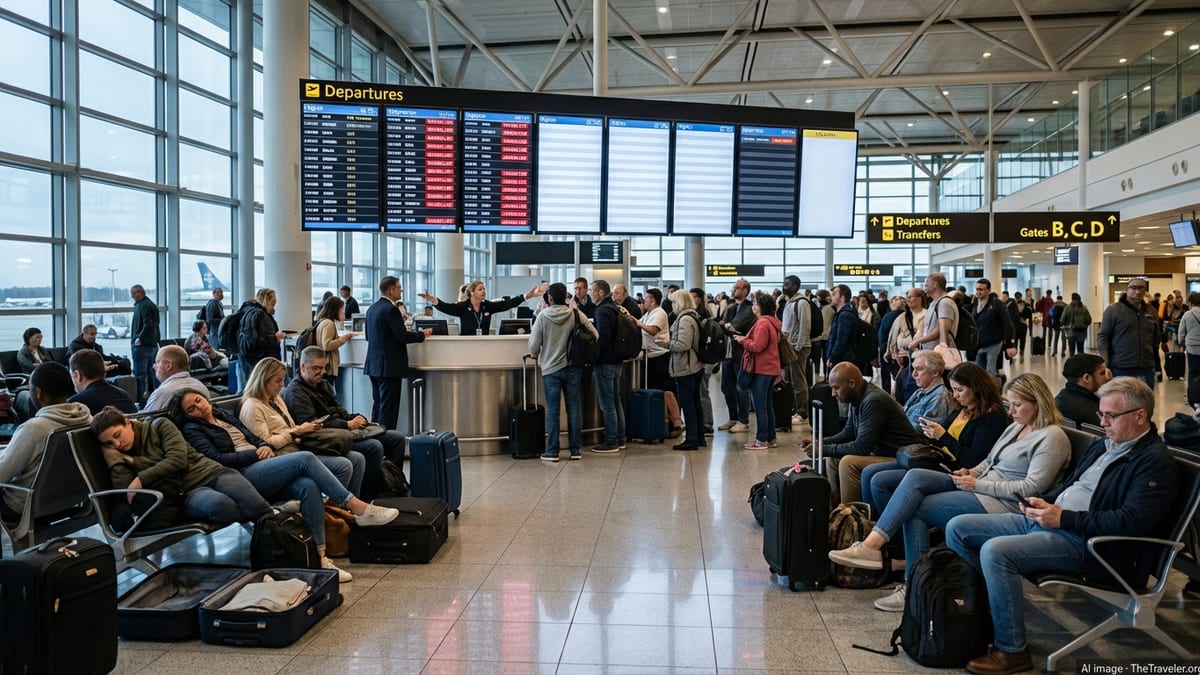
Saudi Arabia’s key airports in Riyadh, Jeddah and Dammam are experiencing recurring waves of flight cancellations and delays in 2026, as regional airspace restrictions, security tensions and capacity constraints continue to ripple through Gulf aviation and disrupt travel itineraries worldwide.
Get the latest news straight to your inbox!
Regional Tensions Feed Continuing Flight Disruptions
Published government and aviation advisories indicate that commercial flights to and from Saudi Arabia remain operational but are facing periodic disruption. Travel guidance issued by foreign ministries in recent months notes that services at airports in Jeddah and Riyadh have been significantly affected by wider instability in the Middle East, with travelers urged to anticipate longer journey times and sudden schedule changes.
Reports from airline data platforms and passenger advocacy groups show that airspace closures and short notice operational restrictions across the Gulf have repeatedly forced rerouting and cancellations. One analysis of flight movements in early June 2026 pointed to almost 250 services disrupted in a single day across Kuwait, Bahrain, the United Arab Emirates and Saudi Arabia, including more than 90 outright cancellations. Saudi hubs were among the airports affected as carriers adjusted routings and crew rosters.
These patterns are unfolding against the backdrop of an ongoing regional conflict that has forced several neighboring states to limit or temporarily close their airspace. Publicly available information on the economic impact of the 2026 Iran conflict highlights thousands of daily cancellations across the wider Gulf, putting additional pressure on airports that remain open, including those in Saudi Arabia.
While Saudi authorities have kept their primary airports operational, domestic and international travelers are effectively absorbing disruption passed along from neighboring closures and diversions. The result is a volatile operating environment in which flights can appear normal on schedules several days out but are increasingly vulnerable to last minute changes.
Riyadh and Jeddah Hubs Under Strain
Data compiled from flight tracking services and airport information feeds shows that King Khalid International Airport in Riyadh and King Abdulaziz International Airport in Jeddah have been at the center of Saudi Arabia’s recent disruption. On several days in late June and early July 2026, these two hubs reported hundreds of delayed services and a smaller but notable cluster of cancellations.
One widely cited tally for early July recorded 406 delayed flights and 11 cancellations across Riyadh and Jeddah in a single operating day, affecting a mix of national and foreign carriers. Publicly available coverage indicates that both domestic routes and long haul connections to Europe, Asia and North America were hit, leading to missed onward connections and extended airport stays for many passengers.
Jeddah and Riyadh are crucial to Saudi Arabia’s wider aviation strategy and to the country’s tourism and business travel ambitions. Jeddah serves as a primary gateway for pilgrims traveling to the holy cities, while Riyadh is being positioned as a major transfer hub through the growth of its flag carriers. Persistent irregular operations at these airports therefore have implications that extend beyond national borders, influencing travel flows across the Middle East and connecting markets.
Despite the strains, operational snapshots from flight trackers suggest that disruption is uneven rather than constant. Some days show largely normal schedules with only minor delays, while others see disruption spikes when regional airspace conditions tighten or weather and crew availability issues compound already stretched operations.
Airlines Adjust Networks as Operational Risks Evolve
Publicly available airline updates and coordination notices indicate that carriers are continuing to adjust networks touching Saudi Arabia in response to evolving risks. Briefs from airport slot coordinators show elevated cancellation rates across Middle Eastern airports during recent months, with a portion of those cancellations linked to services to or from Saudi gateways.
Several international airlines serving the kingdom have introduced temporary suspensions or reductions on selected routes, particularly when regional airspace tensions escalate or when security incidents occur near secondary airports. Passenger reports and travel advisories also reference periods when services to certain Saudi cities were curtailed while flights to Jeddah or Riyadh continued operating, concentrating demand onto the busiest hubs.
Saudi carriers are navigating the same pressures. Saudia and low cost operators such as Flynas and Flyadeal have maintained extensive domestic and international schedules from Riyadh, Jeddah and Dammam, but publicly accessible timetables and passenger accounts show recurring last minute timing changes and occasional cancellations. Industry guidance notes that disruptions can cascade throughout the day as aircraft and crews rotate between multiple cities, meaning that a delay on one early morning sector can translate into missed slots or crew duty time limits later on.
Forward looking network plans, including the gradual build up of the new carrier Riyadh Air, are designed to significantly expand capacity over the coming years. For now, however, the immediate challenge for airlines remains managing operational reliability in an environment where external constraints can shift quickly.
Advisories Urge Travelers to Stay Flexible and Informed
In response to the fluid situation, public communications from Saudi aviation regulators and airport operators in early 2026 have consistently encouraged passengers to verify flight status close to departure. Statements highlighted in local media in February and March show airports in Riyadh, Jeddah and Dammam urging travelers bound for affected destinations to check schedules with their airlines before heading to the terminal.
Foreign ministries and consular services have issued similar guidance, advising citizens transiting Saudi Arabia to remain alert to possible last minute disruption. Travel notices emphasize that while flights continue to operate, itineraries may change with limited warning and that rebooking options can be constrained during peak travel periods, such as religious holidays and major events.
Consumer advocacy groups focusing on air passenger rights have also drawn attention to the Gulf situation, underlining that airspace closures and security related restrictions are typically categorized as extraordinary circumstances. As a result, compensation regimes may differ from cases where disruption stems from airline specific issues, though travelers may still be entitled to care, re-routing or refunds under the conditions of carriage and relevant local regulations.
Publicly available guidance recommends that passengers build additional buffer time into connections, particularly when connecting onward to long haul services outside the region. Many travelers are also being advised to monitor airline apps and airport information channels on the day of travel and to ensure that contact details in bookings are accurate in case carriers need to issue rapid updates.
Implications for Tourism, Pilgrimage and Business Travel
The pattern of delays and cancellations at Saudi airports in 2026 carries wider implications for tourism, pilgrimage travel and corporate mobility. Jeddah’s role as a principal entry point for Umrah and Hajj visitors means that any sustained disruption can quickly affect hotel occupancy, ground transport and tour operations in the surrounding region.
Recent seasons have already tested the capacity of Saudi air infrastructure during peak pilgrimage periods, and the additional layer of regional airspace uncertainty adds further complexity. Travel industry reports suggest that some tour operators are factoring in longer transit times and more generous scheduling margins when designing packages that route through Saudi hubs.
For business travelers, recurring irregular operations can complicate attendance at time sensitive meetings and events. Corporate travel managers monitoring developments in Riyadh, Jeddah and Dammam are increasingly weighing schedule resilience alongside fare levels and loyalty benefits when selecting preferred carriers and routings for employees.
At the same time, investment in Saudi Arabia’s aviation sector continues, with infrastructure projects and fleet expansions aimed at creating more capacity and improving punctuality over the medium term. How quickly those long term initiatives translate into greater day to day reliability will depend not only on domestic reforms, but also on the trajectory of the broader regional security and airspace environment that continues to shape flight cancellations and delays in the kingdom.