


More news on this day
Seattle-Tacoma International Airport is bracing for what forecasts describe as its busiest summer on record, as peak vacation demand collides with a global wave of visitors heading to the Pacific Northwest for the 2026 FIFA World Cup.
Get the latest news straight to your inbox!
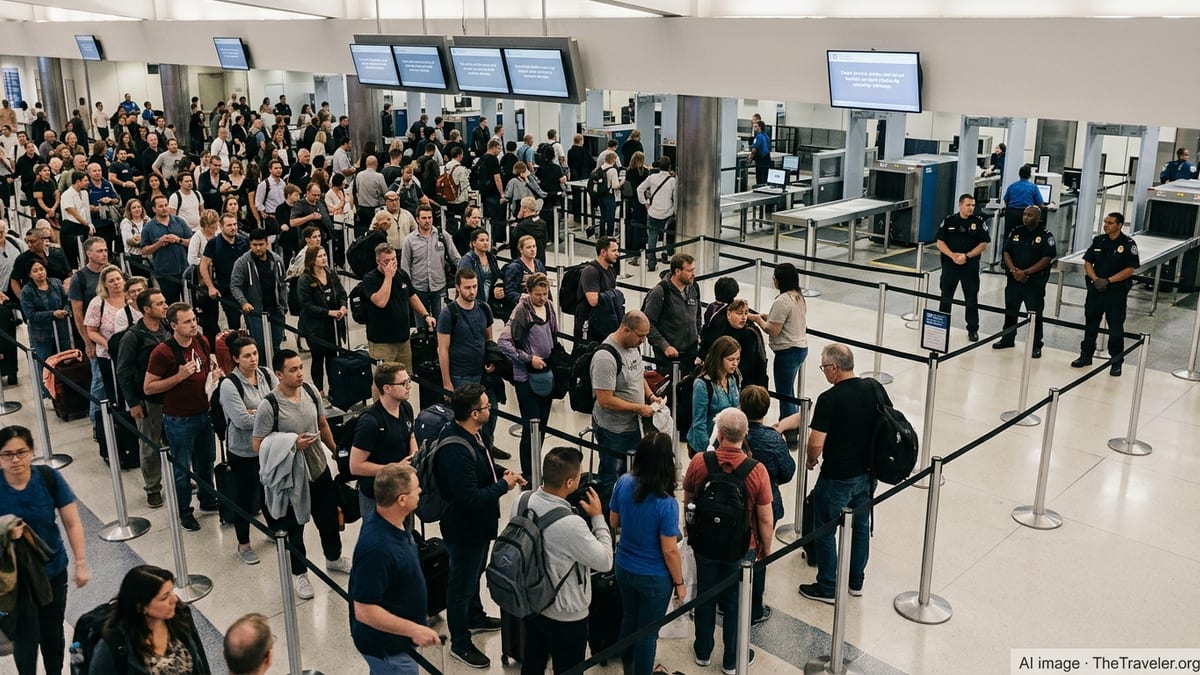
World Cup summer set to push Sea-Tac to new records
Passenger volumes at Seattle-Tacoma International Airport have already reached historic highs, and projections point to even more growth in 2026 as World Cup matches kick off in the city. Publicly available airport data shows Sea-Tac handled more than 52 million passengers in both 2024 and 2025, surpassing pre-pandemic levels and cementing the airport’s status as one of the country’s busiest hubs.
Budget and planning documents from the Port of Seattle indicate passenger traffic could climb above 54 million annual travelers in 2026, with international traffic expected to increase as soccer fans arrive from Europe, Latin America and Asia. Local tourism forecasts have highlighted the tournament as a major driver of long-haul demand, even as some city-center hotel bookings trend below early expectations.
Travel and security agencies have begun warning that certain days in June and July could be among the most crowded in the airport’s history, with spikes tied to match days, cruise departures and major summer holiday weekends. With limited airfield space and construction underway on the multiyear Upgrade SEA modernization program, even modest disruptions can quickly ripple into longer queues at check-in, security and baggage claim.
For travelers who must connect through Seattle this summer, that combination of record traffic, tournament excitement and construction activity raises the stakes for trip planning. Avoiding the worst of the congestion will depend on carefully chosen flight times, smart use of airport programs and a willingness to adjust routines that might have worked in quieter years.
Picking the right days, times and airlines
Published schedules and historical traffic patterns suggest that the most challenging days at Sea-Tac are likely to cluster around weekends, match days and traditional summer peaks like the Fourth of July period. Early forecasts point to particularly heavy demand on Fridays, Sundays and Mondays, when World Cup spectators and cruise passengers often arrive or depart at the same time as regular leisure travelers.
Travel experts reviewing airline timetables for Seattle say that early morning and late-night departures often remain the most reliable way to avoid the thickest security lines. Flights that leave before 7 a.m. can benefit from shorter screening queues and less congestion on the airport roadways, while departures after 8 p.m. may be buffered from the midday rush tied to transcontinental and transpacific banks.
Choosing a carrier’s primary hub flights can also help. Airlines that base sizable operations at Sea-Tac typically have more ground staff, more check-in counters and more flexibility to rebook disrupted travelers. For example, major West Coast and Alaska-focused carriers maintain dense networks through Seattle, which can translate into more options if a connection is missed during a particularly busy match day.
Travelers with flexibility may wish to avoid connections through Seattle on days when the city hosts multiple tournament fixtures or when cruise departures and arrivals peak. Some North American itineraries this summer offer viable alternatives via Vancouver, Portland or other West Coast hubs, which could lessen exposure to World Cup congestion at Sea-Tac, especially for passengers who are not attending matches.
Using pre-screening and digital tools to skip the worst lines
Security screening is expected to be one of the tightest bottlenecks at Sea-Tac during the World Cup period, and federal transportation authorities have already urged summer travelers to arrive earlier than usual. Enrolling in trusted traveler programs such as TSA PreCheck or CLEAR can significantly reduce wait times, particularly during those early-morning and early-evening peaks when multiple long-haul flights are scheduled.
Sea-Tac also offers its own digital tools designed to smooth the experience. The airport’s online reservation system for security checkpoints allows passengers on certain days to book a time slot for screening, which can help bypass general lines that may snake deep into the terminal at peak hours. Airport communications emphasize that availability is limited, so travelers are encouraged to reserve a slot as soon as their flight details are confirmed.
Airline mobile apps and the airport’s own alerts remain another underused asset. These platforms push real-time updates on gate changes, security wait times and construction-related detours inside the terminal. With multiple Upgrade SEA projects reshaping concourses, roadways and checkpoints, these notifications can make the difference between a smooth connection and a sprint across crowded corridors.
For international arrivals tied to the tournament, border processing could add extra time to the journey. Customs and immigration agencies report higher volumes of travel authorizations from countries with teams in the World Cup, suggesting that entry queues may swell at peak arrival times. Travelers can ease this pressure by using mobile passport control apps where eligible, enrolling in trusted traveler programs such as Global Entry when possible, and ensuring that documents and declarations are prepared before landing.
Rethinking how to get to and through the airport
The crush of cars on airport drives has long been a pain point at Sea-Tac, and World Cup traffic is expected to exacerbate congestion around pick-up and drop-off zones. Transportation plans released in recent months show regional agencies boosting transit capacity on key corridors during match days, including services linking downtown Seattle to the airport and to the stadium district.
Light rail is positioned to be one of the fastest ways to reach Sea-Tac during busy tournament days. Trains bypass highway backups that have become common on major match and cruise days, and they offer a predictable connection time between downtown and the terminal. For travelers carrying lighter luggage or arriving during the commuting shoulder periods, rail and express bus services can remove a major source of stress before even entering the terminal.
Those who still rely on private vehicles or ride-hailing services can mitigate delays by building additional buffer time into their trip, using the airport’s real-time parking availability tools and considering drop-off at slightly less congested locations such as the light rail station, where local rules allow curbside stops for passengers. Some travelers have also started to favor off-airport parking providers with shuttle services that bypass the tightest choke points near the terminal.
Inside the airport, construction activity tied to the Upgrade SEA program continues to reshape walking routes and waiting areas. Travelers who have not passed through Seattle in several years may find new layouts, closed corridors and freshly opened spaces. Checking terminal maps in advance, noting which concourses serve specific airlines and allowing extra time to connect across the facility can help prevent last-minute scrambles through crowded construction zones.
Building a World Cup travel game plan
With the world’s focus on Seattle this summer, airport operations will be tested by surging traffic, tight airspace and overlapping events. Publicly available planning materials underscore that Sea-Tac is investing billions of dollars in long-term capacity, but most of those projects will come online gradually rather than all at once for this tournament.
In the meantime, individual travelers can take practical steps to stay ahead of the crowds. Booking flights as early in the day as possible, arriving at the airport well in advance of departure, using pre-screening programs and digital tools, and relying on rail where feasible are among the most effective strategies to reduce stress.
Travel industry analysts note that World Cup visitation patterns may be uneven, with some match days and host cities seeing unexpectedly moderate demand and others facing intense spikes. That uncertainty makes flexibility a valuable asset. Choosing changeable tickets, leaving room in itineraries for delays and planning a realistic schedule on arrival day can all help cushion the impact of a record-breaking summer at Sea-Tac.
For visitors and locals alike, the payoff for this extra preparation could be significant. With a bit of foresight, even the busiest days in the airport’s history do not have to mean missed flights, endless lines or a chaotic start to a long-awaited trip.