


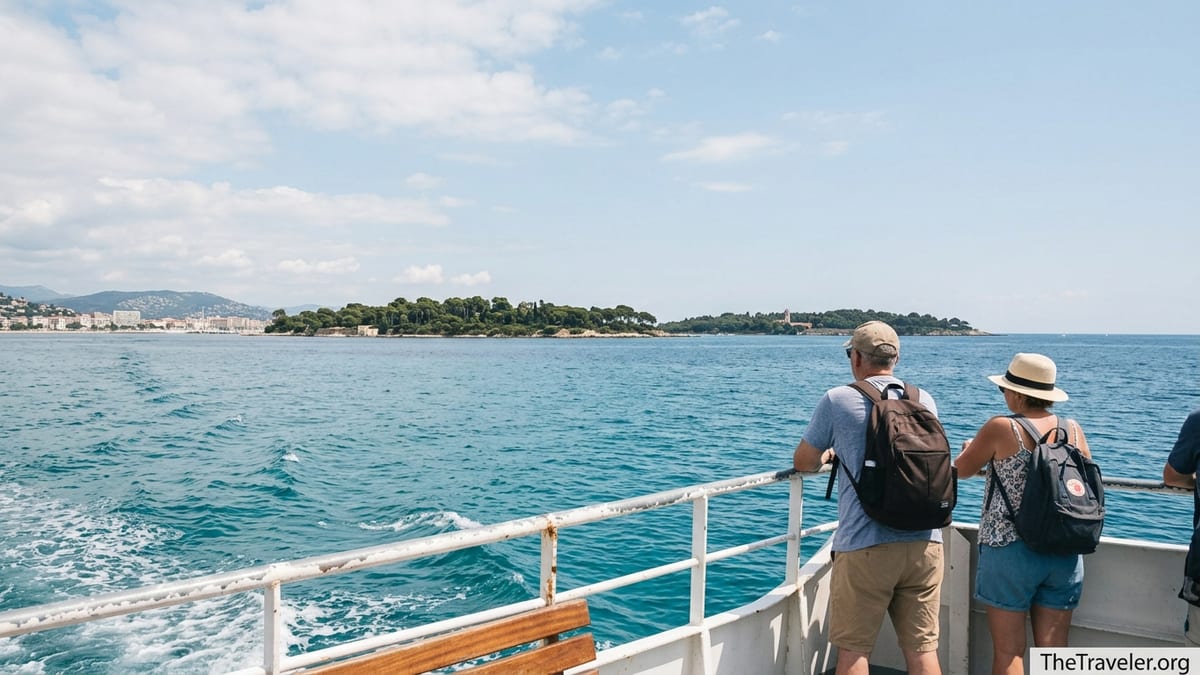
Just 15 minutes by boat from Cannes, the Lérins Islands feel surprisingly far from the traffic, luxury boutiques and red carpets of the Riviera. Pines and eucalyptus replace traffic noise, small coves edge turquoise shallows, and a working monastery produces its own wine. Yet many visitors rush through on a quick ferry ride, never quite finding the quiet beaches, the best viewpoints or the most atmospheric corners of the abbey. With a little planning, you can experience Sainte-Marguerite and Saint-Honorat like an insider and still be back on the Croisette in time for dinner.
Get the latest updates straight to your inbox!
Getting Your Bearings: Two Islands, Two Different Moods
The Lérins archipelago is a small chain of islands in the Bay of Cannes, but for most travelers the names that matter are Sainte-Marguerite and Saint-Honorat. Sainte-Marguerite is the larger island, roughly 3 kilometers long and under 1 kilometer wide, carpeted in pine and eucalyptus forest with a scattering of rocky coves and a historic fortress. It is the better choice if you want easy hiking paths, picnic spots and shallow bays for swimming and snorkeling.
Saint-Honorat, about 1.5 kilometers long, feels very different. Almost the entire island belongs to the Abbey of Lérins, a Cistercian community with around 30 monks who cultivate vineyards and produce wines and liqueurs. Here you walk among vines and old stone chapels, with the sea opening up at the edge of the fields. The mood is contemplative rather than beachy, and loud music, drones and party behavior are out of place. If you only have one day, it is possible to visit both islands, but most travelers will get more from choosing one that suits their style.
Both islands are car free and reachable only by boat. The main departure point is the old port of Cannes, a short walk from the Palais des Festivals and the western end of the Croisette. Regular public ferries and a few private operators make the crossing all year, with far more departures between roughly April and October. Travel time is usually around 15 minutes to Sainte-Marguerite and just over that to Saint-Honorat, depending on the company and sea conditions.
Because the islands are small, it is easy to assume you can just improvise when you step off the boat. In reality, the experience changes significantly depending on what time you go, which paths you follow first and how well you understand island etiquette. The rest of this guide breaks down how to make your choices so you do not walk straight past the best coves, viewpoints and chapels.
Ferries, Timing and Costs: Avoiding Crowds Before You Arrive
Several companies run ferries from Cannes to the Lérins Islands. For Sainte-Marguerite, common options include boats branded Horizon or those sold through local tourism offices; for Saint-Honorat, the abbey works with an authorized maritime company that departs from the same port area. Schedules vary by season, but a typical high-season pattern is departures roughly every 30 to 60 minutes during the day for Sainte-Marguerite and less frequently, often hourly or every 90 minutes, for Saint-Honorat.
Round-trip fares in 2025 and early 2026 generally fall in the region of 18 to 25 euros per adult for Sainte-Marguerite and a similar or slightly higher range for Saint-Honorat, with discounts for children and, in some cases, for advance online booking. Prices can change with fuel costs and seasonal promotions, so use current schedules from the Cannes tourism office or the ferry operators when you plan. Families often find that a day out for two adults and two children, including ferry tickets, easily reaches 60 to 80 euros before any food or museum entry.
To experience the islands at their quietest, timing matters more than the specific company you choose. On bright summer days in July and August, the busiest crossings from Cannes to Sainte-Marguerite are usually mid-morning, when people arrive with beach bags and coolers, and mid-afternoon when day-trippers head back. Aim for one of the first boats, often around 9:00, and you can walk the coastal path in near silence before the crowds reach the most popular coves. In shoulder seasons like late April, May, September and early October, ferries are calmer, and you can leave a little later without sacrificing tranquillity.
On Saint-Honorat, the rhythm is shaped by the monastery. Many visitors arrive late morning, wander through the cloister and fortified tower, have lunch and leave mid-afternoon. If you want moments of real stillness in the church or among the chapels, consider an earlier boat and head straight to the eastern side of the island before circling back to the abbey buildings. In all seasons, storms and strong winds can affect sailings. In practice this usually means some crossings are canceled on rough winter days rather than in summer, but if you are visiting between November and March, it is worth checking the morning’s schedule before you walk down to the port.
Sainte-Marguerite: Forest Walks, Fort Royal and Secret-Looking Coves
Most ferries to Sainte-Marguerite land at the main quay on the north side of the island. From here, many visitors drift straight to the nearest beaches near the landing stage, which are fine for a quick dip but lack the magic of the more secluded coves further away. To experience the island at its best, resist the temptation to stop immediately. Instead, turn left or right onto the coastal path that circles the island and walk 20 to 30 minutes before settling down.
Walking west from the quay takes you past low cliffs and pebble bays with clear water. Small signs and simple paths drop from the main trail down to the sea. In calm conditions, you will often see locals spread out on flat rocks farther from the quay, swimming and snorkeling with views back towards the Esterel mountains. A full loop of the island on foot takes around 2 to 2.5 hours at a relaxed pace, longer if you stop to swim and photograph the views of Cannes and the Alps behind it.
Fort Royal dominates the central northern coastline, a honey-colored stone fortress visible from the boat long before you land. Historically it served as a military stronghold and later a state prison, most famously for the prisoner known as the Man in the Iron Mask. The fort now houses a museum where you can learn about the island’s history and its role as a maritime lookout. Entry fees are modest by Riviera standards and worth factoring into your day if you are interested in history or traveling with children who like ramparts and towers. Expect to spend around an hour inside if you read the displays and explore the bastions.
Beyond the fortress, the southern coast of Sainte-Marguerite is wilder and faces open sea. Here the shore alternates between rocky ledges and stretches of shingle, with underwater meadows of seagrass just offshore. Bring reef-safe sunscreen, water shoes if you have sensitive feet, and your own mask and snorkel: there are no rental stands on the beaches themselves. There are basic refreshment kiosks and simple restaurants near the main quay, but once you have walked into the forest you are on your own. Fill water bottles in Cannes, pack a picnic from a bakery on Rue Félix Faure or around Marché Forville, and treat any island purchase as a bonus rather than a necessity.
Saint-Honorat: Monastic Calm, Vineyards and a Fortified Monastery
Saint-Honorat’s boat landing feels quieter the moment you arrive. Signs near the pier remind visitors that this is a religious site first and a tourist destination second. You are free to explore, but the monks’ private living areas are closed, and visitors are asked to dress modestly and keep voices low near the church and cloister. Simple, comfortable clothes are fine; swimwear belongs on the beaches, not on the central paths.
The heart of the island is the Abbey of Lérins, with its church, cloister and guesthouse buildings. The current abbey complex blends medieval and more recent structures, but the monastic presence dates back to late antiquity. Today, the monks follow a rhythm of prayer that shapes public opening times. Outside religious services, travelers can step into the church, walk through parts of the cloister and visit the small shop where the community sells wine, liqueurs and other products. Bottles of the abbey’s wines, such as white cuvées based on varieties like Clairette and Rolle, are premium products by local standards. Picking up a single bottle to share back in Cannes is a tangible way to remember the trip.
Perhaps the most striking structure is the fortified monastery on the sea edge, a stone tower and complex of rooms that once offered refuge from attacks. You reach it by following paths through the vineyards and low pines, emerging at a squat fortress washed by waves. Inside, narrow staircases and small chapels lead up to terraces with wide views over the bay. Entry times can be subject to restoration work, particularly into late 2025 while certain parts of the abbey complex undergo phased conservation. When it is open, allow at least 45 minutes to explore without rushing.
Between the abbey buildings and the sea, the island is ringed by small coves and rocky shelves where swimming is possible. There are no loud beach clubs or jet skis, just simple stone steps or paths dropping to the water. A full circuit of the island on foot, including time to sit by the sea and wander through the vineyards, typically takes 2 to 3 hours. Plan shoe choices accordingly. While the paths are mostly flat, they are not ideal for delicate sandals, and you will enjoy it more in walking shoes or sturdy sandals that cope with gravel and rocks.
Where and What to Eat Without Missing the Best Moments
Because both islands are undeveloped compared with the Riviera coastline, food planning is part of experiencing them well. On Sainte-Marguerite, the most straightforward approach is to buy picnic supplies in Cannes before boarding. A typical budget-conscious setup is a baguette, cheese and charcuterie from a neighborhood shop, pieces of fruit and a bottle of water per person. This kind of simple picnic for two from central Cannes often costs significantly less than a single main course at a seafront brasserie in town, and you gain the flexibility to eat whenever you reach an appealing clearing or cove.
Close to the main landing on Sainte-Marguerite you will find a handful of seasonal restaurants and snack bars offering salads, grilled fish, paninis, ice creams and drinks. Prices reflect the logistics of supplying a small island: a soft drink or coffee can be a couple of euros more than in central Cannes, and main courses generally priced in a modest mid-range rather than as cheap eats. These spots are convenient if you prefer to travel light, but they can be crowded on summer weekends, and service slows at peak times. If you want to avoid spending most of your visit waiting for food, either eat outside typical lunch hours or commit to self-catering.
On Saint-Honorat, the options are even more focused. The main restaurant, operated in cooperation with the abbey, offers Mediterranean-style dishes served on terraces overlooking the sea and vineyards. Think grilled fish, risotto, simply prepared meat dishes and local wines, including the abbey’s own labels. Advance reservations are strongly advised in high season, and walk-ins risk disappointment, especially at weekend lunch. Prices are in line with a pleasant mid-range restaurant in a French coastal resort, not a budget canteen, so factor that into your day’s spending.
If you prefer not to sit for a full restaurant meal on Saint-Honorat, it is entirely acceptable to bring your own picnic and choose a quiet spot away from the abbey buildings, provided you respect the environment: no loud music, no litter, no open fires. You can supplement a picnic with small purchases from the abbey shop, where items like a single bottle of wine or a jar of tapenade transform a simple picnic into a very local experience. Remember that alcohol consumption should be discreet and moderate on an island that functions as a place of retreat.
Swimming, Snorkeling and Respecting a Protected Environment
The waters around the Lérins Islands are famous for their clarity, particularly on still days when the sea turns shades of aquamarine and deep blue. Rocky shores and underwater meadows of seagrass create habitats for small fish and other marine life. For travelers, this makes the islands ideal for easy off-the-beach snorkeling rather than high-adrenaline watersports. Bring your own basic snorkel set; you will not find big rental operations lined up along the shore as in some resort areas.
On Sainte-Marguerite, many of the best swimming coves lie along the south and west coasts. These are mostly pebble and rock rather than sand, so water shoes or sturdy sandals make getting in and out more comfortable. The northern side near the quay offers easier access for families with small children who prefer shorter walks and quick dips. Always check local signage and conditions before entering the water. On windy days the open southern side can be choppy, and currents may be stronger than they first appear.
Saint-Honorat has a more intimate feel to its swim spots: small inlets with clear water and views across to Sainte-Marguerite and the mainland. The absence of loud music and beach bars here can be a relief if you are looking for somewhere to float and watch the light on the water. As on Sainte-Marguerite, expect rocky entries rather than wide sandy beaches. In both places, do not expect showers, loungers or umbrellas. Shade comes from trees set back from the shore and from hats you bring yourself.
Environmental protection is taken seriously on the islands. Authorities have invested in updated signage and management plans to protect both forests and marine habitats. In practice, this means sticking to marked trails rather than cutting across dunes or vegetation, packing out all rubbish, and using only mineral or reef-conscious sunscreens that are less harmful to marine life. Drones are restricted, open fires and barbecues are prohibited, and camping is not allowed. There is no official naturist area on Sainte-Marguerite or Saint-Honorat, so bring standard swimwear and respect local norms.
Practical Tips: Tickets, What to Pack and When to Go
For most visitors, buying ferry tickets on the day at the Cannes port works perfectly well, especially in shoulder seasons. Booths generally open at least 30 minutes before the first sailing, and staff can advise on return times. In peak summer, on public holidays or during major events in Cannes, advance online booking can be a good idea simply to avoid queues at the ticket office. Even then, you will still need to arrive with enough time to board calmly; islands trips should not start with a sprint along the quay.
There is no need to rent a car specifically for the islands. Many travelers arrive by train from Nice or Antibes and walk down to the port. If you are staying in central Cannes, the old port is comfortably walkable from most hotels and apartments. Pack as you would for a day of light hiking and beach time combined: breathable clothing, a hat, swimwear, towel, walking shoes or sandals with grip, a reusable water bottle, sunscreen, and perhaps a lightweight long-sleeved layer for the boat ride if the wind picks up.
Season makes a big difference to your experience. June and September often deliver some of the best balances between warm sea temperatures and manageable crowds. July and August bring peak heat and visitor numbers; the islands are still beautiful, but you will need to be more strategic about early starts and less ambitious about covering every path. In winter, ferries run less frequently and some services such as island restaurants may be limited or closed, but those who make the trip on a clear, crisp day often find near solitude on the trails.
Be realistic about mobility. Paths on the islands are not technically difficult, but they are not designed as fully accessible promenades. If you or someone in your group uses a stroller or has difficulty with uneven ground, you will still be able to enjoy parts of the main paths close to the landing areas, but long circuits and some rocky coves may be off the table. In such cases, consider focusing on the more central parts of Sainte-Marguerite or the immediate abbey zone on Saint-Honorat and treating the visit as a shorter contemplative stop rather than a full-day trek.
The Takeaway
Experiencing the Lérins Islands fully is less about checking off a list of sights and more about understanding the personality of each island and pacing your day accordingly. Sainte-Marguerite rewards slow exploration along the coastal paths, with time to wander down side trails towards quiet pebble coves and to climb the ramparts of Fort Royal. Saint-Honorat invites a different rhythm: a walk through vines and pines, a pause in the abbey church or by one of the small chapels, and perhaps a glass of monastic wine while you look back at the Riviera skyline.
With travel times of around a quarter of an hour from Cannes, it is tempting to treat the islands as an afterthought, something to squeeze between shopping and sunset cocktails. Yet visitors who catch an early ferry, bring a simple picnic, wear shoes that can handle forest tracks, and give themselves permission to linger often remember this small archipelago as a highlight of their Côte d’Azur trip. Plan the logistics, respect the quietness of the monastery and the fragility of the environment, and the best spots will reveal themselves without rush.
FAQ
Q1. Can I visit both Sainte-Marguerite and Saint-Honorat on the same day?
Yes, it is possible but can feel rushed. Many travelers prefer to dedicate a full day to one island, especially in summer when heat and crowds slow things down. If you do combine them, take an early ferry, visit the quieter and more contemplative Saint-Honorat first, then finish the afternoon swimming on Sainte-Marguerite before returning to Cannes.
Q2. Do I need to book ferry tickets to the Lérins Islands in advance?
For most of the year you can buy tickets at the port in Cannes on the day. In July and August, on weekends or during major events like the film festival or big conferences, advance online booking can reduce waiting time and the risk of fully booked departures, especially for larger groups.
Q3. Are there sandy beaches on the Lérins Islands?
Most shorelines on both islands are rocky or pebbly rather than wide sandy beaches. You will find some small sandy sections, particularly near the landing area on Sainte-Marguerite, but the main appeal is clear water, rocky coves and natural surroundings rather than long, groomed sand beaches with rows of loungers.
Q4. Is Saint-Honorat suitable for families with children?
Yes, provided children are able to walk for a while and understand that parts of the island are places of worship where quiet behavior is expected. Families often combine a short visit to the abbey and fortified monastery with gentle shoreline walks and simple paddling stops. If your children mainly want to splash and play noisily in the water, Sainte-Marguerite is usually a better fit.
Q5. What should I wear to visit the abbey on Saint-Honorat?
Wear casual but modest clothing that covers shoulders and upper thighs when you are near the church and cloister. Swimwear, shirtless torsos and very revealing outfits are not appropriate in the abbey area. You can carry a light T-shirt, dress or sarong in your bag and slip it on over beachwear when you leave the shoreline paths and approach the monastic buildings.
Q6. Are there places to stay overnight on the Lérins Islands?
There is no conventional tourist hotel scene on the islands. Saint-Honorat offers limited retreat-style accommodation linked to the monastery, intended for those seeking spiritual time rather than a standard beach break, and spaces are booked directly and often well in advance. Most visitors sleep in Cannes or nearby towns and visit the islands as day trips.
Q7. Can I bring my dog to the Lérins Islands?
Rules can change, and different operators may have their own policies, but in general you should not assume that dogs are automatically allowed on boats or across all parts of the islands. If traveling with a pet, check both the ferry company conditions and current island regulations before you go, and be prepared for restrictions around sensitive natural areas and the abbey.
Q8. Is there mobile phone coverage on the islands?
Yes, mobile reception is usually good around the Lérins Islands since they are close to the mainland. However, signal can fluctuate in forested interior sections, and data speeds may slow during very busy summer days when many people are connected at once. Do not rely entirely on streaming maps; download an offline map of the islands before you board the ferry.
Q9. How much time do I need to walk around each island?
A relaxed loop of Sainte-Marguerite’s coastal paths, with short photo and water stops, takes around 2 to 2.5 hours. A similar unhurried circuit of Saint-Honorat, including time to visit the abbey area and fortified monastery, runs to about 2 to 3 hours. Add extra time if you plan longer swims, a sit-down lunch or extended photography stops.
Q10. Are the Lérins Islands open all year round?
Yes, the islands themselves and the basic ferry services operate year round, though sailing frequency drops outside the main season and can be affected by bad weather. Some facilities, such as island restaurants or specific parts of the abbey complex, may close or run reduced hours in winter and during restoration work. Always check current information shortly before your trip, especially if you are visiting between November and March.