


The French Riviera offers no shortage of glittering coastal escapes, but two experiences capture its soul in very different ways: the low-slung pine forests and monasteries of the Lérins Islands off Cannes, and the glamorous headland of Cap d’Antibes between Antibes and Juan-les-Pins. Both are close enough to visit on a day trip, yet each feels like a distinct world. Choosing between them can shape the tone of your entire stay on the Côte d’Azur.
Get the latest updates straight to your inbox!
Setting the Scene: Two Very Different Rivieras
The Lérins Islands sit just offshore from Cannes, a short boat ride that feels like a journey back in time. Motor traffic is limited, the pace is slow, and the scent of pine, eucalyptus and sea salt hangs over quiet coves and monastery gardens. On Sainte-Marguerite you walk sandy paths past stone fortifications and a modest harbor; on Saint-Honorat, monks tend vineyards and produce well-regarded wines and liqueurs sold in a small shop near the abbey.
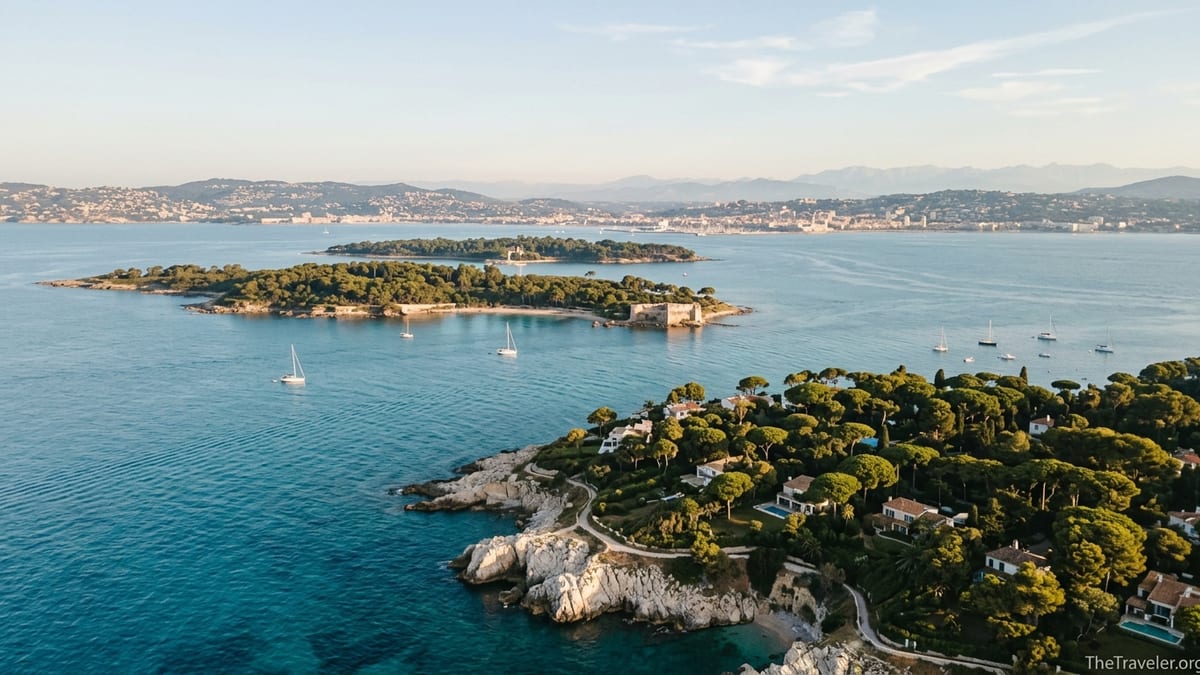
Cap d’Antibes, by contrast, is a dramatic peninsula jutting into the Mediterranean between glamorous Juan-les-Pins and charming old Antibes. It is edged with pale rock, pocket beaches and some of the Riviera’s most storied villas and hotels. The famous coastal path, the Sentier du Littoral, wraps around much of the headland, offering cliffside views back to the Alps and across to the Lérins themselves. Here the Riviera feels more intense: sharper light, bigger villas, more overt luxury.
In practical terms, both destinations are easily reached without a car, and both can be done as half- or full-day trips. Ferries to the Lérins leave from Cannes’ Quai Laubeuf on a fixed timetable, while buses and local taxis regularly link Antibes and Juan-les-Pins with Cap d’Antibes. The choice is less about convenience and more about the kind of story you want your Riviera day to tell: contemplative island wandering, or coastal glamour with sea-sprayed hiking.
Understanding the differences in atmosphere, activities, and costs will help you decide which escape will leave a deeper impression on your own trip.
Access, Logistics and Costs
Reaching the Lérins Islands almost always starts with Cannes. Regular ferries depart from Quai Laubeuf in the Old Port to both Sainte-Marguerite and Saint-Honorat. In high season, departures to Sainte-Marguerite typically run every 30 to 60 minutes during the day, with the crossing taking around 15 minutes. Adult return tickets often sit in the range of 17 to 20 euros to Sainte-Marguerite and a little more to Saint-Honorat, with modest reductions for children and sometimes for advance online purchases. The price covers transport only; the islands themselves are free to roam.
Cap d’Antibes is reached from either Antibes or Juan-les-Pins. Without a car, most visitors combine a local bus ride and some walking. Buses heading toward the Cap are usually standard urban fares, often around 1.50 to 2 euros per journey with the regional network, though services can thin out in the late evening and on Sundays. Many travelers simply take a taxi or rideshare from central Antibes to Plage de la Garoupe, one of the main beach access points and the starting point of the Sentier du Littoral. A short ride might cost 15 to 25 euros depending on traffic and time of day.
Overall, a day on the Lérins will usually involve higher fixed transport costs due to ferry tickets, but once there you can picnic cheaply and walk for free. A day on Cap d’Antibes can be almost free if you walk or take the bus and use public beaches, or quite expensive if you book sunbeds at a well-known beach club or dine at a waterfront restaurant. For example, a pair of sun loungers and an umbrella at a mid-range Cap d’Antibes beach club in high season can easily reach 50 to 80 euros for the day, while a simple island picnic might set you back only the cost of a bakery stop in Cannes.
One important practical note: portions of the coastal path on Cap d’Antibes periodically close for rockfall protection and safety works, and a section under Villa Eilenroc is currently scheduled to remain closed until at least late 2026. Check with the Antibes tourist office near your travel dates and be prepared for potential detours or round-trip walks rather than a full loop.
Landscape and Atmosphere: Pine Forests or Pale Cliffs
If your image of the Riviera involves quiet shade and cicadas rather than neon and yachts, the Lérins Islands are likely to resonate strongly. Sainte-Marguerite’s interior is crisscrossed by sandy tracks beneath pine and eucalyptus, with occasional clearings giving glimpses of the sea. On a summer morning you can leave the ferry crowd behind in ten minutes and walk alone among trees, passing low stone walls and modest viewpoints. It feels closer to a Mediterranean nature reserve than a resort.
Saint-Honorat is even more peaceful. The island is smaller, with the abbey buildings, vineyards and simple paths forming a tranquil, almost cloistered landscape. Bells mark the rhythm of the day, and visitors are gently encouraged to keep noise down near the monastic areas. The coastline here tends toward low rocks and small inlets rather than the larger beaches of the mainland, but the sense of calm, especially outside peak hours, can be profound.
Cap d’Antibes offers a sharper, more dramatic landscape. The Sentier du Littoral clings to pale limestone cliffs that drop to transparent water. At various points near Garoupe and toward the Baie des Milliardaires, rough hewn steps lead down to flat rocks where locals lay towels and plunge into deep turquoise pools. The sea feels more open and wild here, especially on breezy days when waves slap against the rocks and spray drifts onto the path.
Above the cliffs, the peninsula is dotted with pine and cypress, but also with some of the Riviera’s most exclusive properties. From parts of the coastal path you glimpse villas framed by umbrella pines and manicured gardens. This juxtaposition of wild rock and manicured wealth defines much of Cap d’Antibes’ atmosphere. It rarely feels remote in the way the islands can, but it does feel intensely, undeniably Riviera.
Beaches and Swimming: Sand, Rock and Secret Coves
For straightforward sandy beach time, the Lérins Islands and Cap d’Antibes each deliver in different styles. On Sainte-Marguerite, small beaches and coves fringe much of the shoreline. Some are pebbly, but several sheltered inlets offer soft sand or fine shingle and gentle entry into shallow water. Many visitors bring a simple folding mat and snorkel mask, spending the day alternating between reading in the shade and floating over seagrass meadows where fish dart between rocks.
The Plateau du Milieu, a shallow zone between Sainte-Marguerite and Saint-Honorat, fills with anchored boats in summer. While that means more marine traffic, it also creates a festive atmosphere on sunny days, with swimmers, kayakers and paddleboarders crisscrossing the calm channel. If you prefer quieter spots, you can simply walk further along the island’s perimeter to find a less busy cove. Facilities are limited, so come prepared with water shoes if you dislike stony entries and pack enough drinking water on hot days.
Cap d’Antibes’ most famous sandy beach is Plage de la Garoupe, a crescent of pale sand and clear water on the eastern side of the peninsula. In summer the majority of the sand is occupied by private beach clubs offering sunbeds, waiter service and often a restaurant terrace. Public sections do exist, usually two small patches of sand that can fill quickly by mid-morning in July and August. The water here is typically calm and transparent, ideal for families and less confident swimmers, though space can be tight in peak weeks.
Beyond Garoupe, a series of smaller beaches such as Plage des Ondes and coves near Port de l’Olivette offer more low-key options, often with pebbly or mixed sand and rock. Along the coastal path itself, swimmers favor rocky platforms accessible by steps carved into the stone. These spots are more adventurous: you climb down with your bag, find a flattish surface for your towel, and plunge straight into deep, cool water. There are no lifeguards, and entry can be slippery, so they suit strong swimmers and those comfortable in open sea conditions.
Culture, History and Sense of Place
The Lérins Islands condense centuries of history into a small footprint. On Sainte-Marguerite, the Fort Royal once held the mysterious Man in the Iron Mask, whose story continues to fascinate visitors. Today part of the fort houses a museum focused on local maritime archaeology and the island’s prison past. Walking the ramparts and stepping into the stark stone cell blocks offers a surprising contrast to the pine-scented trails outside, grounding your beach day in a tangible historical narrative.
Saint-Honorat layers spiritual history on top of this. The island’s community of Cistercian monks maintains the abbey and organizes the vineyards that fill much of the interior. Visitors can attend services, explore the fortified monastery on the shoreline, and purchase monastery-produced wines and liqueurs. Tasting a glass of their white wine on the terrace of the island restaurant, with views back toward Cannes, is a memorable way to connect with the island’s living traditions.
Cap d’Antibes, while less overtly historical in its attractions, radiates cultural significance of a different kind. For more than a century it has been the backdrop for aristocrats, artists and movie stars staying in grand hotels and villas. The famous Hotel du Cap-Eden-Roc, perched on the cliffs, has become shorthand for Riviera luxury. Even if you never step inside, simply seeing its white facade and the line of cabanas along the rocks from a passing boat reinforces the peninsula’s aura of exclusivity.
There are also quieter cultural notes. Above the coastline you can visit the lighthouse and chapel of Notre-Dame de la Garoupe, historically a place of pilgrimage for sailors. The small sanctuary, filled with ex-voto offerings and maritime symbols, looks out over sweeping views toward Nice, the Alps and the Lérins. Combining a morning coastal walk with a late afternoon visit to the chapel offers a satisfying way to experience both the physical and spiritual layers of Cap d’Antibes.
Food, Drink and Budget Realities
On the Lérins Islands, food options are limited but atmospheric. Sainte-Marguerite has a handful of simple restaurants and snack bars near the landing area, serving salads, grilled fish, sandwiches and ice creams at typical Riviera seaside prices. You might pay around 18 to 25 euros for a main dish like grilled sea bream or a generous niçoise salad, and 4 to 6 euros for a coffee or soft drink. On peak summer weekends, expect popular spots to be busy shortly after the lunchtime ferries arrive.
Saint-Honorat has a single main restaurant near the water and a kiosk selling picnic items and drinks. Prices here reflect the remote setting and the uniqueness of dining on a monastic island, so while not extravagant by Riviera standards, it is not a budget choice. Many visitors opt instead to buy pastries, fruit and cheese in Cannes before boarding the ferry, then picnic in a quiet cove. This keeps costs down and gives you full flexibility over your day.
Cap d’Antibes, thanks to its dense cluster of villas and luxury hotels, skews more upscale. Beach clubs along Garoupe and other coves often feature menus with fresh seafood, Mediterranean dishes and cocktails. Expect to pay 25 to 40 euros for a main course at a mid-range beachfront restaurant, and more at upscale venues. Ordering a simple lunch of grilled vegetables, a glass of rosé and coffee can easily reach 35 to 45 euros per person when seated on a deck with sea views and direct beach access.
That said, it is absolutely possible to experience Cap d’Antibes on a tighter budget. Public sections of Garoupe and nearby beaches are free, and there are small grocery stores and bakeries back in Antibes and Juan-les-Pins where you can stock up on sandwiches and fruit. Many locals do exactly this, then hike the Sentier du Littoral with a backpack picnic, stopping on a flat rock to eat with million-euro views for the price of a baguette and some olives.
When Each Destination Shines
Season and timing play a big role in how each place feels. The Lérins Islands are at their best from late spring through early autumn, roughly May to early October, when ferries run frequently and the water is warm enough for swimming. July and August can be busy, particularly on weekends, but the crowd tends to thin as you walk away from the landing points. On hot days, the islands’ tree cover and frequent sea breeze make them more comfortable than some exposed mainland beaches.
Cap d’Antibes is more versatile year-round. The coastal path is a favorite with locals on bright winter days when temperatures are mild and the air is clear enough to see snow on the Alps. In early season months such as April, May and October you often enjoy comfortable hiking temperatures and less crowded beaches, though some beach clubs may not yet be fully operational. High summer brings dazzling sea colors and long swimming days, but also more competition for parking and public beach space.
If you have limited time, consider the rhythm of your wider itinerary. A day on the Lérins pairs naturally with time in Cannes: morning ferry to Sainte-Marguerite, afternoon swim and fort visit, then back to the mainland for an evening stroll along the Croisette. Cap d’Antibes, meanwhile, blends seamlessly with stays in Antibes or Juan-les-Pins: breakfast in the old town market, a late-morning walk or bus to the Cap, coastal hike and swim, then dinner in the historic center or by the marina.
Weather matters too. On days with stronger winds or rougher seas, ferries to the islands can be less pleasant and very occasionally disrupted, whereas Cap d’Antibes remains accessible even if swimming is less attractive. If the forecast hints at choppy water but bright skies, you might lean toward the peninsula for its land-based walks and views.
The Takeaway: Which Leaves a Bigger Impression?
Choosing between the Lérins Islands and Cap d’Antibes is ultimately choosing between two complementary faces of the Riviera. The islands deliver quiet paths, monastery bells, and low-key coves that encourage you to slow down. Their impact often lies in the contrast with Cannes: one moment you are among luxury boutiques, the next you are under pines, listening to cicadas and waves.
Cap d’Antibes, on the other hand, leaves its mark through drama and glamour. The combination of cliffside paths, impossibly clear water and glimpses of legendary hotels and villas creates a powerful sense of place. Even a short walk from Garoupe to a rocky swimming spot can feel like stepping into a postcard you have seen in magazines for years.
If you are traveling with children or anyone who prefers gentle walking and clear logistics, the Lérins Islands, especially Sainte-Marguerite, may be the more comfortable choice. Paths are mostly flat, traffic is minimal, and beaches are never far away. History buffs and those seeking reflective, almost spiritual moments might find Saint-Honorat unforgettable.
Active travelers, strong swimmers and those fascinated by classic Riviera myth-making may find Cap d’Antibes more thrilling. The Sentier du Littoral offers just enough challenge to feel like an adventure, and cooling off in deep turquoise water at the base of the cliffs is an experience that tends to linger long after the trip ends. If you can, the most satisfying answer is not to choose at all, but to schedule one day for the islands and another for the Cap, stitching together a personal portrait of the Côte d’Azur that balances serenity with spectacle.
FAQ
Q1. Can I visit both the Lérins Islands and Cap d’Antibes in one day?
It is technically possible, but not recommended if you want to enjoy either place fully. Each destination easily fills a relaxed day, especially when you factor in ferry times for the islands or hiking and swimming stops on Cap d’Antibes. If you have only one day, choose the experience that best matches your interests rather than rushing both.
Q2. Which is better for families with young children?
The Lérins Islands, particularly Sainte-Marguerite, are often more comfortable with young children. Paths are mostly level, there is very little vehicle traffic, and many coves offer gentle, shallow entries into the water. On Cap d’Antibes, Garoupe’s sandy beach is family friendly, but the rocky coastal path and deep water swimming spots suit older children and confident swimmers better.
Q3. Do I need to book anything in advance?
For the Lérins Islands in high season, it is wise to book ferry tickets ahead for popular departure times, especially mornings in July and August. For Cap d’Antibes, advance booking is usually only necessary if you want reserved sunbeds at a specific beach club or a table at a well-known seaside restaurant. The coastal path and public beaches do not require reservations.
Q4. Is the Sentier du Littoral suitable for all fitness levels?
The main coastal path around Cap d’Antibes is considered moderately challenging. It includes uneven surfaces, steps carved into rock and some narrow sections close to the water. Most reasonably fit people with good mobility can manage it in about 1.5 to 2 hours for the main stretch, but it is not ideal for strollers, wheelchairs or those with significant balance issues.
Q5. Can I swim year-round at either destination?
Local residents sometimes swim in the sea almost year-round, but comfortable swimming for most visitors is usually from late May to early October, depending on weather. Outside this window, water temperatures can feel quite cold and lifeguard services are less common. Coastal walks on Cap d’Antibes remain enjoyable in winter even when swimming is not.
Q6. Are there places to store luggage on the islands or the Cap?
There are no dedicated left-luggage facilities on the Lérins Islands, and facilities on Cap d’Antibes are minimal. If you are checking out of accommodation that day, ask your hotel or a luggage storage service in Cannes, Antibes or Juan-les-Pins to hold your bags before you head out. Traveling light greatly improves both experiences.
Q7. Which destination is more budget friendly?
Overall, a do-it-yourself day on the Lérins Islands can be quite budget friendly if you bring a picnic and simply explore on foot. The upfront ferry cost is offset by low on-island expenses. Cap d’Antibes can be either affordable or expensive depending on choices: public beaches and picnics keep costs down, while beach clubs and upscale restaurants push budgets higher.
Q8. How crowded do these places get in summer?
Both destinations see a noticeable increase in visitors in July and August. Ferries to the islands can be busy midday, and popular coves fill up by late morning. On Cap d’Antibes, public sections of Garoupe beach and the coastal path can feel busy at peak hours. Starting early, visiting on weekdays and walking a little further from main access points are the best strategies to find quieter spots.
Q9. Is one destination better for bad-weather days?
On days with strong wind or rough seas, ferries to the Lérins Islands may be less comfortable or occasionally disrupted, reducing the appeal of an island trip. Cap d’Antibes generally remains accessible in all but the worst conditions, and the coastal path can be atmospheric in cooler, breezier weather, though you should avoid it during storms or heavy rain for safety reasons.
Q10. If I can only choose one, which should I pick?
If you value tranquility, light walking, and a clear sense of separation from the mainland, choose the Lérins Islands. If you are drawn to classic Riviera glamour, dramatic sea views and more varied swimming spots, choose Cap d’Antibes. Think about whether you want your standout memory to be monastery bells over vineyards, or sun glinting off cliffs and grand villas along a wild-feeling coastal path.