


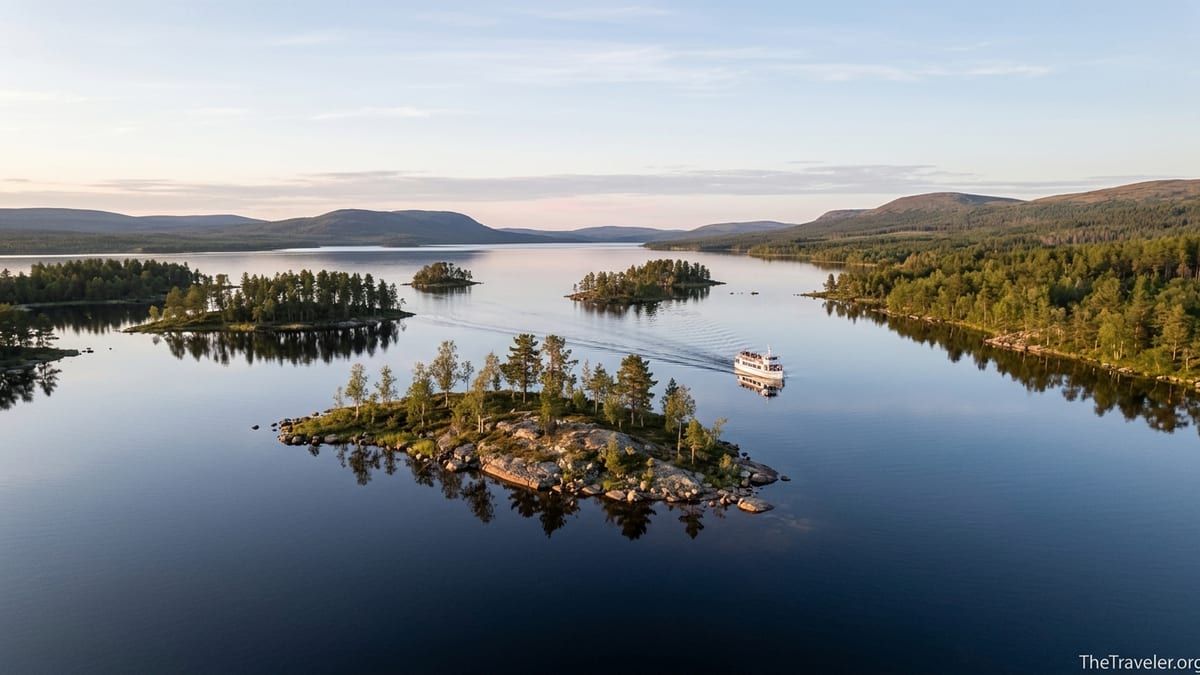
On the map, Lake Inari looks like a spray of shattered glass across the very top of Finland. On the water, it feels like a quiet inland sea, dotted with thousands of islands, some of them sacred to the Sámi people who have lived here for millennia. Exploring this lake is not only about Arctic scenery. Done thoughtfully, it is one of the most rewarding ways to begin understanding Sámi culture and life in northern Lapland today.
Get the latest updates straight to your inbox!
Getting Oriented: Why Lake Inari Matters
Lake Inari lies far above the Arctic Circle, in the municipality of Inari in Finnish Lapland. It is the third largest lake in Finland and the largest in the Sámi homeland, with more than three thousand islands scattered across an area of over a thousand square kilometers. That scale shapes everything about how you experience it: this is not a cozy forest lake but a true wilderness expanse, where weather rolls in quickly and the horizon seems to stretch forever.
The village of Inari, on the southern shore, is widely regarded as the capital of Finnish Sámi culture. Here you find the Sámi Museum and Nature Centre Siida, the Sámi Cultural Centre Sajos, and everyday services such as supermarkets, small hotels and guesthouses. For most travelers, Inari village is the practical base for exploring the lake, whether you arrive by bus from Rovaniemi, by rental car, or via the nearby Ivalo Airport about 40 minutes away.
Lake Inari is important to Sámi culture both historically and spiritually. Sacred islands such as Ukonsaari, ancient Sámi burial grounds on tiny islets, and old fishing and reindeer migration routes all intersect on these waters. When you step onto a cruise boat or paddle a kayak here, you are moving through a cultural landscape, not just a photogenic one. Treating the area with the respect you would afford a temple or historical monument is an essential part of visiting.
Despite its remoteness, Lake Inari is increasingly included in Lapland itineraries. Tour operators in Inari now offer regular summer cruises, winter snowmobile and ice-fishing safaris, and multiday Aurora packages. Yet tourism volume is still modest compared with busier hubs like Rovaniemi or Levi, which means you can often stand on a headland or island and hear only wind in the birch trees and the crack of lake ice shifting under snow.
Meeting Sámi Culture in Inari Village
Before you set foot on a Lake Inari island, it is worth spending at least half a day in Inari village orienting yourself to Sámi history and contemporary life. The Sámi Museum and Nature Centre Siida combines cultural and natural history exhibitions, including a highly regarded open-air museum of traditional Sámi buildings. Walking through turf-roofed storehouses, old reindeer herding shelters and fishing huts gives context to what you will see on the islands later.
Inside Siida, bilingual and trilingual displays introduce the different Sámi groups in Finland, including Inari Sámi, Skolt Sámi and North Sámi, and explain how livelihoods such as reindeer herding, fishing and handicraft are practiced today. Exhibits on traditional beliefs and sacred sites are especially relevant if you plan to visit Ukonsaari or other culturally significant islands. Budget two to three hours to move slowly, read the captions, and watch any short films that are showing.
A short walk away, the Sámi Cultural Centre Sajos houses the Finnish Sámi Parliament and often hosts events, exhibitions and performances. While formal political sessions are not a tourist attraction, concerts, film screenings or handicraft fairs sometimes take place in the public spaces. Check notices in the lobby or ask at your accommodation if anything is scheduled during your stay. Even without an event, simply seeing Sajos’s modern, wood-heavy architecture helps connect the deep past presented in Siida with Sámi society now.
In everyday terms, Sámi culture is also visible in small details around Inari. You might see traditional duodji handicrafts such as tin-thread embroidered belts or reindeer antler knife handles in local shops, or hear staff at a café switching between Finnish and Sámi. When you buy souvenirs, look for items clearly labeled as Sámi-made rather than generic “Lapland” products, and be prepared for higher prices that reflect the time required for artisanal work. Supporting local craftspeople is one of the most direct ways to contribute economically to Sámi communities.
On the Water: Cruises, Boats and Quiet Paddling
For many visitors, a summer cruise is the most straightforward introduction to Lake Inari. From roughly June to early September, local operators based at the Inari village harbor run daily boat trips with an electric-hybrid catamaran or smaller vessels. Typical cruises last two and a half to three hours, cost in the region of 60 to 90 euros per adult depending on the company and inclusions, and include commentary in English and Finnish about the lake’s geology, wildlife and Sámi history.
Most scheduled cruises include a landing on Ukonsaari, the lake’s most famous sacred island, if conditions allow. Boats tie up at a small jetty, and passengers follow a short but sometimes steep wooden staircase and boardwalk up to viewpoints over the open water. The stop is usually limited to 20 or 30 minutes, enough for a brief walk and photos but not a full exploration. If you prefer more time ashore, ask locally about smaller-boat tours or private charters, which can be surprisingly good value if shared between a group of four or six travelers.
Independent travelers sometimes rent rowing boats, small motorboats or kayaks from lakeside guesthouses and activity companies. Prices vary by season and equipment but as a rough guide, expect around 30 to 50 euros for a half-day kayak rental and 60 to 100 euros for a motorboat with fuel. If you are not used to navigating complex island-dotted waters, start with short excursions close to shore and carry a detailed map or GPS. Lake Inari is shallow in places, with submerged rocks, and weather can change quickly; this is not the place to learn boating safety from scratch.
Paddlers with experience may plan multiday expeditions among the islands, camping at designated lean-to shelters or basic wilderness huts maintained by local authorities. In practice, this means carrying full camping gear, food, and proper waterproof clothing, and knowing how to interpret Finnish topographic maps. If you are unsure, consider joining a guided overnight trip instead. Some Inari-based outfitters offer two- or three-day kayak journeys that include tent camping on islands, simple campfire meals and chances to learn about particular sites from Sámi or long-term local guides.
Sacred Islands and How to Visit Them Respectfully
Among the more than three thousand islands and islets of Lake Inari, a small number have particular spiritual or historical importance. Ukonsaari, also known as Ukko Island or by its Inari Sámi name Äijihsuálui, is the best known. Archaeological finds and oral histories indicate that it was used for sacrificial ceremonies and offerings, making it one of the most significant Sámi sacred sites in Finland. Standing on its rocky slopes, with water in every direction, it is easy to see why it was chosen.
Today, visitors can come ashore on Ukonsaari only along designated paths. Signs and guides will generally remind you not to leave the boardwalk, pick plants, move stones or leave any marks. Treat this as you would a church or graveyard. That means avoiding loud music, drones or shouted conversations, and being mindful of photography. Many local Sámi consider it inappropriate to stage fashion shoots or social media “stunts” here, even if there is no formal rule against it.
Other islands, such as old burial islets often referred to as graveyard islands, are not routinely included on tours and may not be signposted. If a guide points one out from the boat, the respectful response is to observe from a distance and not ask to land. Some modern-day reindeer herders and families also maintain private cabins or traditional structures on islands, another reason to avoid wandering ashore without clear permission outside designated stops.
If you book a private boat trip with a local Sámi skipper, use that opportunity to ask about cultural protocols. For example, instead of asking for “hidden” sacred places, you might say that you are interested in learning about the stories connected to the landscape and are happy to see only what is appropriate for visitors. Guides who feel their culture is being respected are often very generous with explanations about seasonal migrations, fishing techniques, or how certain cliffs or capes got their names.
Arctic Landscapes Across the Seasons
Lake Inari is dramatically different in appearance and feel depending on when you visit. In high summer, typically from late June to late July, the sun barely skims below the horizon. Long, pastel evenings reflect off the water, and slender birch trees on the islands glow almost silver. Light wind can whip up short, choppy waves, but many days are calm, perfect for cruising or paddling in fleece and a windproof jacket.
By late September and October, autumn colors set in. Low-growing shrubs and dwarf birch on the islands turn fiery red and orange, while nights grow longer and the first Northern Lights of the season often appear. Boat services start to wind down as temperatures drop, but hikers may still access viewpoints and short lakeside trails before the snow becomes deep. This shoulder season can be quieter and less expensive for accommodation, though some smaller guesthouses close temporarily.
In winter, from roughly December through April, Lake Inari usually freezes solid enough for snowmobile tracks and ski routes to crisscross its surface. Tour companies in Inari offer guided snowmobile safaris ranging from two-hour excursions to full-day expeditions out among the islands, often combined with ice fishing or campfire picnics. Prices commonly fall in the 120 to 220 euro range per person for half-day to full-day outings, including warm overalls, helmets and sometimes a simple lunch.
Winter also brings some of the clearest night skies for Aurora viewing. Several local operators run Northern Lights hunts by car, snowmobile or even kicksled, heading out onto the lake or to dark viewpoints away from village lights. Because the aurora is never guaranteed, consider tours that keep the focus on the whole experience, such as learning to drill a fishing hole or hearing stories around a fire, rather than treating the lights as a promised “show.”
Practical Planning: Access, Accommodation and Budget
Reaching Inari is relatively straightforward despite its far-north location. Most international visitors fly into Helsinki and then connect to Ivalo Airport, served by regular domestic flights in winter and somewhat fewer in the summer shoulder seasons. From Ivalo, you can either rent a car at the airport or take a scheduled bus north to Inari village. The road is well maintained year-round, but in winter you should be comfortable with snow and ice driving if you choose a rental.
Accommodation around Lake Inari ranges from simple cabins and guesthouses to boutique lakeside hotels and glamping-style glass igloos designed for Aurora watching. In summer, a basic lakeside cabin with shared facilities might start around 80 to 120 euros per night, while in the peak Aurora months of January and February, glass-roofed suites can easily exceed 300 euros per night. Booking well in advance is important for Christmas and New Year, when demand spikes across Lapland.
Daily costs in Inari are comparable to the rest of Finland, which means higher than many travelers from North America or southern Europe might be used to. A casual sit-down meal in a local restaurant can easily reach 20 to 35 euros per person, particularly if you choose regional specialties such as sautéed reindeer or Arctic char. To keep expenses manageable, consider booking accommodation with a kitchenette and buying groceries at the village supermarket for some meals, then treating yourself to select restaurant dinners focused on local ingredients.
When planning your itinerary, remember that Inari is a small village and operations are seasonal. A summer visitor might combine a Siida museum morning, afternoon lake cruise and evening stroll along the shore in a single day. In winter, dressing, transport and daylight constraints mean you are better off planning a maximum of one major guided activity such as a snowmobile safari or husky trip each day, with museum visits or short walks filling the gaps. Factor in buffer days in case weather cancels boat trips or night excursions.
Travel Ethically: Supporting Sámi Communities and the Environment
On Lake Inari, ethical travel is not an abstract concept but part of daily choices. One practical step is to favor Sámi-owned or Sámi-led businesses when booking tours and buying crafts. While not every company advertises ownership structure clearly, you can often learn more by reading about the founders on their websites, asking directly by email, or checking whether they collaborate with Sámi cultural institutions. Choosing these operators helps ensure that money generated by Sámi culture remains, at least in part, with Sámi people.
Another consideration is how cultural elements are presented on tours. If a program offers “traditional Sámi costumes for photos” without context, or focuses heavily on stereotypes, that can be a sign to look elsewhere. More respectful experiences might involve listening to joik singing in a small cultural event, visiting a workshop where duodji artisans explain materials and patterns, or simply having an unhurried conversation with a guide about how climate change is affecting reindeer herding routes today.
Environmental impact on and around Lake Inari is also crucial. The lake’s water is remarkably clear, and many islands are home to nesting birds and delicate Arctic plants. On boat or snowmobile excursions, follow your guide’s instructions regarding speed limits and no-go zones, which are often in place to protect wildlife or prevent erosion. If you explore independently, stick to existing paths, avoid making campfires on bare rock, and carry out all rubbish, including biodegradable waste like fruit peels that can attract animals.
Finally, consider the carbon footprint of reaching this remote region. For some travelers, combining several activities in one longer stay in Inari rather than multiple short trips to different Arctic destinations can be a more climate-conscious choice. Once in the village, walking is easy and many accommodations are within a short distance of the harbor and cultural centers. In winter, some hotels lend kicksleds or snowshoes to guests, turning even simple errands into a small Arctic adventure without additional fuel use.
The Takeaway
Exploring Lake Inari is less about ticking off sights and more about slowing down enough to feel both the grandeur of the Arctic landscape and the depth of Sámi presence within it. A well-planned visit might include a day at Siida, a respectful landing on Ukonsaari during a quiet lake cruise, a winter snowmobile or ski journey out across the frozen surface, and unhurried evenings listening for the crackle of ice or watching for the first hint of green aurora overhead.
Throughout, what matters most is the attitude you bring. Treating sacred islands as living places of significance, choosing experiences that benefit Sámi communities, and preparing properly for the often-harsh conditions will reward you with more than photographs. You are likely to leave with a clearer sense of how people have lived with this northern lake for thousands of years, and why many say that once you have sat by its shore in deep silence, some part of Lake Inari always stays with you.
FAQ
Q1: When is the best time of year to visit Lake Inari?
The answer depends on what you want to experience. For boat cruises and island visits, late June to early September offers open water and long days. For Northern Lights and frozen-lake activities such as snowmobiling or skiing, mid-December to late March usually provides the most reliable conditions, though exact dates vary with weather each year.
Q2: How do I get to Inari village without driving in winter?
You can fly from Helsinki to Ivalo Airport and take a scheduled bus or prebooked transfer to Inari, which takes about 40 minutes. Many hotels and tour operators can arrange pick-ups, so you do not need to rent a car if you prefer not to drive on snow and ice.
Q3: Can I visit Ukonsaari island on my own boat or kayak?
In calm summer conditions, experienced paddlers and boaters can reach Ukonsaari independently, but it is strongly recommended to join a guided tour. Guides can explain the island’s cultural significance and ensure you land only where and when it is permitted, minimizing impact on this sacred site.
Q4: Is Lake Inari a good place to see the Northern Lights?
Yes. Lake Inari’s far-north location and relatively low light pollution make it an excellent Aurora destination. If skies are clear, you can sometimes see the lights from the village shoreline, but guided Aurora hunts by car, snowmobile or on the frozen lake can increase your chances by reaching darker viewpoints.
Q5: Do I need special clothing or gear for lake activities?
In summer, sturdy walking shoes, a windproof jacket, warm layers and a hat are usually enough for cruises and short walks. In winter, you will need insulated boots, thermal base layers, and a proper winter jacket and trousers; most guided tours provide additional overalls, mittens and helmets for activities like snowmobiling.
Q6: Is it possible to combine Lake Inari with other Lapland destinations?
Yes. Many travelers pair Inari with Saariselkä, a resort area about an hour’s drive south that offers downhill skiing and additional winter activities. With a rental car, it is also feasible to drive between Inari and Rovaniemi, though the journey is several hours and best done with time in hand, especially in winter.
Q7: How much should I budget for activities on Lake Inari?
As a rough guide, summer lake cruises often cost between 60 and 90 euros per adult, while winter snowmobile or Aurora tours commonly range from 120 to 220 euros per person depending on length and inclusions. Self-guided options like kayak rentals can be more affordable, but you should still factor in museum visits, meals and accommodation.
Q8: Are there options for travelers who prefer gentle or slower-paced activities?
Absolutely. You can focus on museum visits, short lakeside walks, easy boat cruises, and quiet evenings watching the sky. Some operators offer slower, more interpretive excursions that emphasize storytelling and photography rather than speed or adrenaline, which can be ideal for families or visitors with limited mobility.
Q9: How can I tell if a tour or souvenir is Sámi-owned or Sámi-made?
Look for information about the owners or makers in brochures and shop displays, ask staff directly, and pay attention to labels that specify Sámi artisans or design cooperatives. Authentic duodji is typically more expensive than mass-produced items, reflecting the time and skill involved, and reputable sellers are usually happy to explain the background of their products.
Q10: Is it safe to go out onto the frozen lake without a guide?
Locals regularly travel on the ice in winter, but they also have detailed knowledge of safe routes and changing conditions. As a visitor, it is safest to stick to marked tracks and guided tours unless you have solid Arctic experience, up-to-date local information, and proper safety equipment such as ice picks and a flotation aid.