


Lisbon’s Humberto Delgado Airport sits surprisingly close to the historic center, which means your first impressions of the city are often shaped by the short trip between the terminal and your hotel. With a little planning, that first journey can be cheap, quick and calm instead of confusing, overpriced or stressful. This guide walks you through the main options in 2026, with realistic prices, timings and clear examples so you can land knowing exactly what to do.
Get the latest updates straight to your inbox!
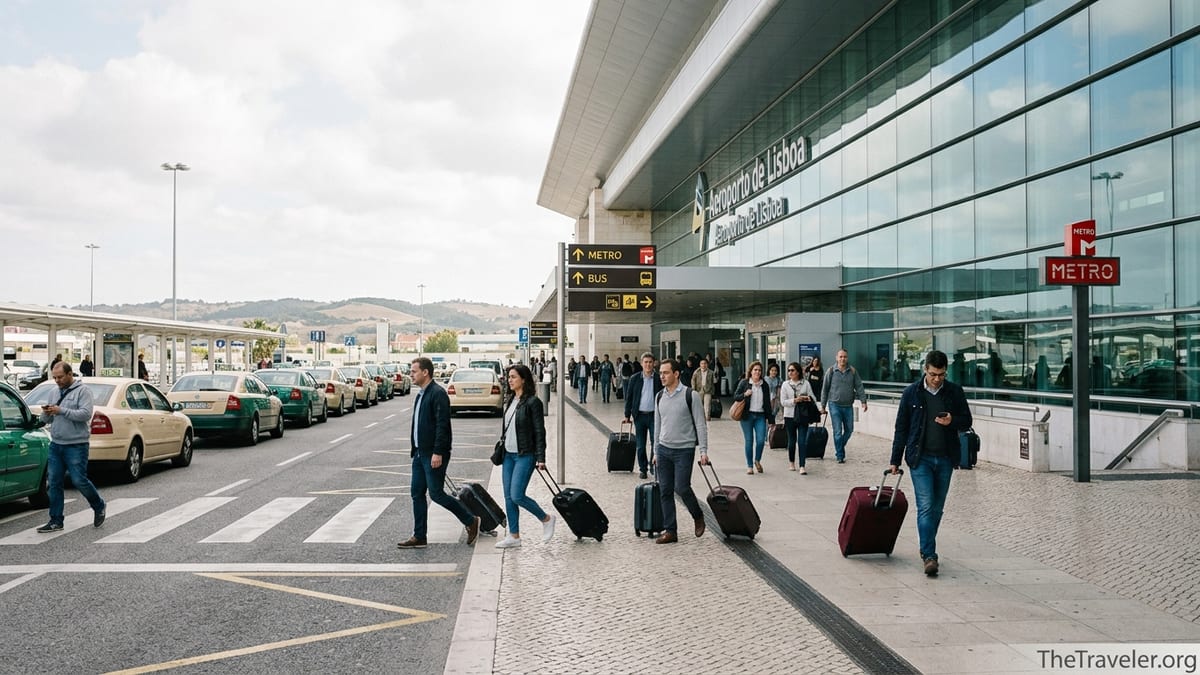
Understanding Lisbon Airport and Where You Are Going
Lisbon Humberto Delgado Airport (LIS) lies roughly 7 kilometers northeast of Baixa, the downtown district where many visitors stay. Arrivals from North America and much of Europe come into Terminal 1, which handles the bulk of international flights. Low-cost carriers and some European routes use Terminal 2, connected by a free shuttle bus. Most ground transport options, including the metro, city buses, taxis and ride hailing pickups, are centered around Terminal 1, so even if you land at Terminal 2 you will usually transfer to T1 before heading into town.
For orientation, picture the city in three broad areas that matter for airport transfers. First is Baixa / Chiado / Rossio, the classic “center” with steep streets and older hotels and apartments. Second is the business and residential area around Saldanha and Marquês de Pombal, which is very well connected by metro. Third is Parque das Nações, the modern riverside district near Oriente station, a common base for conferences and high speed trains to Porto. Knowing which of these matches your hotel address will help you pick the right line or route once you are on the metro or bus.
Because the airport is so close to the city, travel time is rarely the problem. What causes stress for many new arrivals are ticket machines in Portuguese, unfamiliar zones, pushy unlicensed drivers and uncertainty about what a taxi or Uber should cost. The following sections walk through each option with simple “do this, avoid that” guidance and concrete examples, so you can step out of baggage claim with a plan instead of guesswork.
Metro: The Default Stress Free Option for Most Travelers
Lisbon’s metro connects directly to the airport via the Red Line, with a station marked “Aeroporto” built into the terminal complex. Trains generally run from about 6:30 in the morning until around 1:00 the following night, with departures every 6 to 10 minutes at busy times. In practice, that means most daytime and evening arrivals can expect to be standing on a platform within 10 or 15 minutes of clearing customs.
For cost-conscious travelers, the metro is hard to beat. A single metro journey using a rechargeable Viva Viagem or Navegante card typically costs under 2 euros as of 2026, plus a small one time fee for the card itself. For example, a visitor landing at 10:00 on a Monday, loading a Viva Viagem card at the airport station and riding straight to Saldanha on the Red Line would usually spend less than 3 euros in total for card plus fare. That same ride by taxi can run 15 to 20 euros depending on traffic and time of day.
Getting from the airport metro station to central neighborhoods is straightforward. If you are staying near Saldanha or the surrounding business hotels, stay on the Red Line to Saldanha and walk from there. For Baixa, Chiado or Rossio, most travelers ride the Red Line to Alameda or São Sebastião, then change to the Green or Blue lines into the historic center. The journey from “Aeroporto” to Baixa-Chiado with one easy transfer usually takes around 25 to 30 minutes, which is often faster than a taxi during evening rush hour.
The main potential stress point is buying the ticket. Machines at the airport offer English language menus, but the choices can feel confusing after a long flight. A simple approach is to ignore passes and day tickets on your arrival and first buy only a single metro journey loaded onto a Viva Viagem card. You can top it up later at your convenience. Always keep the card handy until you have fully exited the station at your destination, because you will need it to tap out via the gates.
City Buses: Useful for Specific Routes and Late Starts
Lisbon’s yellow city buses, operated by Carris, also serve the airport and can be a good option if your hotel sits on one of their main corridors. As of 2026, routes such as 744 and 783 connect the airport with key points in the city, including Avenida dos Restauradores and Marquês de Pombal, while other lines like 705 and 722 run to transport hubs such as Oriente. These buses board from signed stops outside the terminal, separate from the private tour coaches and long distance buses.
On paper, bus fares and metro fares are similar if you pay with the same reusable card, which keeps costs low. For instance, a traveler staying near Avenida da Liberdade might ride the 783 bus from the airport to a stop close to their hotel for little more than the price of a metro ticket. The trade off is that buses move through regular traffic, so they can be slower at peak times than the largely underground metro.
Buses come into their own when the metro is just starting or winding down, or if you are traveling with large luggage. Early morning flights that land just after 6:00 sometimes see travelers waiting for the first metro trains; in those cases a bus that is already running can shave 15 or 20 minutes off your transfer. Unlike the metro, most buses allow you to place bigger suitcases in designated spaces near the doors, which can feel less cramped than busy metro carriages.
However, buses are usually less intuitive for first time visitors because you need to recognize your stop or follow it on a map. If you use a transit app on your phone, download Lisbon’s public transport data in advance or use an offline map, then track your progress and press the stop button a little before your stop appears. If that sounds like one task too many after an overnight flight, the metro or a taxi may feel more relaxing.
Taxis: Convenient but Know the Fair Price
Official Lisbon taxis wait at a signed rank outside arrivals and are available around the clock, including during the overnight hours when the metro does not operate. Vehicles are typically beige or black and green, with a rooftop taxi sign and a visible meter. In 2026, urban taxi fares start with a small minimum charge and then rise by roughly 1 euro per kilometer, with extra fees for luggage, late night hours and toll roads where applicable.
In real terms, that means a standard metered ride from the airport to Baixa or Chiado often falls between 15 and 25 euros in light to moderate traffic. A couple arriving at 23:00 and heading to a hotel on Rua da Prata, for example, might see a final fare around 18 to 20 euros including luggage supplements. Going to the business district around Saldanha may be a little cheaper, while heading farther west toward Belém will cost more. It is always reasonable to ask the driver for an approximate total before you start; their answer should be in the same ballpark as these figures.
Stress around taxis in Lisbon often comes not from the service itself but from a minority of drivers and unlicensed operators who target tourists at the airport. You may encounter people inside the terminal who approach you with offers of a “cheap taxi” or “no queue.” These are not official taxis. For your own safety and to avoid overcharging, decline and walk to the signed taxi rank outside. Once in an official cab, check that the meter is running and that any extras, such as luggage fees, are explained if they seem unusually high.
One practical way to reduce anxiety is to have your hotel’s address written clearly on paper or saved on your phone, ideally in Portuguese format with postal code. Show this to the driver, confirm they know roughly where it is and listen for a fare estimate that matches what you expect. If a driver refuses to use the meter, step out and take the next taxi in the line. Most drivers are professional and used to visitors; setting these boundaries at the start makes the journey smoother for both of you.
Ride Hailing Apps: Uber, Bolt and Free Now
Ride hailing services such as Uber, Bolt and Free Now operate widely in Lisbon and are popular with both locals and visitors. At the airport, they pick up from designated parking areas rather than directly outside arrivals, so you will follow clear signs or app instructions to reach the correct zone. As of mid 2026, the airport has introduced organized lanes and numbered slots for ride hailing pickups, which helps match riders and drivers more efficiently even during busy periods.
Prices for ride hailing trips from the airport to the city center vary with demand but often fall in the 10 to 20 euro range for a standard car. For example, a solo traveler landing at 15:00 on a Tuesday and opening the Uber app might see a quote of 12 to 16 euros for an “UberX” to a guesthouse near Rossio. Late at night or during very high demand, surge pricing can push that closer to 20 or 25 euros. If you open the app and see an exceptionally high estimate, it can be worth waiting ten minutes or comparing a second app like Bolt to see if prices settle.
Using an app has several advantages that reduce stress for many travelers. You see the price estimate upfront, you can track the car’s route on your phone, and payment happens automatically through the app. There is no need to explain your destination in Portuguese or worry about having enough cash in euros. Apps also provide a record of the trip and a support channel if something goes wrong, which can feel reassuring in an unfamiliar city.
There are still a few things to watch. First, confirm the license plate and driver’s name in the app before getting into any car; at busy pickup zones, multiple drivers can arrive at once, and you do not want to step into the wrong vehicle. Second, if a driver contacts you asking you to walk away from the official pickup area to meet them in a different location, or to cancel and rebook privately, politely refuse and stay within the designated zone. Finally, if you are traveling as a family of four with several large suitcases, consider selecting a larger vehicle category in the app, such as Uber Comfort or a “van” option, to avoid last minute arguments about space.
Private Transfers and Hotel Shuttles
For those who value predictability above price, pre booked private transfers offer a door to door solution that can significantly reduce arrival stress. Several Portuguese and international companies run fixed price transfer services from Lisbon Airport to hotels across the city. You typically book online before your trip, receive a confirmation with meeting instructions, and then look for a driver holding a sign with your name in the arrivals hall or at a designated meeting point.
While prices vary by company and vehicle size, a typical private transfer for up to three passengers from Lisbon Airport to central districts like Baixa or Avenida da Liberdade often costs in the region of 25 to 35 euros in 2026. Larger minivans that can accommodate five to eight passengers, or groups with surfboards or multiple large suitcases, will cost more. The upside is that the price is agreed in advance and will not change because of traffic jams or late night supplements; your driver also knows exactly where you are going.
Some mid range and higher end hotels in Lisbon partner with transfer companies or run their own shuttle services. For instance, a boutique hotel in Chiado might offer an airport pickup for a fixed fee that is slightly higher than a taxi but includes a bilingual driver and assistance with luggage all the way to the reception desk. If you are arriving late at night, traveling with elderly relatives or visiting during a busy festival period, this kind of pre arranged service can remove a lot of small worries at once.
The main drawback of private transfers is that they are less flexible than public transport. If your flight is severely delayed or rerouted, you may need to contact the provider to adjust your pickup time or risk a no show fee. When booking, make sure the company tracks flight numbers and includes a reasonable grace period for delays in their terms. Save their contact details offline or as a screenshot in case mobile data is patchy when you land.
Night Time and Early Morning Arrivals
Many long haul flights from North America arrive in Lisbon early in the morning, sometimes before the metro begins running at full frequency. Likewise, budget carriers may depart late at night. Planning for these edge times is one of the simplest ways to remove stress from your airport transfers, particularly if you are tired or anxious after a long journey.
Between roughly 1:00 and 6:30 in the morning, there is no metro service to or from the airport. During these hours, your practical choices narrow to taxis, ride hailing or a pre booked private transfer. A couple arriving from Toronto at 5:15, for example, might clear passport control by 6:00 and then find themselves with a 30 minute wait until the first metro trains begin running. If they have heavy luggage and a hotel in Baixa, it may be more comfortable to take a taxi or an Uber rather than stand in the station after a sleepless night.
At night, weigh safety and comfort alongside price. Lisbon is generally considered safe compared with many major cities, and official taxis and licensed ride hailing drivers operate 24 hours a day. Still, it is sensible to stay within the lit, busy areas outside arrivals while you arrange your onward transport. If you are traveling alone and feel uneasy, standing near other passengers headed for the taxi rank or ride hailing pickup can add a layer of comfort while you wait.
For very early departures from the city back to the airport, allow extra time if you rely on a taxi or ride hailing car ordered in the moment. On some mornings, high demand in residential neighborhoods can make it harder to find an immediate Uber or Bolt. A common strategy is to book a private transfer or ask your hotel to call a trusted taxi for a fixed time, such as 4:30 for a 7:00 flight, so you are not refreshing apps on the sidewalk with a suitcase in hand.
Practical Tips to Keep Your Transfer Calm
A few simple habits can turn your airport transfers into uneventful routines rather than stressful episodes. Before you fly, save your hotel name and full address in a note on your phone and take a screenshot, so you can show it to drivers even if roaming or Wi Fi is not yet working. If you plan to use the metro, glance at a current map of the lines and identify in advance the station closest to your accommodation and which line it sits on.
On arrival, take a moment before leaving the terminal to sit on a bench or stand to the side and decide which transport option makes the most sense based on the time, your energy level and your luggage. If you are landing at 14:00 with one backpack and staying near a metro station, heading straight to the Red Line is almost always the simplest option. If you are landing at 23:30 with two children and three suitcases, a taxi rank or pre booked transfer will almost certainly be worth the extra cost compared with wrestling bags up metro staircases.
Always be cautious of anyone who approaches you proactively inside the terminal offering rides that sound too easy or too cheap. Licensed taxis wait at the official outside rank, ride hailing drivers meet you in signed parking areas coordinated via apps, and private transfer drivers carry paperwork or confirmation of your booking. If something feels improvised or if a driver suggests avoiding official pickup zones for vague reasons, choose a different option.
Finally, remember that Lisbon’s public transport ticketing is designed to be reloaded and reused. Do not worry if you make a less than perfect choice for your very first trip from the airport. Buy the simplest valid ticket, get to your hotel, drop your bags and then take the time to explore day passes or cards that might save money on later journeys. The goal for that first hour in Lisbon is not to optimize for every euro; it is to arrive relaxed and ready to enjoy the city.
FAQ
Q1. What is the cheapest way to get from Lisbon Airport to the city center?
The metro is usually the cheapest option. A single journey on the Red Line using a rechargeable card typically costs under 2 euros in 2026, plus a small fee for the card itself.
Q2. How long does the metro take from Lisbon Airport to downtown?
From the “Aeroporto” station on the Red Line, it takes about 20 minutes to reach central interchange stations like Saldanha and around 25 to 30 minutes to reach Baixa or Chiado with one easy transfer.
Q3. Is it safe to take a taxi from Lisbon Airport at night?
Yes, using official taxis from the signed rank outside arrivals is considered safe, even late at night. Avoid unlicensed drivers who approach you inside the terminal, confirm the meter is on and keep valuables with you.
Q4. How much should a taxi from Lisbon Airport to Baixa cost?
In normal traffic a metered taxi ride from the airport to Baixa or Chiado typically falls between 15 and 25 euros, depending on time of day, traffic and luggage supplements.
Q5. Where do Uber and Bolt pick up at Lisbon Airport?
Uber, Bolt and other ride hailing services pick up in designated parking areas signposted from the terminal, not directly outside arrivals. The app will guide you to a specific zone or lane where your driver meets you.
Q6. Does the metro run all night from Lisbon Airport?
No. The metro usually operates from around 6:30 in the morning until about 1:00 at night. During overnight hours between those times, you will need a taxi, ride hailing car or private transfer.
Q7. Can I use the same ticket on Lisbon buses and the metro from the airport?
Yes, if you use a Viva Viagem or similar rechargeable card, you can load credit or day passes that work on both the metro and city buses operated by Carris, including those serving the airport.
Q8. Is there still an airport shuttle bus like an Aerobus in Lisbon?
Dedicated airport shuttle buses that once ran direct to downtown have been scaled back or discontinued, so today most travelers rely on the metro, regular city buses, taxis, ride hailing apps or private transfers.
Q9. What is the best option if I arrive with a lot of luggage or small children?
If you have several large bags or are traveling with young children, a taxi, ride hailing car or pre booked private transfer is usually less stressful than the metro, because you avoid stairs, crowds and line changes.
Q10. How early should I leave the city to reach Lisbon Airport for my flight?
For flights within Europe, aim to reach the airport at least 2 hours before departure; for long haul flights, 3 hours is safer. Add 30 to 45 minutes for travel time from central Lisbon by metro or taxi, and more during rush hour.