


Newark Liberty International Airport has a reputation for frayed nerves and frantic dashes through crowded concourses. Yet for most travelers, the chaos is more about first impressions than reality. Once you understand the layout, the new Terminal A, and how to move between terminals and transit options efficiently, Newark becomes far easier to use than its reputation suggests.
Get the latest updates straight to your inbox!
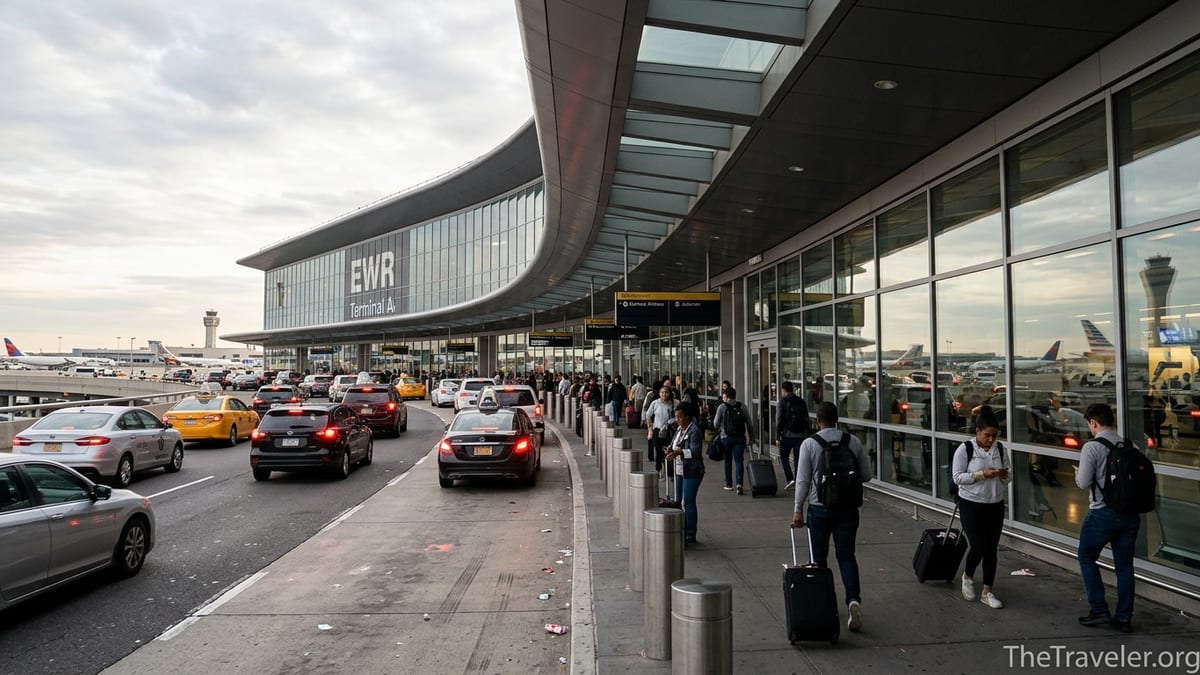
First Impressions: Why Newark Feels So Chaotic
The moment you arrive at Newark Liberty International Airport, it can feel like everything is happening at once. Separate terminals labeled A, B, and C, different drop-off zones for each airline, construction equipment around the AirTrain tracks, and a constant stream of honking rideshares around the terminal roadways can overwhelm anyone who has just stepped out of a taxi or NJ Transit train. The visual clutter makes it easy to think the airport will be confusing from start to finish.
Part of the anxiety comes from Newark’s role as a major East Coast hub. United Airlines runs its largest east coast operation from Terminal C, with dozens of departures tightly packed in the morning and evening peaks. That means crowded check in halls around 6 to 9 a.m. and again from late afternoon into early evening, when business travelers and European-bound flights overlap. Add in the fact that each terminal has its own security checkpoints and post-security areas, and first time visitors often worry they will end up in the wrong place.
Compounding that perception is the ongoing AirTrain replacement project. Travelers arriving by rail at Newark Liberty International Airport Station are currently funneled onto shuttle buses instead of the once straightforward monorail ride straight into the terminals. The signage can look temporary and ad hoc, with portable signs and staff redirecting passengers to buses at peak times. For an airport that serves tens of millions of passengers a year, that can feel more like a construction site than a polished gateway.
But beneath that messy first impression, Newark’s basic structure is actually simple. Three passenger terminals sit along a single loop road, all clearly marked with overhead signs. Each terminal is arranged in a mostly linear way once you are inside. The trick is to tune out the background noise, know which terminal you are headed to before you arrive, and understand that the construction and shuttles are temporary layers placed on top of an otherwise straightforward hub.
Understanding the Terminals: A, B, and C in Plain Language
The fastest way to make Newark feel manageable is to understand the role of each terminal before you leave home. Terminal A is the newest, a 1 million square foot facility that opened in 2023 as part of a 2.7 billion dollar redevelopment program. It now handles many domestic and select international flights for airlines such as Air Canada, JetBlue, American, and Delta, with bright, wide concourses and clear digital signage. If you are flying those carriers, chances are good you will be in Terminal A, which many regular travelers now consider the easiest terminal to navigate.
Terminal B, the middle terminal in every sense, handles a mix of international and domestic carriers. Many European and Latin American airlines, along with some low cost operators, still use this older building. It is split into gate areas 40 through 49, 51 through 57, and 60 through 68, each with its own security checkpoint. That segmentation can be confusing if you simply follow the first “Departures” sign you see. Checking your boarding pass to see whether your gate is, for example, B51 or B66, lets you head to the correct checkpoint and avoid backtracking.
Terminal C is United’s home. If your ticket shows a United flight, especially on a domestic or transatlantic route, you will almost certainly find yourself here. Terminal C’s concourses are busier and can feel more crowded, especially during peaks, but they are logically laid out in long arms with shops and restaurants concentrated near the central sections. United’s own app and departure boards inside Terminal C typically do a good job of guiding you to your gate, and many passengers rely on these instead of scanning every overhead sign.
A useful mental shortcut is to link your airline to a terminal instead of trying to remember the entire airport map. A traveler flying JetBlue from Boston to Newark and then changing to an American Airlines flight to Dallas can safely assume both segments will use Terminal A. Someone arriving on a Lufthansa flight into Terminal B and connecting to a United domestic flight in Terminal C can plan for an inter terminal transfer. Once you learn your airline’s usual home, Newark’s alphabet of terminals stops being intimidating.
AirTrain, Shuttles, and Ground Transport: What Is Happening Now
For years, the AirTrain monorail made Newark easy to understand: it circled the terminals, the parking lots, and the rail station in a continuous loop. As of 2026, that system is in the middle of a full replacement program, and service patterns have changed. Trains still run between the terminals and some parking areas, but rail passengers arriving at Newark Liberty International Airport Station now connect via shuttle buses between the station and the P4 area, then continue by AirTrain to the terminals. That extra step is what makes the airport feel more chaotic, especially if you have not built it into your mental plan.
In practical terms, the current setup adds about 10 to 20 minutes to what used to be a short monorail ride. A traveler arriving from New York Penn Station on an NJ Transit train now steps off at Newark Liberty International Airport Station, follows signs to “Shuttle to Terminals,” and boards a bus that feels somewhat like an airport parking shuttle. From P4, an AirTrain style people mover connects to Terminals A, B, and C. During peak hours, staff with high visibility vests direct passengers to the correct queue, and announcements repeat the process in simple terms.
If you are coming by car, taxi, or rideshare, you can often skip the AirTrain layer entirely. Each terminal has its own dedicated curbside departures area, clearly signed from the airport access roads. Many regular travelers instruct their rideshare driver to choose “Terminal A departures” or “United Terminal C departures” in the app, which removes any guesswork. Off site parking shuttles usually specify the terminal they are serving before they depart the lot; for example, a Newark Park & Ride shuttle from an industrial lot near Route 1 & 9 might announce it will stop at A, then B, then C in order.
To make the current construction phase less stressful, budget extra time if you are relying on trains and the shuttle connection. A conservative approach is to arrive at Newark Liberty International Airport Station at least three hours before an international departure and two hours before a domestic flight, especially in the morning rush. That might sound excessive, but it means you can absorb a full shuttle cycle, a moderate security line, and still reach the gate without sprinting.
Security, Check In, and Boarding: How Long It Really Takes
Security lines are often where Newark’s reputation is made or broken in a traveler’s mind. Recent tracking from airport focused sites that pull data from official feeds suggests that average wait times typically range from about 15 to 40 minutes, with early mornings and late afternoons tending toward the higher end. At Terminal C, it is not uncommon for standard security around 7 or 8 a.m. to stretch to half an hour or more on busy weekdays, while mid morning and mid afternoon windows can drop closer to 10 to 20 minutes.
Programs such as TSA PreCheck, Global Entry, and CLEAR are widely used at Newark and can cut that wait to a few minutes, particularly at Terminal A and Terminal C, where dedicated lanes operate during most of the day. For example, a frequent United flier with both CLEAR and TSA PreCheck might clear the checkpoint at Terminal C in under 10 minutes even when the standard line stretches around stanchions. Similarly, a Delta passenger in Terminal A with PreCheck can often pass through in less than 15 minutes when standard lanes are far longer.
The more important factor is how you sequence your steps. A realistic time budget for a domestic morning departure from Newark might look like this: 15 to 20 minutes from curbside or train platform to check in counters or bag drop, 20 to 40 minutes for security depending on whether you have expedited screening, and another 10 to 15 minutes to walk to your gate and settle in. For an international departure, particularly from Terminal B where some gates are deeper into the building, adding an extra 30 minutes is wise, since passport checks and secondary screening can be slower during peak outbound waves to Europe.
Many Newark veterans now check live wait time apps before leaving home or while in the car. If an app shows Terminal A standard lines spiking above 40 minutes, a traveler might ask a rideshare driver to drop them ten minutes earlier than planned. Conversely, if wait times are reported around 10 minutes, a domestic traveler with only a carry on may be comfortable arriving closer to 90 minutes before departure. These modest adjustments based on real time data can make the difference between a calm pre flight coffee at a La Colombe kiosk in Terminal A and a stressful sprint to last call at the gate.
Inside the Terminals: Finding Food, Services, and Quiet Corners
Once you are through security, Newark quickly becomes easier to handle. The new Terminal A, in particular, feels like a different airport from the older facilities many travelers remember. Its concourses are high ceilinged and lined with local and national brands, such as Jersey style bakeries, familiar coffee chains, and sit down restaurants overlooking the apron. Digital departure screens and wayfinding boards appear at frequent intervals, which means you rarely have to walk more than a few gates before confirming your flight status or gate changes.
Terminal C has one of the densest clusters of food and retail options in the airport, geared toward United’s hub operation. You can find everything from quick grab and go salads and sandwiches to full service bars and a steakhouse style restaurant. Many seats in dining areas have power outlets and USB ports, and United’s app often allows you to view restaurant menus or even place orders for pickup at participating outlets. While the concourses can feel crowded, particularly near popular coffee stands, quieter seating pods are often tucked further down near lesser used gates.
In Terminal B, the layout is more traditional, and amenities vary by concourse. The 60 to 68 gate area, which handles many long haul flights, tends to offer more substantial food and duty free choices, while the 40 to 49 gates feature a mix of chain restaurants and newsstands. If you have a longer layover between an international arrival and a domestic connection here, it is worth walking a bit further from the main cluster of gates to find a calmer corner with more available seating and charging points.
Across all three terminals, airline lounges provide additional refuge. Delta’s Sky Club moved into the new Terminal A, offering views of the ramp and quieter workspaces. United operates multiple United Club locations in Terminal C, and several international airlines, such as Lufthansa and SAS, provide lounges in Terminal B for premium cabin passengers and elite frequent fliers. Even if you do not have lounge access, airports wide free Wi Fi and an increasing number of soft seating zones make it easier to claim a comfortable spot while you wait.
Connections and Tight Layovers: When Newark Is Easier Than It Looks
Connecting at Newark can sound intimidating on paper, especially if your itinerary involves a terminal change. In practice, many domestic to domestic connections are surprisingly manageable, and even some international transfers are easier than travelers expect. For example, a United passenger arriving into Terminal C from Chicago with a 75 minute connection to a second United flight to Orlando will usually remain inside the same terminal. United’s connection screens near arrival gates show onward flights and walking times, and the longest walk along a single concourse rarely exceeds 15 minutes at a normal pace.
Terminal A connections are often even simpler. A JetBlue passenger arriving from Fort Lauderdale and connecting to a Boston flight stays within the same new facility. Wide corridors, clear gate numbering, and multiple food options along the path reduce stress. Even a 45 minute layover can be enough time to stretch your legs, pick up a sandwich, refill a water bottle, and reach your onward gate without feeling rushed, as long as your inbound flight is approximately on time.
Connections that involve clearing immigration and customs in Terminal B before taking the AirTrain and shuttle combination to another terminal are more complex, but still manageable with proper planning. A traveler arriving from London on a morning flight into Terminal B, then connecting to a United domestic flight from Terminal C, might need 2 to 2.5 hours between flights during peak arrival banks. The steps are straightforward: passport control, baggage claim, customs, recheck bags, then follow signs back up to the AirTrain platform and proceed to Terminal C. The perceived chaos comes from the number of steps, but each one is signposted.
Airlines generally avoid selling extremely tight international connections at Newark that require a terminal change, knowing that current AirTrain and shuttle conditions can add unpredictable minutes. If you are building your own itinerary, err on the side of longer connection times, particularly if you are arriving in the early afternoon when both inbound transatlantic flights and outbound domestic departures crowd the schedule. A 90 minute domestic to domestic connection in the same terminal is reasonable; for anything involving Terminal B arrivals and a different terminal departure, two hours or more is safer.
Practical Strategies to Make Newark Feel Calm
The difference between a chaotic Newark experience and a surprisingly smooth one often comes down to a few simple habits. The first is to confirm your terminal and airline pairing before you depart for the airport. Most airline apps and booking confirmations clearly list Newark as EWR followed by a terminal assignment. If your boarding pass says Terminal A, you can instruct an Uber driver, airport shuttle, or friend dropping you off to follow signs specifically to that terminal, rather than circling the entire loop looking for the right door.
The second strategy is to build realistic time buffers into your plan. For a domestic flight, aim to reach the terminal building about two hours before departure if you are checking bags, or 90 minutes if you have only a carry on and some form of expedited security. For international flights, especially those departing from Terminal B, arriving three hours in advance still makes sense, given the extra steps at check in and potential for longer security lines. These guidelines may sound conservative, but they transform the airport from a series of emergencies into a series of manageable pauses.
Technology can help further reduce the sense of chaos. Newark bound travelers increasingly check security wait time tools and crowding indicators on airline apps, then adjust their departure from home or hotel by 15 to 30 minutes accordingly. Some use credit cards that cover the cost of TSA PreCheck or CLEAR enrollment specifically to cut down on Newark’s lines. Others use trip tracking apps that alert them to gate changes or delays, reducing the need to hover anxiously near departure boards.
Finally, accept the temporary imperfections of an airport under renovation and focus on the parts that already work well. While the AirTrain replacement and construction equipment may be distracting in 2026, the new Terminal A, improved concessions in Terminal C, and gradually upgraded roadways are all signs of an airport moving toward a more polished future. Treat Newark not as a chaotic maze, but as a work in progress with a fairly simple underlying structure, and you will move through it with far more confidence.
The Takeaway
Newark Liberty International Airport has long carried a reputation for confusion and congestion, and first impressions in 2026 can reinforce that view. Construction barriers, altered AirTrain patterns, and busy security checkpoints can make the airport feel like a challenge. Yet when you look past the noise, Newark’s fundamentals are straightforward: three main terminals aligned along a single loop, clear airline to terminal pairings, and improving facilities anchored by the new Terminal A.
For most travelers, a smoother Newark experience comes from a few deliberate choices: know your terminal and airline in advance, allow sufficient time for the train to shuttle to AirTrain transfer if you arrive by rail, budget realistic security and check in windows, and use real time tools to watch for delays or long lines. Inside the terminals, especially in Terminal A and C, the abundance of seating, dining, and services makes it easier than ever to relax once you are airside.
Newark may never feel as compact as a small regional airport, but it is far from the unmanageable maze its reputation implies. With a bit of preparation and an understanding of its layout and current construction realities, even a first time visitor can move from curb to gate with confidence. The airport might look chaotic at first, yet for travelers who take a moment to learn its rhythms, Newark Liberty is easier than it looks.
FAQ
Q1. Which terminal do most United Airlines flights use at Newark?
Most United Airlines flights operate from Terminal C at Newark, although a small number of regional or partner flights may occasionally use other terminals.
Q2. How early should I arrive at Newark for a domestic flight?
Plan to arrive at your terminal about two hours before a domestic departure if you are checking bags, or 90 minutes if you have only a carry on and expedited security.
Q3. How early should I arrive at Newark for an international flight?
For international flights, particularly those departing from Terminal B, arriving at least three hours before departure is recommended to allow for check in, security, and possible lines at passport control.
Q4. Is the AirTrain still running at Newark in 2026?
The AirTrain is being replaced, so service patterns have changed. Trains still run between terminals and some parking areas, but rail passengers now use shuttle buses between the rail station and the AirTrain connection point.
Q5. Are Newark security lines really as bad as people say?
Security waits can be busy during peaks, but typical waits range from about 15 to 40 minutes. Programs like TSA PreCheck, Global Entry, and CLEAR often reduce that to under 15 minutes.
Q6. Which terminal at Newark is the newest and easiest to use?
Terminal A is the newest facility, opened in 2023, and many travelers find it the easiest to navigate thanks to wide concourses, clear signage, and modern amenities.
Q7. How much extra time should I allow if I am arriving by NJ Transit or Amtrak?
If you are arriving by rail, add at least 20 extra minutes to your schedule to account for the shuttle bus and AirTrain combination between the rail station and the terminals.
Q8. Can I walk between terminals at Newark?
There are no convenient public walkways between the terminals inside the secure area. Travelers normally use the AirTrain and shuttle system, or curbside vehicles, to move between Terminals A, B, and C.
Q9. Is Newark a good airport for connections?
Newark can be efficient for connections, especially when both flights are in the same terminal. Domestic to domestic connections of 60 to 90 minutes in one terminal are usually manageable.
Q10. What is the best way to reduce stress when flying through Newark?
The best approach is to confirm your terminal before you leave, arrive with sensible time buffers, use real time security and flight updates, and remember that the airport’s layout is simpler than it first appears.