


Before I set foot on Long Beach Island, I thought I knew exactly what a Jersey Shore vacation looked like: neon-lit boardwalks, booming bars, and crowded beaches packed towel to towel. Instead, this slender barrier island off Ocean County quietly upended my expectations. LBI, as locals call it, feels less like a stereotype and more like a small string of coastal villages, where days revolve around tides, bike rides, fresh seafood, and sunsets over the bay rather than arcades and all-night parties.
Get the latest updates straight to your inbox!
An Island That Feels Like a String of Small Towns
Long Beach Island stretches roughly 18 miles along the Atlantic, but it rarely feels like one continuous resort strip. Driving north from the causeway, you pass through distinct communities: Ship Bottom’s motels and casual eateries, Surf City’s family neighborhoods, Loveladies’ dune-front homes, and the fishing heritage of Barnegat Light. Each section has its own personality, more reminiscent of coastal New England villages than the caricature many people associate with the Jersey Shore.
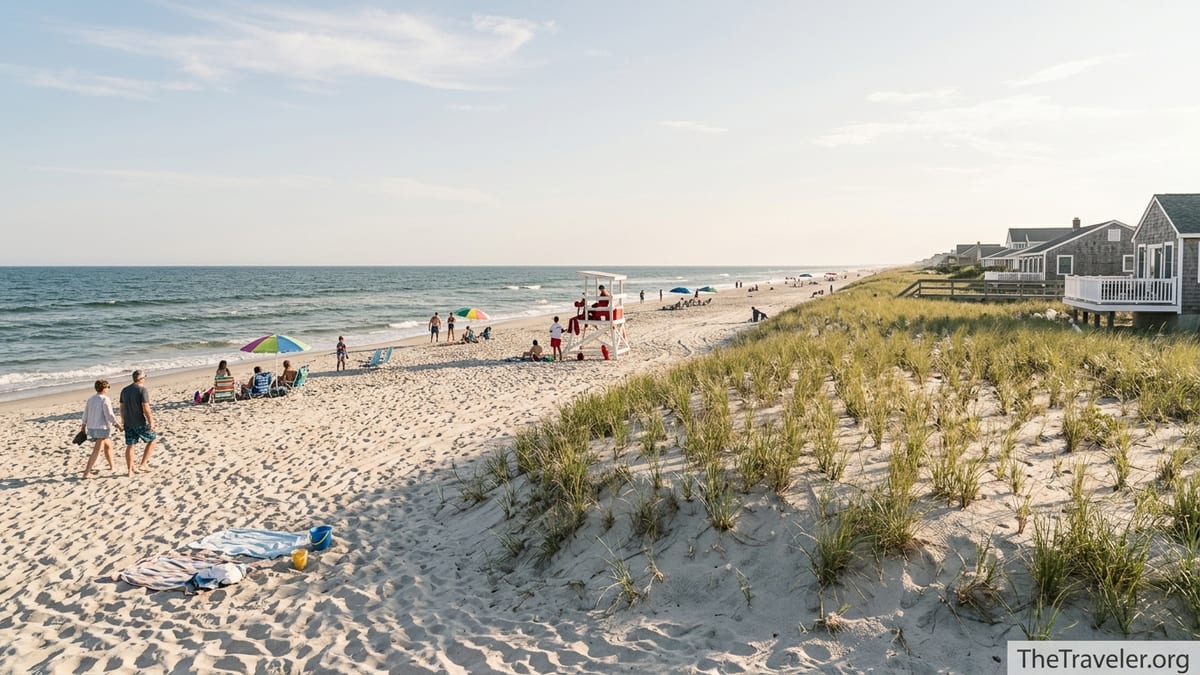
Instead of high-rise hotels, you see low-slung shingle houses and small inns tucked behind sea oats. In Beach Haven, Victorian-influenced architecture still frames streets leading down to the ocean. Many visitors stay in weekly vacation rentals, often multigenerational family homes with sand-tracked porches and outdoor showers. It feels residential first, touristy second, which changes the mood of the entire trip. You are not just visiting a resort; you are slipping into an existing community’s summer rhythm.
The lack of a traditional, mile-long amusement boardwalk surprised me most. There are attractions, of course, but they are compact and woven into town blocks rather than dominating the shoreline. The main strip in Beach Haven might have surf shops, ice cream stands, and boutiques, but you can stroll it in flip-flops without being blasted by competing sound systems. The vibe is neighborly rather than in-your-face.
This structure also spreads people out. On a busy July Saturday, you can still find stretches of sand where your closest neighbor is comfortably far away, especially near residential streets in Long Beach Township or the quieter north end. It is not an empty island, but the density feels manageable and human, not overwhelming.
Boardwalks, Arcades, and the Blessing of What LBI Doesn’t Have
What truly changed my idea of the Jersey Shore was not just what LBI offers, but what it has consciously chosen not to become. Many shore towns build their identity around a single, crowded boardwalk. On LBI, nightlife is lighter and more dispersed, and entertainment leans family-friendly rather than raucous.
In Beach Haven, Fantasy Island Amusement Park packs a classic shore experience into a few blocks: a small Ferris wheel that glows at night, spinning rides, arcade games, and a compact midway of skill booths. You can let kids run from skee-ball to the carousel while adults linger on benches with soft-serve cones. Yet once you step off that block or two, the noise drops away quickly. A few streets in either direction, you are back among quiet houses and the sound of distant waves.
There are bars and live music, particularly at places like hotel beach clubs and local taverns, but they feel like an accent rather than the whole story. On most nights, the biggest crowds cluster not around shot specials but around miniature golf courses and ice cream windows. It is entirely possible to be asleep by 10 p.m. with the windows open and hear little more than the wind in the dunes.
This restraint shapes your days. Instead of plotting which bar to hit, you find yourself planning around the tide chart: a morning surf session in Spray Beach, an easy bay swim with small kids in Harvey Cedars, or a sunset walk along the lifeguarded beach in Brant Beach. LBI proved that a Jersey Shore vacation could be active, social, and fun without feeling overcaffeinated.
Beach Culture at a Slower, Softer Pace
Like most Jersey Shore towns, Long Beach Island uses beach badges in summer, typically from mid-June through Labor Day, for anyone 12 or older on guarded beaches. The prices vary slightly by municipality and season, but they generally cost less than some of the high-profile party beaches. Weekly or seasonal badges make sense if you are staying for more than a few days, and many towns now sell them via mobile apps or preseason discounts, so you can skip long lines at the booth.
Once you are on the sand, the pace feels markedly gentler than in some better-known resort towns. The beaches are wide, with soft, pale sand and dunes that are actively preserved. Lifeguard stands are spaced with enough distance that you can spread out towels and umbrellas without feeling jammed in. Families tote folding wagons piled with boogie boards and shade tents, and you see as many grandparents reading under umbrellas as you do twenty-somethings tossing a Frisbee at the water’s edge.
Practical details add to the low-stress atmosphere. Street parking near the beach is generally free in most sections of the island, though spots fill up fast on peak days and village centers may have meters. Many rental homes come with beach badges included, plus carts or bikes. It is common to see early-morning walkers in athletic gear, dogs on leashes heading back from sunrise strolls where allowed, and surfers paddling out before the day heats up.
The absence of constant boardwalk vendors means you need to arrive prepared. Most days I packed a cooler with sandwiches from a local deli and a few iced coffees from an independent café, because food options directly on the sand are limited outside of certain oceanfront resorts. The upside: far fewer loudspeakers, fewer seagulls trained to snatch fries out of your hand, and a beach soundscape that remains blissfully simple: waves, wind, and kids laughing.
Beyond the Beach: Lighthouses, Back Bays, and Bike Rides
What ultimately made LBI feel different to me was how quickly you can step away from the ocean and find quieter, more reflective experiences. At the island’s northern tip, Barnegat Lighthouse State Park in Barnegat Light anchors the landscape. The towering red-and-white lighthouse, often called Old Barney, watches over the inlet where fishing boats and charter vessels slide past jetties lined with anglers. You can climb the lighthouse when it is open, but even a walk along the promenade or the maritime forest trails reveals a wilder side of the Jersey Shore, with seabirds circling and salt-marsh views stretching toward the mainland.
On the bay side, marinas rent kayaks, stand-up paddleboards, and small boats. A late-afternoon paddle in the shallows off Ship Bottom or Beach Haven West lets you drift past crab traps and osprey platforms as the sun begins to recline. The bay waters are typically calmer than the ocean and relatively shallow in many areas, which is reassuring for beginners and families. Local outfitters often run small-group eco-tours, pointing out the marsh grasses that protect the island from storms and the clams that feed the region’s famous chowder.
Cycling is another way the island reveals itself. LBI’s central boulevard serves as the main artery, but quieter parallel streets near the bay and ocean become informal bike routes. Many rental homes include beach cruisers, and shops in Surf City and Beach Haven rent everything from kids’ bikes to electric models. A casual morning ride from Ship Bottom to Surf City takes you past coffee shops, churches, pocket parks, and side streets that dead-end into the bay with tiny public docks for watching the sunset.
For families, mini-golf has almost ritual status here. Courses dot the island from Barnegat Light to Beach Haven, often themed with pirates, lighthouses, or sea creatures. On warm evenings, lines of flip-flopped players snake past flower beds and wooden bridges. It is a small thing, but the shared, low-key tradition of putt-putt and ice cream does a lot to define the island’s atmosphere.
A Food Scene That Favors Freshness Over Flash
Eating on Long Beach Island was another area where my expectations were quietly rewritten. I arrived imagining a lineup of interchangeable pizza slices and fried baskets. Instead, I found a dining scene that blends unfussy takeout with surprisingly ambitious kitchens, most of them independently owned and fiercely local in tone.
Classic shore fare is everywhere, but often prepared with more care than the stereotype suggests. In Beach Haven, chowder shops ladle out both Manhattan and New England styles, often using clams from nearby waters and serving them in bread bowls or sturdy paper cups you can carry back to your rental. Family pizza spots in Surf City or Ship Bottom do brisk business in big, foldable slices and pies that can easily feed a multi-generational crew after a long beach day.
Then there are the restaurants that lean upscale yet remain relaxed: airy rooms serving seared scallops, seafood risotto, or locally landed swordfish, often in BYOB settings where guests arrive with a favorite bottle from a nearby liquor store. Some long-running island inns in Beach Haven turn out multicourse meals that feel more like a coastal city than a casual surf town, with white tablecloths, low candlelight, and piano music greeting you at the door.
Breakfast and coffee culture deserve mention too. Rather than chains, you will find one-off bakeries and cafés pouring strong cold brew, stacking egg sandwiches on soft rolls, and selling crumb-topped blueberry muffins that routinely sell out by midmorning. Lines form at popular spots on weekend mornings, but they move quickly, and the payoff is worth it when you step onto the beach with a still-warm bagel and an iced latte in hand.
Where to Stay When You Don’t Want a Party Town
The accommodations on Long Beach Island push the entire vacation experience closer to quiet retreat than carnival. There are a few traditional hotels and oceanfront resorts, mostly in Beach Haven and the southern sections of Long Beach Township, some with private beach clubs, poolside tiki bars, and on-site dining that make it easy to park once and forget your car for a few days. For couples or small groups, these can feel like self-contained mini-resorts, complete with loungers set out on the sand each morning.
Most visitors, however, stay in rental homes and duplexes. That might mean a small cedar-shake cottage in Surf City two blocks off the beach, a bayfront house in Harvey Cedars with its own dock and sunset views, or a contemporary home in Loveladies with an elevated deck and an outdoor shower hidden behind weathered fencing. Weekly rates vary widely depending on size and proximity to the ocean, but many families book the same house year after year, building traditions that are as rooted in a particular porch or bunkroom as they are in the island itself.
Because there are relatively few high-rise properties, even busier areas maintain a low profile. Walking back from the beach at dusk, you pass porches lit with soft yellow bulbs, grills firing up for dinner, and the echo of someone practicing guitar through an open window. It feels more like staying in a neighborhood than in a tourist zone.
If you want a bit more bustle without full-on chaos, Beach Haven’s inn-style properties strike a balance: walkable to amusements and restaurants but still calm by late evening. On the other end of the spectrum, the north-end communities near Barnegat Light tilt firmly toward early-to-bed, early-to-rise, perfect for travelers who prefer coffee at sunrise over cocktails at midnight.
Planning a Trip: Practical Details and Seasonal Nuances
Reaching Long Beach Island is straightforward if you are driving from New York, Philadelphia, or much of New Jersey. The only way onto the island is via the causeway bridge from the mainland town of Ship Bottom. In peak summer, traffic can back up on Saturday changeover days, so arriving midweek or early in the morning makes the experience smoother. Once on the island, you can largely rely on walking and biking within each town, though a free shuttle typically runs in-season along the main boulevard, allowing you to leave your car parked for much of your stay.
Summer is high season, with lifeguard coverage, open restaurants, and plenty of events, but shoulder seasons reward travelers willing to trade guaranteed swimming weather for elbow room. In May and September, water temperatures can be brisk yet pleasant for surfers in light wetsuits, and many restaurants and shops remain open, often with shorter waits and slightly lower accommodation rates. Some businesses scale back hours in October, but fall weekends still deliver mild days ideal for biking, lighthouse visits, and long walks on nearly empty beaches.
Budget-wise, LBI is not the cheapest corner of the Jersey Shore, but it is also not engineered around high-volume party tourism. Daily beach badge prices compare reasonably with other shore towns, especially if you commit to a weekly or seasonal pass, and free or low-cost activities like sunsets on the bay, crabbing from small docks, and window-shopping in village centers balance out splurges such as a boat charter or a tasting menu dinner.
One planning tip that deeply affects how your trip feels: choose your base town carefully. If you want walkable restaurants and amusements, look to Beach Haven or Ship Bottom. For a quieter, almost village-like feel, focus on Surf City, Harvey Cedars, or Barnegat Light. Those seeking more space and larger homes often end up in Loveladies or North Beach. The right match can spell the difference between a week that feels like a wellness retreat and one that feels like a classic, kid-centered shore getaway.
The Takeaway
Long Beach Island did more than give me a pleasant week at the shore. It rewrote my assumptions about what a Jersey beach vacation could be. Instead of fluorescent boardwalks and shoulder-to-shoulder crowds, I found an island built around neighborhoods, small businesses, and a deep respect for the dunes and bays that protect it.
Here, days are defined by the arc of the sun and the timing of high tide. Mornings mean bikes and coffee runs, afternoons stretch across wide beaches without constant loudspeakers, and evenings drift into mini-golf, chowder, and slow walks past porches strung with soft lights. The party exists if you want it, but it never dominates the experience.
If your mental image of the Jersey Shore still revolves around wall-to-wall bars and an endless boardwalk, Long Beach Island is a gentle correction. It proves that the same stretch of coastline can host a very different kind of trip: one that is quieter, more deliberate, and grounded in a sense of place. For me, it turned the idea of a “Jersey Shore vacation” from something I tolerated into something I look forward to.
FAQ
Q1. Does Long Beach Island have a traditional boardwalk like other Jersey Shore towns?
Not in the classic sense. LBI has small promenades, piers, and an amusement area in Beach Haven, but no continuous, multi-mile wooden boardwalk lined with bars and rides.
Q2. Do I need a beach badge to go on the sand in summer?
Yes. Most LBI municipalities require beach badges for anyone 12 or older on guarded beaches in peak season, typically from mid-June through Labor Day, with options for daily, weekly, and seasonal badges.
Q3. Is Long Beach Island a good fit for families with young children?
Very much so. The island’s slower pace, calm bay beaches, family-focused activities like mini-golf and arcades, and abundance of rental homes make it especially comfortable for families.
Q4. How does LBI compare to livelier Jersey Shore destinations?
Compared with louder party towns, LBI feels quieter and more residential. Nightlife and amusements exist, mainly in Beach Haven, but they do not overwhelm the island’s overall relaxed character.
Q5. What is the best time of year to visit Long Beach Island?
July and August offer peak summer energy and warm ocean water, while late May, June, and September deliver milder crowds, slightly lower prices, and still-pleasant weather for biking and beach walks.
Q6. Do I need a car once I am on the island?
A car is helpful, especially for arrivals and departures, but many visitors rely on walking, biking, and the in-season shuttle to move between beaches, restaurants, and shops.
Q7. Are there options for upscale or romantic dining on LBI?
Yes. Alongside casual pizza and seafood shacks, LBI has several upscale, reservation-recommended restaurants and cozy inn dining rooms, particularly in Beach Haven and Long Beach Township.
Q8. Is Long Beach Island suitable for a couples’ or adult-focused getaway?
Absolutely. The quieter nightlife, boutique inns, oceanfront resorts, and opportunities for cycling, paddling, and sunset bay walks make LBI an appealing choice for couples and small adult groups.
Q9. What non-beach activities are available if the weather is bad?
You can visit Barnegat Lighthouse State Park, explore local shops and galleries, spend time in arcades, enjoy long meals at local restaurants, or take scenic drives along the island and mainland.
Q10. How far is LBI from major cities like New York and Philadelphia?
Long Beach Island lies roughly a two to three hour drive from New York City and about one and a half to two hours from Philadelphia, depending on traffic and route.