


Newark Liberty International Airport has a reputation that makes many travelers nervous: long lines, confusing terminals, and tight connections. So when I saw that my spring itinerary routed me through Newark on a 90-minute connection from an early flight into Terminal A to an evening departure from Terminal C, I braced for the worst. Instead, my transfer through Newark Liberty went far smoother than I expected, thanks to a clearer terminal layout, updated facilities, and a few small decisions that made a big difference.
Get the latest updates straight to your inbox!
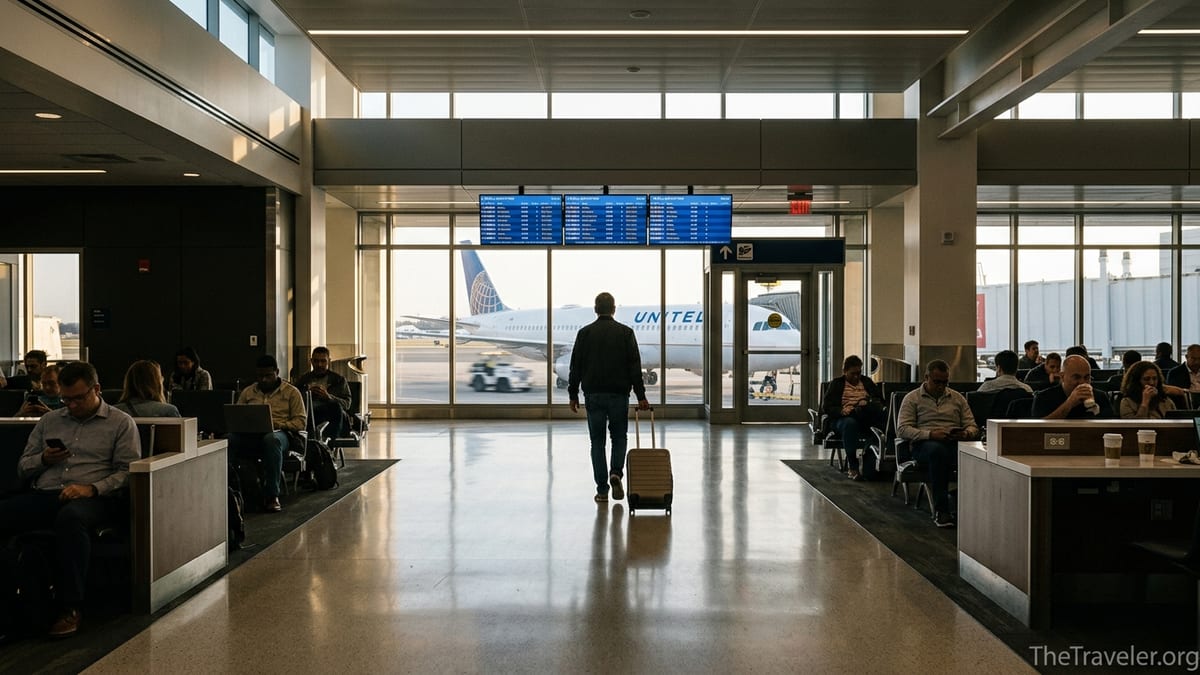
First Impressions: A Modern Welcome in Terminal A
My connection started in Newark’s Terminal A, the airport’s newest facility, which opened in 2023 and still has that clean, modern feel. As soon as I stepped off the jet bridge, the difference from the older terminals was obvious: higher ceilings, more natural light, and wide corridors that made it easy for a full planeload of passengers to disperse without bottlenecks. Overhead signs clearly pointed toward baggage claim, connections, and the AirTrain, which was my lifeline to Terminal C.
I followed the “Connections / AirTrain” signage and found that the wayfinding was more intuitive than at many older U.S. hubs. Digital displays showed real-time flight information, so even before I left the arrivals level I could confirm that my onward United flight from Terminal C was on time and still scheduled at Gate C94. That double-check made it clear I did not need to linger in Terminal A and could head straight for the inter-terminal transfer.
Security wait time boards near the exit showed approximate queues for each terminal’s checkpoints. On my afternoon connection, the estimate for Terminal C security hovered around 20 to 25 minutes, typical for off-peak hours according to recent airport guides. Knowing that, plus my 90-minute layover, reassured me that as long as I kept moving, there was no real need to sprint through the building.
One pleasant surprise in the new Terminal A was the number of visible airport staff in distinctive vests near key junctions. When I paused for a second to confirm I was indeed walking toward the AirTrain, an employee stepped in unprompted to ask if I needed help and quickly confirmed I just had to ride the train two stops to Terminal C. That kind of proactive help can shave crucial minutes off a tight transfer, especially if you are stepping into Newark for the first time.
Navigating the AirTrain During Construction
Newark’s three terminals are not connected airside; you have to leave the secure area and use the AirTrain or shuttle buses outside security to move between them. The AirTrain is a monorail that typically links all terminals, parking, and the Newark Airport Rail Station. Because of an ongoing replacement project, it is currently operating with a few quirks, including a mandatory transfer at certain points and buses substituting for the rail segment to the main rail station at specific hours. Inside the airport loop, however, it still functions as the main way to shift from Terminal A to B to C.
From Terminal A arrivals, I took the escalator up, following the red AirTrain signs. Trains were running about every 5 to 7 minutes, similar to what recent traveler reports suggest, and the wait felt reasonable. The platform displays listed the next stops and clearly indicated that the train I boarded would hit Terminal C after a brief stop at the parking station. Even with construction-related transfers at some times of day, most passengers on my journey seemed to know the drill: get on, listen for announcements, and be ready to switch trains if needed.
The actual ride is short. Airport planning sources recommend budgeting around 30 minutes for a terminal-to-terminal transfer including walking and waiting time, but on my mid-afternoon connection it took closer to 15 minutes from the time I left the Terminal A arrivals hall to the moment I was stepping off at Terminal C. That timeframe would tighten during rush hours or if track maintenance forced an extra change of trains, so I would still treat 30 minutes as a safe planning number if you are looking at a tight layover.
I was particularly struck by how many visual cues were in place even amidst construction. Temporary floor decals pointed the way to connecting trains, and staff at the platforms were actively directing travelers: “This one for Terminal C,” “Next train for Terminal A,” and so on. For an airport that once felt notorious for confusion, this level of hand-holding significantly reduced stress and helped keep the transfer brisk rather than chaotic.
Reclearing Security Without Losing Your Nerve
Every inter-terminal connection at Newark requires re-clearing TSA security. That reality scares many passengers, especially when minimum domestic connections are listed at around 45 minutes and international to domestic at about 90 minutes. The difference between a smooth and stressful transfer often comes down to timing your security experience and choosing the right lane for your situation.
When I arrived at Terminal C’s departures level, I checked one of the airport’s digital wait-time boards before joining a line. Mid-afternoon on a weekday, the standard TSA lane showed about 20 minutes, while TSA PreCheck was fluctuating between 5 and 10 minutes. CLEAR was also available at some Terminal C checkpoints, something frequent United flyers increasingly rely on during peak morning and evening waves. I had PreCheck, so I chose the dedicated lane and was through in roughly eight minutes, including a short pause while an officer verified my boarding pass and ID.
Families or travelers connecting from long-haul international flights would be wise to factor in more time, especially during the 6 to 9 a.m. and late afternoon peaks. Security wait-time monitoring sites regularly report 25 to 40 minutes in the standard lines during those windows in Terminal A and similar in B and C, while off-peak often drops closer to 10 to 20 minutes. In real terms, that means a 90-minute connection is generally safe if your inbound flight is on time and you move directly toward your onward gate instead of lingering at baggage claim or ticket counters.
One detail that helped my connection feel calmer was the number of automation tools in play. At the checkpoints I used, bins rolled forward automatically, belt lanes were clearly divided between standard and priority screening, and several TSA officers were posted at the merge points to proactively direct people to shorter lines. It was not glamorous, but it was efficient, and I emerged into the Terminal C concourse with a solid hour left before boarding.
Discovering the Upgraded Side of Terminal C
Terminal C is United’s long-established stronghold at Newark, and much of it has been refreshed in recent years, particularly the C3 concourse where many international and transcontinental flights depart. After clearing security near the central rotunda, I stepped into a concourse packed with recognizable brands and local touches: a mix of sit-down restaurants, quick-service counters, and grab-and-go markets, along with cafes pouring espresso and specialty drinks.
What struck me first was how many travelers were actually sitting comfortably with space around them. Newark once had a reputation for crowded, outdated gate areas, but the most heavily renovated sections of Terminal C now feature power outlets at nearly every seat, long communal tables, and more natural light. At several gates, self-service kiosks allowed people to order food from nearby vendors straight to their seat, a convenience that can make a 45-minute pre-boarding window feel much less rushed.
I spent a few minutes wandering the central shopping spine, where duty-free stores gave way to familiar travel retailers selling headphones, travel pillows, phone chargers, and snacks. Prices were standard for major U.S. hubs, with items like bottled water and basic charging cables coming in slightly above what you would pay in the city but not wildly out of line with airports like Chicago O’Hare or Washington Dulles. For anyone who arrives without an essential, there is a high chance you can replace it here without hunting from one end of the terminal to the other.
There are multiple lounge options as well, especially for United and Star Alliance travelers. While I chose to stay in the main concourse for this connection, many flyers with Priority Pass or premium-cabin tickets find that ducking into a lounge in Terminal C gives them showers, quieter seating, and better food than they expect from Newark’s older reputation. Even if you stay in the public areas, simple choices like walking one or two gates away from the boarding area to find a quieter row of seats can turn a packed departure hall into a fairly relaxed waiting room.
How Much Connection Time Do You Really Need at Newark?
My 90-minute layover from Terminal A to Terminal C felt comfortable, even with the need to ride the AirTrain and re-clear security. That said, connection comfort at Newark depends on several variables: time of day, season, whether you are arriving internationally, and whether your flights are on the same ticket. Airport and airline planning guidelines typically list minimum domestic connections at about 45 minutes and international to domestic at around 90 minutes, but veteran travelers often build in extra time, especially in winter when weather disruptions are more common.
For domestic-to-domestic or domestic-to-international connections within the same terminal, 60 to 75 minutes is usually enough if your inbound flight is on time. For example, a United passenger connecting from a regional jet arriving at C80 to a transatlantic departure at C95 may only have a 10- to 15-minute walk between gates and no need to leave security. Many travelers report making similar gate-to-gate moves at Newark in under 20 minutes, with time left to grab a coffee before boarding.
International arrivals connecting to domestic flights, especially those that involve changing from Terminal B or C to another terminal after immigration and customs, warrant more buffer. Between deplaning, border control, baggage recheck, AirTrain or shuttle transfers, and a second pass through TSA, that 90-minute minimum can shrink quickly. Flyers with Global Entry and PreCheck routinely make 90-minute connections, but travelers without trusted traveler programs often say they feel most comfortable with 2 hours or more, particularly during morning arrival waves from Europe.
If you are booking your own itinerary, a sensible rule is to treat 45 minutes as the hard minimum only when Newark is a familiar airport for you and you are staying within one terminal. For everyone else, aiming for at least 1 hour and 15 minutes domestically and 2 hours when crossing between international and domestic flights will provide a useful cushion. As my experience showed, when the airport is running smoothly, that extra time becomes an opportunity to explore rather than something you desperately need to avoid a misconnection.
Little Habits That Make Newark Transfers Easier
My smooth connection at Newark was not just luck. A handful of simple habits and real-time decisions noticeably reduced friction. The first was checking my onward gate and terminal before landing. Many airlines, including United, display connection details in their mobile apps and on seatback screens before arrival. By the time my inbound flight began its descent into Newark, I already knew I would be heading to Terminal C and loosely where my C90s gate area was located on the map.
Second, I moved with purpose but not panic. After leaving the aircraft, I resisted the temptation to stop at cafes or shops in Terminal A and instead went straight to the AirTrain, on the assumption that anything I needed to eat or drink would be available in Terminal C as well. That turned out to be correct. Within an hour of landing, I was on the departure side in my second terminal, with food and amenities within easy reach. The mental boost of knowing I had already completed the complex part of the transfer made the rest of the layover feel almost leisurely.
Third, I used the airport’s wait-time displays and signage actively instead of treating them as background noise. When I spotted a security checkpoint with noticeably shorter lines just a few doors down from the one most people were queuing for, I walked the extra minute and cut my waiting time significantly. Newark’s digital boards, along with the staffing around the AirTrain platforms and checkpoints, are genuinely useful if you pay attention to them.
Finally, I adjusted expectations. Newark is a busy northeast hub with all the unpredictability that implies: storms can stack up arrivals, construction can add transfers, and sudden surges of travelers can make a previously calm checkpoint feel crowded. By expecting some minor friction and padding my schedule accordingly, I found myself pleasantly surprised when the connection went smoothly instead of stressed when things took slightly longer than a perfectly theoretical plan.
The Takeaway
Newark Liberty International Airport is not a quiet regional terminal where every connection feels effortless. It is a major U.S. hub handling tens of millions of passengers a year, with the weather, congestion, and construction challenges that come with that scale. Yet my recent transfer from Terminal A to Terminal C demonstrated that with a bit of planning and the benefit of recent upgrades, a Newark connection can be far smoother than its reputation suggests.
The new Terminal A delivers a cleaner, more intuitive arrival experience than in years past. The AirTrain and associated shuttles, while occasionally modified by construction, still provide a relatively quick way to move between terminals for most connections. Security checkpoints, particularly when paired with TSA PreCheck or CLEAR, are not significantly more time-consuming than what you would encounter at other large U.S. airports. And the upgraded portions of Terminal C offer enough dining, shopping, and seating options that even a longer layover can feel productive or relaxing instead of cramped and chaotic.
If you are debating whether a Newark connection is worth the risk, remember that thousands of travelers successfully make tight transfers there every day. Build a realistic buffer into your itinerary, pay attention to real-time information, and move directly toward your next terminal instead of wandering. Do that, and there is a good chance you will find, as I did, that your connection through Newark Liberty goes far more smoothly than you expected.
FAQ
Q1. How much connection time do I really need at Newark Liberty International Airport?
Most travelers are comfortable with 60 to 75 minutes for domestic-to-domestic connections within the same terminal and at least 90 minutes if you need to change terminals or clear immigration and customs. If you do not have programs like Global Entry or TSA PreCheck, planning for 2 hours between an international arrival and a domestic departure is wise.
Q2. Is 1 hour enough to connect between different terminals at Newark?
It can be enough if your flights are domestic, your inbound is on time, and lines at security are moderate. The AirTrain ride itself is short, often 10 to 15 minutes including walking and waiting, but you must add time to exit the first terminal, ride the train, and re-clear TSA. For travelers unfamiliar with the airport, 75 to 90 minutes is more comfortable.
Q3. Do I have to go through security again when transferring at Newark?
Yes. Newark’s terminals are not connected airside, so any transfer between Terminals A, B, and C requires leaving the secure area and passing through TSA security again in your departure terminal. This is true even if both flights are on the same airline and on a single ticket.
Q4. How reliable is the AirTrain during the current replacement project?
The AirTrain still operates around the terminals and parking areas, but service patterns have been adjusted while the system is being replaced. At some times and locations you may need to transfer trains or use a shuttle bus, especially for the segment to and from the main rail station. Within the airport loop, trains typically run every few minutes, and staff and signage help direct passengers.
Q5. What is the easiest terminal for connections at Newark?
For United and Star Alliance passengers, Terminal C is usually the easiest because many domestic and international flights operate from there, reducing the need to change buildings. If both of your flights arrive and depart from Terminal C, your connection may be as simple as a 10- to 20-minute walk between gates without using the AirTrain.
Q6. Are there good food and coffee options for short layovers?
Yes. Terminals A, B, and C all have a mix of grab-and-go counters, coffee bars, and sit-down restaurants. In Terminal C in particular, renovated concourses feature multiple cafes and fast-casual outlets within a few minutes’ walk of most gates, along with self-service ordering kiosks in some areas, making it realistic to grab a meal or coffee even on a 60- to 90-minute layover.
Q7. Does Newark Liberty have free Wi-Fi for connecting passengers?
Newark Liberty offers complimentary Wi-Fi throughout the terminals. Speeds are adequate for typical tasks like checking email, messaging, and downloading boarding passes. Many seating areas near gates now include power outlets and USB ports so you can charge devices while you connect.
Q8. What should I do if my inbound flight is delayed and my connection is tight?
If your inbound flight is delayed, speak with gate agents or use your airline’s mobile app before landing to see whether you can be rebooked. Once on the ground, move directly to your next terminal, bypassing shops and restaurants until you have cleared security. Airline staff in Newark can sometimes hold a flight for a few minutes if many connecting passengers are affected, but it is safest to assume you must move quickly.
Q9. Is Newark a difficult airport for first-time international travelers?
Newark can feel busy and complex, but its signage, digital displays, and staff guidance make it manageable even for first-time international travelers. If you allow enough time, follow the “Connections” signs, and ask staff for help when in doubt, the process of clearing immigration, rechecking bags, and reaching your onward gate is straightforward, if occasionally slow during peak periods.
Q10. Are there quiet places to rest during a longer layover at Newark?
Yes. In addition to airline lounges and paid-access lounges, some concourses have quieter seating areas a gate or two away from the busiest departure points. Travelers on long layovers often walk deeper into a concourse, away from central food courts and rotundas, to find calmer corners with power outlets and more open seats.