


Pisa is one of those places many travelers squeeze into a rushed half day between Florence and the Cinque Terre. Yet if you plan carefully, this compact Tuscan city rewards you with far more than a quick photo of the Leaning Tower. From mastering ticket timings in Piazza dei Miracoli to choosing a base that makes late evening strolls along the Arno feel effortless, a little preparation goes a long way toward seeing the best of Pisa without feeling hurried or overwhelmed.
Get the latest updates straight to your inbox!
Choosing the Right Time and Length for Your Pisa Stay
If your only goal is to see the Leaning Tower from the grass, you can technically visit Pisa in three or four hours. Many cruise passengers and day trippers do exactly that, arriving by mid-morning and leaving by mid-afternoon. The risk is that you spend much of your limited time queuing for tickets and navigating crowds instead of actually enjoying the monuments.
For a first visit that covers the classic highlights at a relaxed pace, one full day and one night in Pisa is a good minimum. This allows you to visit the tower and the rest of Piazza dei Miracoli, walk the historic streets from Borgo Stretto to the Arno, enjoy sunset on one of the riverside bridges, and sit down to a proper Tuscan dinner. Travelers who are curious about side trips, such as Lucca or the beach at Marina di Pisa, often stretch that to two nights.
Season makes a big difference to how your trip feels. July and August are the busiest months, when daytime temperatures regularly push past 30 degrees Celsius and coach groups crowd the square around the tower from late morning onward. Late April to early June and late September to October bring milder weather, lighter crowds, and more comfortable conditions for climbing the tower’s 294 steps. Winter can be atmospheric and quiet, but opening hours are shorter and you will want to bring a warm, waterproof layer for windy days on the Campo dei Miracoli lawn.
Time of day matters almost as much as time of year. If you stay overnight in Pisa, consider booking the first or last tower entry slot of the day. Early entry lets you climb before most tour groups arrive, while the final entry, often around late afternoon depending on season, can give you softer light and fewer people in your photos. Midday slots are the most crowded and are often taken by large group reservations.
Arriving in Pisa and Getting Into the City
Most international visitors arrive at Pisa’s Galileo Galilei Airport, which sits only a couple of kilometers from the city center. Transfers are straightforward and quick if you know what to look for as you step out of the terminal. The automated PisaMover shuttle connects the airport with Pisa Centrale, the main train station, in just a few minutes. It usually runs from early morning until around midnight, with frequent departures, and is designed to handle rolling luggage easily.
Ticketing for PisaMover continues to evolve, but as of 2026 you can expect to pay a mid-range fare for a one way ride and you can typically use contactless payment such as a bank card or mobile wallet directly at the gates. Travelers who arrive late at night after the PisaMover has stopped running usually rely on official taxis from the rank outside the terminal. A taxi to a central hotel near the river or Piazza dei Miracoli often takes about 10 to 15 minutes in normal traffic and normally costs the equivalent of a modest dinner in a mid-range trattoria.
If you are already elsewhere in Tuscany, reaching Pisa by train is often simplest. Regional trains between Florence’s Santa Maria Novella station and Pisa Centrale usually run at least once or twice per hour during the day, with journey times around one hour depending on the service. Tickets for these regional trains are typically inexpensive by Western European standards and prices do not increase if you buy close to departure, so many travelers simply purchase them at station machines a few minutes before boarding.
From Pisa Centrale, many visitors walk into town. The stroll to the riverfront at Ponte di Mezzo takes around 15 minutes along Corso Italia, a pedestrian shopping street lined with clothing chains, gelato shops and cafes. From there it is another 10 to 15 minutes to Piazza dei Miracoli and the Leaning Tower, depending on your pace. Those with heavy luggage or mobility issues often prefer a short taxi ride from the station directly to their accommodation or to the square.
Booking the Leaning Tower and Piazza dei Miracoli
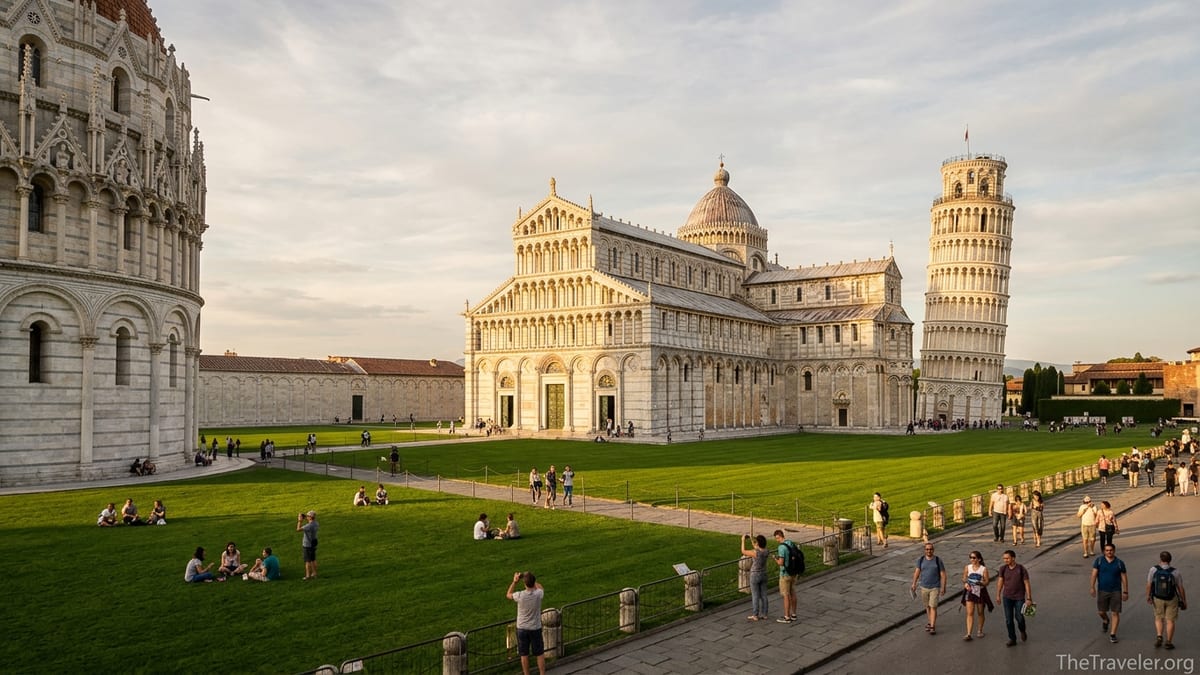
Piazza dei Miracoli, also known as Piazza del Duomo, concentrates Pisa’s most famous monuments in one enclosed green space. Within a few minutes’ walk you will find the Leaning Tower, the Cathedral of Santa Maria Assunta, the Baptistery, the Camposanto cemetery and the Opera del Duomo Museum. Because visitor numbers to the tower are strictly limited for safety, planning your ticket in advance is the single most important step if you do not want to miss the highlight of your trip.
In 2026, standard Leaning Tower tickets are typically around the mid-twenties in euros for adults, with a small discount for youths and no climb allowed for children under eight for safety reasons. Combo passes that include the tower plus access to the other monuments in the square usually cost only a little more than the tower ticket alone and often represent the best value if you intend to visit the Baptistery and Camposanto as well. Buying online in advance for a specific time slot lets you skip the onsite ticket line, which in high season can easily take half an hour or more.
Each climb is timed to about 30 minutes. Bags larger than a small handbag or camera bag must be left at the free cloakroom near the base of the tower, so if you are arriving with luggage on a day trip, factor in a stop at station lockers or your hotel first. Inside, the marble steps are smooth and noticeably slanted due to the tower’s lean, which some people find disorienting. Closed shoes with a decent grip are a practical choice, especially in wet weather.
Do not overlook the rest of the square while planning. The Cathedral can be visited with a free ticket once you hold any other monument ticket, but you still need to reserve a time slot. The Baptistery’s interior acoustics are remarkable, and attendants sometimes demonstrate the echo effect with a short chant. The Camposanto, a monumental cemetery with frescoes and sarcophagi, tends to be quieter and can be an unexpectedly moving part of the visit. A realistic schedule for all of Piazza dei Miracoli is around three hours if you are climbing the tower and entering at least two other monuments.
Designing an Itinerary That Hits Pisa’s True Highlights
A simple but effective way to structure a full day in Pisa is to group the main sights by area and time of day. Many travelers start with Piazza dei Miracoli early, then move south into the historic center and down to the river as the day goes on. For example, you might book a tower climb around 9:00 or 9:30 in the morning, spend late morning exploring the Cathedral, Baptistery and Camposanto, then take a break on the grass or at a nearby cafe before walking back toward the center.
From the square, follow Via Santa Maria toward the Arno. This route passes small souvenir shops and casual eateries, but it also offers glimpses of student life, as the University of Pisa has several faculties nearby. At mid-afternoon, you could detour to Piazza dei Cavalieri, redesigned in the Renaissance by Giorgio Vasari and dominated by the elegant facade of the Palazzo della Carovana. Today it houses the Scuola Normale Superiore, and the square itself makes a quiet contrast to the busy Campo dei Miracoli.
Continuing south, you eventually reach Borgo Stretto, a narrow, arcade-lined street with boutiques and cafes. Locals often order a quick espresso at the bar counter here before heading to work or class. Take time to step into one of the traditional pastry shops for cantuccini biscuits or a slice of torta co’ bischeri, a local tart filled with chocolate and rice cream. A late afternoon stroll along the Arno’s lungarni, the promenade streets that run parallel to the river, rounds out the picture of Pisa as more than a single monument.
If your schedule allows, consider leaving Piazza dei Miracoli and the tower for late afternoon or early evening instead, when group tours taper off. In that case, you might spend the morning wandering the riverfront and side streets, then head north to the square after lunch. What matters most is that you block your day around the fixed time of your tower climb, then fill in the rest with nearby sights so you are never rushing across town against the clock.
Where to Stay and Eat to Make the Most of Your Visit
Your choice of neighborhood can shape how easy it is to see Pisa’s highlights. Staying near Piazza dei Miracoli puts the Leaning Tower practically at your doorstep, which is convenient if you have an early or late climb time. Small guesthouses and bed and breakfasts in this area often occupy old residential buildings, with simple rooms and the bonus of being able to photograph the tower in the early morning before the crowds arrive.
On the other hand, a base closer to the Arno or around Borgo Stretto offers more atmosphere in the evenings and shorter walks to restaurants and bars. For example, a modest three star hotel a few minutes from Ponte di Mezzo lets you wander out after dinner to see the reflections of palaces in the river, then walk back to your room in under ten minutes. Travelers catching an early train to Florence or the coast might prefer the practical choice of staying near Pisa Centrale, where mid-range chain hotels and budget options cluster within five minutes of the station.
Food in Pisa leans heavily on Tuscan and coastal traditions. You will find simple trattorias serving ribollita vegetable soup, pappardelle with wild boar ragù, and grilled seafood caught from the nearby Tyrrhenian coast. A realistic budget for a sit down dinner with a pasta course, main course, house wine and coffee in a casual restaurant is often in the range that many visitors would expect to pay for a single main dish in the center of cities like Paris or London. At lunchtime, many locals opt for a panino from a bakery or a plate of pasta of the day, which keeps costs down without feeling like a compromise.
Gelato is abundant, but quality varies. Look for places where the gelato is kept in covered metal containers rather than piled high in bright colors. A small cup typically costs only a few euros, making it an easy treat between sights. For coffee, prices at the bar counter are lower than at a seated table, in line with Italian custom. Standing with locals for a quick macchiato can be a pleasant part of your morning routine before heading to the tower.
Practical Tips, Safety and Common Mistakes to Avoid
The biggest planning mistake many travelers make in Pisa is underestimating how ticketed entries and queues can eat into a tightly scheduled day. Booking your Leaning Tower slot before you decide train times, restaurant reservations or side trips helps avoid conflicts. For instance, if you are coming from Florence on a day trip, aim to arrive in Pisa at least one and a half to two hours before your tower slot so that any minor train delay does not make you miss the climb.
Pisa is generally a safe city, especially during the day in tourist areas. As in most popular destinations, pickpocketing can occur around crowded spots such as Pisa Centrale, Piazza dei Miracoli and busier shopping streets. Keeping valuables in a zipped crossbody bag and avoiding leaving phones or cameras unattended on the grass are usually sufficient precautions. At night, main routes between the center and major hotels remain busy enough that most visitors feel comfortable walking, but quieter backstreets near the station can feel less welcoming after dark, so a short taxi ride may be a better option if you are arriving late.
Dress codes at religious sites in Pisa are similar to those in the rest of Italy. While the outdoor areas of Piazza dei Miracoli are informal, you will be expected to cover shoulders and knees inside the Cathedral. A light scarf or shawl in your day bag makes it easy to adapt. For the tower climb, bring only what you can comfortably hold or fit in pockets; large backpacks and suitcases are not allowed and will need to be stored.
Finally, leave some flexibility in your schedule. Rail strikes, though not everyday occurrences, do happen in Italy. If you have a flight from Pisa the same day as a planned day trip by train, consider leaving yourself extra time or using an earlier service than strictly necessary. Having a mental backup plan, such as a taxi from a nearby town back to Pisa or simply swapping days for a local exploration of Pisa’s streets and riverfront, can make an unexpected disruption far less stressful.
Easy Day Trips and How Pisa Fits into a Wider Itinerary
Pisa’s location makes it a natural transport hub for western Tuscany, which is one reason so many low cost airlines use its airport. If you have more than one night in the city, you can easily combine Pisa’s highlights with at least one nearby destination. The walled city of Lucca is the most popular choice. Trains between Pisa and Lucca usually take around 25 to 30 minutes, and many visitors happily spend a half day there cycling or walking along the Renaissance walls and exploring its piazzas.
Beach lovers can head to Marina di Pisa or Tirrenia on the coast. Buses connect Pisa to Marina di Pisa in under an hour, and in summer the seafront fills with Italians escaping the city heat for a swim and a plate of fried seafood. While these seaside towns do not have the monumental draws of Pisa itself, they provide a pleasant contrast if you are staying several days and want to see a different side of local life.
Pisa also works well as a starting or ending point for a longer trip through Tuscany and central Italy. A common pattern for first-time visitors is to fly into Pisa, spend one or two nights seeing the tower and the city, then continue by train to Florence for several days before moving on to Rome or Venice. Others do the reverse, flying out of Pisa at the end of a wider itinerary to take advantage of direct flights. In both cases, treating Pisa as more than a simple transfer point means you do not miss its highlights in the rush of connections.
If you are arriving on a cruise ship via the port of Livorno, allow for the extra transfer time. Some cruise lines sell shore excursions that include a guided visit to Pisa and, sometimes, a brief stop in Florence. Independent travelers often take a shuttle or local transport from the port to Livorno’s station, then a regional train to Pisa Centrale. With limited hours ashore, prebooking at least your tower ticket gives you the best chance of seeing the square properly before you have to head back to the ship.
The Takeaway
Planning a trip to Pisa without missing the highlights comes down to a few simple but important steps. Decide how much time you can give the city, then build your schedule around a reserved Leaning Tower slot rather than fitting the tower in as an afterthought. Choose accommodation that matches your priorities, whether that is waking up within sight of Piazza dei Miracoli or enjoying evenings on the Arno. Allow enough margin for airport transfers and regional trains so that unexpected delays do not cost you the climb you came for.
When you treat Pisa as a city rather than just a monument stop, its true character emerges. You notice students chatting under the porticoes of Borgo Stretto, families enjoying gelato on the riverfront, and evening light catching the white marble of the cathedral. With realistic expectations, a bit of advance booking and a flexible attitude, you can leave Pisa feeling that you have experienced both its iconic sights and its everyday life, rather than just ticking a famous tower off your list.
FAQ
Q1. How far in advance should I book Leaning Tower of Pisa tickets?
In busy months such as May through September, it is sensible to book at least one to two weeks ahead, especially for popular morning and late afternoon time slots. Outside peak season, you may find same week availability, but there is no guarantee for specific times.
Q2. Can I visit Pisa as a day trip from Florence and still see the main highlights?
Yes, a day trip from Florence is realistic if you catch an early regional train and return in the evening. With roughly eight to ten hours total, you can climb the Leaning Tower, visit at least part of Piazza dei Miracoli, walk through the historic center and have a relaxed meal, as long as you plan around your tower time slot.
Q3. Is climbing the Leaning Tower suitable for children and older visitors?
The climb involves nearly 300 narrow, sloping steps and can feel disorienting. Children under eight are not allowed for safety reasons, and those under 18 must be accompanied by an adult. Older visitors in good health who are comfortable with stairs generally manage fine, but anyone with serious mobility, heart or balance issues should consider enjoying the tower from the ground instead.
Q4. What should I wear when visiting Pisa’s main monuments?
There is no strict dress code outdoors, but inside the Cathedral and other religious spaces shoulders and knees should be covered. Comfortable walking shoes are important for cobbled streets and the sloping steps of the tower. In summer, a hat and light clothing help with the heat, while in winter a warm coat and waterproof layer are useful for windy days on the exposed Campo dei Miracoli.
Q5. Is Pisa safe at night for solo travelers?
Central areas around the Arno, Borgo Stretto and Piazza dei Miracoli are generally safe and remain active into the evening. As in any city, it is sensible to avoid poorly lit side streets, keep valuables secure and consider using a licensed taxi for late night journeys to or from the station area. Most solo travelers report feeling comfortable with basic urban precautions.
Q6. How much should I budget for a day in Pisa excluding accommodation?
Budgets vary, but a typical visitor might spend the equivalent of several tens of euros on monument tickets, around the mid-teens for a sit down lunch, more for dinner in a casual trattoria with wine, plus small amounts for coffee, gelato and local transport. Day trippers who bring snacks and focus on free outdoor views can keep costs much lower, while those booking guided tours and multi course meals will spend more.
Q7. Are there luggage storage options if I only have a few hours in Pisa?
Yes, luggage storage is available at or near Pisa Centrale station, often operated either directly by the railway or by private lockers and staffed facilities nearby. Many day trippers arriving between flights or trains leave suitcases there so they can walk to Piazza dei Miracoli unencumbered and still be free to climb the tower, where large bags are not permitted.
Q8. What is the best way to reach Piazza dei Miracoli from Pisa Centrale?
The most pleasant option for many visitors is to walk. The route through Corso Italia, over one of the central bridges and up through the old town takes around 25 to 30 minutes at a relaxed pace. Taxis outside the station provide a quick alternative if you are short on time or carrying heavy luggage, and city buses also connect the station with stops close to the square.
Q9. Can I see Pisa’s highlights if my flight arrives late in the day?
If your flight lands in the late afternoon or evening, you are unlikely to climb the tower the same day due to timed entry and closing hours, but you can usually still enjoy an evening walk to see the illuminated silhouette of the tower and cathedral from the outside. Booking your monument visits for the following morning, then leaving Pisa later that day or the next, is often the most relaxed approach.
Q10. How does Pisa compare with Lucca for an overnight stay?
Pisa offers the iconic Leaning Tower and a livelier student atmosphere, especially around the river and university areas. Lucca, a short train ride away, feels quieter and more enclosed, with intact city walls you can walk or cycle along. Many travelers choose to stay one or two nights in Pisa to focus on its highlights, then add a half day or more in Lucca to experience a different side of northern Tuscany.