


Pisa is one of Italy’s most famous names, yet many visitors leave feeling they have battled crowds, overpaid for the basics and barely scratched the surface beyond a single tilted tower. The city is compact, easy to navigate on foot and full of small Tuscan details, but a handful of common mistakes can quickly turn a simple stop into an expensive or underwhelming detour. Understanding how Pisa actually works in 2026, from Leaning Tower tickets to airport transport and driving rules, will help you avoid the pitfalls that catch thousands of travelers every year.
Get the latest updates straight to your inbox!
Rushing Pisa as a Box-Ticking Day Trip
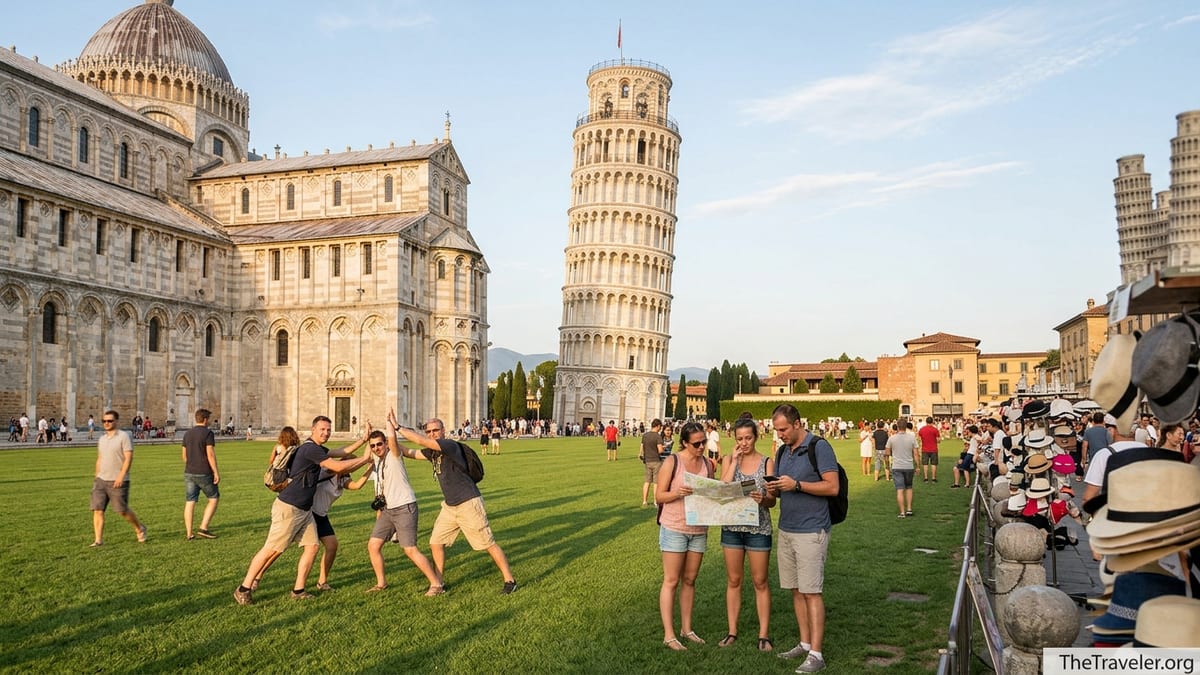
One of the biggest mistakes is treating Pisa purely as a tick-box stop on a long day trip from Florence or the coast. Many visitors arrive on late-morning trains from Florence, walk straight from Pisa Centrale to Piazza dei Miracoli, snap a few “holding up the tower” photos, and head back within two or three hours. Travel behavior studies based on mobile data suggest that a large share of foreign visitors spend less than half a day in the city, concentrating almost entirely around the Leaning Tower. This “fast tripper” pattern leaves no time for the riverside Lungarni, the medieval streets of Borgo Stretto or even a relaxed coffee away from the crowds.
In practice, rushing creates a cascade of problems. You arrive at the tower late morning or early afternoon, which is exactly when tour buses from Florence, cruise passengers from Livorno and organized coach tours pour into the square. Lines for security and ticket pickup get longer, restaurant waiters are working at full speed and even basic tasks like using the restroom become frustrating. By the time you have your obligatory photos, you are watching the clock for your return train instead of exploring the historic center just a 15-minute walk away.
A slower approach changes everything. Travelers who time their visit for early morning or late afternoon often describe a completely different experience. Taking the 8:00 or 8:30 train from Florence, for example, gets you into Pisa before 10:00, when the coach groups are only beginning to arrive. Alternatively, staying one night in Pisa lets you wander the Lungarni at sunset and see the tower lit after dark, long after the last tour buses have pulled away. Even adding two extra hours to your schedule opens space to climb the tower, enter the cathedral and stroll via Santa Maria or Borgo Stretto without feeling constantly rushed.
Mishandling Leaning Tower Tickets and Timing
The Leaning Tower is the focal point of almost every visit, and mismanaging tickets is one of the most frequent and costly mistakes. All tower tickets are timed-entry, with strictly enforced 30-minute windows. In 2026, official ticket prices for the tower alone sit around the 20 euro mark, while combo passes that include other monuments in Piazza dei Miracoli cost slightly more. Third-party platforms and street touts often advertise “skip-the-line” access at significantly higher prices, sometimes bundling the tower with a short guided tour. Visitors who have not read the fine print can end up paying a hefty premium for what is essentially the same timed slot they could have bought directly.
A common real-world scenario plays out like this: a family arrives from Florence around midday without pre-booked tickets, walks to the official ticket office and discovers that tower climbs are sold out until late afternoon. Faced with the risk of missing their return train, they turn to a reseller’s kiosk in a side street, where a salesperson offers a last-minute “priority” ticket at nearly double the official price. The family pays, only to find they still queue for security, store their bags in the same lockers as everyone else and enter with other timed-ticket holders. The only thing they truly skipped was the uncertainty of availability.
The smarter strategy is to decide in advance whether you want to climb the tower at all. The staircase is narrow, the 251 steps are uneven and the tilt is disorienting, which can be challenging for those with mobility or balance issues. If you do plan to climb, buy your tickets from the official channel as soon as your travel dates are firm, particularly for peak months like June through September. Choose an early morning or late afternoon slot to avoid the harshest heat and crowds. If you arrive without a reservation and find climbs sold out, remember that entry to the cathedral itself can be free with a simple ticket from the office, allowing you to enjoy world-class Romanesque architecture at minimal cost.
Underestimating Pisa’s ZTL and Parking Pitfalls
For visitors arriving by rental car, Pisa’s Limited Traffic Zone, or ZTL, is one of the most expensive mistakes you can make. Like many Italian historic centers, Pisa uses camera-enforced ZTL gates to keep non-resident traffic out of the core, including the area around the Leaning Tower and much of the medieval center. Passing under one of these cameras without authorization typically triggers an automatic fine. Guides to ZTLs across Italy note that violations can run roughly from 80 euros to more than 300 euros per entry, and because each camera counts separately, a driver who unknowingly crosses multiple access points on the same day may receive several fines months later at home.
This catches countless travelers off guard. A typical story goes like this: a couple picks up a rental car at Pisa Airport and follows their navigation app toward “Piazza del Duomo” or “Leaning Tower parking.” As they get closer to the monument, signs become more complex and streets narrower. By the time they notice the round white ZTL signs with a red circle, they have already driven past the cameras. Weeks or months after they return home, the rental agency charges an administrative fee to forward their details, and the fines arrive in the post long after the vacation glow has faded.
In 2026, local parking guides consistently recommend using lots outside the ZTL and walking in. One of the most practical options is the free car park on Via Pietrasantina, which offers around a few hundred spaces. From there, city buses on the LAM Rossa line or an easy 10- to 15-minute walk take you to Piazza dei Miracoli without any ZTL risk. Closer to the center, blue-line “zona blu” street parking typically costs around 1.50 to 2.20 euros per hour during the day, and several garages near the center charge in the range of 18 to 30 euros for a full day. Choosing these legal, marked options is far cheaper than gambling on driving closer to the tower.
Another parking-related trap involves informal “attendants” near Piazza dei Miracoli. Local reports describe men in high-visibility vests waving drivers into public spaces or lay-bys, then demanding 5 to 10 euros in cash as a supposed “guard” fee. These individuals are not official parking staff. The safest approach is to park only in clearly signed, official lots or blue-lined spaces with meters, pay at the machine or via a recognized parking app where available, and ignore anyone asking for cash without a printed ticket. If you are unsure, ask your hotel for a recommended lot and driving instructions that avoid the ZTL altogether.
Ignoring Simple Transport Tricks from Pisa Airport
Because Pisa has its own international airport just a few kilometers from the center, many travelers assume that getting into town is trivial and make decisions on the fly after landing. This can lead to overspending or confusion, especially if you arrive tired after a long flight. In 2026, the main public connection between Pisa International Airport and Pisa Centrale station is the automated PisaMover shuttle. It runs roughly every few minutes from early morning until around midnight and takes about five minutes. Recent fare updates put a standard one-way ticket at around 6.50 euros for adults, with contactless “tap and go” options allowing you to pay by credit card or smartphone right at the turnstiles.
Unprepared visitors often fall into two opposite traps. Some reflexively avoid the PisaMover because a short train ride “seems expensive,” then end up taking an even pricier taxi. Metered cabs waiting outside the terminal typically charge around 15 to 20 euros for the 10-minute ride into the city center, more at night or with luggage surcharges. Others line up to buy shuttle tickets from the machines, not realizing they can tap a contactless card and go straight through. In peak arrival waves, those ticket lines can feel longer than the ride itself.
The reality is that you should choose based on your situation rather than guesswork. Solo travelers or couples staying near Pisa Centrale will usually find the PisaMover the easiest option, especially with light luggage. Families with multiple bags heading directly to a hotel near the tower might decide that a taxi split between four people is reasonable. For very budget-conscious visitors arriving during daylight with small backpacks, walking from the airport to the center takes around 25 to 30 minutes on flat streets, letting you see local neighborhoods and the Arno River on the way. The main mistake is not knowing the prices and schedules before you land, then making rushed decisions at the terminal when you are least alert.
Eating and Shopping in the Most Touristy Strip Only
Another classic error is assuming that the streets immediately around Piazza dei Miracoli represent the whole of Pisa’s food and shopping scene. The strip directly facing the Leaning Tower is lined with stalls selling miniature towers, leaning shot glasses, hats and cheap T-shirts, alongside restaurants advertising aggressively priced “tourist menus” in multiple languages. While grabbing a quick gelato here is understandable, sitting down for a full meal or buying all your souvenirs in this zone usually means higher prices and lower quality than you can find just a few streets away.
Travelers frequently report disappointing experiences such as paying 10 to 12 euros for a mediocre Aperol spritz served in a plastic cup on a terrace facing the crowds, or receiving microwaved pasta advertised as “authentic Tuscan cuisine.” These establishments rely on foot traffic and one-time customers rather than local repeat business, so there is little incentive to offer good value. The same applies to souvenir stalls selling mass-produced magnets and snow globes, often made far from Italy, at prices that quickly add up when you buy for friends and family.
Walk five or ten minutes toward the river, however, and the atmosphere changes. On and around Borgo Stretto, Corso Italia and the smaller side streets, you will find bakeries selling fresh focaccia by weight, cafes serving proper espresso at the counter for around 1.50 euro and small boutiques with higher-quality leather goods or ceramics. A simple rule of thumb is to eat where menus are primarily in Italian and where you can see locals at the tables. Even near the tower, taking the time to check where students or office workers are having their lunch can lead you to a trattoria offering a hearty plate of pasta for 9 or 10 euros and a carafe of house wine, instead of an overpriced “menu turistico.”
Overlooking Pisa Beyond the Piazza dei Miracoli
Focusing entirely on the Leaning Tower is understandable but shortchanges the rest of the city. Many visitors spend their full time within the walls of Piazza dei Miracoli and leave convinced that Pisa is nothing more than one square surrounded by souvenir kiosks. This perception is often reinforced by fast-paced bus tours that allocate less than two hours in town. The result is that travelers miss the medieval lanes, riverfront views and quieter churches that locals know best.
Just a short walk away, the Lungarni along the Arno River offer a completely different side of Pisa. Standing on Ponte di Mezzo in the evening, you can look back at rows of ochre and pastel facades reflected in the water, with students chatting along the railings and cyclists commuting home. Further along, the tiny Gothic church of Santa Maria della Spina, perched almost at water level, is one of the city’s architectural gems and far less crowded than the monuments in Piazza dei Miracoli. These spots provide rich photo opportunities and a strong sense of place without the crush of selfie sticks.
In the historic center, streets like Via Santa Maria, Via San Martino and Borgo Stretto still retain a lived-in feel, with greengrocers, bakeries and bookshops mixed among bars and clothing stores. Piazza delle Vettovaglie hosts a market in the mornings, where locals pick up produce, cheese and cured meats. Even an hour wandering these areas can give you more insight into Tuscan everyday life than queuing for one more staged photo. The main mistake is assuming that once you have seen the tower, Pisa has nothing left to show you.
Misreading Safety, Scams and Crowd Dynamics
Pisa is generally a safe city, but like any popular destination with dense crowds and distracted visitors, it has its share of petty crime and minor scams. Many first-time visitors either overestimate the risks and move around nervously, or underestimate them completely and let their guard down. The most common issues reported in recent years include pickpocketing in crowded areas around the tower and train station, aggressive souvenir sellers, and the informal parking “helpers” already mentioned.
Typical trouble spots include the lawns of Piazza dei Miracoli on summer afternoons, when hundreds of people cluster around the same angles for photos, and the underpasses and platforms at Pisa Centrale during rush periods. In such environments, thieves look for open handbags, phones left on cafe tables and wallets placed in back pockets. Visitors distracted by street performers or focusing on framing the perfect leaning pose are easier targets. The presence of organized tour groups and solo travelers juggling luggage makes these areas particularly attractive to opportunists.
Basic precautions go a long way. Use a cross-body bag that zips, keep your phone in a front pocket or interior compartment and be wary of anyone who suddenly invades your personal space with trinkets, friendship bracelets or petitions to sign. When buying souvenirs or snacks from kiosks, check prices before ordering and count change. If someone offers unsolicited help with luggage, parking or ticket machines, retain control of your belongings and politely decline if you feel pressured. Balancing realistic caution with enjoyment will help you appreciate Pisa’s monuments without constant worry.
The Takeaway
Pisa rewards travelers who give it a bit more time and attention than the standard whistle-stop visit allows. The city’s challenges are predictable and manageable if you know what to expect: timed tickets for the Leaning Tower, camera-enforced ZTL zones, airport transfer costs, touristy strips near the monument and crowd-related petty crime. Most of the worst experiences shared by visitors trace back to rushed schedules, last-minute decisions or ignoring the small-print rules that govern traffic and ticketing.
By planning your tower climb in advance, parking outside the ZTL, learning how the PisaMover and taxis are priced, walking beyond the immediate orbit of Piazza dei Miracoli and applying basic street smarts, you can turn Pisa from a stressful obligation into a memorable highlight of your time in Tuscany. Instead of a quick detour for a single photo, the city becomes a compact, walkable introduction to Tuscan life, complete with river views, lively student streets and one of the world’s most recognizable silhouettes rising above them all.
FAQ
Q1. Do I really need to pre-book tickets to climb the Leaning Tower of Pisa?
Pre-booking is strongly recommended, especially from spring through early autumn. Same-day tickets often sell out by late morning, leaving only late-afternoon slots that may not fit with day-trip train schedules.
Q2. Is climbing the Leaning Tower suitable for children and older travelers?
The climb involves 251 narrow, slightly worn steps and a noticeable tilt that can feel disorienting. Children under a certain minimum age are not allowed to climb, and anyone with mobility, heart or balance issues should consider whether the effort is worthwhile.
Q3. How can I avoid ZTL fines when driving into Pisa?
Study a ZTL map before you drive, follow signs carefully and park in lots outside the restricted zone, such as the larger car parks signposted from the main approach roads, then walk or use local buses to reach the tower.
Q4. What is the most cost-effective way to get from Pisa Airport to the city center?
For most visitors, the PisaMover shuttle to Pisa Centrale station is the best value, with a fixed fare and frequent departures. Taxis cost more but can be practical for families with heavy luggage or late-night arrivals.
Q5. Are restaurants near the Leaning Tower always tourist traps?
Not all, but many rely on one-time visitors, so prices are higher and quality can be inconsistent. Walking five to ten minutes toward the river or into the historic center usually yields more authentic options where locals also eat.
Q6. Is Pisa worth more than a quick stop just to see the tower?
Yes. Adding even a few extra hours lets you explore the Lungarni along the Arno, the medieval streets around Borgo Stretto, local markets and smaller churches that most rushed visitors never see.
Q7. How much time should I plan for a first visit to Pisa?
A focused visit can work in three to four hours, but allowing at least half a day, or staying one night, offers a more relaxed pace and time to enjoy the city beyond Piazza dei Miracoli.
Q8. Is Pisa safe for solo travelers and families?
Pisa is generally safe, including for solo visitors and families, provided you use normal urban precautions such as watching your belongings in crowded spots, avoiding unlit areas late at night and ignoring pushy vendors.
Q9. Can I walk from Pisa Centrale station to the Leaning Tower?
Yes. The walk takes about 20 to 25 minutes on mostly flat streets through the historic center. Many visitors enjoy following Corso Italia and Borgo Stretto, using the stroll as a way to see more of the city.
Q10. What are the best times of day to visit the Leaning Tower to avoid crowds?
Early morning, shortly after opening, and late afternoon toward the final entry slots are typically quieter than late morning and midday, when coach tours and large groups are most concentrated.