


For many travelers, Pisa is little more than a half-day detour for a photo with its famously tilted campanile. Yet those who step beyond Piazza dei Miracoli, or even linger overnight, discover a compact Tuscan city with riverside palaces, serious art museums, Gothic chapels, student nightlife and easy access to sea breezes and pine forests. Far from being a one-sight town, Pisa quietly rewards curiosity with experiences that feel more local than blockbuster.
Get the latest updates straight to your inbox!
A Historic Port City Hiding in Plain Sight
Pisa’s global image is dominated by a single tower, but the city’s story stretches back more than a millennium as a maritime republic that once rivaled Genoa and Venice. Walking from the train station toward the Arno River, you pass layers of history in just 15 minutes: Roman walls, medieval churches and Renaissance palaces built when Pisa controlled trade routes as far as the eastern Mediterranean. That long past gives today’s city a depth that many visitors miss when they rush in and out in a single morning.
Evidence of this former sea power appears everywhere once you look. On Lungarno Pacinotti, the National Museum of the Royal Palace occupies a 16th century Medici residence filled with tapestries, arms and portraits that belonged to grand dukes and later to Savoy kings. A short walk away, the National Museum of San Matteo, housed in a former convent near Lungarno Mediceo, holds one of Tuscany’s most important collections of medieval sculpture and painting, including works by Nicola and Giovanni Pisano and delicate 14th century Madonnas that once adorned Pisa’s churches.
Even the city’s layout tells you it was built for trade and ceremony. Wide riverside boulevards curve with the Arno, framed by docks and warehouses that have since become university buildings, apartments and museums. When you cross Ponte di Mezzo, the central bridge, it is easy to imagine Pisan ships once sailing upriver from the coast. The famous tower is only one monument within this broader urban landscape, and understanding that context makes a visit feel richer and less like a single-sight pilgrimage.
The Arno Riverside: Everyday Pisa on Display
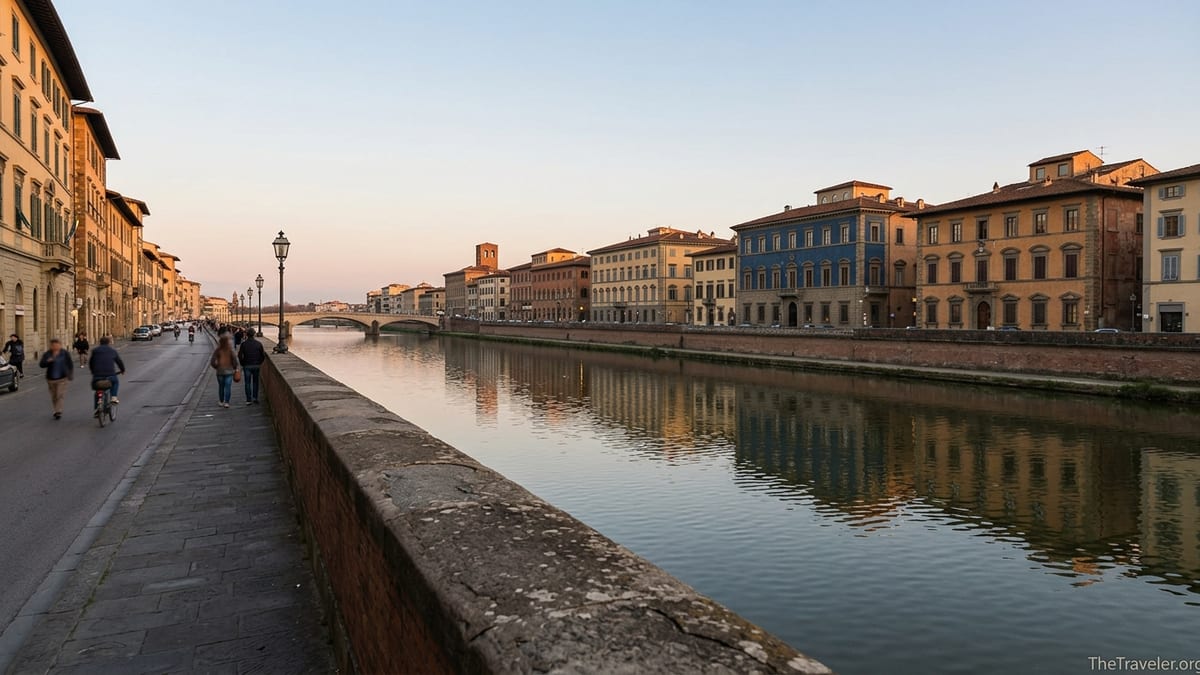
Ask locals where they go in the evening and most will point you to the lungarni, the promenade streets lining both banks of the Arno. These wide sidewalks and stone parapets are arguably the most atmospheric part of Pisa, especially at sunset when the façades of palaces like Palazzo Agostini and Palazzo Lanfreducci glow warm terracotta and their reflections shimmer in the river. Unlike the crowded lawns of Piazza dei Miracoli, the lungarni are where you see joggers, students with takeaway pizza slices and families on their nightly passeggiata.
A practical way for visitors to experience this side of the city is to plan an early evening walk from Ponte della Vittoria in the west to Ponte della Cittadella in the east. Along the southern bank you pass Palazzo Blu, a striking blue-fronted palace that now hosts major temporary art exhibitions and a permanent collection of Italian painting, often with bilingual labels and an admission fee that is typically under 10 euros for adults. On the northern bank, historic cafés like Caffè dell’Ussero, tucked under the Gothic arches of Palazzo Agostini, offer a chance to sit with an espresso or spritz and watch the light fade behind the Romanesque church of San Paolo a Ripa d’Arno.
Timing your trip for June adds another dimension. During the Luminara di San Ranieri, usually held on 16 June, the city switches off most electric lights along the river and illuminates the palaces with tens of thousands of small candles placed in paper frames on windowsills and arches. The reflections in the Arno turn the whole riverscape into a flickering corridor of light. While Piazza dei Miracoli remains busy that night, many locals and returning visitors choose to stay on the riverbanks, listening to live music and buying paper cones of fried seafood from temporary stalls that appear just for the festivities.
Art, Museums and Culture Beyond the Postcard
Travelers who enjoy art often find Pisa far more interesting than they expected once they step inside its museums. Palazzo Blu, right on Lungarno Gambacorti, has become a regional cultural center, regularly hosting international exhibitions that have in recent years focused on artists from Dalí to Modigliani. Alongside temporary shows, its permanent galleries trace Tuscan art from the Middle Ages to the 20th century through paintings, coins and period furniture once collected by a local savings bank. Visitors typically spend 1 to 2 hours here, and facilities like free lockers and a small café make it an easy stop between walks along the river.
Across the water near Lungarno Mediceo, the National Museum of San Matteo deserves far more attention than it gets from day-trippers. Inside a former Benedictine convent, rooms display wooden crucifixes, stone reliefs and painted panels rescued from churches across the region, including works by Donatello and Masaccio. One gallery reconstructs sculptures from the little riverside chapel of Santa Maria della Spina, so you can admire the originals up close before visiting the tiny Gothic church itself on Lungarno Gambacorti. For art lovers choosing between spending an extra hour queuing for the tower or quietly wandering San Matteo, the museum is often the more memorable experience.
Pisa also rewards those interested in design and technology. On the northern riverbank, the Museum of Ancient Ships of Pisa, set in old Medici arsenals near the San Rossore area, showcases remarkably preserved Roman and medieval boats discovered during construction work at the nearby train station. Full-size hulls, cargo remains and reconstructions of ancient river ports help you visualize Pisa as a living harbor instead of a landlocked photo-op. Combined tickets and city passes sold in local tourist offices often bundle these museums together, so visitors who plan ahead can spend a full cultural day in town at a lower per-museum cost.
Hidden Churches, Side Streets and Quiet Squares
Beyond the postcard lawn of Piazza dei Miracoli, Pisa’s historic center hides a network of alleys, cloisters and churches that remain relatively calm even at the height of summer. Starting from the tower, a short walk down Via Santa Maria leads to Borgo Stretto, a medieval street of arcades lined with small boutiques, gelaterie and wine bars. Here you can duck under stone arches to find courtyards where laundry hangs above 14th century brickwork, or stumble upon neighborhood churches like San Michele in Borgo that rarely see tour groups.
On the Arno’s southern side, Santa Maria della Spina is one of Pisa’s true small-scale treasures. This tiny chapel, covered in marble pinnacles and statues, sits almost at river level, its façade catching the late afternoon sun. Inside, when open, you find a stripped-back interior that contrasts sharply with its ornate exterior, creating a contemplative mood. Just beyond, the quieter quarter around San Paolo a Ripa d’Arno, sometimes nicknamed the “old cathedral,” showcases Pisan Romanesque architecture without the crowds drawn to the main Duomo.
Exploring these lesser-known zones also means discovering how compact Pisa is. You can walk from the station to Piazza dei Miracoli in about 20 minutes, but giving yourself another hour or two to wander side streets reveals lived-in corners like Piazza delle Vettovaglie, a small square that hosts a morning produce market. Here, stalls sell seasonal fruit, local pecorino cheeses and bunches of wild asparagus in spring. Ordering a simple espresso at one of the bar counters and watching locals shop can be as revealing as any formal sightseeing.
University Energy and Nightlife in a Small City
One reason Pisa feels different from many other Tuscan towns is its large university population. The University of Pisa, the Scuola Normale Superiore and the Sant’Anna School of Advanced Studies attract students from across Italy and abroad, helping to support a year-round nightlife that is more casual and affordable than in resort-focused destinations. For travelers, this means that even a midweek visit in November will find busy cafés and bars rather than shuttered streets once day-trippers have left.
In the evenings, areas like Piazza dei Cavalieri and the lanes off Borgo Stretto fill with clusters of students balancing books and plastic cups. Many budget-minded visitors gravitate to small wine bars offering glasses of Tuscan reds and simple crostini for a few euros, a welcome contrast to the more expensive restaurants closer to the tower. Spots along Via San Martino and the southern lungarno often combine aperitivo buffets with live music or DJ sets, creating a relaxed atmosphere where tourists blend in easily with locals.
This student influence also appears in the city’s cultural calendar. Independent cinemas, bookshops and small galleries organize debates, concerts and temporary exhibitions in both Italian and English, especially during the academic year. Travelers who spend a night or two can check local posters or ask at their guesthouse about events, then experience a Pisa that has little to do with leaning architecture and everything to do with ideas and conversation.
Food, Markets and Everyday Tuscan Flavors
Pisa’s culinary scene is grounded in simple Tuscan cooking and river-coast proximity rather than in fine-dining theatrics. The city lies only a short distance from the Tyrrhenian Sea, and day-trip destinations like Marina di Pisa and Tirrenia provide much of the fresh seafood that appears on local menus. Typical trattorie in neighborhoods south of the river or near the station will list fried anchovies, spaghetti with clams and cacciucco-style fish stews alongside land-based classics like ribollita and grilled pork.
For many visitors, the best food experiences are unplanned. A morning stroll through Piazza delle Vettovaglie reveals vendors selling fresh tomatoes, porchetta sandwiches carved to order and small pastries filled with custard. In the afternoon, gelaterie along Borgo Stretto serve seasonal flavors like fig or chestnut in autumn, while bakeries near the universities offer still-warm focaccia. Prices are often lower a few blocks away from the tower, where cafés and restaurants cater more to local budgets than to passing tour groups.
Those staying overnight can also sample Pisa’s aperitivo culture. In the early evening, bars on both sides of the Arno set out platters of olives, bruschetta, pasta salads and bite-sized frittate that are included in the price of a drink, often just a few euros more than a basic coffee. Joining this ritual, standing at a high table overlooking the river as the sky shifts from gold to blue, is one of the most tangible ways to feel part of the city rather than above it as a spectator.
Gateway to Nature: Sea, Pines and Parks
Another reason Pisa continues to attract travelers is its strategic position between inland Tuscany and the sea. From Pisa Centrale, regional trains and buses connect in under half an hour to coastal spots like Marina di Pisa, where beach clubs open in summer and families stroll along a seafront promenade lined with Art Nouveau villas. During the hot months, many visitors use Pisa as a base to combine cultural sightseeing in the morning with swimming or sunbathing in the afternoon, returning in time for dinner in town.
Northwest of the center, the San Rossore Regional Park offers a very different landscape: a mixture of pine forests, wetlands and sand dunes that once formed part of a royal estate. Cycle paths and walking trails cut through shady groves, making it a popular escape on hot days. Guided tours by bike or small train, often bookable through local operators in Pisa, bring visitors past free-ranging horses and toward quiet stretches of beach that feel far removed from the bustle around the Leaning Tower.
Even inside the city, nature plays a role. Pisa’s botanical garden, close to Piazza dei Miracoli and one of the oldest in Europe, contains mature Ginkgo trees planted in the late 18th century, historic greenhouses and ponds filled with aquatic plants. For a modest entrance fee, travelers can wander shaded paths, learning about medicinal herbs and exotic species in an environment that feels more like a university research space than a tourist attraction. It is an easy way to balance crowded monuments with calm, green corners.
The Takeaway
Ultimately, Pisa endures as a travel destination because it offers more than a single, spectacular photograph. The Leaning Tower remains an undeniable draw, but it is the combination of riverside palaces, serious yet manageable museums, lived-in student districts, simple food and easy access to sea and forest that persuades many visitors to stay longer than planned. In a country crowded with iconic sights, Pisa’s great advantage is its scale: you can cross the center on foot in minutes yet still uncover new details each time you wander its streets.
For travelers who value atmosphere as much as checklists, Pisa works best not as a rushed detour but as a place to slow down. Booking a night, dining where students eat, walking the lungarni at dusk and ducking into a museum when the sun is strong can turn a routine stop into a highlight of a Tuscan itinerary. The tower may be what first puts Pisa on your map, but the city beyond it is what lingers in memory.
FAQ
Q1. Is Pisa worth visiting if I have already seen the Leaning Tower on a past trip?
Pisa is still worth visiting because the city offers riverside palaces, excellent museums like Palazzo Blu and San Matteo, student nightlife and easy access to coastal areas and parks that many first-time visitors miss.
Q2. How long should I stay in Pisa to see more than just the tower?
Spending at least one full day and preferably one or two nights lets you visit key museums, explore the lungarni, enjoy the markets and experience the city’s evening atmosphere.
Q3. Are the museums in Pisa suitable for travelers who are not art experts?
Yes. Museums such as Palazzo Blu and the National Museum of San Matteo are compact, well signed and manageable in one to two hours, making them approachable even for casual visitors.
Q4. What is the best area to walk in Pisa in the evening?
The lungarni along the Arno River are ideal in the evening, with locals strolling, palaces lit up and plenty of cafés and bars where you can stop for an aperitivo.
Q5. Can I enjoy good food in Pisa without spending a lot near the tourist area?
Yes. Moving a few streets away from Piazza dei Miracoli toward Borgo Stretto, Piazza delle Vettovaglie or Via San Martino usually brings you to more affordable trattorie, markets and wine bars frequented by locals and students.
Q6. Is Pisa a good base for day trips to the beach or countryside?
Pisa works well as a base, with short connections to coastal spots like Marina di Pisa and to natural areas such as the San Rossore Regional Park, plus easy rail links to cities like Lucca and Florence.
Q7. What time of year is best to experience local festivals in Pisa?
June is particularly lively, especially around the Luminara di San Ranieri when thousands of candles illuminate the riverside, but university terms also bring year-round cultural events.
Q8. Is Pisa easy to explore on foot?
Yes. The historic center is compact, and most main sights, including the tower, museums and riverfront, are within a 20 to 25 minute walk of Pisa Centrale station.
Q9. Will I find nightlife in Pisa outside of the main tourist season?
Because Pisa is a university city, bars and cafés around Borgo Stretto, Piazza dei Cavalieri and the lungarni stay active throughout most of the year, not just in summer.
Q10. Can I combine a quick visit to the Leaning Tower with a more in-depth look at the city?
Yes. Many travelers visit the Leaning Tower early or late in the day to avoid crowds, then spend the middle of the day exploring museums, markets, side streets and the Arno riverfront for a more rounded experience of Pisa.