


Southern Italy is one of those places where it is painfully easy to plan too much. Between the Amalfi Coast, Pompeii, Capri, Puglia’s whitewashed hill towns, Matera’s cave dwellings and the volcanic drama of Mount Vesuvius and Etna, you can cram your days with bucket-list names and still feel you are leaving half of it behind. Planning well is less about seeing everything and more about choosing the right highlights for your time, budget and travel style.
Get the latest updates straight to your inbox!
Decide What “Southern Italy” Means For Your Trip
On a map, Southern Italy takes in a big sweep: Campania around Naples and the Amalfi Coast, Basilicata with Matera, Puglia down the heel of the boot, Calabria at the toe and the island of Sicily. Trying to cover all of this in one standard vacation is the fastest way to end up exhausted on a bus instead of enjoying your espresso in a sunny piazza. Before you book anything, decide on a realistic geographic focus that matches how many days you have.
As a rule of thumb, a 7 to 10 day trip is usually enough for one core region plus a side trip. For example, you might combine Naples, Pompeii and the Amalfi Coast, or pair Matera with a loop through Puglia. A two week trip can reasonably add either Sicily or a slower, deeper exploration of Puglia’s Salento peninsula. Once you accept that you will not see everything in one go, you can plan a route that feels human rather than like a package-bus dash.
Look at real itineraries that tour companies and guidebooks are currently running for clues on what is feasible. Many 9 to 10 day group tours starting this year string together Naples, Pompeii, the Amalfi Coast, Matera and Puglia, but they typically spend two or three nights in each hub and travel mostly by private coach. Independent travelers relying on trains and buses will usually want to trim that by at least one stop or add more days so transfers are not eating half of each day.
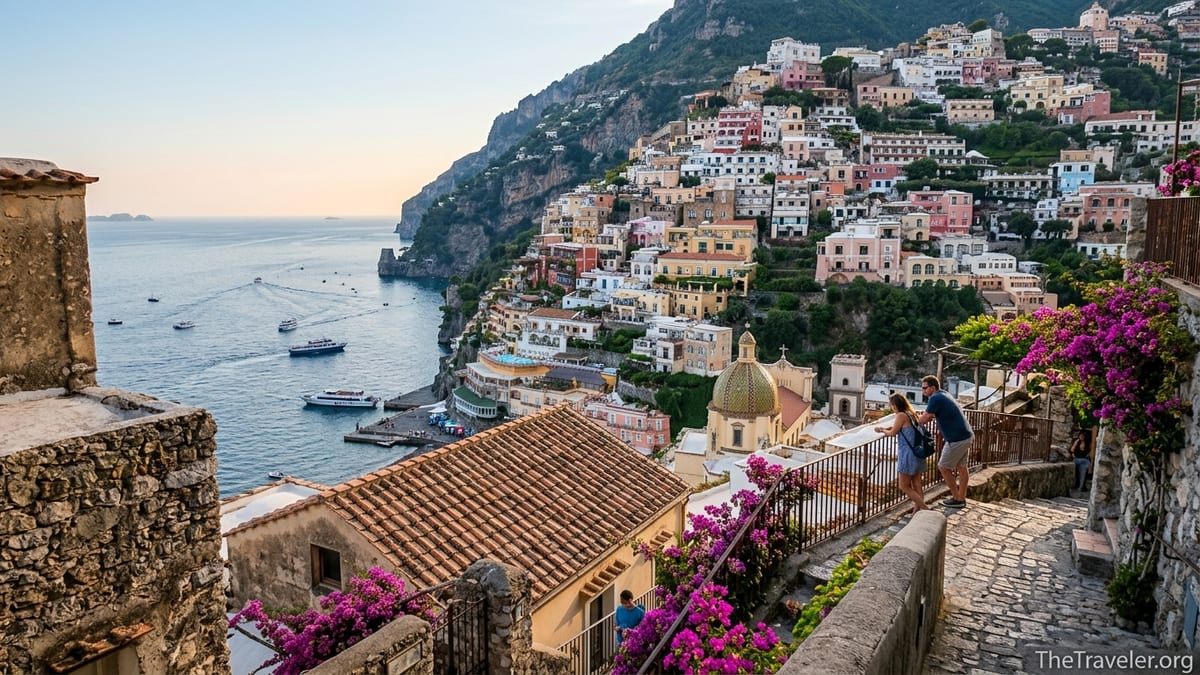
Think about what “highlights” means to you personally. For some travelers it is the lemon-scented glamour of Positano and boat trips along the Amalfi Coast. For others it is wandering the ancient lanes of Matera at dusk or tasting rustic cucina povera in a Puglian masseria. Being honest about whether you care more about beaches, history, food, hiking or nightlife will help you choose which famous names belong on this particular trip.
Choose the Right Season and Book the Essentials Early
Southern Italy can now be extremely crowded in peak months, especially July and August, when domestic holidaymakers join international visitors. Recent tourism reports noted that a clear majority of summer visitors described the experience as overcrowded, with queue times and packed streets in hotspots like Positano, Capri and Pompeii. Heat is also a factor: afternoon temperatures along the coast can easily climb into the 30s Celsius, making mid-day sightseeing punishing rather than pleasant.
For many travelers the sweet spots are late April to early June and mid-September to mid-October. In these shoulder seasons, ferries along the Amalfi Coast are running, most beach clubs are open, but room rates and crowds are still lower than in August. Sea temperatures warm up from late May, so if swimming is important and you are deciding between May and October, late May or early June often wins. Winter can be atmospheric for cities like Naples and Bari, but expect some coastal hotels and many beach services to be closed.
Whatever the season, book scarce items early. These are your flights into hubs such as Naples, Bari or Brindisi, your first and last hotels, and any time-specific tickets like a guided tour of Pompeii or a cooking class in a farmhouse outside Ostuni. In Positano and Capri, mid-range seaview rooms in June can reach 250 to 400 euros per night or more, and the most atmospheric small hotels often sell out months ahead. In Puglia, countryside masserie with pools near places like Martina Franca or Monopoli are increasingly popular and can fill quickly for June and September weekends.
Build in some flexibility around the hottest part of the day. In summer, design your days so that archaeological sites like Pompeii, Paestum or the Sassi of Matera are visited early in the morning or late in the afternoon. Use the blazing mid-day hours for long seaside lunches, a siesta back at your hotel, or a swim at a lido in Positano, Polignano a Mare or along the Salento coast near Otranto. Planning this rhythm in advance will keep you happier on the ground than any extra checklist sight.
Design a Logical Route: Classic 7–14 Day Frameworks
Once you know your rough dates and budget, sketch a route that minimizes backtracking. For a week focused on Campania, a classic pattern is to fly into Naples, spend two or three nights in the city, then move to Sorrento, Salerno or one Amalfi town as a base. From Naples you can take a local train to Pompeii for the day, or join a small-group excursion that combines a few hours at the ruins with a hike on Mount Vesuvius. From Sorrento or Salerno you have ferries fanning out to Positano, Amalfi, Ravello and Capri.
If Matera and Puglia are non-negotiable highlights, consider starting in Naples or Bari and ending at the other. One practical 10 day pattern: two nights in Naples, one night in Matera, three or four nights in the Valle d’Itria area of Puglia (using Ostuni, Locorotondo or Martina Franca as bases), and two or three nights on the coast in Polignano a Mare or Monopoli. Trains connect Naples to Salerno and beyond, while coach services link Salerno or Bari with Matera in two to three hours, and regional trains link the main Puglian towns.
For travelers with two weeks and a strong wish list, you can layer in an island without losing all your beach time. For example, five nights split between Naples and Sorrento, two nights in Matera, four nights in Puglia and three nights on an island like Capri or Ischia. This kind of route usually benefits from one or two private transfers, for instance from the Amalfi Coast to Matera, to save hours of connections with luggage in midsummer heat.
Beware of itineraries that try to “do” both the Amalfi Coast and deep Puglia plus Sicily in under two weeks. On paper it looks possible. In practice, moving from Positano to Alberobello to Siracusa involves multiple changes of train and bus, or significant driving in areas with intense summer traffic and tight parking. Unless slow road trips are what you most enjoy, it is often wiser to save Sicily or Calabria for a dedicated future journey.
Balance the Big Names With Smart Bases
Almost everyone planning Southern Italy wants to see the Amalfi Coast, Pompeii, Matera and at least a taste of Puglia. The key decision is where you actually sleep. Picking the right base can mean the difference between nervously watching bus departure boards and strolling back to your room after a long dinner in the piazza. For the Amalfi Coast, think carefully about whether you want to stay on the clifftop coast itself or just outside it with easier access and lower prices.
Sorrento and Salerno are two good examples of practical bases that still let you enjoy the full drama of the coast. Sorrento has frequent ferries and buses to Positano, Amalfi and Capri, plus direct trains back to Naples and Pompeii, so you can combine historic sites and seaside in a single stay. Salerno, a larger, more local-feeling city at the southern end of the Amalfi stretch, offers direct trains from Rome and Naples and ferries to Amalfi and Positano in season, often at lower hotel prices than its more famous neighbors.
In Puglia, think in terms of clusters rather than a string of one-night stops. The white hill towns of the Valle d’Itria are relatively close together. By basing yourself in Ostuni, Locorotondo or Martina Franca for three or four nights, you can day-trip to Alberobello’s trulli, Cisternino’s simple grill restaurants, and the Adriatic beaches near Torre Guaceto without repacking every day. Further south, Lecce makes an excellent base for exploring the Baroque architecture of Salento and the coasts around Otranto and Gallipoli.
Matera is a special case. It deserves at least one night, ideally two, to appreciate the way the stone city glows at sunset and lights up after dark. Consider splurging one night on a cave-style boutique hotel carved into the rock, which can start around 150 to 250 euros per night in shoulder season, and pairing it with a simpler guesthouse for additional nights. By treating Matera as a stay rather than a rushed day trip, you turn a “highlight” into a core memory.
Understand Transport: Trains, Ferries, Buses and When to Hire a Car
Southern Italy is reasonably well connected, but not always in straight lines, and not all coastal villages are easy to navigate with luggage. High-speed trains can whisk you from Rome to Naples in around 70 minutes, and onwards to Salerno in less than an hour more. Regional trains link Bari with Puglian towns like Polignano a Mare, Monopoli, Ostuni and Lecce. However, once you are actually on the cliffs of the Amalfi Coast, buses and ferries take over, and schedules vary by season and weather.
For many travelers, it makes sense to rely on trains and ferries for the bulk of the trip and use private transfers at one or two key pinch points. For example, a car service from Naples airport to Positano in high season might cost in the region of 120 to 180 euros for a couple, depending on time of day and vehicle, but it saves juggling suitcases on a commuter train and then changing to a crowded bus. Similarly, a pre-booked transfer from Matera to a masseria in rural Puglia can be more efficient than trying to stitch together local buses and taxis.
Renting a car can be rewarding in quieter parts of Puglia and Basilicata, especially if you want to explore small beaches, vineyards and villages beyond the main rail lines. A compact rental picked up in Bari for a week in shoulder season might cost roughly 35 to 60 euros per day before fuel, depending on demand and insurance options. That said, driving the coastal road between Sorrento and Amalfi is not for everyone. Traffic jams, narrow curves, limited parking and strict ZTL (limited traffic) zones in historic centers catch many visitors off guard. If your main dream is simply to see the Amalfi villages, boats and buses are usually the calmer option.
Ferries themselves can be a highlight. In season, small ferries cruise between Salerno, Amalfi, Positano, Sorrento and Capri, offering open-air decks and glorious views of the cliffs and pastel villages. A one-way ticket from Salerno to Amalfi can be in the 10 to 20 euro range, with slightly higher prices for longer routes and faster hydrofoils. Build buffer time into your itinerary for delayed departures, and remember that rough seas can cancel services, especially in early spring and late autumn.
Budget Realistically: What a Southern Italy Trip Costs
Costs in Southern Italy vary widely between a peak August week in Positano and a May road trip through inland Puglia. As a broad frame, many mid-range travelers currently report daily budgets in the 130 to 220 euro per person range, including accommodation, meals, local transport and admissions. Couples based in smaller Puglian towns or Matera might sit at the lower end of that range in shoulder season, while those staying right in Positano, Capri or a luxury masseria with a pool will push the upper end or beyond.
Accommodation is usually the single biggest line item. A clean mid-range double room in Naples or Bari outside the very peak weeks can often be found for around 90 to 150 euros per night, breakfast included. In Matera, atmospheric cave hotels start around 150 euros in May or October and rise in summer. Along the Amalfi Coast, seaview rooms in Positano or Amalfi often range from 250 to well over 400 euros per night in high season. Opting for neighboring towns such as Minori, Maiori or Praiano, or basing in Salerno or Sorrento, can trim those costs substantially while keeping you in easy reach of the scenery.
Food can be as affordable or as indulgent as you choose. A simple lunch of a panino and espresso at a bar in Naples or Lecce might cost 6 to 10 euros, while a sit-down meal of fresh grilled fish with house wine at a seaside trattoria on the Amalfi Coast could run 25 to 40 euros per person. Puglia in particular is excellent value for rustic, ingredient-driven meals: think orecchiette with cime di rapa, burrata with tomatoes and local olive oil, and grilled lamb at a braceria, often for 20 to 30 euros per person excluding wine.
Do not forget smaller but cumulative items like tourist taxes and site tickets. Most Italian municipalities now charge a nightly tourist tax per guest that is added to your hotel bill. In parts of Campania and Puglia, mid-range hotels might add a few euros per person per night, while some resort areas and luxury properties in Italy have raised their caps in recent years. Entry tickets for major sites such as Pompeii, Paestum, Castel del Monte or guided tours in the Sassi of Matera also add up. It is wise to earmark at least 20 to 40 euros per person per day across your trip for admissions, local buses, gelati and incidental spending.
Secure the Unmissable Highlights With Smart Planning
Once your framework is in place, zoom in on the experiences you would be genuinely disappointed to miss and lock those in. For many visitors, this shortlist includes walking the streets of Pompeii, taking at least one boat ride along the Amalfi Coast or to Capri, staying overnight in Matera, and exploring at least one cluster of Puglian hill towns and beaches. Instead of throwing every famous name into a long wish list, assign one or two true highlights to each base and build your days around them.
For Pompeii and Herculaneum, decide whether you prefer to visit independently with a guidebook or invest in a half-day small-group tour with a licensed guide. Guided tours, which might cost in the ballpark of 50 to 90 euros per person including entry, can be excellent value if you have limited time and want context without doing heavy pre-trip reading. If you go solo, aim to arrive at opening time to enjoy the ruins in the coolest, quietest hours and leave before the midday sun and tour groups peak.
On the Amalfi Coast or around Capri, reserve time on the water. A shared small-boat excursion along the coast with swim stops can start around 70 to 120 euros per person, depending on group size and inclusions, while private boat hires climb from there. Even short ferry rides offer stunning views of Positano’s vertical pastel houses, Amalfi’s Duomo and the cliffs dropping straight into the sea. In Puglia, consider balancing coastal days with inland experiences such as an olive oil tasting at a historic masseria or a cycling tour through the trulli landscape around Alberobello.
In Matera, pre-book at least one guided walking tour of the Sassi districts, which may cost 20 to 40 euros per person in a small group. Guides not only point out hidden rock churches and viewpoints but also explain the city’s unique social history, from centuries of cave dwelling to the 20th-century evacuations and recent rebirth. Similarly, in Lecce or Naples, a food-focused walking tour or cooking class can be a satisfying way to turn a generic “dinner out” into a deeper connection with Southern Italian recipes and markets.
The Takeaway
Planning a trip to Southern Italy without missing the big highlights is less about racing between famous names and more about making a few deliberate, informed choices. Start by defining your corner of the south, whether that is a classic Naples and Amalfi Coast week, a Matera and Puglia loop, or a two week journey that layers in an island. Choose your season wisely, with shoulder months offering a better balance of weather, crowds and price than the height of August.
From there, build a logical route that minimizes backtracking and anchors you in smart bases like Sorrento, Salerno, Matera, Ostuni or Lecce. Use trains and ferries where they shine, and do not hesitate to book an occasional transfer or car rental when it unlocks harder-to-reach countryside. Budget realistically for accommodation, food, transport and the growing patchwork of local taxes and site fees, aiming for a daily range that matches your travel style rather than chasing the cheapest option.
Most importantly, decide what “unmissable” really means for you. Perhaps it is sunrise over the Bay of Naples from Castel Sant’Elmo, an evening spritz in Matera as the cave houses light up, or swimming off a boat as Positano glows behind you. Once those anchor experiences are in place, let the rest of your days breathe. Southern Italy rewards those who leave space for slow coffees, spontaneous detours down side streets and that extra plate of orecchiette in a family-run trattoria you never saw on any list.
FAQ
Q1. How many days do I need for a first trip to Southern Italy?
For most travelers, 7 to 10 days is enough for one core area, such as Naples, Amalfi Coast and Pompeii or Matera and Puglia. If you want to add an island like Capri or a deeper exploration of Puglia and Basilicata, 12 to 14 days feels more comfortable without turning the trip into a blur of transfers.
Q2. Is it better to stay in Positano, Amalfi, Sorrento or Salerno?
Positano and Amalfi offer postcard-perfect views but come with higher prices and lots of stairs. Sorrento and Salerno are more practical bases, with direct trains and a wider choice of mid-range hotels, plus easy ferries and buses to the villages along the coast. Many visitors choose one “glamour” night in Positano or Amalfi and spend the rest of their stay in Sorrento or Salerno.
Q3. Do I need a car to explore Puglia and Matera?
You do not strictly need a car if you are happy to focus on main towns connected by trains and buses, such as Bari, Polignano a Mare, Monopoli, Ostuni, Lecce and Matera. However, a rental car does make it easier to reach small beaches, hilltop villages and rural masserie. If you are nervous about driving, you can mix public transport with occasional local transfers or day tours from a central base.
Q4. When is the best time to visit the Amalfi Coast and Puglia?
Late April to early June and mid-September to mid-October are usually ideal. In these months you tend to get pleasant temperatures, running ferry services and open beach clubs, but fewer crowds and slightly lower prices than in July and August. If swimming is a priority, late May, June and September are usually the most reliable months.
Q5. How much should I budget per day in Southern Italy?
Mid-range travelers commonly plan for roughly 130 to 220 euros per person per day, including accommodation, meals, local transport and admissions. Staying in smaller cities like Bari, Lecce or inland Puglia can keep you near the lower end of that range, while choosing seaview hotels in Positano, Capri or luxury masserie will push your costs higher.
Q6. Can I visit Pompeii and the Amalfi Coast in one day from Naples?
It is possible but can be rushed. A more relaxed approach is to dedicate one day to Pompeii and perhaps Vesuvius from Naples or Sorrento, then a separate day for the Amalfi Coast by ferry or bus. If you have limited time and want to combine them, consider a small-group excursion that coordinates the logistics for you.
Q7. Is Matera worth an overnight stay instead of a day trip?
Yes. Matera’s atmosphere changes dramatically at sunset when the stone houses light up and day-trippers leave. Staying one or two nights lets you explore the Sassi in the cooler early morning and evening, dine in cave restaurants, and enjoy the viewpoints without the midday crowds. Many travelers consider the overnight experience one of the standout memories of their trip.
Q8. How far in advance should I book hotels and tours?
For peak season stays in popular spots such as Positano, Capri, Polignano a Mare or Matera, booking three to six months ahead is sensible, especially for May, June and September weekends. In shoulder seasons and larger cities like Naples or Bari you may find good options closer to the date, but it is still wise to secure first and last nights, and any must-do tours, as soon as your flights are confirmed.
Q9. Are there quieter alternatives to the Amalfi Coast?
If you like the idea of dramatic coastline but prefer fewer crowds and lower prices, consider the Cilento Coast south of Salerno, the Gargano peninsula in northern Puglia, or parts of the Salento coast near Otranto and Santa Maria di Leuca. These areas have beautiful beaches and villages, but see fewer international visitors than the famous Amalfi stretch.
Q10. Is Southern Italy safe for independent travelers?
Yes, Southern Italy is generally safe for independent travelers, including solo visitors, if you follow normal urban common sense. Petty theft can occur in busy areas and on public transport around Naples and major train stations, so keep valuables secure and be mindful of bags and phones. Outside the big hubs, most Puglian and coastal towns feel relaxed and friendly, especially in the evenings when families are out for the nightly passeggiata.