


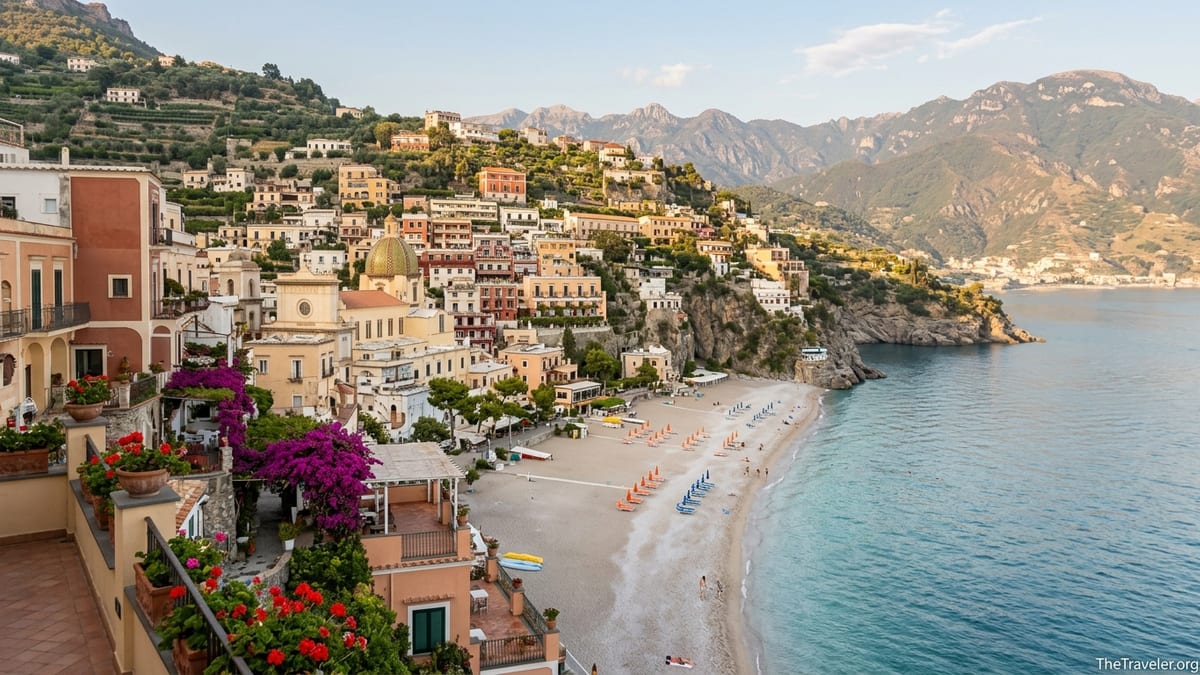
Southern Italy is one of Europe’s most seductive regions: a place where pastel towns tumble towards turquoise seas, baroque piazzas glow at sunset and olive groves run to the horizon. It is also busier than ever. Tourism numbers across Italy have rebounded strongly in recent years, and in hot spots like the Amalfi Coast, Puglia and Sicily, high summer can feel like a festival that never ends. Choosing the right moment to visit now matters almost as much as choosing the right place. If you want warm beaches, vivid local culture and room to breathe, timing is everything.
Get the latest updates straight to your inbox!
Understanding Southern Italy’s Seasons Today
In practical terms, southern Italy means Campania’s Amalfi Coast and Cilento, Basilicata’s Tyrrhenian shore, Puglia’s Adriatic and Ionian beaches, Calabria’s coastline, and the islands of Sicily and Sardinia. Across this wide area, summers have become hotter and busier, while the so-called shoulder seasons of late spring and early autumn are lengthening as more travelers shift away from peak months. Official tourism data and on-the-ground reports show that international arrivals in Italy have not only recovered from the pandemic but in many places now exceed pre-2019 levels, particularly along the coasts and islands.
Average weather patterns still hold: July and August are typically the hottest months, with many southern coastal destinations recording daytime highs over 30 degrees Celsius and sea temperatures at their warmest. In contrast, April, May, late September and October usually bring milder air temperatures, plenty of sunny days and seas that are still swimmable, especially from late May onward and well into early October along the Tyrrhenian and Ionian shores. These shoulder months increasingly provide the sweet spot between enjoyable beach weather and the most intense visitor crowds.
Another crucial factor is the Italian holiday calendar. Most Italians still take their main vacation between late July and the national holiday of Ferragosto on 15 August. During that period, domestic visitors flood coastal resorts from Liguria to Sicily. In Amalfi, Positano, Polignano a Mare and Taormina, hotel occupancy and beach club reservations often peak in this two-to-three-week window. Outside it, especially in May, June and late September, popular places feel more relaxed, restaurant reservations are easier and even well-known beaches become manageable if you choose your hours carefully.
Climate change adds a final consideration. Recent summers have brought more frequent heatwaves across southern Europe, occasionally pushing inland and urban temperatures into the high 30s Celsius. Coastal breezes help, but sightseeing at archaeological sites such as Paestum, Pompeii or the Valley of the Temples in Agrigento can be punishing in the middle of a hot August afternoon. This is one reason many experienced Italy travelers, as well as the Italian National Tourist Board itself, increasingly encourage visits in spring, autumn and even winter for city breaks.
The Sweet Spot Months: Late May, June and September
If your priority is swimming and sunbathing without feeling crushed on the sand, late May, June and September are consistently the best all-round choices for southern Italy. In these months, average daytime highs on the Amalfi Coast and around the Bay of Naples usually hover in the low to mid-20s Celsius, climbing toward the upper 20s on clearer days. Sea temperatures in late May may still feel brisk to some visitors, but by June and September most people find the water comfortably warm for long swims.
Concrete examples make the difference clear. In Positano in June, you can usually find a sun lounger at Spiaggia Grande or Fornillo Beach if you arrive by mid-morning, even on weekends, and restaurants along the waterfront promenade often still have walk-in tables for early dinners. By contrast, in August many beach clubs report being fully booked days in advance, and even reaching town by road or local bus can involve lengthy traffic delays. Much the same pattern holds in Puglia: a June visit to the beaches of the Gargano Peninsula or Salento’s Pescoluse and Torre dell’Orso means lively but bearable crowds, in contrast to the tightly packed umbrellas of high August.
September, in particular, has become the insider’s month for southern Italy. On the Amalfi Coast, many locals now describe it as the ideal compromise: the sea is at its warmest after months of sunshine, the majority of European school holidays have ended, and yet most hotels, ferries and restaurants still operate on full summer schedules. In Sicily, towns such as Cefalù and San Vito Lo Capo remain vibrant, with beach bars open and evening passeggiata rituals in full swing, but families with children have returned home, softening the pressure on beaches and parking. Travelers who can delay their trip to the second half of September often find that even iconic resorts feel more breathable.
Price-wise, these shoulder months can offer subtle but meaningful savings. While the days when May and September were dramatically cheaper than July may be fading in the most famous destinations, it is still common to see hotel rates in places like Sorrento or Polignano a Mare that are 10 to 20 percent lower in early June or late September than during the Ferragosto peak. More importantly, you gain flexibility: last-minute restaurant tables, reasonably priced taxi transfers and same-week beach club reservations are far easier to secure when the region is not at maximum capacity.
Spring for Culture and Coastal Walks
For travelers motivated as much by cities and ancient sites as by beach time, spring from April to early June is particularly rewarding. The weather in April can be mixed, with a higher chance of showers and cooler evenings, but daytime temperatures are usually pleasant enough for exploring on foot. This is the time to wander Naples’ centro storico without the summer humidity, to climb the steep lanes of Matera’s Sassi districts in clear, bright light, or to tour the Greek temples at Paestum, Metaponto and Agrigento before the sun grows harsh.
Spring also suits southern Italy’s excellent coastal hiking. On the Amalfi Coast, the famed Path of the Gods above Positano and the terraced trails around Ravello and Minori are far more enjoyable in April or May than in July, when many walkers are forced to start before sunrise to avoid the worst of the heat. In Cilento National Park, south of Salerno, the clifftop paths between villages like Acciaroli and Pioppi, and inland routes through oak and chestnut woods, are filled with wildflowers from April into early May, while beach towns are just beginning to awaken for the season.
Culturally, spring brings a dense calendar of religious and folk festivals, especially around Holy Week and Easter. In Puglia, processions in towns such as Ruvo di Puglia and Taranto combine brass bands, traditional dress and baroque statuary carried through narrow streets late into the night. On the Amalfi Coast and in many Calabrian and Sicilian towns, Easter is marked by elaborate rituals that locals take seriously yet are usually welcoming for respectful visitors. Experiencing a Good Friday procession in a whitewashed hill town like Ostuni or in inland Sicily often offers a much more intimate and authentic encounter with local life than attending a tourist-focused summer event.
The trade-off in spring is the sea. Even in late April, the water along the Tyrrhenian and Adriatic coasts can feel cold, especially for travelers accustomed to tropical beaches. Hardy swimmers will certainly take a dip on sunny days, and by late May many visitors find the sea inviting, particularly in shallower bays that warm quickly. However, if swimming is central to your trip and you prefer genuinely warm water, planning for early June onward, or accepting shorter swims in April and early May, is the more realistic approach.
Autumn for Warm Seas and Harvest Season
From mid-September through October, the Mediterranean and Ionian seas around southern Italy are often still pleasantly warm while the air cools just enough to make walking and sightseeing comfortable again. In Puglia’s Salento region, beaches near Gallipoli and Otranto can see locals swimming until well into October in years with mild weather, and in Sicily it is not unusual to find Sicilians still at the beach on sunny November weekends. For visitors, this means that a late-September trip can combine relaxed days on the sand with long, crowd-free afternoons in historic centers.
Autumn is also harvest season in much of southern Italy. Inland from the coast in Campania and Basilicata, grape harvests brings activity to vineyards around Taurasi and the Vulture area, while olive picking begins across Puglia and Calabria. Agriturismi, or countryside farm stays, often respond with seasonal menus built around freshly pressed olive oil, wild mushrooms and early citrus. A guesthouse near Ostuni might serve orecchiette with cime di rapa made from vegetables grown meters from your table, while a rural inn in inland Sicily offers tasting menus featuring new wine, local pecorino and slow-braised lamb. For travelers interested in food and wine, an October visit can feel particularly rich.
In cultural terms, the big summer festivals gradually wind down as September advances, but many music and arts events still dot the calendar. The long-running Ravello Festival on the Amalfi Coast typically stretches deep into summer with open-air concerts on clifftop terraces. In Puglia’s Gargano Peninsula, traveling summer festivals bring traditional music and contemporary performances to coastal towns, often extending into August. By late September, the focus shifts to smaller, often more local events such as food-themed sagre celebrating chestnuts, mushrooms or regional cheeses, especially in inland hill towns from Irpinia to the Madonie mountains.
One advantage of autumn that is easy to underestimate is the light. The strong, high sun of July gives way to softer, more oblique light in late September and October, which can make photography more rewarding and walking less tiring. A late afternoon stroll along the lungomare in Bari or the seaside promenade in Reggio Calabria, with the sun slicing low across the Strait of Messina, has a mellow, nostalgic quality that is very different from the high-energy buzz of August evenings.
Navigating High Summer: July and August
Despite persistent warnings about heat and crowds, July and August remain the peak months for coastal southern Italy, in part because many travelers are constrained by school holidays. If this is when you must visit, it is still possible to enjoy the region, but you need to set realistic expectations and plan carefully. Daytime temperatures along the coasts commonly climb into the low 30s Celsius, sometimes higher during heatwaves, and humidity can be significant in urban centers like Naples and Palermo.
On the positive side, the summer months guarantee a lively atmosphere and maximum choice. Every ferry route is running, beach clubs are fully staffed, and coastal towns are open late into the night. In Positano, Amalfi, Tropea or Taormina, you will find frequent boat excursions, from short hops to nearby coves to full-day trips to Capri, the Aeolian or Egadi Islands. Nightlife is at its most energetic, with beach bars in places like Gallipoli, Polignano a Mare and Catania’s waterfront drawing crowds into the early hours.
The downside is density. Popular beaches around the Bay of Naples, Salento’s Maldive del Salento stretch or Sicily’s Mondello near Palermo can fill every available patch of sand by late morning. Well-known coastal drives, such as the road between Sorrento and Amalfi, sometimes slow to a crawl under the weight of tour buses and rental cars. Museum and site queues lengthen too, especially at Pompeii, Herculaneum and the archaeological park in Syracuse. Prices in the most famous resorts often reach their annual peak, and last-minute bargains become rare.
To cope, it is wise to structure your days around the climate and crowds. Many visitors now treat July and August in southern Italy like a tropical destination: early morning swims or sightseeing, a long siesta in air-conditioned accommodation, then late-afternoon and evening activities. Choosing smaller or lesser-known bases can also help. Instead of Positano, consider staying in quieter Praiano or Minori; instead of the most photographed towns of Salento, look at smaller coastal villages just a few kilometers away, where you can still drive to famous beaches but sleep in relative calm.
Winter and Early Spring: Quiet Cities, Limited Beach Life
From November through March, southern Italy enters its quietest period, at least along the coasts. Many seaside hotels and beach clubs on the Amalfi Coast, in Cilento and in smaller Puglian and Calabrian resorts close for the season, reopening around Easter. Ferry schedules are reduced, and services to some islands become less frequent. Weather is variable: you can see crisp, sunny days reaching the mid-teens Celsius alongside periods of rain and occasional storms sweeping in from the sea.
Yet winter is far from a dead season, especially for culture-focused travelers who do not mind limited beach time. Major cities such as Naples, Bari, Lecce, Palermo and Catania remain lively year-round, with restaurants, markets and museums open and mostly used by locals. Accommodation can be significantly cheaper than in summer, and queues at big-ticket sights such as the Archaeological Museum in Naples, the baroque churches of Lecce or the Norman Palace in Palermo are minimal. For visitors from colder climates, a sunny January afternoon in Palermo’s Piazza Pretoria can feel positively mild.
Christmas and New Year add their own atmosphere, especially in Naples, famous for its presepe nativity scenes, and in coastal towns that decorate seafront promenades with lights. Carnival in February brings parades and costume events in various southern towns, and early spring often sees religious festivals leading up to Easter. However, if your vision of southern Italy centers on long days at the beach, al fresco seafood lunches in linen shirts and late swims in clear water, winter will not deliver that experience.
A compromise for beach lovers who also want quieter conditions is to aim for late March or early April, particularly in Sicily and along Puglia’s lower Adriatic, where the first warm days may already tempt locals back onto the sand. You are unlikely to swim for hours, but you might enjoy a bracing dip followed by a seafood lunch in a nearly empty beach town, something that is almost impossible in August.
Matching Destinations to Your Priorities
Even within southern Italy, the best time to visit can vary by micro-region. The Amalfi Coast thrives on a relatively short, intense season. Amalfi, Positano and Ravello typically wake fully in April and remain active through October, but the narrow geography concentrates visitors in summer. Here the difference between a June morning ferry to Capri, when you might find seats with ease and walk relatively freely in Anacapri, and an August crossing, where decks feel jammed and Capri Town’s lanes are shoulder to shoulder, is stark.
Puglia, by contrast, offers more space. The Gargano Peninsula in the north has forested headlands, long sandy beaches and a scattering of small resorts that, while busy in peak season, can still feel less compressed than Amalfi’s cliff towns. Further south in Salento, towns such as Santa Maria di Leuca and Castro tend to attract more domestic visitors than international tour groups, and in June or late September you can often find stretches of relatively quiet coastline a short drive from famous beaches. Inland white towns like Martina Franca or Locorotondo are pleasant bases in almost any season, balancing access to both Adriatic and Ionian coasts.
Sicily, the largest island in the Mediterranean, has its own rhythm. Coastal resorts such as Taormina, Cefalù and San Vito Lo Capo are very popular in July and August, but the island’s varied geography means you can escape crowds by heading to less developed stretches of coast or inland regions like the Nebrodi and Madonie mountains. Spring and autumn work well across most of Sicily: visit the temples of Agrigento in April, when wildflowers carpet the surrounding hills, then head to the baroque towns of Noto and Modica before looping up to Mount Etna for cool air and lava views. In October, you might swim near Syracuse in the morning and spend a mild evening in the medieval lanes of Erice.
Calabria and Basilicata remain relatively under the radar internationally compared with Amalfi and Puglia, although places like Tropea on the Tyrrhenian and Maratea on the Basilicata coast are gaining attention. Here, too, July and August see the biggest influx of domestic holidaymakers, but shoulder months can feel pleasantly local, with town squares filled mostly with Italian families and students. If your goal is to blend beach time with a sense of everyday southern life rather than a purely international resort scene, planning a May or late September stay in these regions can be especially rewarding.
The Takeaway
Choosing the best time to visit southern Italy is ultimately a matter of trade-offs between weather, crowds, prices and what you most want from your trip. For most travelers seeking a balance of warm beaches, rich culture and manageable visitor numbers, late May, June and September stand out as the optimal months. In these periods, you can swim comfortably in clear water, explore historic towns and archaeological sites without oppressive heat, and still find space on the sand and a table in a seafront trattoria.
If your focus leans more toward walking ancient streets, lingering in churches and museums and experiencing religious and food traditions with fewer tourists, spring and autumn tilt in your favor, even if that means cooler swims. High summer delivers the classic Mediterranean holiday of packed beaches, long nights and non-stop activity, but demands careful planning to stay comfortable. Winter and early spring, finally, reward those willing to trade beach days for quiet city breaks and lower prices.
Whichever season you choose, remember that southern Italy is not just its postcard-famous towns. By pairing better-known destinations with quieter neighbors, adjusting your daily rhythm to the climate, and embracing local events from Easter processions to autumn food festivals, you can enjoy the region’s beaches and culture without feeling overwhelmed by its popularity. With a little strategic timing, southern Italy still offers exactly what most travelers come for: luminous sea, layered history, and the sense that life is meant to be savored slowly.
FAQ
Q1. What is the single best month to visit southern Italy for beaches and fewer crowds?
For most travelers, September is the best all-round month. The sea is very warm after summer, most services are still running on full schedules, and European school holidays have ended, which helps ease beach and town crowds compared with July and August.
Q2. Is May warm enough for swimming on the Amalfi Coast and in Puglia?
By late May many visitors find the sea comfortable, especially in sheltered bays in Puglia and along the Amalfi Coast. The water can still feel brisk, but on sunny days you can usually enjoy shorter swims followed by warm, pleasant hours on the beach.
Q3. How bad are the crowds in July and August in popular places like Positano and Taormina?
In peak summer these towns can feel extremely busy, with packed beaches by late morning, heavy traffic on coastal roads and queues at popular viewpoints and restaurants. You can still have a good experience by booking key services in advance, going out early in the day and choosing a quieter base nearby.
Q4. Are prices really lower in shoulder season compared with August?
In many coastal resorts, hotel and apartment rates in early June or late September are often noticeably lower than during the mid-August peak, and minimum stay requirements can be more flexible. Savings vary by destination, but you are more likely to find better value and last-minute availability outside high summer.
Q5. When do beach clubs and ferries start operating for the season?
On major southern coasts, many beach clubs and ferry routes begin opening around Easter and build up through April and May, with full schedules typically in place by June. Exact dates depend on local conditions and demand, so it is wise to check ahead if you are traveling in early spring.
Q6. Is winter a good time to visit southern Italy?
Winter is not ideal for beach holidays, but it can be excellent for city-focused trips to places like Naples, Bari, Palermo and Lecce. You will find fewer tourists, lower accommodation prices and a more local atmosphere, though coastal resorts and some island services operate on reduced schedules.
Q7. What is the best time for festivals and cultural events in southern Italy?
Spring around Easter and early summer are rich in religious processions and folk traditions, especially in Puglia, Campania and Sicily. Summer brings music and arts festivals in coastal towns, while autumn focuses more on food and wine events tied to the harvest in inland regions.
Q8. How early should I book accommodation for a September trip to the Amalfi Coast or Puglia?
For popular areas such as Positano, Amalfi, Polignano a Mare or Ostuni in September, booking several months ahead is wise, especially for sea-view rooms or boutique hotels. More flexible travelers staying in less famous towns can sometimes find good options closer to their travel dates.
Q9. Which regions in southern Italy feel less crowded even in peak season?
Parts of Calabria, Basilicata’s coast around Maratea, sections of Puglia’s Gargano Peninsula and many inland hill towns across the south tend to be quieter than marquee destinations. Even in July and August, these areas often have a more local, small-town vibe while still offering access to good beaches.
Q10. If I can only travel in August, how can I avoid the worst of the crowds and heat?
Choose a less famous base rather than the most iconic town, plan sightseeing early in the morning and late in the afternoon, book beach clubs and key restaurants ahead, and build long midday breaks into your schedule. Staying near, rather than in, major hotspots and using local ferries instead of coastal roads whenever possible also helps.