

Southern Italy promises dreamlike coastlines, sun-baked piazzas and long, lazy lunches by the sea. Yet many visitors leave frustrated, exhausted or out hundreds of euros because they stumble into the same avoidable traps. From underestimating August heat on the Amalfi Coast to racking up ZTL traffic fines in Puglia’s whitewashed towns, the most common mistakes are surprisingly predictable. With a bit of local insight, you can enjoy the best of the south while sidestepping its biggest headaches.
Get the latest updates straight to your inbox!
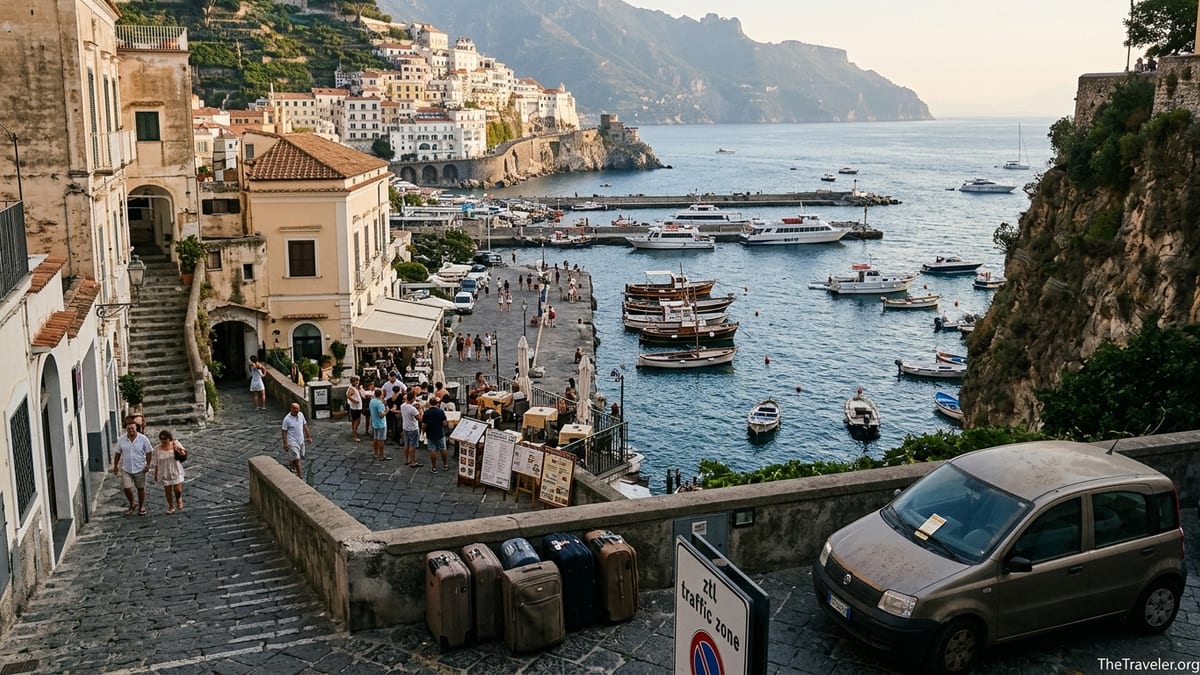
Misreading the Seasons: Underestimating Heat, Crowds and Closures
One of the most frequent mistakes is treating Southern Italy as a year-round, one-size-fits-all destination. On paper, August sounds ideal: school holidays, beach weather, long days. In reality, it is often the most challenging time to visit regions like Campania, Puglia, Calabria and Sicily. Daytime temperatures in August regularly climb into the high 80s and low 90s Fahrenheit in coastal cities such as Naples, Bari and Palermo, and even higher inland. Stone streets and sun-reflecting facades turn historic centers into heat traps by midday, making simple walks from the train station to a hotel feel punishing.
Then there is Ferragosto, the national holiday on August 15. Around that week, many Italians leave cities for the seaside or countryside. In Southern Italy, that means already popular coastal spots like Positano, Tropea, Gallipoli and Taormina absorb not just international tourists but waves of domestic vacationers. In beach towns across Puglia, for example, it is common in mid August to see private lidos on popular stretches like Baia Verde or Torre dell’Orso fully booked with umbrellas by mid-morning, and restaurant reservations for Saturday nights snapped up weeks in advance.
At the same time, some city businesses close. Travelers who base in Naples or Bari in mid August and assume they can just wander into any neighborhood trattoria are sometimes greeted by handwritten “chiuso per ferie” signs on the door. While tourist-heavy areas typically stay open, the more local spots that many travelers seek out often shut for a summer break. If your dream is to eat where the locals eat, you need to double check opening hours and consider traveling in late May, June, late September or early October instead.
Planning without regard to local rhythms can sour an otherwise excellent itinerary. A couple planning a romantic Amalfi Coast trip might book a cliffside room in mid August only to find the coastal road choked with slow traffic, parking spaces near Positano’s center costing more than 30 euros for a day, and midday heat so intense that hiking the famous Path of the Gods becomes risky rather than enjoyable. Aligning expectations with the realities of Southern Italy’s peak season is one of the most powerful ways to transform your trip.
Underestimating Distances, Travel Times and ZTL Traps
On a map, Southern Italy looks compact. Salerno to Amalfi is less than 25 miles. Bari to Alberobello is under 40. Catania to Taormina barely an hour by car. The trap is assuming those short distances translate into quick, stress-free transfers. The Amalfi Drive, for example, is a narrow, winding coastal road where buses squeeze past parked cars and scooters weave through blind corners. In July and August, a transfer from Sorrento to Amalfi that might take 80 minutes at dawn can stretch well beyond two hours in the middle of the day. Travelers routinely miss pre-booked boat tours in Positano or dinner reservations in Ravello because they left “just an hour” to get there.
In Puglia and Sicily, many visitors rent cars to explore hill towns and beaches, which is usually a smart choice. Problems start when they do not understand Italy’s ZTL, or Zona a Traffico Limitato. These restricted traffic zones ring the historic centers of hundreds of towns, from Bari and Lecce to smaller gems like Ostuni and Noto. Drive past the electronic ZTL sign without authorization and cameras record your plate. Months later, back home in the United States or Canada, travelers receive fines often over 100 euros per infraction, sometimes multiplied by several entrances on the same day. Many renters report only learning the term “ZTL” when the first fine arrives.
Southern Italy adds extra layers to the confusion. In the summer, popular areas like Baia Verde near Gallipoli or certain stretches of the Taormina seafront may introduce seasonal restrictions or pedestrianized zones. A visitor following a generic GPS route might be calmly led straight into a limited zone because the device is not fully updated. The safer approach is to park outside historic centers in signed lots or blue-lined pay spaces and walk or take local shuttles in. In Taormina, for instance, parking at one of the main car parks above town and then using the shuttle bus or pedestrian paths is far less stressful than attempting to navigate up to your hotel door by car.
Beyond fines, underestimated travel times can ruin carefully planned itineraries. A family based in Bari might see that Polignano a Mare, Monopoli, Alberobello and Matera all appear within an easy radius and schedule them in a single day. By the time they battle lunchtime traffic, find parking, and navigate crowded lanes under the midday sun, they have spent most of the day driving and searching for spots rather than experiencing any one place in depth. In Southern Italy, it is usually better to cut destinations and build in slow time than to treat the region as a checklist.
Rushing the Coastlines: Amalfi, Puglia and Sicily in a Blur
Few places charm the imagination like Southern Italy’s coastlines. Photographs of Positano’s stacked pastel houses, Puglia’s whitewashed cliffs above turquoise water, or Sicily’s volcanic black sand beaches tempt travelers to try to see them all. A common mistake is attempting to sample every coast in one trip, resulting in constant packing, unpacking and highway time instead of the slow, seaside rhythm that makes these places magical.
On the Amalfi Coast, a typical error is booking a hotel in Positano for two nights and aiming to “do” Positano, Amalfi and Ravello, plus Capri as a day trip. Realistically, with summer queues for ferries, zigzagging bus routes and steep staircases connecting beach and town, you might spend more time waiting in lines and climbing steps than actually sitting with a spritz overlooking the sea. A more rewarding plan is often to pick one base, like Amalfi or Minori, stay at least three or four nights, and use ferries rather than buses wherever possible. Ferries between Amalfi, Positano and Salerno typically take less time and offer a much calmer experience than standing on a crowded roadside waiting for overfilled buses to stop.
In Puglia, travelers sometimes try to combine the Adriatic and Ionian coasts in just a couple of days, shuttling between Polignano a Mare, beaches near Monopoli, the Salento peninsula and Gallipoli. What looks like a 60 to 90 minute drive on the map can grow far longer on summer weekends when half of the region is heading to the same beaches. Local tourism offices in towns like Gallipoli warn that arriving at beaches in August much after mid-morning often means circling endlessly for parking or being turned away at capacity-controlled lidos. Choosing one focus area, such as the Valle d’Itria for hill towns and coves or the Salento for long sandy strands, and giving it four or five days will almost always feel more satisfying.
Sicily, the largest island in the Mediterranean, is perhaps the easiest place to wildly underestimate scale. Visitors regularly plan to land in Catania, see Taormina and Mount Etna, swing through Syracuse, then loop across to Palermo, Cefalù and the western wine country, all in a week. Distances between these areas can be several hours, and roads into historic centers are slow. Trying to see both east and west coasts in a short trip leans heavily toward car dashboards and gas station sandwiches. Focusing on just the east, or just the northwest, for a first visit lets you actually experience the nightly passeggiata in a single town, become a regular at a bar for morning granita, and recognize the baker at the corner panificio.
Misunderstanding Beach Culture, Costs and Sun
Many first-time visitors to Southern Italy arrive assuming all beaches are free public spaces where they can drop a towel anywhere. While there are free stretches, a large part of the coastline around popular resorts is managed by private lidos. In places like Positano, Taormina’s Isola Bella, or Puglia’s most photographed coves, prime front-row sunbeds with umbrellas can cost a substantial amount per day in high season, with prices rising the closer you are to the sea. Travelers sometimes arrive at noon expecting to rent a cheap chair, only to discover there is a waiting list and that a pair of front-row beds costs far more than they budgeted.
Free public areas, known as spiaggia libera, do exist but are often smaller, rockier or more crowded, especially in August. On a typical Sunday afternoon in July near Naples or Salerno, you may find families camped under umbrellas set up at dawn, coolers and beach toys spread over every square meter of sand. For visitors who want a low-stress day, booking a lido in advance when possible or arriving early in the morning is crucial. In towns like Polignano a Mare, where the main beach is a small cove, locals routinely recommend getting there before 9 a.m. if you want space to spread a towel, particularly in peak months.
The sun in Southern Italy is another underestimated factor. UV indices in June, July and August are frequently in the very high range, and the reflection off white stone and water intensifies exposure. Travelers from cooler climates sometimes forget to reapply sunscreen or assume the same sun habits they use at home will suffice. A common scenario involves arriving in Amalfi or Taormina, spending a first blissful day on the beach without sufficient protection, and waking up the next morning with painful sunburn that limits everything from swimming to walking tours. Carrying reef-safe sunscreen, a wide-brimmed hat and light long-sleeved layers is just as important as remembering a swimsuit.
Finally, many visitors underestimate how long a full beach day can feel in the heat. Sitting through the hottest hours from noon to four often leads to dehydration and fatigue. Locals typically leave the shore for a long lunch in the shade or a rest and return in the late afternoon when the sun is lower and the water still warm. Adopting that rhythm, rather than forcing non-stop midday sunbathing, not only keeps you healthier but brings your schedule in line with Southern Italy’s slower, more sustainable pace.
Clashing With Local Food Schedules and Tourist-Trap Menus
Another major source of frustration is not understanding how food culture works in Southern Italy. Many travelers, especially from North America, expect to sit down for dinner around 6 or 6:30 p.m. and find bustling restaurants. In most of the south, kitchens open for dinner closer to 7:30 or 8, with peak dining times after 9. Arriving early often means sitting alone or being told the kitchen is not quite ready. Conversely, showing up at 9 p.m. in August in a popular town like Sorrento, Amalfi or Polignano a Mare without a reservation can mean a long wait or being turned away.
Lunch times can also surprise visitors. In local neighborhoods of cities such as Naples or Palermo, small family-run trattorias may serve a busy lunch from roughly 1 to 2:30 p.m. and then close entirely for several hours. Travelers who wander in at 4 p.m. assume they are being snubbed when the reality is that staff have gone home for a rest. In seaside villages, you may find beachside kiosks open steadily for snacks, but proper sit-down meals still revolve around clear lunch and dinner windows. Planning small snacks between meals and adjusting your eating times to local norms helps avoid the cycle of being starving when only gelato or pre-made sandwiches are available.
Tourist-trap restaurants are another recurring complaint. In heavily visited areas of Southern Italy, it is easy to land at a place with laminated multilingual menus featuring photos of every dish, servers waving at you from the sidewalk, and prices noticeably higher than neighboring spots. While these restaurants can provide a basic meal, they often serve generic versions of Italian dishes that have little to do with regional traditions. On the Amalfi Coast, for instance, it is common to see frozen seafood or standardized carbonara dishes on offer, even though the real local specialties revolve around fresh fish, lemons and simple grilled preparations.
A better strategy is to walk a few streets back from the main square, look for handwritten daily menus focused on a handful of seasonal dishes, and note where Italians are actually eating. In Puglia, a simple osteria offering orecchiette with cime di rapa and a short list of house wines by the carafe is often a stronger choice than the seafront restaurant marketing “tourist menu” packages. Asking your hotel receptionist or a barista where they would take visiting relatives for dinner can yield more authentic spots than relying solely on glossy photos. When in doubt, be cautious about surprise extras like bread and cover charges, which are normal but should be clearly listed on the menu or chalkboard.
Ignoring Cultural Norms, Dress Codes and Daily Rhythms
Beyond food, many missteps in Southern Italy stem from not tuning in to local customs and daily rhythms. Dress is a big one. In hot weather, visitors understandably reach for short shorts, tank tops and beachwear, then are surprised when they are refused entry to churches or shrines. Important religious sites such as the Cathedral of Amalfi, the sanctuaries near San Giovanni Rotondo, or major churches in Palermo and Catania typically require shoulders and knees to be covered. Security staff at the doors will simply wave you away if you are not dressed appropriately. Carrying a light scarf or shawl and wearing longer shorts or skirts on sightseeing days allows you to enter without issues.
Public behavior is another area where expectations can collide. In smaller southern towns, loud arguments on trains, drunkenness in the main piazza, or walking through quiet residential lanes late at night with Bluetooth speakers can be seen as disrespectful. Locals are friendly and used to tourism, but they also value decorum. Watching how families and older residents move through spaces during the evening passeggiata is an easy way to calibrate your own volume and presence. Simple politeness, like greeting shopkeepers with a “buongiorno” or “buonasera” before launching into questions, goes a long way.
Daily closures also catch people off guard. In many parts of Southern Italy, especially away from major tourist strips, you will find businesses closed for a few hours in the afternoon. Small boutiques, local bakeries and even some pharmacies may shut around 1 or 1:30 p.m. and reopen later in the afternoon or evening. Planning your errands, shopping and sightseeing around this rhythm helps avoid long stretches of shuttered doors. Likewise, public transport schedules can be lighter on Sundays and public holidays, which is important if you need a specific bus to reach a rural agriturismo or beach.
Finally, tipping expectations differ from those in North America. Service charges may already be included in the bill in some restaurants, and leaving large tips as a default can feel out of step. In many casual places across Southern Italy, locals round up the bill or leave a small extra amount in cash for good service rather than a fixed percentage. Observing what nearby Italian diners do and asking discreetly at your accommodation can prevent awkward moments at the table.
Overplanning, Underbooking: Logistics, Tickets and Reservations
Many visitors pour hours into mapping out ambitious itineraries but neglect the unglamorous logistics. In Southern Italy, this often shows up as travelers who know exactly which villages they want to see but have not booked key elements like ferry tickets, car rentals, or crucial train seats in advance. During high season on the Amalfi Coast and around the islands of Capri, Ischia and Procida, popular ferry departures can sell out, especially on weekends. Arriving at the dock twenty minutes before a mid-morning boat and assuming you can buy a ticket on the spot is risky in July and August.
Car rentals are another pressure point. In recent summers, demand for automatic rental cars in Southern Italy has frequently outstripped supply. Travelers flying into Bari, Brindisi, Catania or Naples without a pre-booked car have reported being left with only expensive, oversized vehicles or no cars at all. In some cases, last-minute prices for compact automatics have been several times higher than what early bookers paid. If your route genuinely requires a car, securing it weeks or months in advance is far safer than hoping to negotiate at the airport counter.
Accommodation in the most desirable spots also fills fast. Positano, Amalfi, Polignano a Mare, Matera and Taormina all have limited space in their historic cores. Waiting until the last minute can mean settling for inconvenient locations far from the center or paying premium prices for whichever rooms remain. Travelers who book only their first night and “see what happens” often end up spending precious vacation hours scrolling on their phones searching for alternatives, rather than strolling the lungomare at sunset.
At the same time, there is a flip side mistake: scheduling every minute so tightly that any delay triggers a domino of missed reservations. In Southern Italy, trains can run a few minutes late, buses get stuck behind farm tractors, and ferries adjust schedules based on sea conditions. Building in buffer time between major moves, and leaving at least one unstructured day in each base, allows you to absorb local pace rather than fighting it. It is often the unscripted hour in a small bar in Lecce or a last-minute detour to an olive grove in the Valle d’Itria that becomes a highlight.
The Takeaway
Southern Italy rewards travelers who slow down, respect local rhythms and plan around a few distinctive challenges. The region is not difficult, but it is unforgiving of certain assumptions: that August will feel like any other summer month, that a short distance on the map equals a quick transfer, that all beaches are free, or that you can drop into star coastal towns without reservations in peak season. Most frustrations reported by visitors, from surprise traffic fines to long restaurant waits and heat exhaustion, trace back to these same miscalculations.
By choosing your season carefully, giving each base enough nights, parking outside ZTL zones, adjusting your eating and dressing habits to local expectations, and booking key logistics in advance, you set yourself up for the version of Southern Italy that locals love: long seaside dinners, quiet mornings in stone-paved alleys, cool churches offering respite from the sun, and unhurried drives through olive groves and vineyards. The south’s beauty is no secret, but its true charm emerges when you treat it less like a checklist and more like a place to inhabit, however briefly.
FAQ
Q1. Is it a mistake to visit Southern Italy in August?
It is not automatically a mistake, but you must be prepared for intense heat, higher prices, very busy beaches and potential closures around the August 15 Ferragosto holiday. If you can only travel then, book accommodation, cars and key restaurants well in advance, plan beach mornings and late-afternoon sightseeing, and consider basing in slightly less famous coastal towns to reduce crowd stress.
Q2. How can I avoid ZTL fines when driving in Southern Italy?
The safest approach is to assume that any historic center may have a restricted traffic zone. Before entering a town, look for signs marking ZTL areas, park in official lots or blue-lined paid spaces outside the old center, and walk or take local shuttles in. Tell your hotel you are driving so they can explain the legal route if they have permission for guests. Do not rely solely on older GPS devices, as they are not always updated with current restrictions.
Q3. Do I really need a car, or can I rely on trains and buses?
It depends on your route. Trains work very well between larger Southern Italian cities such as Naples, Salerno, Bari, Lecce and major Sicilian hubs. For small villages, rural agriturismi and scattered beaches, a car offers far more flexibility. Many travelers combine both: using trains between cities and renting a car for a few days in Puglia, Basilicata or rural Sicily to reach places that public transport serves poorly.
Q4. How many bases should I choose for a two-week trip to Southern Italy?
A common mistake is choosing too many. For roughly two weeks, three to four bases is usually ideal, for example a city like Naples, a coastal base on the Amalfi Coast or Cilento, a few nights in Puglia, and perhaps a final stop in Matera or on a Sicilian coast. Staying at least three nights in each base helps you experience local life instead of constantly packing and unpacking.
Q5. What should I know about beach clubs and costs?
On many popular beaches, especially in Amalfi, Puglia and Sicily, private beach clubs rent sunbeds and umbrellas by the day, with higher prices for front-row spots and in peak months. Free public areas exist but can be crowded and basic. To avoid disappointment, assume you may pay for a beach chair on iconic beaches, arrive early, and ask your hotel to reserve at a reliable lido if you have your heart set on a particular stretch of sand.
Q6. How can I spot and avoid tourist-trap restaurants?
Warning signs include aggressive staff trying to pull you in from the street, laminated menus with photos in many languages and long lists of generic dishes. Instead, look for shorter handwritten menus focused on seasonal offerings, dining rooms with a mix of locals and visitors, and staff who seem busy serving rather than calling to passersby. Asking locals such as your host or a shopkeeper for a recommendation remains one of the best methods.
Q7. What should I wear to visit churches and smaller towns?
Pack light, breathable clothing that still covers shoulders and at least to the knees for church visits. A simple T-shirt and longer shorts or a midi dress usually suffice. Carry a scarf in your bag so you can quickly adapt if you decide to pop into a cathedral or sanctuary. In the evenings, locals in Southern Italy often dress neatly to stroll the piazza, so slightly smarter outfits can help you feel more in tune with the atmosphere.
Q8. Is it necessary to book restaurants in advance?
In peak months and in famous destinations such as Positano, Amalfi, Polignano a Mare or Taormina, booking popular restaurants for dinner is strongly recommended, especially on weekends. For lunch or in less touristy towns, you can often walk in, but it is still wise to reserve if there is a particular place you really want to try. When in doubt, ask your accommodation to call and secure a table for you.
Q9. How do afternoon closures affect travel plans?
In many Southern Italian towns, smaller shops and some restaurants close for several hours in the early afternoon. This can affect everything from buying train tickets at a small station to picking up pharmacy items before a hike. Plan errands and shopping for the morning or early evening, and use quiet afternoon hours for rest, long lunches or time at the beach, which aligns well with local routines.
Q10. What is the biggest planning mistake first-time visitors make?
The most common mistake is trying to see too much in too little time, combining the Amalfi Coast, Puglia, Calabria and Sicily in a single short trip. This leads to constant transit days, rushed meals and little genuine connection with any one place. Choosing fewer regions, staying longer in each base, and allowing for slow days almost always results in a more memorable Southern Italy experience.