


Planning Banff National Park has become less about simply booking a hotel and more about solving a four-part puzzle: lakes, wildlife, scenic drives and crowds. With shuttle reservations for Moraine Lake, traffic controls at Lake Louise and record summer visitation, how you time and sequence your days now matters as much as where you go. This guide walks through concrete, real-world strategies to build a Banff itinerary that actually works on the ground in 2026.
Get the latest updates straight to your inbox!
Start With Season, Not Dates
The single most important decision you will make is when to visit. Banff’s character changes dramatically by season, and that directly affects your chances of seeing turquoise lakes, active wildlife and clear roads without overwhelming crowds. July and August remain the busiest months, with Parks Canada reporting continued year-over-year visitation growth and peak pressure around Lake Louise and Moraine Lake. Expect parking lots to fill early, lineups at viewpoints, and shuttle reservations that can sell out minutes after they are released.
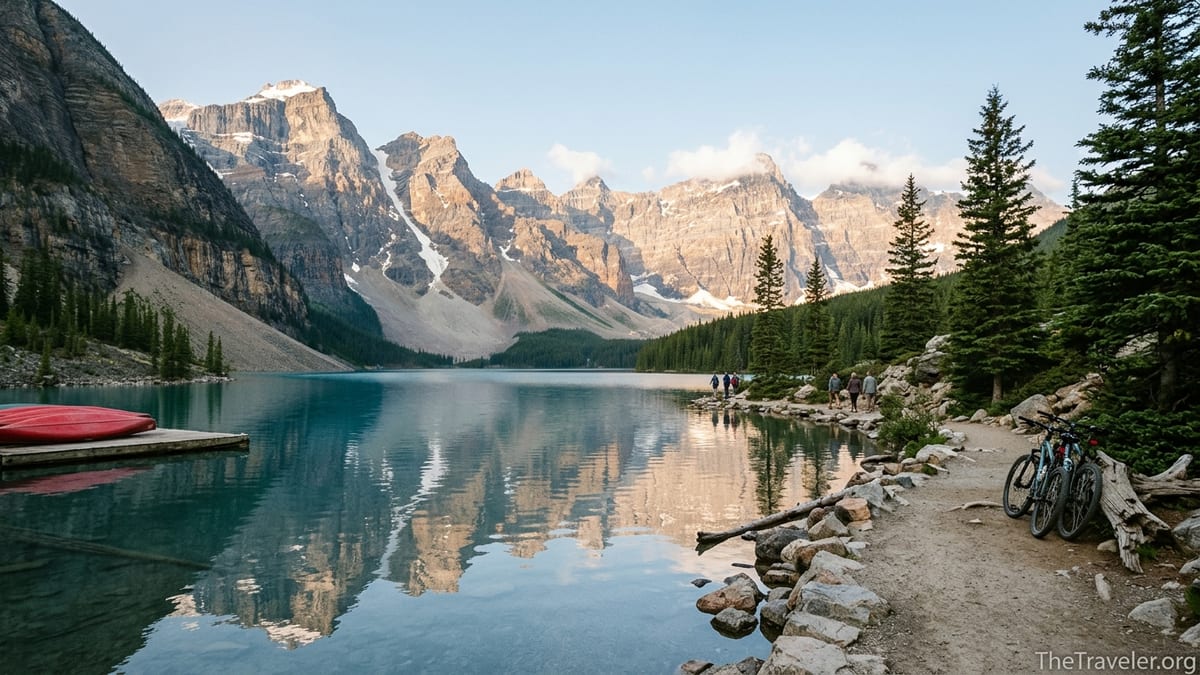
If your priority is brilliant blue water at places like Moraine Lake, Lake Louise and Peyto Lake, target late June through mid-September, when most ice has melted and the glacial rock flour is suspended in the water. In early June lakes can still be partly frozen at higher elevations, and in October their color is often more muted, though crowds thin out and hotel rates in Banff town and Lake Louise village usually dip compared with peak summer.
For wildlife and fewer people, consider shoulder seasons. Late May and early June, plus mid-September into early October, often bring good bear and elk sightings along the Bow Valley Parkway and Icefields Parkway, while trailheads and viewpoints feel noticeably less congested than in August. Winter offers its own drama, but many scenic roads, picnic sites and lakeside trails are snowbound, and the Icefields Parkway can be subject to avalanche closures or heavy snow, which makes it a very different trip to plan.
When choosing exact dates, cross-check them against Canadian long weekends and major events in Banff or Calgary. A midweek visit in late June can feel very different from a July weekend, both in price and pressure on key sights. If you can, plan core lake and wildlife days for Tuesdays through Thursdays and use weekends for more flexible activities such as in-town walks, gondola rides or spa days.
Building Your Lakes Strategy: Moraine, Louise and Beyond
Moraine Lake and Lake Louise require the most planning. As of 2026, private vehicles are not allowed on the Moraine Lake road, so you must reach it by Parks Canada shuttle, Roam Transit Super Pass, commercial tour, bike or on foot. Shuttle reservations for the Parks Canada system to Lake Louise and Moraine Lake typically open in mid-April on the federal reservation portal and can see tens of thousands of people in the online queue in the first minutes. If catching sunrise at Moraine is a dream shot, book one of the earliest “Alpine Start” buses, which depart around 4 to 5 a.m. from the Lake Louise Park and Ride.
For Lake Louise, you still can drive a private vehicle to the lakeshore, but paid parking has tight capacity and can reach “lot full” by early morning on busy days. The alternative is to park at the Lake Louise Park and Ride off the Trans-Canada Highway and take the Parks Canada shuttle. Travelers staying in Banff town often use Roam Transit’s express route to Lake Louise with a reservable day pass, which includes access to the Parks Canada Lake Connector shuttle between Lake Louise and Moraine Lake. In practice that means you can leave your car in Banff, ride an early express bus, and then shuttle between both lakes without ever hunting for a parking space.
If you are planning three or four days in the park, build at least one “big lakes” day anchored around these logistics. A typical real-world plan might be: leave Banff on the 7 a.m. Roam express, arrive at Lake Louise by 8 a.m., immediately transfer on the Lake Connector to Moraine Lake, hike the Rockpile or Consolation Lakes trail while the light is still soft, then spend the afternoon paddling or walking at Lake Louise before shuttling back to the Park and Ride and onward to Banff. Factor in that shuttle queues build through the afternoon; give yourself at least 60 to 90 minutes of slack before any dinner reservations back in town.
Do not overlook other lakes that require much less planning but still deliver classic Rockies scenery. Along the Minnewanka Loop near Banff town, Lake Minnewanka, Two Jack Lake and Johnson Lake are all accessible by private vehicle or local transit. Early morning at Two Jack Lake, for example, often brings mirror reflections of Mount Rundle with only a handful of photographers on the shoreline. Farther afield, Bow Lake and Peyto Lake on the Icefields Parkway offer high-impact views right off the highway, and many visitors treat them as “backup” or relief options on days when Lake Louise or Moraine feel too crowded or are obscured by smoke or cloud.
Wildlife Viewing Without Disrupting the Animals
Banff’s headline wildlife, especially black and grizzly bears, elk and bighorn sheep, are most reliably seen at dawn and dusk along lower-elevation valleys. The Bow Valley Parkway between Banff and Lake Louise has long been one of the top spots, which is precisely why Parks Canada now uses seasonal closures along sections of it in spring to give animals space during calving and foraging. From roughly March to late June, a 17 kilometer stretch east of Johnston Canyon is closed to public vehicle traffic for parts of the day and heavily promoted as a cycling route in summer. Even when it reopens, speed limits and wildlife corridor regulations are enforced more tightly than on the main Trans-Canada Highway.
For planning, translate wildlife hopes into specific time blocks. For instance, if you are staying in Banff town in September, you might schedule a pre-breakfast drive or Roam bus ride along Vermilion Lakes Road or out toward Minnewanka for a chance to see elk in the rut or beavers in the wetlands. In June, a dedicated dawn or dusk cruise along open portions of the Bow Valley Parkway can yield bear or deer sightings from the safety of your vehicle. Many visitors also book a guided evening wildlife tour with local operators for their first night; guides know current hot spots and recent closures and can give you a feel for distances and behavior that you can apply later on your own.
It is critical to stay realistic. Wildlife is never guaranteed, and tighter regulations reflect growing concern about animals becoming habituated to cars and people. Expect to see temporary “no stopping” zones if bears are feeding near road shoulders, and be prepared to roll past rather than adding to a traffic jam. Always carry bear spray on hikes, keep at least 100 meters from bears and wolves and much more in open terrain, and store all food and scented items inside vehicles or hard-sided enclosures at campgrounds. Building wildlife time into early mornings and late evenings will also free up your mid-day hours for lake visits and scenic drives, when animal movement tends to slow and crowds at popular viewpoints peak.
If wildlife is a central reason for your trip, consider staying at least one or two nights outside Banff town where darkness is deeper and human activity tapers off, such as in the Lake Louise village area, along the Icefields Parkway at places like the Saskatchewan River Crossing region, or even in nearby Yoho National Park. This makes it easier to be on quiet roads at first light without facing an hour-long drive from Banff’s hotels.
Designing Scenic Drives That Actually Fit in a Day
Banff’s scenic roads can look deceptively simple on a map. In reality, traffic, construction, wildlife jams and frequent photo stops mean you should plan for slower progress than your navigation app suggests. The classic drive is the Icefields Parkway from Lake Louise to the Columbia Icefield and onward to Jasper. Many visitors underestimate how much there is to see just on the Banff side. Driving from Lake Louise to the Columbia Icefield Discovery Centre without stops takes about two and a half hours, but with realistic pauses at Herbert Lake, Bow Lake, Peyto Lake, Mistaya Canyon and the Weeping Wall viewpoint, most people turn it into a full-day out and back.
If you are based in Banff town, it is common to drive the Icefields Parkway as a long day trip. A workable plan might be to leave Banff by 7 a.m., reach Lake Louise by 8 a.m. and the Columbia Icefield area around late morning, giving you several hours of daylight for short hikes, glacier views and a late lunch before returning by early evening. In winter and early spring, this same route becomes much more serious: snow plowing can be infrequent, and the entire parkway may close temporarily for avalanche control, so visitors in those months often opt for guided bus tours or postpone the full drive in favor of closer sights.
Closer to Banff, the Bow Valley Parkway provides a slower, more intimate alternative to Highway 1. Because of spring closures and speed limits, it is best treated as its own half-day experience rather than a quick bypass. Many travelers pair it with time at Johnston Canyon, hiking to the Lower and Upper Falls and then looping back to Banff in the afternoon. During summer, cyclists increasingly use the eastern car-free segment as a scenic ride, renting bikes in Banff town and pedaling past forest, cliffs and possible wildlife with no vehicle traffic.
Within a short radius of Banff town, the Minnewanka Loop and Mount Norquay viewpoints are ideal for flexible scenic drives that do not require reservations. You can start late in the afternoon, circle past Two Jack and Lake Minnewanka, take a picnic at one of the lakeside day-use areas, then finish with sunset views from the Norquay lookout over the lights of Banff. These short loops are particularly valuable on days when wildfire smoke, rain or shuttle issues make longer itineraries less appealing.
Beating the Crowds With Smart Daily Patterns
Because Banff’s main lakes and viewpoints are heavily constrained by shuttle schedules and parking capacity, the easiest way to buy breathing room is to shift your daily rhythm. Think of your day in three pieces: early morning, midday and late afternoon to evening. Reserve early mornings and late afternoons for the most popular places and leave the middle of the day, when crowds are thickest, for in-town activities, museums, or less famous trails.
For example, on a peak July day you might reach Moraine Lake on a pre-dawn shuttle, explore until mid-morning, then return to Lake Louise village for brunch. Midday could be spent at the Lake Louise lakeshore or on a moderate hike like the Lake Agnes Tea House trail, which spreads people out vertically rather than concentrating them around the parking area. By mid-afternoon, when the bulk of tour buses arrive, you could already be on your way back toward Banff, stopping at quieter pullouts like Castle Junction or the Vermilion Lakes boardwalk.
In Banff town itself, crowds concentrate along Banff Avenue and the gondola and hot springs area. Visiting the Banff Gondola or Banff Upper Hot Springs first thing in the morning or after 5 p.m. can dramatically cut wait times compared with midday. Restaurants along Banff Avenue often take reservations, and planning early dinners gives you the flexibility to use the golden hour for photography at nearby spots such as Surprise Corner, the Bow Falls viewpoint or the Fenland Trail, all within a short walk or drive of the town center.
Another effective crowd-management tactic is building a “weather flex day” into your plan. Banff’s conditions can change quickly, and smoke from regional wildfires sometimes reduces visibility in late summer. By leaving one day uncommitted, you can swap your lakes and scenic drives onto the clearest day of your stay and keep museum visits, spa time or in-town shopping as backup for when the mountains are hidden. This flexibility often matters more to your enjoyment than fitting in one more small attraction.
Where to Stay to Match Your Priorities
Your choice of base can make or break how realistic your wildlife and lake plans feel each day. Banff town offers the widest range of hotels, from budget motels along Banff Avenue to mid-range chains and historic properties like the Fairmont Banff Springs. It is the best choice if you want easy access to restaurants, evening walks, grocery stores and local transit routes that reach nearby lakes and trailheads. You pay for the convenience in higher summer room rates and more traffic congestion getting in and out during peak hours.
Lake Louise village, a 40 to 45 minute drive from Banff, is quieter and much closer to both Lake Louise and the start of the Icefields Parkway. Hotels here tend to be more expensive, and dining options are limited compared with Banff, but staying even one or two nights dramatically simplifies early-morning lakeside plans. You can be at Lake Louise before most Banff-based visitors arrive, and it is easier to catch early shuttle departures to Moraine Lake or to head north on the Icefields Parkway without an additional highway commute.
For travelers focused on scenery and wildlife rather than nightlife, accommodations along the Icefields Parkway or in nearby Yoho National Park can be excellent additions. Lodges near Bow Lake, Saskatchewan River Crossing or the Columbia Icefield give you a head start on sunrise photography and quieter trailheads, and they reduce the amount of driving you have to do in a single day. The tradeoff is higher prices for remote lodges, more basic services and a need to book well in advance for peak summer dates.
Campsites such as Two Jack, Tunnel Mountain or Lake Louise Campground are another way to stay close to nature and spread lodging costs, but they also require careful planning. National park campground reservations typically open months ahead and sell out quickly for July and August. Make sure you understand campground rules about food storage, quiet hours and generator use, especially in areas with active bear populations. If you are renting an RV, factor in the time it takes to move and set up between campgrounds before committing to ambitious driving days.
The Takeaway
Banff is no longer a park where you can simply show up in July and expect to drift from Moraine Lake to Lake Louise and back on a whim. Shuttle systems, seasonal road closures and sheer popularity mean you need to think carefully about when you visit, where you stay and how you sequence each day around lakes, wildlife and scenic drives. The reward for this extra homework is that Banff’s headline experiences remain very much within reach, from the first blush of light on Moraine Lake’s peaks to a bear glimpsed along the Bow Valley Parkway or a quiet sunset at Two Jack Lake with Mount Rundle reflected in still water.
If you start by picking the right season for your priorities, lock in time-sensitive pieces like lake shuttles and key accommodations, then layer in flexible scenic drives and early or late wildlife windows, you will not feel as if you are fighting the crowds at every turn. Instead you will move with the park’s natural rhythms, not against them, and come home with the sense that you experienced Banff itself, not just its parking lots and lineups.
FAQ
Q1. Do I really need to book a shuttle to see Moraine Lake in 2026?
Yes, private vehicles are not allowed on the Moraine Lake road, so you will need a Parks Canada shuttle reservation, a Roam Transit Super Pass, a commercial tour, or you must access it by bike or on foot.
Q2. How far in advance should I book Moraine Lake and Lake Louise shuttles?
For peak summer visits, plan to book as soon as the reservation system opens, often in mid-April, then check back for occasional additional releases or cancellations closer to your travel dates.
Q3. Is it better to stay in Banff town or Lake Louise?
Banff town offers more dining, shopping and transit, while Lake Louise is quieter and closer to Moraine Lake and the Icefields Parkway. Many travelers split their stay, using Banff as a base for a few nights, then moving to Lake Louise for early-morning lake access.
Q4. Can I do the Icefields Parkway as a day trip from Banff?
Yes, but it is a long, full day. Driving from Banff to the Columbia Icefield area and back with stops at lakes and viewpoints typically takes 10 to 12 hours. Consider road and weather conditions, especially outside summer.
Q5. When is the best time of year to see wildlife in Banff?
Spring and fall shoulder seasons, such as late May to early June and September to early October, often bring good wildlife activity along valley bottoms while avoiding the heaviest summer crowds.
Q6. Will I still see the famous turquoise color if I visit in early June?
At lower-elevation lakes like Lake Minnewanka, yes, but high lakes such as Moraine and Peyto can hold ice into early June. For the most reliable turquoise color, aim for late June through mid-September.
Q7. How can I avoid the worst crowds at Lake Louise and Moraine Lake?
Book the earliest shuttle departures you can, visit on weekdays if possible, and plan to be at the lakes early in the morning or later in the afternoon rather than at midday when tour buses are most concentrated.
Q8. Is the Bow Valley Parkway worth it if part of it is closed?
Yes. Even with seasonal closures on its eastern section, the open portions of the Bow Valley Parkway still offer quieter driving, good wildlife potential and access to Johnston Canyon and several scenic viewpoints.
Q9. Do I need a car in Banff if I rely on shuttles and transit?
Not necessarily. Many visitors stay in Banff town, use Roam Transit to reach Lake Louise and nearby attractions, then rely on Parks Canada shuttles and walking to cover the rest. A car adds flexibility but is not essential in peak season.
Q10. How far ahead should I book accommodations for a July or August trip?
For summer visits, start looking six to twelve months ahead for the best selection in Banff and Lake Louise. Last-minute rooms do appear, but prices are often higher and locations less convenient.