


Speak to almost any seasoned traveler and Banff National Park will appear near the top of their Canadian bucket list. Canada’s first national park has become a global shorthand for wild mountain beauty, those iconic turquoise lakes and an outdoor lifestyle that feels accessible even to first-time visitors. In recent years, Banff has drawn well over four million people annually, with every summer bringing more hikers, road trippers and families eager to see if it is really as spectacular as the photos. The answer, of course, is yes. But Banff’s rise to ultimate bucket list status is about more than pretty scenery. It is the result of smart protections, evolving infrastructure and a visitor experience that keeps getting more refined.
Get the latest updates straight to your inbox!
A Landscape That Redefines the Word “Scenic”
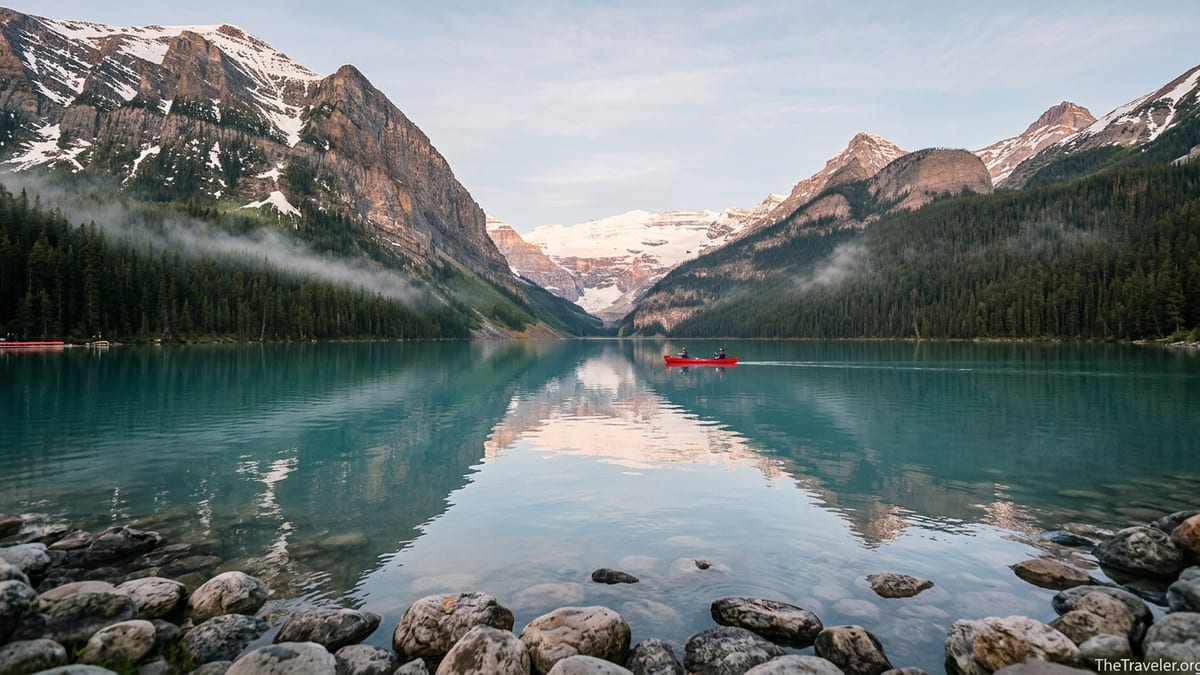
Banff National Park sits in the heart of the Canadian Rockies, where jagged peaks, hanging glaciers and dense evergreen forests collide in a compact, easily explored area. Signature spots like Lake Louise and Moraine Lake deliver the kind of views that usually require multi-day expeditions in other mountain ranges. At Lake Louise, visitors can stand on the shoreline just steps from the parking lot or shuttle stop and look straight up at Victoria Glacier framed by steep peaks. The scene is so dramatic that early morning in July often feels like an open-air gallery, with photographers quietly lining the shore waiting for the first glow of sunlight.
Moraine Lake offers a different, equally powerful moment. Set in the Valley of the Ten Peaks, its water turns an almost electric blue in late spring and summer thanks to glacial silt. Most visitors still climb the short rock pile trail right beside the lakeshore to get a higher vantage. On a clear evening in September, you can watch light fade off ten distinct summits while paddlers in rental canoes trace silent arcs across the water. That this world-famous view is reachable in under an hour from the town of Banff, via a mix of buses and shuttles, is a major reason the park has become a fixture on travel wish lists.
Crucially, Banff’s beauty does not vanish if you venture beyond the icons. The Icefields Parkway, which connects Lake Louise to Jasper, is frequently cited in guidebooks as one of the most spectacular drives in the world. Even a modest day trip north from Lake Louise delivers roadside stops at Bow Lake, Peyto Lake and the Crowfoot Glacier viewpoint. First-time visitors traveling in a rental compact car can experience an ever-shifting montage of glaciers, waterfalls and wildlife lookouts, with viewpoints never more than a short stroll from the road.
For those who do want to work a little, accessible hikes like Tunnel Mountain and the Fenland Trail start almost from the edge of Banff townsite. An hour of climbing up Tunnel Mountain’s well-graded switchbacks rewards you with a balcony view over the Bow Valley, while an easy boardwalk loop through the Fenland wetlands showcases the quieter side of the park’s ecosystems. This combination of drive-up drama and easily reached trails has helped Banff feel both epic and attainable.
Wildlife and Wilderness That Feel Surprisingly Close
Another reason Banff has become the park people dream about is the possibility of seeing charismatic wildlife in a relatively compact area. The Bow Valley and surrounding slopes are home to elk, bighorn sheep, mountain goats and black bears, as well as harder-to-spot species like wolves and cougars. In September, it is not unusual for guests at hotels along Banff Avenue to wake up to elk bugling in the nearby meadows. In early summer, roadside pullouts on the Bow Valley Parkway often fill up when a bear appears on a distant hillside, safely separated from traffic by speed limits and fencing.
Parks Canada has invested heavily in wildlife crossings and fencing along the Trans-Canada Highway through Banff National Park, which has made the corridor safer for animals while still allowing travellers to move efficiently between Calgary, Canmore, Banff and Lake Louise. Overpasses covered in soil and vegetation let elk, deer and even bears cross above traffic. Visitors driving west from Calgary often spot these structures as they enter the park, a visible sign that Banff is trying to balance access with conservation.
There is also a sense that wilderness is never far away, even from the bustling townsite. A ten minute walk from Banff Avenue can put you beside the Bow River under cottonwood trees, with views of Mount Rundle reflecting in the water. Venture a little farther on a guided hike with a local operator and it is possible to learn to recognize grizzly bear tracks in the mud on less frequented trails, or to watch a pika dart between rocks high above treeline. The fact that you can then be back at a downtown bistro for dinner an hour later is part of the park’s modern appeal.
For many international visitors, Banff is also their first real encounter with subalpine and alpine ecosystems. Interpretive displays at places like the Banff Park Museum National Historic Site and the Cave and Basin introduce the park’s natural history in a compact, indoor format that families can visit even on a rainy afternoon. Kids who learned about bison and hot springs in the morning may find themselves spotting real bighorn sheep on the roadside that same evening, giving the trip a sense of immediacy and discovery.
Easy Access Paired With Evolving Infrastructure
Unlike some remote national parks, Banff is relatively straightforward to reach. Calgary International Airport sits roughly a 90 minute drive away in normal traffic. Scheduled shuttle buses and private transfer companies run daily between the airport, Canmore and Banff. Budget-conscious travelers often take a shared coach from the terminal directly to Banff’s main transit hub, while families or groups sometimes book a private van transfer that drops them at their hotel door. This close airport-to-park connection has helped international visitors fold Banff into itineraries that might also include cities like Vancouver or Toronto.
Within the park, infrastructure has been evolving quickly in response to growing demand. Banff National Park recorded more than 4 million visits in the early 2020s, and Parks Canada has used timed shuttles, seasonal road restrictions and expanded public transit to prevent the experience from tipping into chaos on peak days. Visitors heading to hotspots like Moraine Lake can no longer drive personal vehicles to the lakeshore during the main season. Instead they must reserve a Parks Canada shuttle, use regional public transit such as Roam, or book with one of several private tour operators. In practice, this has turned what used to be an anxiety-filled parking scramble into a more predictable, ticketed experience for those who plan ahead.
Prices vary by operator and route, but a typical pre-booked shuttle from Banff to Lake Louise and Moraine Lake often falls into a moderate range per person, while some private sunrise tours from Banff or Canmore cost noticeably more per seat due to smaller group sizes and early departures. The key shift is that capacity is now managed. A traveler who has reserved an early morning Parks Canada bus from the Lake Louise Park and Ride knows they will get a seat and that the lake shore will not be overwhelmed by vehicles.
Closer to the town of Banff, local public transit has also grown. Roam Transit routes now connect Banff with nearby Canmore and outlying attractions like Lake Minnewanka and Johnston Canyon in the main travel season. For a visitor staying in a midrange hotel in downtown Banff, it is realistic to leave a rental car parked for days at a time, relying instead on frequent buses and walking. This shift aligns Banff more closely with European alpine destinations where trains and buses are a normal part of the mountain experience.
Year-Round Adventures for Every Kind of Traveler
Part of Banff’s bucket list appeal lies in how differently the park feels across the seasons. Summer remains the most popular time to visit, when daylight stretches long into the evening and high-country trails open fully. Hikers flock to routes like the Plain of Six Glaciers above Lake Louise, where a half day trek brings you to a rustic teahouse perched near the glacier’s edge. Moderate outings such as Johnston Canyon to the Upper Falls give families a taste of canyon walking on catwalks bolted into limestone cliffs. Travellers see rushing water, mossy walls and, in spring, ice remnants still clinging to shaded corners.
Autumn brings a different energy. In late September, larch trees in the Lake Louise and Moraine Lake areas turn a vivid gold, triggering a surge of hiking interest on trails such as Larch Valley and Sentinel Pass. Parks Canada often uses additional staff and trail restrictions at this time to manage crowds and protect sensitive wildlife habitat, especially as bears intensify their feeding before winter. For photographers and hikers, however, the reward is a landscape where golden needles contrast with dark rock and, sometimes, early season snow.
Winter and early spring have quietly become their own bucket list experience, particularly for travelers who ski or snowboard. The “Big 3” ski resorts of Banff Sunshine, Lake Louise Ski Resort and Mt. Norquay sit within or right beside the park. Multi-day lift passes let visitors chase conditions between them, from broad alpine bowls at Sunshine to long cruiser runs above Lake Louise village. Even non-skiers can ride gondolas for elevated views or join guided snowshoe walks through silent forests. In December, Banff Avenue feels almost like a storybook mountain town, with winter festivals, lights, and steam rising from Banff Upper Hot Springs where bathers soak with views of snow-covered peaks.
Shoulder seasons also have their place. Late May and early June often mean fewer crowds, lower accommodation prices and a mix of lingering snow in the high country with fresh greenery in the valleys. Lakes like Minnewanka may still feel chilly for boating, but this is prime time for wildlife viewing and valley hikes before peak summer numbers arrive. Savvy travelers planning multi-week Canadian itineraries frequently target these shoulder windows to get more of Banff’s highlights with slightly less competition for viewpoints and restaurant reservations.
From Grand Hotels to Cozy Cabins: A Range of Stays
Banff’s rise as a dream destination is also tied to its range of accommodation. At the top end, iconic properties such as the Fairmont Banff Springs and the Fairmont Chateau Lake Louise offer a traditional grand hotel experience with castle-like architecture, bell staff in uniforms and on-site dining rooms overlooking mountain scenery. Rooms at these properties often command premium nightly rates during July and August, yet they continue to sell out months in advance because many travelers see at least one night in a historic railway hotel as part of the classic Banff experience.
Beyond those landmarks, the town of Banff is filled with midrange hotels, lodges and small inns that cater to couples, families and tour groups. Prices shift significantly by season, with summer and fall larch season at the top of the scale, while late spring and parts of winter can be more affordable. A typical midrange hotel might offer a standard room with mountain views, a small indoor pool, and free parking. Visitors on tighter budgets often look at hostels or basic motels on the edge of town, where bunk beds or simple rooms offer a lower nightly cost in exchange for minimal extras.
Lake Louise village presents a smaller, more compact lodging scene. Several lodges and inns sit within walking distance of restaurants and small grocery shops, while a handful of higher-end properties near the lakeshore itself sell premium stays focused on proximity to the water. Because Lake Louise has fewer total rooms than Banff, its accommodations can book out even earlier in peak periods. Travellers who cannot find affordable space in the park often base themselves in Canmore, about 20 minutes east of Banff’s townsite, where condo-style rentals and longer stay options are more common.
Campsites add another dimension. Parks Canada operates multiple campgrounds around Banff, including Tunnel Mountain near town and Lake Louise Campground closer to the upper Bow Valley. These sites typically offer a mix of tent pads and RV spots, with some sections equipped with electrical hookups. Demand is intense in July and August, and many regulars set calendar reminders for the day national reservation systems open. For travelers who score a spot, the reward is waking up with mountain views right outside the tent flap and evenings spent around a fire pit rather than a hotel lobby bar.
Sustainability, Culture and the Story Behind the Scenery
As Banff’s visitor numbers have grown, so has interest in how the park manages its environmental footprint and acknowledges the land’s deeper history. Banff National Park and the surrounding region lie within the traditional territories of several Indigenous nations, including the Stoney Nakoda, Ktunaxa, Blackfoot, Tsuut’ina and Métis communities. Increasingly, tours and interpretive programs highlight Indigenous perspectives on the landscape, from traditional place names for lakes and mountains to stories about seasonal travel routes through the passes.
Travelers can now book guided cultural walks in the Banff and Lake Louise area that focus on Indigenous knowledge of local plants, wildlife and geology. Some operators incorporate storytelling and drumming, while others emphasize hands-on learning, such as identifying useful medicinal plants or traditional food sources. These experiences add depth to a trip that could otherwise be only about photo stops and wildlife sightings, reinforcing Banff’s role not just as a playground but as a living place with layered histories.
On the environmental side, Parks Canada has adopted measures such as seasonal trail and road closures to protect sensitive wildlife corridors. For example, sections of the Bow Valley Parkway and other routes can be restricted in spring and early summer to give animals space to feed and move safely with newborn young. Visitors driving in May or June may encounter clear signage explaining why certain pullouts or trails are closed until specific dates. While occasionally frustrating for those with rigid itineraries, these protections are part of what keeps Banff feeling wild enough to justify its bucket list reputation.
Sustainability also shows up in smaller, everyday choices. Many hotels encourage guests to refill reusable water bottles from lobby fountains rather than buying new plastic, and some restaurants emphasize locally sourced ingredients or smaller menus that change with the seasons. Travelers who opt to use Roam buses instead of driving to every attraction, choose refillable containers over single-use plastics, and stick to marked trails are participating in a collective attempt to keep Banff’s appeal intact for the next wave of dreamers.
Planning Realistically for a Dream Trip
Part of what cements Banff’s status as a bucket list destination is that, with good planning, it is realistically achievable for a wide range of travelers. The trip does require some forethought. Visitors must purchase a Parks Canada pass for each day they are in the national park, whether they are driving themselves or arriving by bus. Many people now buy these passes online ahead of time or at park gates on the Trans-Canada Highway to avoid delays later.
Securing transportation to major lakes is another key step. Parks Canada shuttles to Lake Louise and Moraine Lake typically require advance reservations for peak season dates, and tickets can sell quickly when they are released. Travelers who miss out on the first round of sales often monitor the booking site regularly, as cancellations and additional departures can appear. Others look at private shuttles and guided tours, some of which include hotel pickup, early morning departures timed for sunrise, or combined itineraries such as Lake Louise, Moraine Lake and a short hike all in one day.
Accommodation should be booked early, especially for July, August and late September. Families often prioritize walkable locations in Banff town so teenagers can explore shops, cafés and the riverfront in the evening without needing a car. Couples focused on scenery may choose one or two nights at the Chateau Lake Louise or a similar lakeside property, then move to more modest lodging in Banff or Canmore for the rest of their stay to balance the budget. Road-trippers sometimes reserve campsites part of the time and mix in motel nights when they need a hot shower and a proper bed.
Packing realistically matters. Even in July, evening temperatures can feel cool by Rocky Mountain standards, and thunderstorms can roll through quickly. Many experienced visitors swear by a layering system: a light base layer, a fleece or sweater, and a compact waterproof shell. Footwear does not need to be technical mountaineering gear, but sturdy walking shoes with good traction make a big difference on rocky or wet trails. Travellers hoping to canoe at Lake Louise or Moraine Lake, or soak in Banff Upper Hot Springs, often bring quick-drying clothing and swimsuits to avoid buying extra gear at resort prices.
The Takeaway
Banff National Park’s rise to the top of so many travel wish lists is no accident. It combines instantly recognizable scenery with a level of access, infrastructure and year-round activity that few mountain destinations can match. Visitors can wake up in a historic castle-like hotel or a simple campsite, ride a shuttle or public bus to a world-famous lake, hike to a teahouse under a glacier, soak in natural hot springs and enjoy dinner in a lively town all in the same day.
Yet what keeps Banff feeling like a true bucket list experience is the sense that genuine wilderness is never far away. Wildlife still moves through carefully protected corridors, alpine meadows still bloom above treeline, and lakes still shift to shades of blue and green that challenge the limits of a camera sensor. The park’s evolving systems of reservations, shuttles and closures are all attempts to protect that magic even as more people arrive each year.
For travelers willing to plan ahead, travel respectfully and stay flexible in the face of mountain weather, Banff offers one of the most accessible big-mountain adventures on the planet. That mix of beauty, ease and depth is why, when people start ranking the world’s great national parks, Banff almost inevitably ends up circled, underlined and placed firmly at the top of the Canadian list.
FAQ
Q1. When is the best time of year to visit Banff National Park?
Many visitors choose late June through early September for warm weather and snow free trails. Others prefer late September for golden larch trees or mid winter for skiing and quieter viewpoints.
Q2. How many days do I need in Banff to see the main highlights?
A minimum of three full days allows time for Banff town, Lake Louise and one other area such as Moraine Lake or the Icefields Parkway. Five to seven days lets you add hikes, gondola rides and rest days.
Q3. Do I need a car, or can I rely on public transit and shuttles?
You can visit without a car by using airport coaches, Roam Transit and Parks Canada or private shuttles to major sights. A rental car offers more flexibility, especially for sunrise trips or exploring less visited trailheads.
Q4. How far in advance should I book hotels and shuttles?
For peak summer and late September, it is wise to book accommodations several months ahead and secure shuttle reservations as soon as they open. Shoulder seasons usually offer more last minute availability.
Q5. Is Banff suitable for families with young children?
Yes. Many lakeside viewpoints, short walks and attractions like gondolas and the Banff Park Museum are accessible with strollers or small children. Choosing lodging within walking distance of services makes family logistics easier.
Q6. How expensive is a trip to Banff compared with other mountain destinations?
Banff spans a wide range of budgets. Lodging and restaurant prices in peak season are comparable to popular ski towns, but costs can be reduced by visiting in shoulder seasons, staying in Canmore or campgrounds and self catering some meals.
Q7. Do I need to worry about wildlife encounters on trails?
Banff is home to bears, elk and other wildlife, so travelers should carry bear spray when hiking, make noise, travel in small groups or larger and follow local advice on trail conditions and seasonal closures. Most encounters are distant when visitors follow guidelines.
Q8. Are there options for visitors with limited mobility?
Yes. Many viewpoints at Lake Louise, Bow Lake, Vermilion Lakes and along the Bow River have paved or relatively flat access. Several hotels offer accessible rooms, and some gondolas and tour buses can accommodate mobility aids with advance notice.
Q9. How do I get tickets for Lake Louise and Moraine Lake shuttles?
Parks Canada releases shuttle reservations ahead of each season, with additional seats sometimes added later. Private companies and Roam Transit also sell their own tickets for routes between Banff, Lake Louise and connecting shuttles.
Q10. What should I pack for a summer visit to Banff?
Plan for variable mountain weather by bringing layers, a waterproof jacket, sturdy walking shoes, sun protection and a refillable water bottle. Even in July, mornings and evenings can feel cool, especially at higher elevations.