


First-time visitors often arrive in New York City with one fixed idea: “We’re doing Manhattan.” Within a day, they realize Manhattan is not one place at all but a dense patchwork of villages, each with its own mood, price point, and daily rhythm. The moment you stop planning for “Manhattan” in the abstract and start planning around specific neighborhoods, the borough becomes far more understandable, affordable, and enjoyable.
Get the latest updates straight to your inbox!
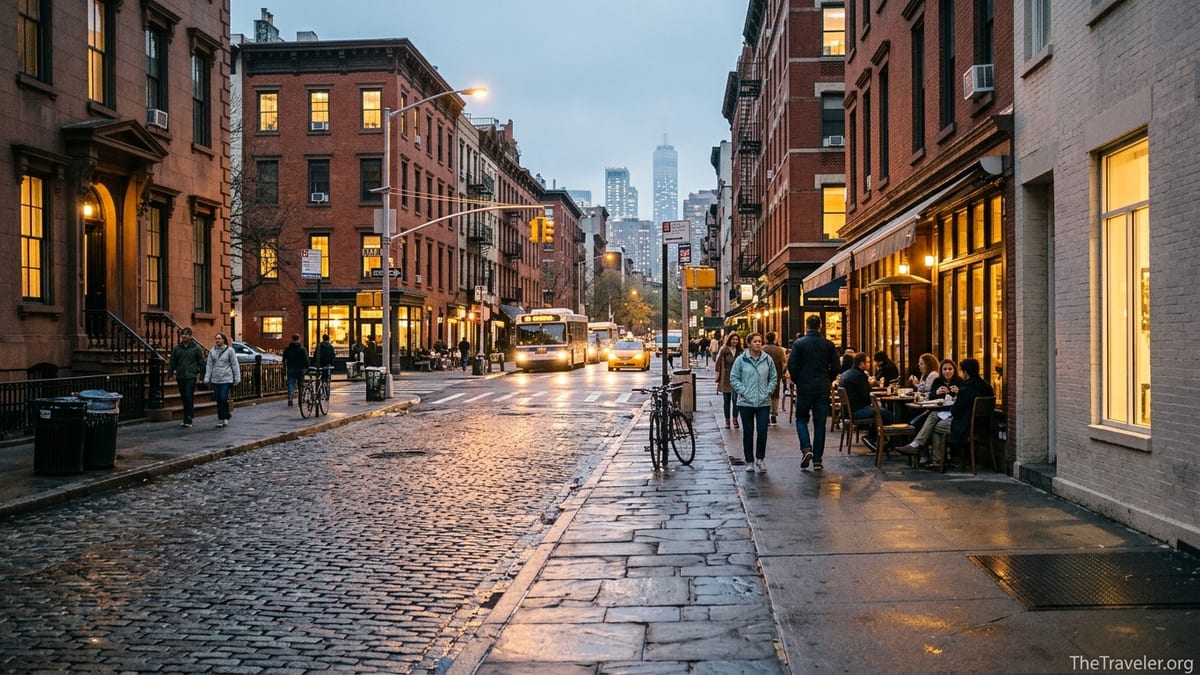
Stop Planning “Manhattan” and Start Planning Micro-Maps
Manhattan is only about 13 miles long, but treating it as a single, walkable zone is one of the fastest ways to exhaust yourself and waste time. In practice, most visitors spend their days in a handful of compact pockets: Midtown’s theater and skyscraper district, the museums and brownstones of the Upper West and East Sides, the village-like streets around Greenwich Village, and the former warehouse belts of SoHo and Tribeca. Each of these is small enough to explore on foot yet different enough that hopping between them repeatedly in a single day can be jarring and inefficient.
Instead of writing “Day 1: See Manhattan” on your itinerary, give each day one primary neighborhood and one backup nearby. A realistic plan might look like “Midtown and Bryant Park” one day, then “Greenwich Village and SoHo” the next. This instantly reduces the number of crosstown subway rides, minimizes transfers, and keeps your walking pleasantly exploratory instead of feeling like a forced march up and down the island.
Thinking in micro-maps is especially important on short trips. A three-night visit is not enough to “do Manhattan,” but it is plenty of time to get to know three to five neighborhoods quite well. Travelers who narrow their focus this way often come home with better memories: a favorite coffee shop in the West Village, an unexpected side street in the Upper East Side, or a quiet bench along the Hudson in Tribeca that they would never have found if they had been racing between distant sights all day.
If you want a visual sense of how fractured Manhattan really is, look at any recent neighborhood map from a tourism board or real estate site. You will see dozens of named districts: the Financial District, Battery Park City, Tribeca, SoHo, the Lower East Side, the East Village, Chelsea, Hell’s Kitchen, Midtown East, Murray Hill, Gramercy, the Flatiron District, the Upper East and West Sides, Harlem, and many more. Approaching your plans at this smaller scale is the key to making sense of it all.
North, Central, South: Breaking Manhattan into Zones
A helpful middle step between “all of Manhattan” and individual neighborhoods is to think in broad zones: Lower, Midtown, and Uptown. Lower Manhattan runs roughly from the southern tip up to around Houston Street. Midtown stretches from there through about 59th Street, which is also the southern edge of Central Park. Uptown covers the Upper East and Upper West Sides and continues into Harlem and Washington Heights.
Most first-time visitors sleep and sightsee in Midtown and Lower Manhattan. Midtown offers quick access to Broadway theaters, Times Square, the Empire State Building, Bryant Park, and flagship shops along Fifth Avenue. Lower Manhattan covers the World Trade Center area, Wall Street, Battery Park, the ferry to the Statue of Liberty, as well as neighborhoods like SoHo and the Lower East Side that are rich in restaurants and nightlife. Uptown, with its museums and residential streets, often becomes a day trip from a more central hotel base.
You can use these zones to structure your days. For example, if you are planning a Statue of Liberty visit that departs from Battery Park in the morning, keep the rest of your day in Lower Manhattan. Walk north afterward through the Financial District and the narrow streets around Stone Street, continue to Tribeca for lunch, and end the afternoon in SoHo or the Lower East Side. On a different day, you might dedicate your time to Midtown: start at the Top of the Rock in Rockefeller Center, walk to the New York Public Library at Bryant Park, then continue down to the Flatiron Building and Madison Square Park.
Keeping days “zone pure” within Manhattan also makes it easier to slot in flexible experiences like food tours or last-minute museum tickets. If you know Tuesday is your Midtown day, you can confidently book an evening theater performance or a same-day timed entry to an observation deck without worrying about racing in from far downtown or north of the park.
Choosing a Base: Pick a Neighborhood, Not a Skyline
One of the biggest planning mistakes visitors make is choosing accommodation based purely on a famous view. A room that shows you the Empire State Building from the 40th floor is thrilling, but a hotel wedged between Midtown office towers may feel sterile once you step onto the street. Instead, treat your hotel or rental as your “home neighborhood” and choose an area whose street life matches the way you like to travel.
For convenience, many first-timers still choose Midtown, especially around Times Square, Bryant Park, and Penn Station. Here you are within about a 15-minute walk of flagship department stores, major subway lines that can send you uptown or downtown, and dozens of midrange chain hotels whose nightly rates may start around the mid-200 dollar range in quieter seasons and climb far higher around holidays. The trade-off is that it rarely feels peaceful; the bright screens of Times Square, late-night noise, and tour groups can be overwhelming.
Travelers looking for a more residential flavor might instead base themselves in neighborhoods like the Upper West Side, the Upper East Side, or Greenwich Village. On the Upper West Side, around 72nd to 86th Streets, you can expect leafy streets, local cafes, and family-friendly restaurants, all a short walk from Central Park and the American Museum of Natural History. The Upper East Side, especially east of Lexington Avenue, remains comparatively quiet in the evenings and is dotted with small bakeries and neighborhood bars. Greenwich Village and the nearby West Village are denser, with a web of smaller streets, jazz clubs, and independent shops that reward unplanned strolling.
Staying downtown gives you a different version of Manhattan entirely. Areas like Tribeca, SoHo, and the Financial District mix converted warehouses, modern glass towers, and cobblestone streets. A morning walk here might take you past gallery spaces in SoHo, through the redeveloped piers along the Hudson River, or into the World Trade Center transit hub. While nightly hotel prices can be similar to Midtown at busy times, weekends and some off-peak periods may see better deals because these neighborhoods are still anchored by office workers during the week.
Planning Days by Theme, Then Matching Them to Neighborhoods
Once you accept that Manhattan is many small places instead of one, you can flip your planning process: start with what you want to feel or do, then assign each theme to a specific neighborhood cluster. This helps you avoid a random scatter of “must see” stops and builds more coherent days.
For a classic “iconic sights” day, pair Midtown with a walk into Central Park. Begin with a morning visit to an observation deck in Midtown, spend your midday at the New York Public Library and Bryant Park, then walk or take a quick subway ride to Central Park South. An afternoon stroll past the pond or a rental rowboat session on the lake lets you slow the pace before an evening theater performance. Because this is essentially one continuous north to south strip, you are rarely more than one subway stop away from any part of your plan.
Food lovers can center a day around the Lower East Side and nearby neighborhoods. Start with a bagel shop breakfast, then walk Orchard Street or Ludlow Street to sample independent boutiques and cafes. From here, you can easily reach Chinatown for dim sum or noodle shops, then drift west into SoHo to explore cast-iron façades and design stores. An evening could end with live music in the East Village, which is only a short walk away. You have essentially spent the day in one broad neighborhood cluster rather than zigzagging across the borough.
For culture-heavy days, Uptown makes sense. The Museum of Modern Art technically sits in Midtown, but the densest museum concentration runs along Fifth Avenue north of 59th Street, with the Metropolitan Museum of Art, the Guggenheim, and several smaller institutions dotting the park’s eastern edge. Travelers often underestimate museum fatigue; a single major museum can comfortably fill three or four hours. Planning a full Uptown day lets you visit one large museum in the morning, enjoy a simple lunch nearby, then stroll through Central Park before heading back to your base. This is far more rewarding than trying to fit two major museums and a downtown attraction into a single afternoon.
Navigating Within Neighborhoods: Subways, Walking, and Reality Checks
Mapping your days by neighborhood does not mean ignoring public transit; it means using it strategically. The subway is still the fastest way to travel longer distances in Manhattan, with a standard trip currently costing around 3 dollars whether you tap in using the OMNY contactless system or a remaining MetroCard balance. Fare capping for OMNY users means that after roughly a dozen paid rides within seven days, additional rides that week are effectively free, which can be useful for visitors staying several days and riding frequently.
Within a given neighborhood, though, you will often move more efficiently on foot. Many of Manhattan’s most visited areas are compact: the distance from Times Square to Bryant Park is about a 10-minute walk, and from Washington Square Park in Greenwich Village to the heart of SoHo is only around 15 minutes along quiet side streets. In places like the West Village, where the street grid bends and narrows, there may not even be a convenient crosstown subway line; walking becomes part of the experience, with discoveries at nearly every block.
Taxis and ride-hailing services fill the gaps but come with trade-offs. Crossing Midtown by car in rush hour can take longer than walking if you are only going a dozen blocks. On the other hand, late at night or in heavy rain, a cab from the Theater District back to a hotel in the Upper West Side or Lower Manhattan may be the most practical choice, even if it costs more than a subway ride. Building your plan around neighborhoods means these occasional car trips are short, direct hops rather than repeated cross-island journeys.
Be realistic about distance when reading maps. A straight line from the Financial District to the Upper East Side looks manageable on a small phone screen, but in practice it can be a 40 to 50 minute subway trip including station stairs and waiting time. A traveler who plans breakfast downtown, a midmorning visit to a museum north of the park, a lunch in Chelsea, and a late afternoon observation deck in Midtown has essentially assigned themselves four zone jumps in one day. A better approach is to cluster two of those in one day and leave the others for another, turning each into a half-day in one area instead of a hectic race.
Sample Neighborhood-Based Itineraries That Actually Work
Thinking more locally can feel abstract until you see it in practice. Consider a long weekend built entirely on neighborhood clusters. On Day 1, after dropping bags at a Midtown hotel, you might stay within a 15-minute radius of Bryant Park: visit the New York Public Library, stroll Fifth Avenue window displays, and head toward the lights of Times Square before an evening Broadway show. Everything you do that day, including meals, fits within a single swath of Midtown.
On Day 2, shift fully downtown. Take the subway to the Financial District, spend the morning walking through the World Trade Center area, and, if you have pre-booked, catch a morning ferry to Liberty Island and Ellis Island. Back on shore, lunch in Tribeca at a casual bistro or pizza spot, then head north on foot into SoHo for shopping and galleries. As dusk falls, walk or make a short subway hop to the Lower East Side or East Village for dinner and live music. Once again, you have essentially moved from the very bottom of the island to the lower-middle and back, but always in connected steps.
Day 3 could be your Uptown day. Start on the Upper West Side with breakfast at a neighborhood diner, followed by a visit to the American Museum of Natural History. After a few hours, exit through the museum’s Central Park entrance and walk across the park to the Upper East Side. Spend the afternoon between the Metropolitan Museum of Art and the quieter streets to its east, then return to your base by subway. If you prefer shopping to museums, the same framework still works: Uptown department stores and boutique-lined side streets can replace gallery halls.
Even longer trips benefit from this structure. A five-night stay might see you base in one neighborhood for the entire time but assign each day to a new cluster: Midtown and Central Park, Lower Manhattan and the harbor, Village and SoHo, Uptown museums and Harlem, and finally a flexible “favorites” day to revisit whichever district you enjoyed most. Because each day limits big jumps, you stay fresher and end up with deeper memories of each area instead of a blur of train rides and ticket lines.
The Takeaway
Manhattan becomes far less intimidating once you stop asking, “How can I see all of it?” and start asking, “Which few neighborhoods do I want to really know?” Breaking the borough into smaller, human-scale places clarifies where to stay, how to structure each day, and which long crosstown journeys are truly worth your limited time. It turns the island from an overwhelming checklist of icons into a series of walkable villages.
Planning at the neighborhood level encourages better decisions: you pick a base that feels like a home rather than a convenience corridor, you group sights that genuinely belong together, and you leave space for unscripted discoveries that cannot be scheduled in an app. You may not return home having “done” Manhattan in any comprehensive sense, but you will have formed a relationship with a handful of its distinct corners.
On a practical level, this approach also respects your energy and budget. By clustering experiences and limiting unnecessary transit, you spend less on repeated long rides and more on the actual meals, shows, and attractions that define your trip. Your photos will still include the classic skyline, but your most vivid memories will likely come from a certain cafe table, a single stoop, or a particular stretch of park in a neighborhood that, for a brief visit, felt like yours.
Most of all, thinking of Manhattan as many places instead of one invites you to travel like a short-term local rather than a passing spectator. You will learn which corner deli makes the best coffee near your hotel, which subway entrance is least crowded at 8 a.m., and which side street offers the quietest walk back after a late show. Those are the kinds of details that turn a few days in New York from a whirlwind into a story you want to keep telling.
FAQ
Q1. Is it realistic to see all of Manhattan in one trip?
It is not realistic to see all of Manhattan in detail on a short visit. Focus on a handful of neighborhoods that match your interests instead of trying to cover the entire island.
Q2. Where should first-time visitors stay in Manhattan?
Many first-timers choose Midtown for convenience to major sights and transport, while others prefer the Upper West Side, Upper East Side, or Greenwich Village for a more residential feel.
Q3. How many neighborhoods should I plan to explore on a three-day trip?
On a three-day visit, aim for three to five neighborhood clusters, such as Midtown, Lower Manhattan, and Uptown, rather than trying to skim a dozen different areas.
Q4. Is it better to walk or use the subway between neighborhoods?
Use the subway for longer jumps, such as between Uptown and Lower Manhattan, and rely on walking within each neighborhood, where most attractions sit within a short stroll of each other.
Q5. How much should I budget for subway rides in Manhattan?
A single subway ride currently costs around 3 dollars. Active visitors taking multiple rides a day can benefit from OMNY fare capping, which limits what you pay in a week.
Q6. Do I need to change hotels to experience different parts of Manhattan?
You do not need to move hotels if you stay somewhere central with good subway access. Instead, plan separate day trips into different neighborhoods from a single, well-connected base.
Q7. Which neighborhood is best for nightlife in Manhattan?
Areas like the East Village, Lower East Side, parts of Greenwich Village, and sections of Hell’s Kitchen offer dense clusters of bars, music venues, and late-night food options.
Q8. Is it safe to walk between neighborhoods at night?
Many central neighborhoods are busy and feel safe in the evening, though conditions can vary by block. Stick to well-lit streets, remain aware of your surroundings, and use taxis or rideshares if you feel uncomfortable.
Q9. How far in advance should I book major attractions within each neighborhood?
Observation decks, theater shows, and popular museum time slots are often worth booking at least days or weeks ahead, especially in peak seasons, while neighborhood walks and local dining can usually remain flexible.
Q10. Can I combine Brooklyn or Queens with my Manhattan neighborhood plans?
Yes, but treat them as separate clusters. For example, plan a full day in Brooklyn neighborhoods like DUMBO and Williamsburg rather than squeezing them into a half-day already packed with Manhattan plans.