


Choosing between staying in Manhattan or Brooklyn can shape your entire New York City experience. The two boroughs are separated by a river and a few subway stops, but they feel like very different trips. One is home to Times Square, Central Park and skyscraper canyons. The other offers converted warehouses by the East River, leafy brownstone streets and a more local, neighborhood rhythm. The right choice depends on your budget, what you want to see, and how you like to travel.
Get the latest updates straight to your inbox!
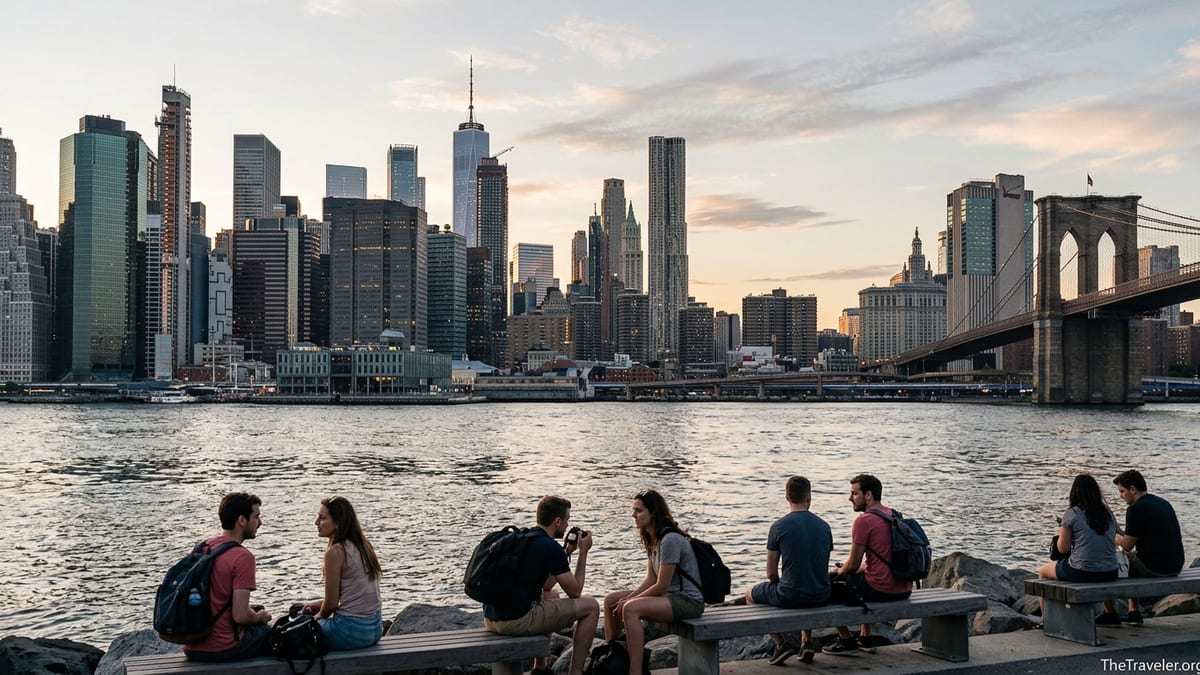
Big Picture: How Manhattan and Brooklyn Feel Different
Manhattan delivers the classic movie version of New York. Think neon in Times Square, yellow cabs on Fifth Avenue, the skyscrapers of Midtown and the canyons of the Financial District. Many first‑time visitors picture themselves walking down Broadway, looking up at the Empire State Building or strolling through Central Park. If your dream trip is to wake up and step straight into that energy, Manhattan puts you at the center of it.
Brooklyn feels more residential and creative. Instead of office towers, you are more likely to be surrounded by brownstone townhouses in Park Slope, old warehouses turned into lofts in DUMBO, or street art and independent shops in Williamsburg. Here, you are sharing the sidewalks with people walking their dogs, carrying yoga mats or pushing strollers rather than briefcases. Cafes double as remote offices, and weekends mean farmers’ markets and waterfront parks as much as museums.
In practice, many visitors split their time between the two. You might spend the day in Manhattan at the Metropolitan Museum of Art, then take the subway back to a quieter base in Brooklyn for dinner at a neighborhood bistro. The good news is that the subway connects both boroughs closely and a standard ride currently costs about 3 dollars, so you can sleep in one and explore the other without much friction.
The key question is not “Which borough is better?” but “Which atmosphere would I rather step into every morning?” Manhattan is intensity and proximity to the headline sights. Brooklyn is space to breathe, neighborhood character and a slightly slower tempo.
Location & Sights: What Each Borough Puts on Your Doorstep
Staying in Manhattan means many of the city’s most famous sights are on your doorstep or just a short subway ride away. From a Midtown hotel, you can walk to Times Square, Broadway theaters, Rockefeller Center and the Museum of Modern Art in a single afternoon. Central Park is a natural anchor for morning runs or evening strolls. If you choose Lower Manhattan, you are close to the 9/11 Memorial & Museum, Wall Street, the Staten Island Ferry and the Brooklyn Bridge.
For example, a hotel near Bryant Park can put you within a 15‑minute walk of Grand Central Terminal, the New York Public Library, Fifth Avenue shopping and multiple Broadway theaters. That kind of dense cluster of marquee attractions is something Manhattan does exceptionally well. You spend less time thinking about transport and more time wandering between sights, even if the sidewalks can feel crowded almost all day.
Brooklyn, by contrast, shines in its neighborhood experiences. DUMBO gives you those iconic postcard views of the Manhattan Bridge framed by red‑brick buildings and a waterfront park where you can sit with a slice of pizza and watch the skyline across the river. Williamsburg offers independent boutiques, rooftop bars with sweeping city views and some of the city’s most talked‑about restaurants. Park Slope and Fort Greene wrap you in tree‑lined streets and local bakeries, with big green spaces like Prospect Park or Fort Greene Park as your backyard.
If your priority is to tour Manhattan’s big sights efficiently over two or three days, staying in Manhattan reduces back‑and‑forth time. If, however, you prefer to anchor your trip in a neighborhood where you can quickly recognize your barista, browse a weekend flea market and then dip into Manhattan as needed, Brooklyn is often the better base.
Budget & Value: Where Your Accommodation Money Goes Further
Accommodation is often the single biggest cost difference between Manhattan and Brooklyn. Recent price guides suggest that an average mid‑range hotel in central Manhattan can run around the mid‑200s dollars per night or more, with busy periods driving rates significantly higher. Around Times Square or near Central Park, 3‑star and 4‑star hotels often start well above 250 dollars and climb quickly for larger rooms or better views.
Brooklyn, while no longer a bargain across the board, generally offers better value for space and atmosphere. A well‑located hotel in Downtown Brooklyn or Williamsburg can sometimes be 15 to 25 percent cheaper than a comparable room in Midtown, especially outside peak seasons. You may also find more apartment‑style hotels or small boutique properties with kitchenettes, which can help you avoid eating every meal out. Regulators have tightened short‑term rental rules across New York City in recent years, which means fewer casual vacation rentals and a stronger pull toward official hotels, particularly in Manhattan.
To see the difference in practical terms, imagine a 5‑night stay in October. A small but central room near Times Square might cost around 300 dollars per night, or 1,500 dollars before taxes and fees. In Brooklyn, a stylish mid‑range hotel near the Barclays Center or in Williamsburg might be closer to 220 to 260 dollars per night for a similar period, saving a few hundred dollars that could cover show tickets, museum passes and several good dinners.
If you are traveling with family or in a group, that space‑for‑money equation becomes even more important. In Brooklyn, it is often easier to find two‑bedroom suites or family rooms with a sofa bed without paying luxury‑level prices. Manhattan still has options for larger groups, particularly in business hotels on the east side or near Penn Station, but you may need to book earlier and accept higher nightly rates.
Getting Around: Subway, Walking and Commute Trade‑offs
New York’s subway system makes it realistic to stay in one borough and explore the other, but daily logistics still matter. As of early 2026, a standard subway ride costs around 3 dollars when you tap in with a contactless card or phone, with weekly caps that give frequent riders a break after a certain number of trips. That flat fare means you can ride from Brooklyn to uptown Manhattan for the same price as one stop in Midtown.
If you base yourself in Manhattan, many core sights are walkable. From a hotel in Midtown, you can reach Central Park, Times Square, the Theater District and major department stores on foot. That can be invaluable for visitors who are nervous about public transport or traveling with small children. Taxis and ride‑share vehicles such as Uber and Lyft are plentiful, but traffic can be slow at rush hour and fares add up quickly, particularly when you cross between boroughs or travel late at night.
From popular Brooklyn neighborhoods, you will likely ride the subway into Manhattan at least once a day. The ride from Williamsburg to Union Square can take around 10 to 15 minutes once you are on the train. From DUMBO or Brooklyn Heights to Lower Manhattan, some trips are even shorter. However, if your itinerary includes several Midtown or uptown attractions in a single day, that daily commute time becomes a factor. You must also account for station stairs, occasional service changes and busy trains at peak commuting hours.
On the other hand, walking and cycling within Brooklyn can be a pleasure in its own right. The Brooklyn waterfront offers long stretches of car‑free paths with sweeping skyline views, and the walk across the Brooklyn Bridge is a classic experience that many visitors repeat twice. If your trip includes a mix of remote work and sightseeing, basing yourself in Brooklyn and doing a reverse commute into Manhattan outside rush hour can make the city feel smaller and more manageable.
Food, Nightlife and Culture: Matching the Scene to Your Style
Both Manhattan and Brooklyn offer enough restaurants and bars to fill countless trips, but the vibe differs. In Manhattan, the options span power‑lunch steakhouses in Midtown, white‑tablecloth dining near Central Park, ramen and izakaya spots in the East Village, and long‑established delis uptown. You will find many Michelin‑recognized restaurants on the island, along with hotel rooftop bars that draw a mix of tourists and after‑work crowds. If you dream of a pre‑theater dinner steps from your Broadway show or a classic cocktail in a historic Midtown bar, Manhattan makes those nights out logistically simple.
Brooklyn’s food scene leans into small, chef‑driven restaurants and casual creativity. In Williamsburg, it is common to see lines outside weekend brunch favorites and natural‑wine bars. In neighborhoods like Greenpoint or Carroll Gardens, you might stumble on a corner trattoria serving handmade pasta or a bakery turning out sourdough loaves and elaborate pastries. Big food halls and outdoor markets also add to the mix, especially along the waterfront in warmer months, where pop‑up stands offer everything from tacos to vegan ice cream.
Nightlife follows a similar pattern. Manhattan has major clubs, late‑night lounges near the Meatpacking District, and upscale hotel bars with dress codes. Brooklyn tends to favor live music venues, neighborhood bars, comedy rooms and warehouse parties that go late but feel more informal. For example, a night out in Bushwick might include craft beer at a small brewery taproom followed by a DJ set in a converted industrial space, while a Manhattan evening could revolve around a jazz club and a nightcap with skyline views.
Culturally, Manhattan holds the heavy hitters: the Met, the Museum of Modern Art, the American Museum of Natural History, major galleries in Chelsea and performing arts institutions around Lincoln Center. Brooklyn counters with its own art and performance spaces, such as the Brooklyn Museum and Brooklyn Academy of Music, plus a thick layer of independent galleries, community theaters and outdoor performance series in parks. If national‑level blockbuster exhibitions and Broadway shows sit at the top of your wish list, Manhattan may suit you better. If you prefer smaller venues, experimental work and a more local crowd, Brooklyn can be deeply rewarding.
Best Fits by Traveler Type
First‑time visitors with only a few days and a long list of “must see” sights often get the most out of staying in Manhattan. If you are trying to fit the Statue of Liberty, Central Park, the Met, a Broadway show and an Empire State Building visit into a long weekend, waking up in Midtown or Lower Manhattan cuts down on commute time and uncertainty. It also makes it easy to pop back to your room to change before a show or rest during the afternoon.
Families with younger children may appreciate Manhattan’s proximity to big attractions but sometimes prefer Brooklyn’s calmer streets. A family staying near Prospect Park, for instance, can start the day with playground time, visit the Brooklyn Botanic Garden, and then take a short subway ride into Manhattan for a single major attraction. Evenings can be quieter, with kid‑friendly restaurants and less intense street noise compared to Midtown or Times Square.
Couples on a romantic trip might choose Brooklyn for its leafy streets and smaller, design‑conscious hotels, then head into Manhattan for special‑occasion dinners and shows. A long weekend could mean morning coffee on a brownstone stoop in Cobble Hill, an afternoon museum visit in Manhattan, and sunset drinks on a Brooklyn rooftop with the skyline as a backdrop. The slightly slower pace can make the city feel more intimate.
Frequent visitors and remote workers often gravitate to Brooklyn as a base. If you have already done the major Manhattan highlights, staying in neighborhoods like Fort Greene, Greenpoint or Gowanus lets you experience a side of New York that locals talk about but guidebooks sometimes compress into a single chapter. You can still reach Manhattan’s business districts for meetings or coworking sessions, but your daily life revolves around coffee shops, local gyms, and park benches rather than office towers.
The Takeaway
Choosing between Manhattan and Brooklyn is really about choosing the version of New York you want to live in for the length of your trip. Manhattan offers intensity, immediacy and easy access to headline sights, with prices and crowds to match. Brooklyn trades some of that instant access for neighborhood charm, slightly better value and a day‑to‑day rhythm that feels more like slipping into a local’s routine.
If it is your first short visit and you want to see as much as possible in limited time, staying in Manhattan usually makes the most sense. If you have a week or more, value space and local character, or have already checked off the major landmarks, Brooklyn can be a more comfortable and distinctive base. In either case, New York’s flat subway fare and dense transit network mean you will almost certainly experience both boroughs before you leave.
The best approach is to sketch your must‑do list and then see which borough reduces your daily friction. Map where you will likely spend your mornings and evenings, estimate how much you want to walk or ride the subway, and consider how important hotel size, price and noise levels are to you. With that clarity, the choice between Manhattan and Brooklyn becomes less of a gamble and more of a tool for shaping your ideal New York City story.
FAQ
Q1. Is Manhattan or Brooklyn cheaper for hotels?
Brooklyn is often somewhat cheaper for similar quality, especially in areas like Downtown Brooklyn or parts of Williamsburg, though prices vary by season and exact location.
Q2. How long does it take to get from Brooklyn to Midtown Manhattan by subway?
From neighborhoods like Williamsburg or Downtown Brooklyn, typical subway rides to Midtown take roughly 20 to 30 minutes once you are on the train, plus station walking time.
Q3. Is Brooklyn safe for tourists compared with Manhattan?
Popular Brooklyn areas such as DUMBO, Brooklyn Heights, Park Slope and Williamsburg are generally considered safe, similar to central Manhattan, though standard big‑city precautions always apply.
Q4. Which borough is better if I only have three days in New York?
If it is your first visit and you have just two or three full days, staying in Manhattan usually makes it easier to reach the major sights without spending too much time commuting.
Q5. Can I stay in Brooklyn and still see all the big Manhattan attractions?
Yes. With a flat subway fare around 3 dollars per trip, you can base yourself in Brooklyn and ride into Manhattan daily, though you should allow extra time for trains and transfers.
Q6. Which borough has better food, Manhattan or Brooklyn?
Both are excellent. Manhattan has more famous fine‑dining and power‑lunch spots, while Brooklyn excels in creative small restaurants, bakeries, food halls and neighborhood bars.
Q7. Is it easier to walk around Manhattan or Brooklyn?
Manhattan is denser with sights close together, so many attractions are walkable from central hotels. Brooklyn offers more relaxed walking in residential neighborhoods and along the waterfront.
Q8. Where should families with children stay, Manhattan or Brooklyn?
Families who want quick access to museums and major sights may prefer Manhattan, while those prioritizing parks, quieter streets and larger rooms often find Brooklyn more comfortable.
Q9. Which borough is better for nightlife?
Manhattan has big clubs, rooftop bars and theater. Brooklyn leans toward live music venues, neighborhood bars and warehouse parties. The better choice depends on your preferred scene.
Q10. Is it worth splitting a stay between Manhattan and Brooklyn?
For longer trips, splitting nights between both can work well. It lets you experience Manhattan’s intensity and then slow down into a more local Brooklyn rhythm without long daily commutes.