


Manhattan can feel overwhelming at first glance: skyscrapers, honking taxis, subway maps that look like a bowl of spaghetti, and a seemingly endless list of things to do. With a bit of structure and a few local tips, though, the island becomes surprisingly manageable. This guide focuses on the Manhattan neighborhoods most useful to visitors, the big hitting sights worth your time, approximate current prices, and the practical details that help you feel more like a savvy temporary New Yorker than a lost tourist.
Get the latest updates straight to your inbox!
How Manhattan Is Laid Out and How to Get Around
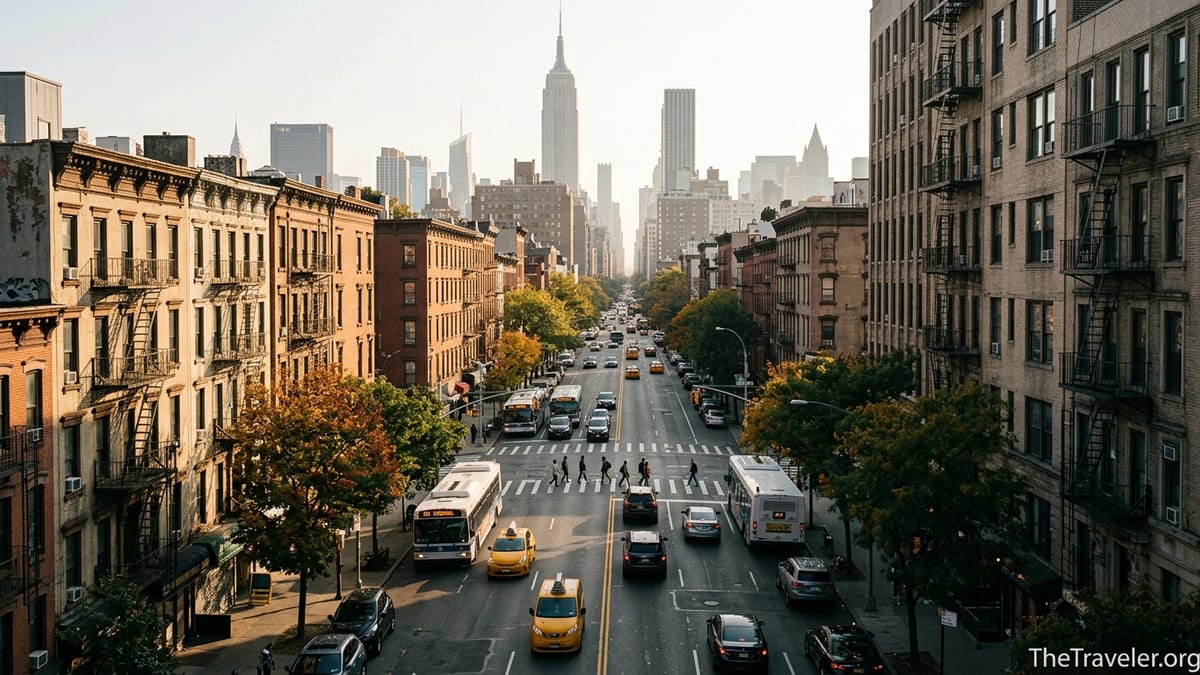
Manhattan is a long, narrow island, just over 13 miles from Inwood at the northern tip down to Battery Park at the southern end. For visitors, the most useful mental map divides it into Downtown (roughly below 14th Street), Midtown (14th to around 59th), and Uptown (above 59th). Major north south avenues are numbered from east to west, with Fifth Avenue as a rough dividing line between the East Side and West Side. Streets mostly run east west and are numbered as you go north, which makes navigating neighborhoods like Midtown, the Upper East Side, and Upper West Side fairly straightforward once you understand the grid.
The main way to move between neighborhoods is the subway. As of early 2026, the base fare on New York City subways and local buses is about 3 dollars per ride when you tap with OMNY, the city’s contactless payment system. You tap a bank card, phone, or OMNY card at the turnstile, and transfers between subway and local buses within about two hours are free. Weekly fare capping means that after roughly a dozen paid rides in seven days, additional rides in that period stop charging, which is useful if you are staying a week and riding multiple times per day.
Yellow cabs and app based cars are easy to find in Midtown, around major hubs like Penn Station and Grand Central, and in popular nightlife zones such as the East Village and Meatpacking District. Even short rides usually start at more than 10 dollars once you add taxes and tips, so many visitors use taxis sparingly, for example to get back to the hotel late at night when trains are less frequent. On the water, NYC Ferry operates routes along the East River linking piers in Midtown and Lower Manhattan with Brooklyn and Queens. A single ferry ride typically costs about the same as a subway ride, and the views of the skyline from the open upper deck are an inexpensive way to experience the harbor.
For one iconic and free boat ride, the Staten Island Ferry departs from Whitehall Terminal at the southern tip of Manhattan and crosses the harbor in roughly 25 minutes each way. Many travelers ride it in the evening to see the Statue of Liberty and the Lower Manhattan skyline without paying for a separate sightseeing cruise. You simply walk on, ride across, disembark in Staten Island, then board the next return boat back to Manhattan.
Downtown Manhattan: History, Harbor Views, and Neighborhood Character
Downtown is where New York City began, and you still feel that history in the narrow, twisting streets around the Financial District. Here you find the New York Stock Exchange, Trinity Church, and the cobbled lanes around Stone Street, which fills with after work crowds at outdoor tables on pleasant evenings. Just north of the financial towers, the 9/11 Memorial and Museum sit beside One World Trade Center. Many visitors spend an hour at the outdoor memorial pools and then another two to three hours inside the museum, where timed tickets usually cost in the range of 30 dollars per adult.
Walk a few blocks northwest and you reach Tribeca, a former warehouse district with cast iron buildings and cobblestone streets that now holds upscale lofts, independent boutiques, and some of the most highly rated restaurants in the city. A typical dinner at a popular Tribeca bistro might see main courses in the 30 to 45 dollar range before drinks, so it is an area where many travelers choose one special night out rather than eating every meal. In contrast, nearby Chinatown remains one of the best places in Manhattan for budget friendly food, with sit down noodle shops and dim sum halls where a filling meal can still come in under 20 dollars per person.
To the northwest of Chinatown, SoHo and Nolita offer a dense mix of fashion boutiques, galleries, and cafes. SoHo’s cast iron facades and cobblestone blocks around Broadway and Prince Street are busy every day, especially on weekends, but if you duck a block or two off the main retail strips you still find quieter corners and smaller designer shops. Nolita, just north of Little Italy, feels more residential, with tree lined streets and intimate wine bars that fill with locals in the evening. If you are staying Downtown, many visitors choose hotels in Tribeca, SoHo, or near the World Trade Center for easy subway access and walkability.
Greenwich Village, the West Village, and the East Village
North of SoHo, the grid breaks down into a maze of angled streets and small blocks in Greenwich Village and the West Village. This is classic postcard Manhattan: brownstone townhouses, leafy residential streets, corner cafes, and small parks. Washington Square Park, with its marble arch, is the hub of Greenwich Village and popular with buskers, chess players, and New York University students. Coffee on a bench here, watching dogs and street musicians, is one of the simplest ways to feel temporarily local.
The West Village, stretching roughly from Seventh Avenue to the Hudson River, skews quieter and more residential. You will find cozy wine bars, tiny bistros, and specialty shops mixed in among townhouses. Dinner for two at a midrange West Village restaurant typically lands around 120 to 160 dollars total once you factor in shared appetizers, main courses, a glass of wine each, tax, and tip. Nearby, the Hudson River Park waterfront offers wide paths where locals jog and cycle, and sunset walks with views across to New Jersey.
On the other side of Broadway, the East Village has a younger, more unpolished energy. Walk along St. Marks Place or around Tompkins Square Park and you pass tattoo studios, record shops, vintage clothing stores, and an array of inexpensive eateries, from ramen counters to Ukrainian diners serving pierogi. A casual meal here can be significantly cheaper than in the West Village, which makes the East Village attractive to travelers watching their budget. Nightlife ranges from tiny basement cocktail bars to long standing music venues, and the streets stay lively well past midnight, especially on weekends.
For accommodation, these Village neighborhoods often sit in the middle price band: usually more expensive than Midtown chain hotels but less than the most exclusive properties near Central Park or in Tribeca. In exchange you get a walkable base surrounded by restaurants and bars, and easy access to multiple subway lines, including the 1, 2, 3 on Seventh Avenue, the A, C, E along Eighth Avenue, and the N, R, W and 6 trains along Broadway and Lafayette.
Midtown and Times Square: Big Icons and Busy Streets
Midtown is the commercial heart of Manhattan and the most common base for first time visitors because of its central location and transport links. Times Square, around 42nd Street and Seventh Avenue, glows with towering digital billboards and is crowded almost around the clock. Hotels in this area are convenient for Broadway theaters and for walking to major landmarks like Rockefeller Center and Bryant Park, though you trade some neighborhood charm for bright lights and heavy foot traffic.
For bird’s eye views of Manhattan, Midtown offers several observation decks. The Empire State Building, near 34th Street and Fifth Avenue, remains the classic choice and usually sells timed tickets in the 40 to 50 dollar range for standard entry to the main deck. Rockefeller Center’s Top of the Rock, and newer decks like Edge at Hudson Yards and Summit at One Vanderbilt, all compete with slightly different angles on the skyline. If you only choose one, consider whether you want to see the Empire State Building in your view, in which case a deck at Rockefeller Center or Hudson Yards is preferable.
Central Midtown also holds cultural heavyweights such as the Museum of Modern Art, where standard adult admission is typically in the mid 20 to 30 dollar range, and the bright art deco interior of Grand Central Terminal. Outside Grand Central on a weekday morning you will see the rush of commuters from the suburbs, and inside the main concourse the famous celestial ceiling, oyster bar, and specialty food market. Bryant Park, behind the main public library on 42nd Street, is a useful place to pause between sights. In summer, locals bring lunch from nearby delis and sit at the moveable chairs; in winter, the park hosts a seasonal ice rink and holiday market.
Eating in Midtown spans everything from dollar slice pizza counters to luxury hotel dining rooms. A typical office worker lunch might be an 11 to 15 dollar salad or sandwich from a fast casual chain, while a pre theater prix fixe menu at a midrange restaurant in the Theater District can run 40 to 70 dollars per person before drinks. For a slightly calmer dining experience, many locals walk a few extra blocks west to Ninth Avenue in Hell’s Kitchen, where independent restaurants line the street offering cuisines from Thai to tapas in a marginally less tourist heavy setting.
Uptown: Central Park, Museums, and Classic Avenues
Above 59th Street, Central Park stretches from the Plaza Hotel area at the southeast corner up to Harlem at 110th Street. The park itself is free and functions as the city’s backyard, with joggers circling the reservoir, families picnicking on the Great Lawn, and street performers gathering near Bethesda Terrace. Bike rentals near the park’s edges can run around 20 to 30 dollars for a couple of hours, though you should stick to the designated cycling loops and avoid riding on pedestrian only paths.
On the east side of the park, Fifth Avenue’s so called Museum Mile includes the Metropolitan Museum of Art, the Guggenheim, and several smaller institutions. The Met uses a suggested admission model for out of town visitors, with standard adult tickets typically in the 30 dollar range, and easily fills an entire rainy day if you are a museum person. On the west side of the park, the American Museum of Natural History draws families with its dinosaur halls and space exhibits. Standard adult admission for timed entry is also usually in the mid 20 to 30 dollar bracket, with separate fees for special shows in the planetarium.
The Upper East Side and Upper West Side feel more residential than Midtown, with tree lined streets, neighborhood cafes, and a calmer pace. The Upper East Side, running roughly from 59th to 96th Street east of Central Park, has a mix of high end boutiques, long standing corner diners, and upscale cocktail bars. To the west of the park, the Upper West Side between Columbus Circle and 96th Street offers prewar apartment buildings, bookstores, and less hurried restaurants. Brunch at a popular Upper West Side spot might run 25 to 35 dollars per person including coffee, which is not cheap but often comes with generous portions.
Farther north, Harlem and Washington Heights showcase Manhattan’s cultural diversity and give a different feel from Midtown or Downtown. In Harlem, around 125th Street, you find historic venues like the Apollo Theater, a growing restaurant scene along Frederick Douglass Boulevard, and soul food institutions where a plate of fried chicken, collard greens, and macaroni and cheese still tends to be more affordable than many Midtown meals. Washington Heights, near the northern end of the island, offers views of the George Washington Bridge and access to Fort Tryon Park and The Met Cloisters, which has a quieter, almost European atmosphere that many visitors appreciate as a break from the dense center of town.
Practical Budgeting and Safety Tips
Manhattan is expensive by any global standard, but you can manage costs with a few tactical decisions. For local transport, using OMNY and aiming for the weekly fare cap is usually cheaper than buying individual single ride paper tickets from station machines, which often have higher per ride prices. A visitor staying seven nights and taking two to three subway rides per day typically reaches the cap in the middle of the week and then rides effectively for free after that. Combining subway and walking is usually the fastest and most economical way to move around, especially during weekday rush hours when crosstown traffic can turn a short taxi ride into a 30 minute crawl.
Food costs add up quickly if every meal is in a sit down restaurant. Many New Yorkers grab breakfast from delis or bakeries where a coffee and bagel can still come in around 6 to 8 dollars. At lunchtime, look for neighborhood spots offering fixed price lunch specials in areas like Koreatown around 32nd Street, or bento box lunch sets at Japanese restaurants, which give good value compared to dinner menus. In the evening, it often makes sense to choose one or two big restaurant dinners during your trip, then keep other nights simpler with slice pizza, ramen, or Chinatown dumplings.
In terms of safety, Manhattan is busy rather than dangerous in most visitor heavy areas. Basic big city habits go a long way: keep valuables out of back pockets, avoid leaving bags unattended in cafes, and be cautious with phones on the edge of subway platforms. At night, main avenues and lively neighborhoods like the Village, Midtown, and parts of Harlem remain active and generally feel safe, though it is sensible to use rideshares or taxis for very late night trips across town or to less familiar areas. If a subway car feels uncomfortably empty late at night, many locals move to the car with the conductor or a busier carriage.
Weather matters more than many short term visitors expect. Summer can be hot and humid, with subway platforms feeling like saunas in July and August, so plan air conditioned museum visits in the mid afternoon and carry water. Winter can be icy and windy, especially along the avenues that funnel gusts between tall buildings. In January and February, locals often favor indoor attractions, neighborhood cafes, and shorter walks linked by subway or bus. Spring and autumn, particularly late April through early June and late September through October, tend to be the most comfortable months for full days of walking and park time.
Local Etiquette and Small Ways to Blend In
New Yorkers move quickly in public spaces, not because they are unfriendly but because the city runs on tight schedules. On subway stairs and escalators, keep to the right if you want to stand and leave room for people to pass on the left. At subway turnstiles, have your OMNY payment ready so you do not hold up the line. When a train arrives, step aside to let people off before you board. These small habits make daily life smoother and help you avoid frustrated sighs from commuters behind you.
In restaurants and bars, tipping norms matter. For sit down service, 18 to 20 percent on the pre tax bill is standard when service is good, and many payment terminals now present suggested tip percentages starting in that range. At counter service cafes, a small tip is appreciated but less expected; dropping a dollar or two into the jar or adding around 10 percent when prompted is common if the staff are friendly. In bars, many locals tip 1 to 2 dollars per drink or around 20 percent on a tab with multiple cocktails.
Noise and personal space expectations differ from many other countries. Conversations at neighboring restaurant tables may be loud but are rarely meant to be intrusive. On the subway, locals appreciate it if you keep phone calls brief and headphones at a reasonable volume. When asking directions, a straightforward “Excuse me, can I ask you something quickly?” usually works better than hovering silently. Most residents will happily point you toward the right subway entrance or cross street as long as you are direct and respectful of their time.
Finally, remember that New Yorkers are used to visitors and to constant change in their neighborhoods. A deli that a guidebook praised last year may now be a different business, and new coffee shops, galleries, and pop ups appear every season. Treat recommendations as starting points rather than fixed rules, and leave room in your schedule for wandering a block or two away from the main drag. Many visitors report that their favorite Manhattan memories come from an unplanned stop: a jazz trio playing in a small bar in Harlem, a sunset in Riverside Park, or a quiet side street in the West Village discovered while walking back to the hotel.
The Takeaway
Manhattan rewards both planning and flexibility. Understanding the basic layout of Downtown, Midtown, and Uptown, plus a handful of key neighborhoods like the Villages, the Upper West Side, and Harlem, makes the city far less intimidating. Building your days around a mix of headline attractions, neighborhood walks, and simple local experiences like riding the subway or grabbing lunch from a corner deli lets you see both the postcard skyline and the everyday city that millions of people call home.
Costs are undeniably high, but current transit options such as OMNY fare capping, along with the wide spectrum of food choices from dollar slices to fine dining, give you room to shape a trip that fits your budget. Safety and etiquette are manageable with a few common sense habits, and the dense network of subways, buses, ferries, and sidewalks means you can cover a lot of ground without ever renting a car. Whether you stay three days or two weeks, Manhattan offers enough layers that you will leave already planning what to explore on your next visit.
FAQ
Q1. How many days do I need to see the main sights in Manhattan?
For a first visit, three full days lets you see major highlights like Times Square, Central Park, the Statue of Liberty area, and one or two museums. If you want to explore neighborhoods in more depth, five to seven days feels more relaxed and allows time for places like the Villages, Harlem, and different corners of Central Park.
Q2. Is it worth staying in Manhattan instead of Brooklyn or Queens?
Staying in Manhattan usually costs more per night, but you gain shorter travel times to many key sights and can often walk between attractions. If your focus is Broadway, museums, and Central Park, a Manhattan base is convenient. If you are comfortable with longer subway rides and want more space for your budget, neighborhoods in Brooklyn or Queens can be good alternatives.
Q3. What is the best way to pay for public transport as a visitor?
Use OMNY by tapping a contactless bank card, phone, or OMNY card at the turnstile. Each subway or local bus ride costs about 3 dollars, and there is a weekly fare cap that stops charging after a set number of rides in seven days. This is usually simpler and better value than buying individual paper tickets, especially if you are riding multiple times per day.
Q4. Are observation decks like the Empire State Building really worth the price?
For many visitors, one paid observation deck is worth the cost as a signature Manhattan experience, especially around sunset when the city lights up. If you are watching your budget, you can still get impressive free views from places like the Brooklyn Bridge, the Staten Island Ferry, and riverside parks, though they will not be as high or panoramic as the paid decks.
Q5. Which Manhattan neighborhood is best for nightlife?
The East Village and Lower East Side are popular for late night bars, live music, and casual eateries that stay open into the early hours. Greenwich Village offers a mix of comedy clubs and jazz bars, while areas around Hell’s Kitchen and the Meatpacking District have more clubs and cocktail lounges. Midtown around Times Square is busy at night but tends to be more tourist focused.
Q6. Is Manhattan safe at night for solo travelers?
Most visitor heavy areas in Manhattan are busy and feel reasonably safe into the evening, especially main avenues and neighborhoods like Midtown, the Villages, and much of Harlem. Use common sense: stick to well lit streets, avoid very deserted blocks late at night, keep valuables out of sight, and consider taxis or rideshares for long cross town trips after midnight.
Q7. How much should I budget per day for food?
On a modest budget using delis, slice pizza, and casual ethnic restaurants, you might manage around 40 to 60 dollars per person per day. A mix of casual lunches and one sit down restaurant dinner each day can easily push that into the 70 to 100 dollar range. High end dining, cocktails, and daily brunch can increase costs significantly.
Q8. Do I need to book attractions and restaurants in advance?
For popular observation decks, the 9/11 Museum, and major museums on weekends or holidays, advance timed tickets reduce waiting and help you plan your day. Broadway shows and top tier restaurants often require reservations, especially for weekend evenings. More casual dining and many neighborhood spots can be visited without bookings, although you may need to be flexible with timing.
Q9. What is the best season to visit Manhattan?
Spring and autumn are generally the most pleasant, with milder temperatures and more comfortable walking weather. Late April through early June and late September through October are especially good for park time and neighborhood exploration. Summer brings long daylight hours but also heat and humidity, while winter can be cold but has the appeal of holiday lights and smaller crowds at some attractions.
Q10. Do I ever need a car in Manhattan?
No, you do not need a car in Manhattan, and driving is usually more hassle than it is worth. Parking is expensive, traffic is heavy, and many streets are better navigated on foot or by subway. If you plan day trips outside the city, you can rent a car just for those days or use regional trains from hubs like Penn Station and Grand Central instead of driving.