


From the brick-red curve of Piazza del Campo to the striped marble of Siena’s Duomo, the view from Torre del Mangia is one of Italy’s great urban panoramas. Yet with timed entries, steep stairs and frequent weather closures, it is surprisingly easy to mistime your visit and miss the best light or even the chance to climb at all. With a little planning, you can turn a simple tower climb into the highlight of your day in Siena.
Get the latest updates straight to your inbox!
Understanding Torre del Mangia and Why Timing Matters
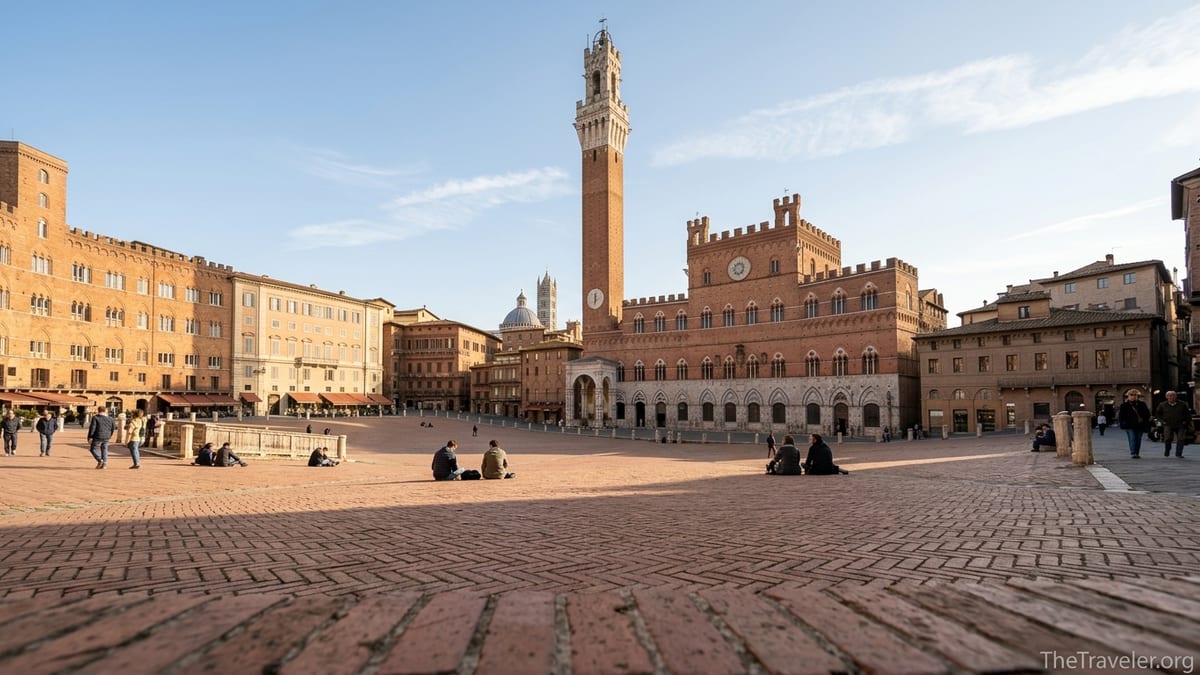
Torre del Mangia rises above Palazzo Pubblico on the lower edge of Piazza del Campo, the shell-shaped central square that anchors Siena’s historic center. Built in the 14th century and standing about 102 meters high, it was designed to match the height of the cathedral bell tower, a symbolic balance between civic and religious power. Today, it doubles as Siena’s most coveted viewpoint, with a tight quota on the number of people allowed up at any one time.
The tower is open on most days of the year, usually from morning through late afternoon, with slightly longer hours in peak season and shorter ones in winter. Entry is by timed ticket, and visitor numbers per slot are capped for safety in the narrow stairwell. On busy summer days and during holiday weekends, mid-morning and mid-afternoon slots can sell out by early afternoon, leaving only late or inconvenient times, or no access at all.
Weather also plays a role. Strong wind, driving rain or thunderstorms can force temporary closures. Local tourism sites note that the tower can close with little notice in bad conditions or for maintenance. This makes flexibility important: if the forecast for your chosen day looks unsettled, treat the climb as your first priority when you arrive in Siena and build the rest of your schedule around whatever slot you manage to secure.
Think of Torre del Mangia as you would a popular museum in Florence: the earlier you plan, the more likely you are to align your climb with great visibility and softer light. Those factors, more than anything else, are what separate a rushed climb in harsh midday sun from a memorable, photograph-ready experience.
Best Times of Day for Unforgettable Views
For most travelers, the best time to climb Torre del Mangia is either in the first hour after opening or in the late afternoon when the Tuscan sun begins to soften. In the morning, the air is usually clearer, especially from September through May, and you will find fewer day-trippers from Florence and the Chianti countryside. The incoming light from the east side of the city paints the red-brick rooftops and the Duomo’s striped façade in a warm, even tone that photographs beautifully without harsh shadows.
Late afternoon, particularly in spring and early autumn, is ideal if you want more drama in your photos and a linger-worthy atmosphere. The sun lowers behind the rolling hills west of Siena, giving you a gentle backlight on the countryside and a golden wash over Piazza del Campo below. In May or late September, for instance, a climb starting around 4:30 or 5:00 p.m. often means you reach the top as the square fills with locals meeting for aperitivo and children playing on the brick slope, providing plenty of life in your viewfinder.
Midday climbs are the easiest to secure on short notice but come with trade-offs. In July or August, the sun is high and intense, flattening the terracotta tones and creating strong contrast between the bright rooftops and shaded streets. The square below can be dazzlingly bright, and haze often builds over the hills, softening distant detail. If your schedule only allows for a midday ascent, consider visiting in shoulder season months like April or October, when the light is gentler and temperatures milder, even around noon.
Night climbs are not typically offered, so you cannot count on sunset or after-dark visits in the same way as some towers in Florence or Venice. If you are keen to combine the view with evening color, aim for the latest slot available that still gives you time to descend before closing, and then plan to linger in Piazza del Campo to watch the sky change over the skyline you just admired from above.
Tickets, Practicalities and Avoiding Common Pitfalls
Access to Torre del Mangia is controlled via timed tickets sold at the ticket office within Palazzo Pubblico, just off Piazza del Campo, and sometimes through combined tickets that include the Civic Museum. Prices for the tower alone are typically in the low double digits in euros for adults, with reduced rates for children and concessions. Families often find that a combined ticket which includes museum access offers better value if they are planning to explore the frescoed council halls inside the palace on the same visit.
Slots are limited, and staff will not allow more visitors into the stairwell than the posted capacity. On quieter winter weekdays, it is often possible to walk up to the desk after breakfast and secure a slot within an hour or two. On busy summer Saturdays or days close to the Palio horse races on July 2 and August 16, climbers report same-day morning slots selling out by lunchtime. If you arrive in Siena by mid-morning on such days, make your first stop the ticket office, even before coffee, and be ready to accept a slightly later time if your preferred one is gone.
There are about 400 steps to the top, and there is no lift. The stairs are steep, narrow and at times enclosed, with occasional passing points where ascending and descending visitors squeeze past one another. Those with severe claustrophobia, heart conditions, or mobility issues may find the climb challenging or unsuitable. Children are allowed, but very young kids may tire quickly or find the staircase intimidating, especially near the top where it tightens inside the tower’s upper section.
A common mistake is underestimating the climb, especially in hot weather. In July and August, the interior of the tower can feel warm and airless. Wear light clothing and sturdy shoes rather than sandals with slippery soles. A small bottle of water is usually allowed, but large backpacks may be refused or asked to be left in a locker or at the base. Give yourself at least an hour from your entry time to ascend, enjoy the view and descend without rushing, particularly if you are coordinating with train or bus departures later in the day.
What You Will See from the Top and How to Frame It
The viewing platform at the top of Torre del Mangia is relatively compact, enclosed by a protective railing. From here, Siena opens in all directions. Directly below you is Piazza del Campo, its famous shell pattern of red bricks and white travertine radiating outward like a fan. On non-Palio days, you will see locals crossing the square diagonally, small groups lounging on the slope and the occasional delivery van circling the perimeter road.
Looking north, the striped Gothic bulk of the Duomo rises prominently, its white and greenish-black marble catching the light. Beyond the cathedral, the city’s outer walls blur into the soft hills of central Tuscany. On clear days, especially in late autumn and winter when the air is crisp, you can pick out individual farmhouses and cypress-lined lanes snaking across the countryside. On the eastern side, red-tiled rooftops cascade down towards the lower districts, giving a strong sense of Siena’s medieval street pattern.
For photography, a general-purpose zoom lens in the 24–70 mm range on a full-frame camera works well, or the main lens on most modern smartphones. Wider compositions around 24–28 mm capture the full curve of Piazza del Campo, while tighter framing at the longer end lets you isolate the Duomo and the distant hills. If you prefer to travel light and shoot with a phone, use the standard lens rather than the ultra-wide for more natural proportions and less distortion along the edges.
Consider alternating between classic skyline shots and more intimate details. For example, one traveler climbing in early October might first photograph the whole square from above, then zoom in on the brick textures of Palazzo Pubblico’s façade or the play of light on laundry lines strung between nearby apartment windows. That mix of broad context and small details will better capture the atmosphere than dozens of nearly identical wide shots.
Seasonal Considerations and Visiting Around the Palio
Siena is a year-round destination, but seasons significantly shape the experience of climbing Torre del Mangia. Spring, from late March into May, brings wildflowers to the surrounding hills and mild temperatures that make the climb more comfortable. Views are often clear, with soft light and longer days, making it easy to fit a morning or late-afternoon ascent into a broader itinerary that might also include the Duomo complex and a leisurely lunch on a side street off Via di Città.
Summer, especially from mid-June to late August, is the busiest period. Day-trippers from Florence arrive by bus and train, tour groups flood the square and queues at the ticket office grow longer. Heat and humidity intensify the physical effort of the climb, and afternoon thunderstorms are more frequent, increasing the risk of short-notice weather closures. If you visit in this window, booking accommodation inside the old town allows you to claim early morning time slots before the bulk of the crowds arrive from elsewhere in Tuscany.
Two summer dates need special mention: July 2 and August 16, when the Palio horse race is held in Piazza del Campo. In the days immediately before each race, workers spread a clay track around the edge of the square, and contrade (districts) stage elaborate ceremonies. Access to certain buildings, including the tower, can be adjusted for safety and logistics, and the piazza may look very different from the classic postcard scene. For some travelers, seeing the square prepared for the Palio from above is an unforgettable bonus. Others hoping for a calmer visit might prefer to avoid those dates and the days directly around them.
Autumn rewards visitors with softer light, harvest colors and generally clearer skies. In late September and October, you might climb in a light jacket, find manageable queues and enjoy long views over vineyards turning rust and gold. Winter can be quieter still, especially on weekdays, though do check for slightly reduced opening hours and be prepared for colder winds at the top of the tower. A bright, cool January afternoon with crisp air can deliver some of the sharpest vistas, even if you need gloves for the railing.
Pairing the Tower With Other Viewpoints in Siena
Even the best tower climb benefits from context. Siena offers several complementary viewpoints at street level and from other heights that help you appreciate what you have seen from Torre del Mangia. After your descent, spend time in Piazza del Campo itself. Sit on the brick slope facing Palazzo Pubblico and look back up at the tower you just climbed. The shift from bird’s-eye view to ground-level immersion will help anchor your mental map of the city.
A short walk uphill takes you towards the cathedral complex. One of the most rewarding follow-up viewpoints is from the area around the Facciatone, the massive unfinished nave of Siena’s planned “New Cathedral.” When open, its own viewing terrace offers a different angle over the city, placing Torre del Mangia as one element within a broader skyline that includes the cathedral dome and the surrounding hills. Even from the streets below, near Piazza del Duomo, you can capture strong compositions with the tower rising beyond striped marble, a juxtaposition that underlines Siena’s blend of civic and religious architecture.
For a more distant panorama, locals often recommend walking to the Fortezza Medicea, a 16th-century brick fortress that now hosts gardens and an open-air walkway. From its ramparts, you see Siena spread out on its hill, with Torre del Mangia poking above the roofline. This view is especially good in late afternoon or just before dusk, and it is free, making it a relaxed complement to your ticketed climb.
If you are staying overnight, consider revisiting Piazza del Campo after dark. While you cannot climb the tower in the evening, watching its illuminated crown stand over the softly lit square gives you a final, grounded sense of place. Many travelers describe this combination of perspectives from above by day and from within at night as what finally makes Siena lodge in memory long after the trip ends.
Practical Tips for Comfort, Safety and Photography
A bit of preparation will help you enjoy the climb rather than endure it. Wear closed-toe shoes with good grip, as the stone and brick steps can be worn smooth in places. In hotter months, light breathable clothing and a sun hat that you can remove easily at the top are useful, since the viewing platform is exposed. Even in cooler seasons, consider bringing a light layer; the wind at the top often feels stronger than at street level, particularly in late autumn and winter.
If you are carrying a camera, attach a wrist strap or neck strap before starting your ascent. The stairwell is narrow and often requires you to steady yourself with one hand on the central column or wall while letting others pass. Switching lenses mid-climb is awkward, so choose one versatile option at the base and stick with it. For smartphones, ensure your battery is well charged and consider enabling a simple grid overlay in your camera settings to help keep horizons straight when capturing the wide sweep of rooftops.
Families should talk through the climb before committing, especially with younger children. Explain that the staircase is narrow, that you must keep moving at a slow but steady pace, and that running or jumping could be dangerous. Parents often find it easiest to position an adult at the front and back of their group so no child ends up squeezed between strangers when people pass on the stairs. If anyone in your party begins to feel unwell or anxious, do not hesitate to pause at one of the small landings and let others go by until you are ready to continue.
Finally, think about how you want to experience the view itself. It can be tempting to step onto the platform and immediately start shooting. Instead, give yourself a minute to stand still, breathe, and trace the lines of the city with your eyes. Identify landmarks such as the Duomo, the fortress and the city gates. Once you have oriented yourself, your photos will be more intentional, and you will likely come away with fewer but more meaningful images that truly reflect the character of Siena from above.
The Takeaway
Visiting Torre del Mangia is not just another box to tick on a Tuscan itinerary. Climbed at the right time of day, in the right season and with realistic expectations of the effort involved, it becomes an intimate encounter with one of Italy’s best-preserved medieval cities. From the top, you see how Siena’s streets coil around Piazza del Campo and how the countryside presses close against its walls; from below, you feel the weight of centuries in the brick under your feet.
By prioritizing your ticket early, choosing morning or late afternoon light, dressing comfortably and pairing the tower with other viewpoints like the cathedral area and Fortezza Medicea, you can ensure that you do not simply visit the tower but truly experience Siena in three dimensions. Plan ahead, climb slowly, look carefully, and the views from Torre del Mangia will linger in your memory long after your time in Tuscany has ended.
FAQ
Q1. How many steps are there in Torre del Mangia and how difficult is the climb?
The climb involves roughly 400 steep, narrow steps with no lift. Most reasonably fit visitors manage it with pauses, but it can be demanding in hot weather or for those with heart, mobility or breathing issues.
Q2. Do I need to book tickets for Torre del Mangia in advance?
Tickets are often sold on a same-day timed-entry basis at Palazzo Pubblico, but in busy periods slots can sell out by early afternoon. It is wise to secure your preferred time as soon as you arrive in Siena and to check whether any combined tickets or advance booking options are available during your travel dates.
Q3. What is the best time of day to climb for great photos?
Early morning and late afternoon usually offer the best light and clearer air. Morning gives even illumination and fewer crowds, while late afternoon can provide warm, golden tones over Piazza del Campo and the surrounding hills.
Q4. Is Torre del Mangia suitable for children?
Older children who are comfortable with heights and stairs usually cope well, but the narrow staircase and exposure at the top can intimidate younger kids. Parents should assess their child’s stamina and comfort with confined spaces and be prepared to supervise closely throughout the climb and descent.
Q5. Can the tower close because of weather?
Yes. Strong winds, heavy rain or thunderstorms can lead to temporary closures or delayed entry for safety reasons. If the forecast is unsettled, aim to climb earlier in the day and be prepared to adjust your schedule if staff suspend access.
Q6. Are there any restrictions on bags or clothing?
Large backpacks are discouraged and may need to be left at the base, as they make passing on the stairs difficult. Wear comfortable shoes with good grip, and in summer choose light clothing, since the tower interior can feel warm and airless during the climb.
Q7. How long should I allow for a visit to Torre del Mangia?
Plan for about an hour from your entry time, which includes the climb up, time on the viewing platform and the descent. If you like to take many photos or travel with children, allowing up to 90 minutes offers a more relaxed pace.
Q8. Can I visit Torre del Mangia the same day as the Duomo and other sights?
Yes. Many travelers climb the tower in the morning, visit the Duomo complex and its museums around midday, then explore other viewpoints like Fortezza Medicea later in the afternoon. With thoughtful planning, all can comfortably fit into a full day in Siena.
Q9. What should I do if I am prone to claustrophobia or vertigo?
If confined spaces or heights trouble you, the stairwell and exposed viewing platform may feel challenging. Consider trying a shorter tower or another city viewpoint first, such as the terraces around the Duomo or the ramparts of Fortezza Medicea, before deciding whether to attempt Torre del Mangia.
Q10. Are there good alternative viewpoints if I cannot climb the tower?
Yes. The area around the cathedral, the terrace of the Facciatone when open, and the walls of Fortezza Medicea all offer impressive panoramas of Siena with Torre del Mangia in the skyline. These options provide excellent views with far less exertion and are accessible to a wider range of visitors.