


Few Italian cities deliver a first impression as powerful as Siena. Walk just a few minutes through its medieval streets and two silhouettes begin to dominate everything: the striped bulk of the Siena Cathedral and the slender, brick shaft of the Torre del Mangia. Both are icons, both are unforgettable, and both compete for your limited time and budget. Which one actually leaves the bigger impression when you experience them in person?
Get the latest updates straight to your inbox!
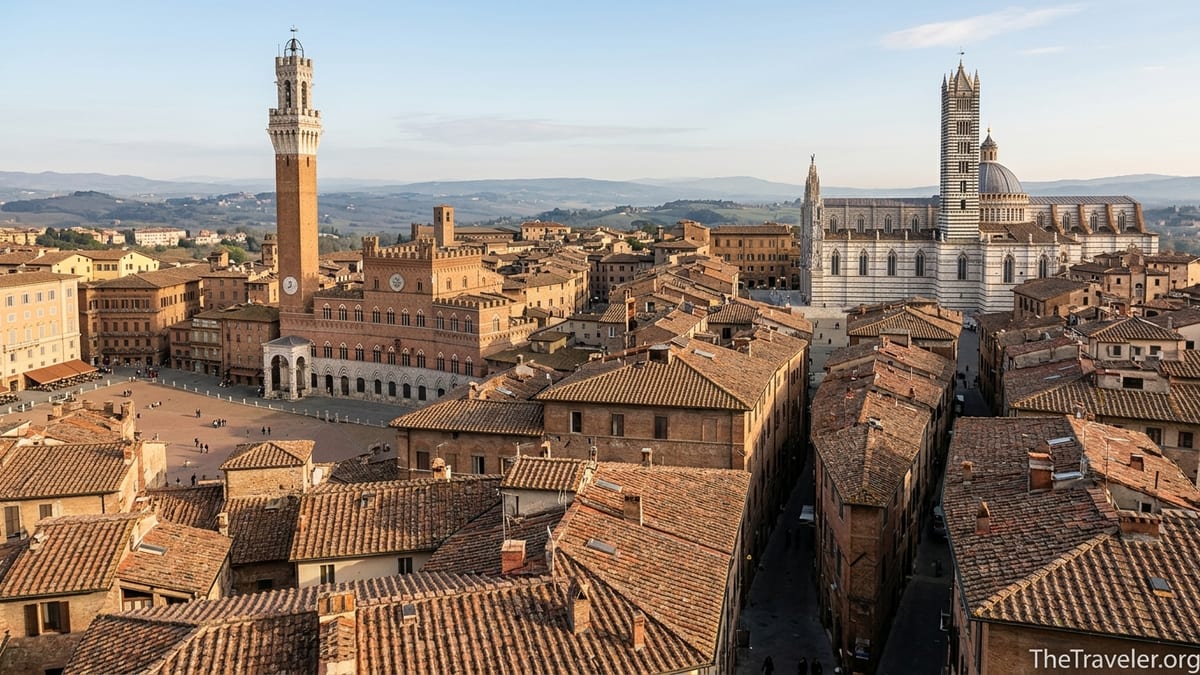
First Impressions: Skyline Icons With Different Personalities
Approaching Siena’s historic center, the two landmarks announce themselves long before you reach them. The Torre del Mangia rises from Piazza del Campo, a 14th century civic tower attached to the Palazzo Pubblico, its warm brick visible from almost anywhere in town. The Siena Cathedral, or Duomo di Santa Maria Assunta, sits on higher ground, a black and white striped Romano-Gothic mass crowned with a dome and a lace-like marble facade.
They feel very different at street level. Standing in Piazza del Campo, the Torre del Mangia soars directly above you, almost sheer, with a belfry that seems to hover over the fan-shaped square. The tower is about 102 meters tall, one of the tallest secular towers of its era, and it dominates the civic heart of Siena. A first-time visitor stepping into the Campo on a warm afternoon often finds their eyes pulled immediately up its brick shaft before taking in the cafes and the gently sloping square below.
The cathedral’s impact works another way. Turning into Piazza del Duomo, you are suddenly in front of an explosion of white, green and pink marble; rows of carved prophets and saints; and a large rose window set into a richly sculpted facade completed in the 13th and 14th centuries. Inside, alternating black and white marble bands wrap the columns and walls, mirrors of the city’s heraldic colors. Many travelers who have already visited Florence or Pisa still describe Siena’s Duomo as the most dramatic cathedral interior they see in Italy.
In practical terms, you could walk between these two landmarks in under ten minutes, but emotionally they inhabit different worlds. The Torre del Mangia is about height, air and the sweep of the Tuscan landscape. The cathedral is about density of detail, color and craftsmanship. Deciding which leaves a deeper impression often comes down to which kind of intensity speaks more strongly to you.
Views vs. Visual Overload: What You Actually Experience
Climbing the Torre del Mangia is a physical experience. Expect more than 300 narrow stone steps, with tight turns and low ceilings. In peak season the climb is usually regulated in timed groups, and you may have to wait for an available slot, particularly in late morning and at sunset. The ascent takes roughly 10 to 15 minutes if you keep a steady pace, and there are a few small landings where you can pause and let faster climbers pass.
The payoff is an open-air panoramic terrace that wraps around the tower just below the bell chamber. From here, Siena unfurls like a model town: the shell-shaped Piazza del Campo directly below; the Duomo’s striped mass and dome off to one side; the tangle of terracotta rooftops; and beyond them rolling Tuscan hills, the Chianti countryside, and on very clear days the outline of Monte Amiata in the distance. On a bright afternoon the light bounces off the brick and stone, while evening visits can offer soft pastel skies and long shadows stretching across the fields.
The cathedral’s impact is less about a single view and more about successive visual shocks. Once inside, your eyes move from the starry blue ceiling of the dome to the inlaid marble floor, where scenes in stone range from biblical stories to allegories like the famous Mount of Wisdom mosaic. Sculptures by artists such as Michelangelo and Bernini stand in chapels along the aisles. Step into the Piccolomini Library and every surface bursts into color, with Renaissance frescoes by Pinturicchio and his workshop and richly decorated vaulted ceilings above illuminated choir books.
Many visitors emerge from the tower with a single, unforgettable memory: the wind and the 360-degree horizon. In contrast, people often leave the cathedral with a blur of richly layered impressions: a fragment of a fresco, a carved doorway, the feel of thick striped columns marching down the nave. If you tend to be moved by landscapes and cityscapes, the Torre del Mangia usually wins. If you respond more to art and architectural detail, the Duomo’s interior can be overwhelming in the best possible way.
Time, Tickets and Practical Logistics
If you only have one full day in Siena, logistics will play a role in what leaves a stronger impression. Both sites now use ticketing systems that try to manage heavy demand, especially between late spring and early autumn. Prices can change seasonally, but as a rough guide expect to pay a mid-range museum price for each, rather than a token church donation.
The Torre del Mangia is operated as a separate attraction from the Palazzo Pubblico museum. Tickets are typically sold for specific time slots, with visitor numbers limited for safety inside the staircase. In high season, afternoon and sunset slots can sell out hours in advance. A realistic visit, including buying the ticket, waiting for your time and doing the climb, often takes between 60 and 90 minutes. If you are traveling with young children, note that there may be age or height restrictions for the climb, and the tight passageways can feel claustrophobic for some adults.
The Siena Cathedral is part of a larger Duomo complex that usually offers several ticket options: a simple cathedral-only ticket, and one or more combined passes that can include the Piccolomini Library, Baptistery, Crypt, Museo dell’Opera and the panoramic terrace known as the Facciatone. Combined passes typically cost more than a single-entry tower ticket but can easily fill half a day if you explore fully. The Duomo floor, one of its most famous features, is often covered most of the year to protect the inlays and is uncovered only during specific periods, usually late summer into autumn, which can affect what you actually see.
If your schedule is tight, the tower climb is a compact commitment that delivers a clear reward. The Duomo complex rewards slower travel; rushing through in 30 minutes tends to dull its impact. From a practical perspective, travelers who pre-book a Duomo complex pass and then add the tower on a flexible schedule often come away feeling they have fully “seen” Siena.
Atmosphere and Emotion: Civic Pride vs Sacred Drama
Emotionally, the Torre del Mangia and the cathedral speak to different sides of Siena’s identity. The tower belongs to the civic world. Rising from the Palazzo Pubblico, it looks down on Piazza del Campo, where the famous Palio horse races are run each summer. Stand under the arches at the base of the tower early in the morning, when the cafes are just setting out chairs, and the square feels like a stage that has not yet filled with its actors. On race days, the balconies and windows facing the square are packed, and the tower becomes part of the choreography of flags, drums and horses.
The mood at the top of the tower, however, is often surprisingly quiet. Because group numbers are limited, you may share the terrace with only a dozen or so people. Much of the talking dies away as visitors simply lean on the low brick wall, watch the breeze move over the hills and listen to the muffled sound of the city below. Many travelers remember this contrast between the busy Campo and the relative stillness of the summit almost as much as the view.
The cathedral, by contrast, carries a ceremonial and devotional atmosphere, even for non-religious visitors. Entering from the bright Tuscan sun into the cool interior, you step into a space designed to inspire awe. During services, the choir and organ fill the nave with sound, and even on regular visiting days there is a low murmur of voices in different languages that underscores the international pull of this building. Details like the golden stars on the blue dome or the carved pulpits and altars create a layered sense of history and belief.
For some visitors, this sacred drama leaves a deeper mark than any viewpoint. A traveler who has climbed towers in Florence, Lucca and San Gimignano might find the Torre del Mangia beautiful but familiar, while they feel the Siena Duomo interior is unlike any other church they have seen. Others, especially those who feel crowded by intense interiors or who visit on a particularly busy day, may find relief and emotional release in the simple act of stepping out into the wind on the tower terrace.
Accessibility, Comfort and Crowd Management
Physical comfort can have a major influence on how you remember a place. The Torre del Mangia involves a sustained climb on narrow, uneven steps with limited passing space. In summer, even with stone walls, the staircase can grow warm and humid. If you have mobility issues, vertigo or a strong fear of heights, the climb may be either impossible or more stressful than enjoyable. There are also brief sections near the top where you walk on metal gratings, which some visitors find unnerving.
In practical terms, wear light, breathable clothing and comfortable closed shoes for the tower. Avoid large backpacks that could make squeezing past others difficult. Morning climbs are often cooler and slightly less crowded than late afternoon, and on windy or rainy days, the terrace can feel very exposed, with weather adding to the intensity of the experience.
The cathedral is far more accessible. There are still steps and uneven floors, but no long, confined staircases. Visitors who cannot manage the entire Duomo complex can usually at least enjoy the main nave and some side chapels. That said, the interior can become very busy in the middle of the day, especially when tour groups arrive in waves. During peak times you may find yourself shuffling slowly along crowded aisles, which can distract from the building’s impact if you are sensitive to noise or prefer quiet contemplation.
Families with young children often report that the Duomo holds their kids’ attention longer, thanks to colorful frescoes and dramatic sculptures, while the tower climb may be more challenging or restricted for smaller ages. Older travelers who prefer to avoid strenuous climbs but still want a panoramic view sometimes choose the Facciatone terrace at the Duomo museum as a more manageable alternative, combining a taste of height with easier access and railings that feel less exposed.
Budget, Value and How Each Fits Into a Day in Siena
For most visitors, ticket prices to both the Torre del Mangia and the Duomo complex fall within a similar range to other major Italian attractions, but how you feel about value often depends on how you plan your day. A tower ticket buys a single, intense experience of about an hour, centered around the climb and the few minutes you spend on the terrace. There is no museum attached to the tower; once you descend, the experience is complete.
The Duomo complex, by contrast, can consume a significant part of your day, especially if you purchase a pass that includes the museum, crypt, baptistery and viewpoint. If you enjoy art, history and architecture, this can feel like exceptional value, giving you access to multiple spaces, each with its own character. For example, spending an hour inside the Piccolomini Library alone, studying the fresco cycle and illuminated manuscripts, is entirely possible for art lovers, while others might prefer a quicker photo-oriented visit.
One practical way to balance cost and impact is to prioritize one “deep dive” and one “highlight” experience. Many travelers choose a Duomo complex pass as their main cultural investment for the day, then add the Torre del Mangia as a shorter, splash-out treat if time and budget allow. Others reverse the equation: focusing on the emotional high of the tower climb and enjoying the cathedral’s exterior and piazza for free without going inside, especially if they are visiting several other churches in Tuscany on the same trip.
Dining and pacing also matter. It is common to climb the Torre del Mangia either just before or just after a leisurely lunch on Piazza del Campo, using the view to orient yourself and then rewarding your effort with a plate of pici pasta and a glass of local Chianti. The cathedral often fits best into the cooler morning or late afternoon, when the sun is less harsh and the marble facade photographs more softly. Structuring your day around these rhythms can make each experience feel more memorable and less rushed.
The Takeaway: Which Landmark Leaves the Bigger Impression?
When travelers compare notes after a day in Siena, patterns emerge. People who are strongly moved by art, architecture and sacred spaces almost always name the cathedral as the highlight. They talk about the shock of entering the striped interior, the saturated color of the Piccolomini Library, and the sense of walking through a living museum where every surface tells a story. For them, the Duomo is not just another church; it is the place where Siena’s ambition, faith and artistic talent crystallize most vividly.
Those who thrive on viewpoints, photography and a sense of physical accomplishment often hold up the Torre del Mangia as their most powerful memory. They recall the narrow climb, the surprise of stepping out into open air, and the feeling of seeing not just Siena but a whole swath of Tuscany at once. In travel journals and photo collections, the tower’s panorama frequently becomes the image that defines the trip.
If forced to choose a single site that offers the deepest and most varied impression of Siena, the cathedral probably edges ahead. It encapsulates more aspects of the city at once: religious devotion, artistic innovation, political history and even its rivalry with Florence. However, that verdict comes with an important caveat. The emotional experience of Siena feels incomplete without, at some point, looking down on the Campo and the Duomo from above. In other words, the cathedral may win on depth, but the Torre del Mangia can deliver the more visceral, immediate jolt.
For many visitors, the ideal solution is not choosing at all. Start your day by walking into the Duomo, taking time to absorb the interior and the Piccolomini Library. Later, climb the Torre del Mangia near golden hour, using what you have already seen at ground level to read the city from above. Together, the two landmarks create a dialogue between earth and sky, art and landscape, that leaves an impression far greater than either could alone.
FAQ
Q1. If I have time for only one, should I visit the Torre del Mangia or the Siena Cathedral?
If you must choose, the Siena Cathedral generally offers the richer overall experience, with its dramatic interior, artworks and access to parts of the broader Duomo complex.
Q2. How long does it take to climb the Torre del Mangia and enjoy the view?
Plan on about 60 to 90 minutes total, including buying or collecting your ticket, waiting for your time slot, climbing the more than 300 steps and spending time on the terrace.
Q3. Is the Torre del Mangia climb suitable for people with a fear of heights or claustrophobia?
The narrow staircases, confined spaces and exposed feeling at the top can be challenging if you dislike heights or tight areas, so in that case the cathedral is usually a more comfortable choice.
Q4. Can I see great views of Siena without climbing the Torre del Mangia?
Yes, the Facciatone terrace in the Duomo museum and several viewpoints on the city walls and nearby hills offer wide views with easier access and fewer steps than the tower.
Q5. Do I need to book tickets in advance for either attraction?
In busy months it is wise to reserve timed tickets for both the Torre del Mangia and the Duomo complex, especially if you want specific times or are visiting on weekends or holidays.
Q6. When is the best time of day to visit the Siena Cathedral to avoid crowds?
Early morning just after opening and late afternoon before closing are usually quieter than midday, when large tour groups often arrive and move through the nave together.
Q7. Is there a dress code for visiting the Siena Cathedral?
Yes, as an active place of worship, visitors are expected to dress modestly, with shoulders and knees covered, and hats removed inside the church.
Q8. Are children allowed to climb the Torre del Mangia?
Children are generally allowed but may face age or height restrictions, and families should consider whether the long, narrow staircase and exposed terrace will be comfortable for them.
Q9. Can I visit both the Torre del Mangia and the Siena Cathedral in a single day trip?
Yes, many travelers comfortably visit both in one day, often combining a morning at the Duomo complex with an afternoon or early evening climb of the Torre del Mangia.
Q10. Which landmark is better for photography, the tower or the cathedral?
The tower delivers sweeping landscapes and skyline shots, while the cathedral offers richly detailed interior and facade photos; serious photographers usually find both essential.