


More news on this day
As global risk levels shift from wildfires to armed conflicts, government “do not travel” warnings are becoming a critical but often misunderstood trigger in travel insurance policies, sometimes cutting off coverage long before airlines ground flights or tour operators cancel departures.
Get the latest news straight to your inbox!
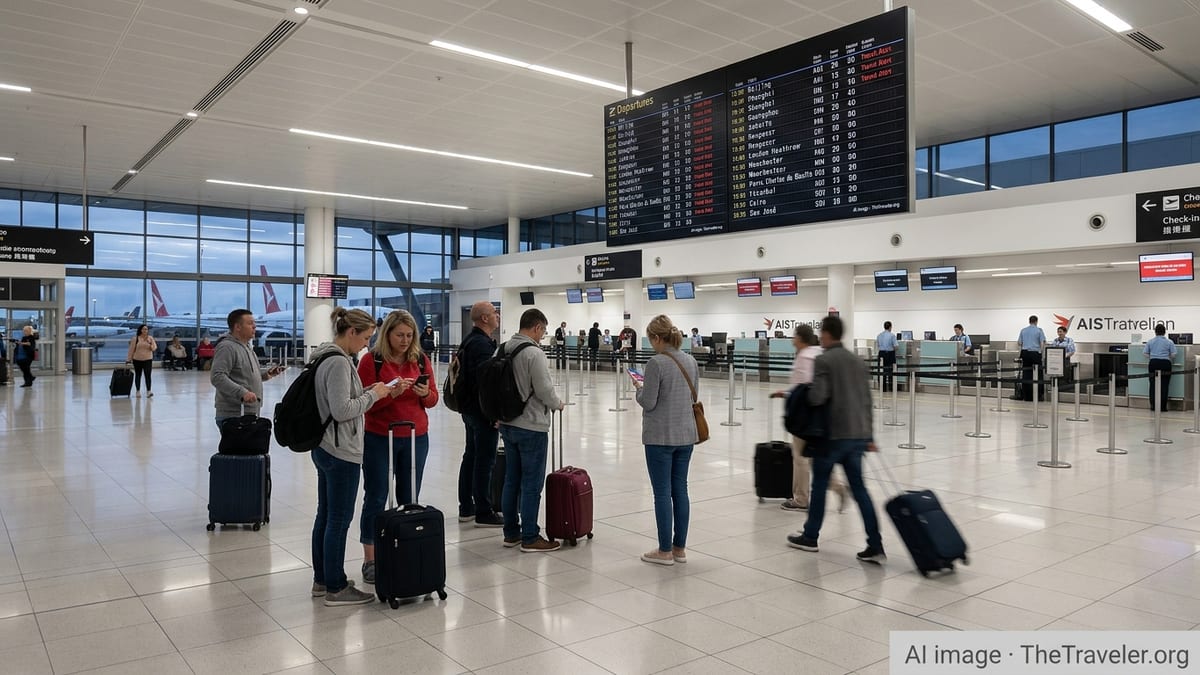
When Government Warnings Collide With Insurance Fine Print
Across major travel markets, publicly available guidance shows that travel insurers increasingly peg their coverage to official advisories, rather than airline schedules. In the United Kingdom, government advice notes that many policies will not cover trips to destinations where the Foreign, Commonwealth & Development Office, or FCDO, has advised against all or all but essential travel, particularly for high-risk destinations. Insurers may refuse emergency medical, cancellation, or disruption claims if a traveler chooses to go regardless of that warning.
Canadian federal guidance offers similar cautions. Information published on Travel.gc.ca explains that insurers use the government’s four-level advisory scale, and that a Level 3 “avoid non-essential travel” or Level 4 “avoid all travel” notice can limit products and coverage. Insurers may decline to pay medical claims or trip cancellation costs for travelers who booked or departed after those stronger advisories were already in place.
In practice, this means a destination can still appear open for business, with airlines operating and hotels accepting guests, while parts of a traveler’s policy are already void. Travelers who only look at flight status boards or tour operator updates can assume they are covered, only to discover later that the decisive date was when a government advisory changed, not when carriers stopped flying.
Some insurers go further, building advisory triggers directly into their exclusions. Policy booklets for several UK and Canadian products state that no cover is available for trips to any country or region under a formal government “avoid all travel” or similar notice, unless a specific extension has been purchased. That approach effectively turns the advisory into an automatic off switch for standard leisure cover.
Advisories That Can Void Cover Before You Book Or Depart
Government travel advice can affect insurance even before a traveler presses the purchase button. Canadian advisory explanations warn that if an “avoid non-essential travel” or “avoid all travel” notice is already in place at the time of booking, insurance bought afterwards may be limited or denied for risks tied to that advisory. The restriction can apply to both medical and cancellation benefits, depending on the wording of the policy.
In the UK, guidance for foreign travel insurance stresses that high-risk destinations are often excluded from standard cover when the FCDO advises against all or all but essential travel. Comparison sites and insurer FAQ pages reiterate that travelers who head to such destinations without specialist policies may find that not only cancellations but also emergency medical treatment, evacuation and repatriation costs are not reimbursed.
Some policies draw a line between pre-existing and newly issued warnings. Documents associated with Canadian group and student policies, for example, indicate that if an official advisory comes into effect after a traveler has already arrived, coverage for emergencies related to that advisory can continue, but for a strictly limited period, such as 30 days from the date the warning was issued. After that, only unrelated medical issues may remain covered.
University and corporate travel policies in the UK similarly tie cancellation rights to changes in FCDO advice after booking. Publicly available guidance from institutional insurers states that travelers may claim for cancellation when a new “advise against all travel” or “advise against all but essential travel” notice is issued for their destination, provided that advice was not in place when the trip was arranged. If the advice was already active, the same policies may offer no cancellation benefit.
Why Airlines Keep Flying When Insurers Step Back
The disconnect that surprises many travelers is that airlines and tour operators do not always react to government advisories as quickly as insurers do. Carriers assess operational risk and demand differently, and they may choose to maintain limited service even when a foreign ministry labels a destination as “avoid non-essential travel.” As long as local airports remain open and airspace is not restricted, some flights continue.
Insurance, by contrast, is framed around financial exposure and clearly defined triggers. Industry commentary, including consumer research from UK organizations, notes that many policies use FCDO advisories as a hard reference point for what is and is not covered. Once a government labels a destination too risky, insurers often see little commercial reason to keep paying for avoidable claims, even if planes are still taking off.
Travelers can find themselves in a tight spot when airlines decline to cancel a flight after an advisory change. With aircraft still operating, standard fare rules may treat the ticket as nonrefundable, and insurers may regard the traveler’s decision not to go as a voluntary choice rather than an insured risk. Unless a policy includes a specific government-advisory or “cancel for any reason” benefit, trip costs can become a personal loss.
This divergence became clearer during the pandemic and in more recent geopolitical crises. While some carriers temporarily halted services, others maintained skeleton routes, and advisory-sensitive policies drew sharp distinctions between bookings made before and after government warnings. The pattern continues in newer conflicts and in regions affected by civil unrest, where flights remain on sale even as insurance exclusions quietly expand.
How Different Countries Tie Policies To Their Own Warnings
One complication for international travelers is that insurers often anchor exclusions to advisories issued by the traveler’s home government, not the destination. Canadian policy wordings commonly refer to the Government of Canada’s Travel Advice and Advisories scale, which covers about 230 locations and distinguishes between exercises of “normal precautions” and strong “avoid all travel” warnings. Where a Level 3 or Level 4 notice exists, companies may alter or withdraw benefits linked to the specified risks.
In the UK, insurer documentation and consumer guidance show that the FCDO’s country pages are a central reference. Policies may state explicitly that cover is invalid if a traveler goes to an area where the FCDO advises against all or all but essential travel. Some products offer additional extensions that allow travel against that advice, but often exclude any claim that arises from the very risk that prompted the government warning.
United States travelers face a similar landscape, although wording varies more widely by company. Many American policies refer broadly to “official advisories” or “Level 4” warnings from the State Department. Publicly available explanations from brokers and risk specialists highlight that underwriters can decline claims connected to destinations listed as “Do Not Travel,” particularly where wars, terrorism or government-imposed travel bans are involved.
Even within a single region, coverage can change as advisories are updated. Canadian travel insurance guidance points out that a shift from a lower advisory level to “avoid all travel” may trigger new exclusions or time limits on existing protection. Meanwhile, UK committee papers note that when the FCDO relaxed its pandemic-related advice for many destinations, it allowed insurers to resume offering broader cover, underscoring how closely policy design tracks government risk assessments.
Practical Steps For Travelers Caught Between Warnings And Flights
Public consumer guidance across several countries converges on one key recommendation: check official travel advisories before booking, before purchasing insurance, and again shortly before departure. Government sites for Canada and the UK both urge travelers to monitor advice pages and sign up for alerts, explaining that changes could directly affect insurance coverage and the availability of assistance services.
Insurer FAQs add another layer of detail. Some providers specify that while most benefits, such as baggage or accidental death coverage, may continue under certain advisories, others, like trip cancellation, interruption or emergency medical costs linked to the advisory risk, can be restricted or excluded. Reading the sections that deal with “travel advisories,” “government warnings” and “war or civil unrest” is essential to understanding where protection may stop.
Travelers looking for more flexibility can seek policies that explicitly address government advisories or offer cancel-for-any-reason options, though publicly available information makes clear that such products can be significantly more expensive and may still exclude some high-risk scenarios. In many cases, travelers are advised that if they choose to proceed to a destination against a strong advisory, they should be prepared to self-insure for at least part of their medical and evacuation costs.
The widening gap between what airlines are willing to operate and what insurers are willing to cover means that the most important travel document may no longer be a boarding pass, but the fine print in an insurance schedule cross-checked against the latest government travel warnings.