


More news on this day
Thailand has urged its citizens to exercise caution when traveling to Belgium, becoming the latest country to highlight unrest in the European state as protests, strikes and sporadic transport disruption focus international attention on Brussels.
Get the latest news straight to your inbox!
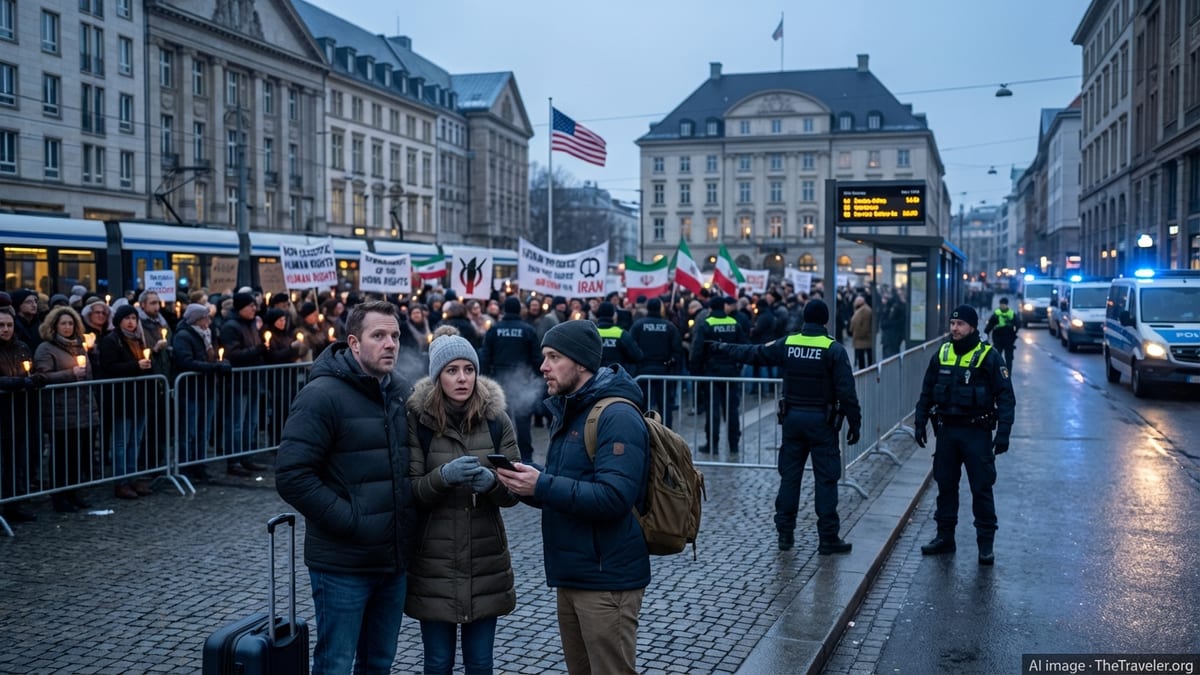
Thai advisory singles out European protest flashpoints
According to reporting from Thai and European media on 19 October 2026, Thailand’s foreign ministry issued a notice advising Thai nationals to be vigilant when visiting four European countries experiencing protests, including Belgium. The message, framed as a warning rather than a prohibition, urged travelers to monitor local news, avoid large gatherings and register contact details with Thai diplomatic missions in Europe.
Coverage in Thai outlets indicates that officials in Bangkok expressed particular concern about images of violent clashes in parts of France, while grouping Belgium with other states where demonstrations over social and economic issues have intensified in recent weeks. The advisory reflects a desire to preempt risks to Thai tourists and expatriates who frequently transit through major European hubs such as Brussels, Paris and Rome.
The warning also comes at a time when Thailand is promoting outbound tourism and expanding air links with Europe, so travel guidance is being closely watched by airlines, tour operators and travelers planning late‑autumn and winter trips.
In contrast to traditional blanket bans occasionally seen in crisis zones, the Thai communication emphasizes heightened awareness rather than telling citizens to stay away from Belgium entirely, aligning it with similar cautionary advice from several European and North American governments.
Belgium faces strikes, protests and an elevated threat level
Belgium has been contending with a combination of social unrest and security concerns that underpin recent foreign travel advisories. National and sector‑wide strikes, including large union‑backed demonstrations earlier in October, have brought thousands of people onto the streets of Brussels. Publicly accessible information from European trade unions and government advisories describes protests focused on the rising cost of living, budget cuts and broader dissatisfaction with economic policy.
These events have, at times, disrupted rail services, urban public transport and access to key areas of the capital, including around Brussels‑Central station and major government districts. Travelers arriving or departing on strike days have reported congestion at rail hubs and longer transfer times between central Brussels and Brussels Airport or Brussels South Charleroi Airport.
Separate from labor action, Belgium continues to operate under a national terrorist threat level categorized as “serious,” a status that predates the current wave of protests but is still referenced in many countries’ travel advisories. International guidance typically notes a risk of terrorism and calls for visitors to remain aware of their surroundings, particularly in crowded public spaces and on public transport.
Official travel advice published by several European foreign ministries in mid‑October 2026 stresses that most demonstrations in Belgium are announced in advance and are generally peaceful, but also warns that isolated incidents of violence or clashes with police cannot be ruled out, especially when marches intersect with broader European unrest.
How other governments frame travel to Belgium
Thailand’s warning closely mirrors the tone of existing advisories from Western governments that had already raised Belgium to a moderate caution level. The United States currently lists Belgium at Level 2, urging travelers to exercise increased caution due to crime, terrorism and unrest. The advisory highlights petty theft in tourist areas, the backdrop of past terrorist incidents and the possibility of large demonstrations that may disrupt transport or public services.
The United Kingdom’s foreign travel advice for Belgium, updated on 17 and 18 October 2026, draws particular attention to nationwide strike action and demonstrations. The notice catalogues a series of general strikes in 2025 and 2026 and warns that similar action may be announced at short notice, potentially affecting trains, metro systems and other essential services. Travelers are encouraged to monitor local media and stay in touch with their travel providers before setting out for airports or rail stations.
Other European governments, including Germany, Spain and smaller EU member states, maintain advisories that acknowledge Belgium’s protest activity and security posture but do not recommend against travel. Instead, they emphasize practical steps such as registering with consular services, allowing additional time for travel on announced protest days and avoiding confrontation with demonstrators or security forces.
Against this backdrop, Thailand’s decision to explicitly reference Belgium in a regional warning underscores how a series of national‑level advisories can collectively influence traveler perceptions, even when no single government calls for citizens to cancel trips outright.
What the unrest means in practice for travelers
For most visitors, travel to Belgium in October 2026 remains possible, with flights, high‑speed trains and intercity services operating broadly as scheduled outside of announced strike windows. However, travelers arriving during or immediately after major protests may encounter delays, route changes and intermittent closures of metro or tram lines in Brussels and other cities.
Publicly available transport updates and eyewitness accounts from recent protests indicate that disruptions tend to be concentrated in central Brussels, around government buildings, major squares and railway interchanges. On large national strike days, unions have targeted commuter rail and local buses, leading some airlines and train operators to offer rebooking waivers for affected tickets.
Travel advisories recommend several common‑sense measures: checking protest and strike calendars before finalizing itineraries, building extra time into connections, and avoiding accommodation directly overlooking major protest routes if noise or access issues are a concern. Visitors who find themselves near a march are generally advised to move away calmly, follow the directions of posted signage and transport staff, and use alternative routes where available.
For Thai nationals in particular, the latest advisory suggests keeping passport and identification documents secure but accessible, ensuring that family or friends at home have current contact details, and saving the phone numbers of Thai embassies or consulates in Europe in case assistance is needed.
Balancing caution with continued travel demand
The Thai warning illustrates a broader challenge facing many governments in 2026: how to balance concern over increasingly visible protests in Europe with the desire to keep borders open and support the recovery of global tourism. Belgium remains a key gateway for travelers visiting the European Union, with Brussels hosting the headquarters of major international institutions as well as drawing leisure visitors to its historic city centers in Brussels, Bruges, Ghent and Antwerp.
Industry analysts note that travel advisories framed as “exercise caution” tend to have a more modest impact on bookings than explicit recommendations to postpone or avoid travel. Tour operators selling multi‑country European itineraries are more likely to adjust day‑to‑day routing to steer groups away from protest hotspots than to cancel Belgium stops entirely, unless demonstrations escalate significantly.
At the same time, the clustering of similar guidance from the United States, European partners and now Thailand reinforces the message that travelers should stay informed and flexible. For independent travelers, that can mean following local news in multiple languages, watching for updates from rail operators and airlines, and considering travel insurance that covers delays linked to strikes and civil unrest.
As protests ebb and flow in the coming weeks, further adjustments to advisories remain possible. For now, Belgium sits in a middle category for many governments: not off limits, but firmly on the radar for travelers who want to understand how social and political tensions may intersect with their plans.