


In a hotel landscape crowded with infinity pools and rooftop bars, Westin chose something deceptively simple to stand for: a great night’s sleep. Over two decades, the brand has turned that promise into a full ecosystem of sleep and wellness experiences that frequent travelers can recognize the moment they open the door to a Westin room. From the now iconic Heavenly Bed to lavender balms, sleep‑friendly room design, and in‑room fitness kits, Westin has systematically built a reputation as the hotel brand where rest and well‑being are not afterthoughts, but the core product.
Get the latest updates straight to your inbox!
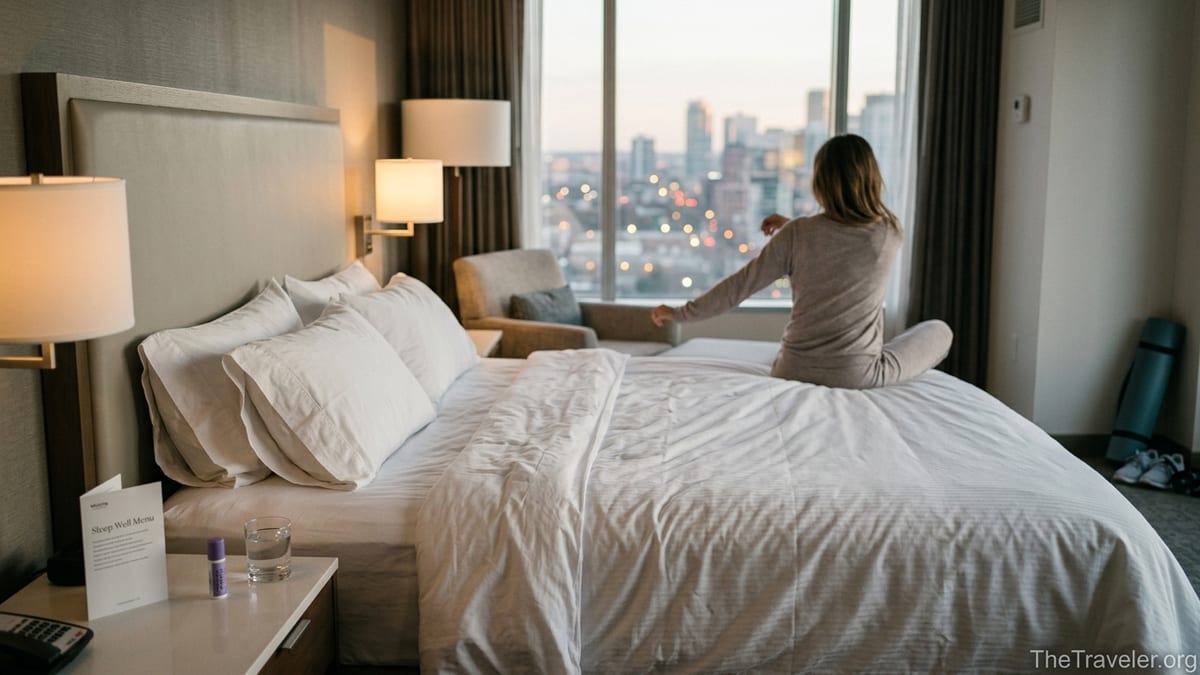
From Marketing Bet to Signature Identity
Westin’s reputation around sleep can be traced back to a single, high‑stakes decision in 1999: to compete not on points or room size, but on the quality of the bed. At the time, hotel bedding was rarely a headline feature. Westin, then part of Starwood, poured significant resources into designing a custom mattress and bedding ensemble and launched it under a dedicated name, the Heavenly Bed. Industry reports note that within the first week of launch, dozens of guests were already calling to ask how they could buy the bed for home, a powerful early signal that the brand had tapped into something travelers genuinely valued.
The move quickly reshaped how the entire sector thought about the overnight experience. Trade publications have since pointed to the Heavenly Bed launch as the moment when the hotel “bed wars” began, with competitors rushing to brand their own mattresses and sleep concepts. For Westin, however, sleep was never just a one‑off campaign. Over the years, the brand continued to refine the Heavenly Bed configuration instead of trading it for trendier gimmicks, reinforcing its identity as the hotel chain that treats restorative rest as a serious, long‑term commitment rather than a seasonal promotion.
By 2016, Westin’s success with the Heavenly Bed was being cited in global wellness tourism reports as an early example of a hotel company building a business around well‑being. Analysts pointed out that what began as a product innovation had evolved into a fully fledged brand promise, influencing everything from restaurant menus to meeting room design. In effect, Westin’s bed strategy became its wellness strategy, and sleep moved from a basic utility to a branded experience guests would pay to repeat.
Crucially, this sleep focus crossed over into retail. According to company and retail partner statements, Westin has sold hundreds of thousands of Heavenly Beds and related bedding sets through channels like the Westin Store and department stores in North America. That volume matters not just financially, but reputationally. When travelers can bring the exact same sleep experience home, the line between “hotel comfort” and “everyday well‑being” blurs, deepening loyalty and reinforcing the idea that Westin is in the business of sleep, not just room nights.
Why Sleep Became Westin’s North Star
Westin’s emphasis on sleep and well‑being aligns neatly with broader travel trends. Over the last decade, wellness tourism has grown into a major segment, with travelers increasingly seeking trips that leave them feeling better rather than depleted. Analysts describing Westin’s brand evolution highlight that the company deliberately framed its offerings around six pillars of well‑being: Eat Well, Sleep Well, Move Well, Feel Well, Work Well, and Play Well. Sleep is placed at the center of this framework, acknowledging that energy, mood, and productivity all depend on how well guests rest.
For frequent travelers, that positioning has clear practical value. Consider a consultant flying into New York for a demanding week of client meetings. Choosing the Westin New York at Times Square, for example, is less about a flashy lobby and more about the expectation of a consistently comfortable mattress, blackout curtains that actually block out Times Square’s neon glow, and thoughtful amenities that help recalibrate the body after a red‑eye flight. In this scenario, the Westin brand works as a kind of shorthand: book Westin, and your chances of waking up functional rather than foggy go up.
Westin has also recognized that sleep problems are not exclusive to long‑haul travelers. Business guests navigating back‑to‑back presentations, parents managing jet‑lagged children at resort properties, and digital nomads toggling between time zones all share a similar need for quality rest. By building marketing campaigns around real issues like travel fatigue, blue‑light overload, and stress, Westin positions itself as a partner in solving everyday wellness challenges, not just a provider of four walls and a breakfast buffet.
This strategic clarity helps Westin stand apart in a crowded field of lifestyle brands. While competitors may spotlight mixology programs or eye‑catching lobby design, Westin repeatedly returns to the same message: your stay is successful if you leave feeling rested and well. For travelers comparing options in a city like Denver or Singapore, where multiple upscale hotels may have similar price points, that promise of better sleep can be a deciding factor, especially on work trips where performance the next morning is non‑negotiable.
The Heavenly Bed and the New Generation of Sleep Design
The Heavenly Bed remains the centerpiece of Westin’s sleep story. Originally introduced in 1999 in partnership with a major mattress manufacturer, the bed combined a plush‑top mattress with high‑thread‑count sheets, a down or down‑alternative duvet, and a specific arrangement of pillows to create a cloud‑like feel. Guest feedback was strong enough that Westin began selling the bed directly to consumers, turning what was once an internal asset into a revenue stream and marketing tool.
In May 2024, Westin unveiled the Next Generation Heavenly Bed, the first complete redesign since that original launch. Brand executives have described a multi‑year research and development process involving thousands of fabric and foam samples and collaboration with independent labs to balance comfort with durability. Reviews from early testers, including mattress specialists who slept on the bed at properties such as the Westin New York at Times Square, describe a more modern, supportive feel with updated linens and a cleaner visual profile that suits contemporary room design.
For travelers, this matters in concrete ways. A guest checking into the Westin Dallas or the Westin Tokyo today can expect a mattress engineered to reduce motion transfer, beneficial for couples where one partner is a restless sleeper, and to offer balanced support for a range of body types. The bed is designed so that edge support is strong enough to sit and work or tie shoes without feeling like you might slide off. Linens emphasize breathability, which is particularly appreciated in humid destinations such as Hawaii or Singapore, where overly warm bedding can sabotage what would otherwise be a perfect night’s rest.
Westin’s willingness to invest again in the Heavenly Bed reflects an understanding that reputations must be maintained, not just earned once. Over time, even the most comfortable mattress can feel dated as sleep science evolves and guest expectations rise. By talking openly about updating materials and design, Westin reassures repeat guests that the bed they fell in love with in, say, a Westin in Vancouver in 2010 has been thoughtfully re‑imagined, not quietly cost‑reduced. For travelers who decide to purchase the Heavenly Bed for home, the updated version also feels less like nostalgia and more like a serious, current sleep upgrade.
Sleep Well: Menus, Lavender Balms and Room‑Level Details
Westin’s Sleep Well program extends far beyond the mattress. On the brand’s official wellness pages, the company highlights three signature elements available at many properties: the Heavenly Bed, a bedside Sleep Well Lavender Balm, and a Sleep Well Menu available via in‑room dining. Together, these turn the pre‑sleep period into a sequence of small rituals that encourage relaxation and better rest.
The lavender balm is a good example of how Westin translates wellness trends into something functional for travelers. Sold through the Westin Store in small roller‑ball vials and provided as a bedside amenity at many hotels, the balm combines lavender and chamomile essential oils. Guests are encouraged to apply it to temples or wrists before bed. For someone arriving late at the Westin Denver International Airport hotel after a turbulent flight, that tiny ritual can become a grounding moment, especially when paired with a hot shower and a few deep breaths before climbing into the Heavenly Bed.
The Sleep Well Menu, meanwhile, connects nutrition to rest. Rather than simply labeling certain dishes as “light,” Westin offers curated options built around ingredients often associated with better sleep, such as tryptophan‑rich turkey, complex carbohydrates, and fruits with natural melatonin like cherries. At a resort property in Mexico or the Caribbean, that might translate into grilled fish with leafy greens and quinoa followed by a small bowl of berries, all available through room service late into the evening. For business travelers working on a presentation past midnight, choosing from the Sleep Well Menu instead of defaulting to a heavy burger and fries can make the difference between waking up sluggish and waking up ready for an early client breakfast.
Beneath these headline features sit subtler design decisions. Many Westin rooms now incorporate blackout curtains that meaningfully block exterior light, an essential feature near bright airports or city centers. Bedside lighting is often warmer and more diffuse, reducing exposure to harsh white light right before sleep. Some properties have invested in improved soundproofing, double‑glazed windows, and quieter air conditioning units, all of which directly influence sleep quality. For guests sensitive to noise or light, these understated details often matter more than any spa treatment available downstairs.
Connecting Movement, Work and Play to Better Rest
Westin’s reputation for sleep is reinforced by how the brand integrates movement and work into its broader well‑being narrative. The company’s six pillars explicitly link Sleep Well with Move Well and Work Well, recognizing that physical activity and productive days set the stage for deeper, more restorative nights. In practice, this shows up in facilities such as WestinWORKOUT fitness studios and an innovative Gear Lending program.
The WestinWORKOUT Gear Lending offering originally became famous for its partnership with New Balance, which allowed guests to borrow running shoes and workout clothes for a modest fee instead of packing their own. Today, Westin promotes gear‑lending kits that include modern accessories from brands like Bala and recovery tools from Hyperice. At a city property such as the Westin Austin Downtown, a traveler can request a Sculpt & Flow kit stocked with weighted bangles and resistance bands, bring it up to the room, and complete a yoga or strength session without setting foot in the gym. This flexibility makes it easier to keep up a fitness routine despite jet lag or packed meeting schedules.
Movement, in turn, supports sleep. A guest who lands at the Westin Paris Vendôme after an overnight flight might start with a gentle session using a recovery kit to loosen tight muscles, then wind down with the Sleep Well Lavender Balm and a light meal from the Sleep Well Menu. By the time they draw the blackout curtains, both body and mind are more prepared for rest than if they had gone straight from airport to laptop. Westin’s infrastructure does not guarantee perfect sleep, of course, but it dramatically increases a traveler’s chances of waking up refreshed rather than stiff and exhausted.
The Work Well pillar adds another dimension. Many Westin lobbies and meeting spaces are designed with natural light, ergonomic seating, and easy access to healthy snacks and hydration. Some properties feature flexible workspaces that allow guests to plug in laptops without being confined to their room desks. The logic is simple: if guests can work efficiently during the day, they are less likely to be up half the night catching up on emails, which indirectly protects their sleep window. For corporate travel planners booking conferences at a Westin in cities like Chicago or Singapore, this holistic approach to productivity and rest can be a strong selling point.
How Travelers Experience Westin’s Sleep Reputation in Real Life
Reputation is ultimately built guest by guest, stay by stay. Online discussions among frequent travelers offer a nuanced picture of how Westin’s sleep and wellness promises play out on the ground. Many trip reports describe stays where the Heavenly Bed lived up to the hype: guests recounting deep, uninterrupted sleep at properties like the Westin Las Vegas or Westin Boston Seaport, often contrasting those nights favorably with more restless experiences at other upscale brands.
At the same time, traveler forums also contain reminders that brand standards can slip if individual properties defer renovations or cut corners. Some guests, for example, have commented on inconsistent pillow quality or older mattresses at specific Westin locations in North America. These anecdotes underline a critical challenge for any global hotel company built around a flagship experience. To defend a hard‑won reputation, Westin must ensure that properties from new‑build resorts in the Middle East to long‑operating city hotels in the United States keep refreshing beds, linens, and room features so they match the brand’s current Sleep Well messaging rather than a past version of it.
For travelers, the practical takeaway is to read recent reviews carefully and to pay attention to the age of a property or its last renovation. A newly opened Westin in São Paulo or Nanjing, for instance, is more likely to feature the latest version of the Heavenly Bed and fully updated wellness programming. By contrast, a Westin that has not been renovated in many years may still advertise the Heavenly experience but deliver an older interpretation of it. In either case, Westin’s overarching sleep‑first reputation often gives it an advantage when travelers are comparing options within the same price band.
Despite occasional inconsistency, Westin’s global narrative around sleep remains strong enough that many travelers actively seek out the brand. Some guests even report planning itineraries or choosing conference hotels specifically to secure access to the Heavenly Bed and associated wellness amenities. For those who end up purchasing the mattress for home, the brand relationship can stretch far beyond a single trip, reinforcing Westin’s identity as a long‑term partner in better sleep rather than a once‑off indulgence.
The Takeaway
Westin’s strong reputation around sleep and well‑being did not happen by accident. It is the product of a long series of deliberate choices, starting with the bold decision in 1999 to build a marketing strategy around a bed and continuing through the development of sleep‑focused menus, in‑room relaxation rituals, and guest‑friendly fitness options. By anchoring its entire brand in the simple but profound promise of better rest, Westin has carved out a distinctive position in the increasingly wellness‑oriented world of travel.
For travelers, that focus translates into tangible benefits. Booking a Westin in cities as varied as Vancouver, Dubai, or São Paulo usually means entering a space where the bed, the lighting, the food, and the fitness options have all been designed with recovery in mind. While no hotel can guarantee eight perfect hours, Westin comes closer than most to stacking the odds in a guest’s favor. As the brand continues to roll out the Next Generation Heavenly Bed and refine its six pillars of wellness, its identity as the place where you go to Eat Well, Move Well, and Sleep Well seems likely to grow even stronger.
In an era when many travelers measure the success of a trip by how they feel when they return home, Westin’s long‑running bet on sleep and well‑being looks not just smart, but prescient. Whether you are crossing time zones for work, escaping for a long weekend, or simply craving one truly restorative night, Westin’s sleep‑centric philosophy offers a compelling reason to choose its properties over the competition.
FAQ
Q1. What is the Westin Heavenly Bed and why is it so famous?
The Westin Heavenly Bed is a custom mattress and bedding ensemble introduced in 1999 to give guests a more luxurious, supportive sleep. It became famous because travelers could immediately feel the difference compared with standard hotel beds, and many began asking how to buy the same setup for home.
Q2. Has Westin updated the Heavenly Bed since it first launched?
Yes. In 2024 Westin rolled out the Next Generation Heavenly Bed, a complete redesign that updates the mattress construction, linens, and overall comfort based on years of guest feedback and advances in sleep technology.
Q3. Do all Westin hotels have the same Heavenly Bed and sleep amenities?
Most Westin properties feature the Heavenly Bed and core sleep amenities, but the exact version and condition can vary by hotel, renovation cycle, and region. It is wise to check recent guest reviews or contact the property directly if consistent sleep quality is especially important to you.
Q4. What is the Westin Sleep Well Menu?
The Sleep Well Menu is a set of in‑room dining options built around ingredients that are generally considered more supportive of good sleep, such as lean proteins, whole grains, and select fruits. It is designed to offer late‑night meals that satisfy hunger without leaving guests feeling too heavy or wired to rest.
Q5. What does the Sleep Well Lavender Balm do?
Westin’s Sleep Well Lavender Balm is a small bedside roller infused with lavender and chamomile essential oils. Guests apply it to their temples or wrists before bed as part of a relaxation ritual intended to help ease tension and prepare the mind for sleep.
Q6. How does Westin’s Gear Lending program support well‑being?
The Gear Lending program lets guests borrow fitness and recovery equipment, such as yoga accessories, light weights, or massage devices, directly to their room. This makes it easier to stay active and relieve travel stiffness, which in turn can improve sleep quality.
Q7. Is Westin more expensive than other hotel brands because of its wellness focus?
Westin typically sits in the upper‑upscale segment, so rates are often comparable to or slightly above other full‑service city and resort hotels. Prices vary widely by location and season, but many travelers feel that the consistent focus on sleep and wellness justifies choosing Westin when rest is a priority.
Q8. Can I buy the Westin Heavenly Bed and sleep products for my home?
Yes. Westin sells the Heavenly Bed, pillows, linens, and the Sleep Well Lavender Balm through its retail channels so guests can recreate much of the in‑hotel sleep experience at home.
Q9. Are all Westin properties equally strong on wellness experiences?
Most Westin hotels follow the brand’s six‑pillar wellness framework, but the depth of offerings can vary. Newly opened or recently renovated properties often showcase the latest fitness studios, spa concepts, and room designs, while older hotels may feel more traditional even if they still feature the Heavenly Bed.
Q10. How should I choose between Westin and another hotel if sleep is my main concern?
If sleep is your top priority, compare recent reviews for mattress comfort, noise levels, and blackout curtains at each hotel. Westin’s brand is built around these factors, so in many cities it will be a strong candidate, especially if the property has been updated with the Next Generation Heavenly Bed and current Sleep Well amenities.