


Westin sits in an interesting corner of the hotel world: positioned as an upscale, wellness-focused brand within Marriott, but competing day to day with classic business hotels and relaxed beach resorts. For travelers trying to decide whether to book a Westin for a client meeting in Chicago or a long weekend in Cancun, the question is simple: is Westin actually worth choosing over other options, and in which situations does it shine most?
Get the latest updates straight to your inbox!
Where Westin Fits in the Hotel Landscape
Westin Hotels & Resorts is an upscale brand owned by Marriott International, with more than 200 properties worldwide, from urban towers in cities like New York and Tokyo to resorts in Hawaii and Mexico. Marriott describes Westin as a full-service brand catering to both business and leisure travelers, but with a strong emphasis on wellness and rest. In practice, that means you will usually find a higher level of on-site services and design than at select-service brands such as Courtyard or Fairfield, but not the ultra-luxury feel of St. Regis or Ritz-Carlton.
For a business traveler comparing options in a major U.S. city, a typical choice might be between the Westin in the central business district and a midscale competitor like Hilton Garden Inn or Courtyard by Marriott a few blocks away. The Westin will usually have a larger lobby, a full-service restaurant and bar, extensive meeting space, and a more polished room design. Those extras are built into the rate, so nightly prices often start higher, particularly midweek when corporate demand is strong.
On the leisure side, Westin competes directly with resort brands like Hyatt Regency, Hilton Resorts, and some all-inclusive properties. Westin’s resort presence is especially visible in destinations such as Maui, Cancun, Los Cabos, and Costa Rica. In those markets, the question is often whether a wellness-forward but not all-inclusive resort is a better fit than a similarly priced beachfront property that wraps food and drinks into a package rate.
Because Westin participates in the Marriott Bonvoy loyalty program, frequent travelers who already collect Marriott points or hold elite status often see Westin as a sweet spot. Elite benefits such as late checkout and room upgrades can significantly increase the value of a stay, especially on business trips with tight schedules or vacations where a few extra hours in the room make a difference.
Signature Wellness Touches: Do They Matter in Real Life?
Westin has spent more than two decades building its identity around wellness, and the most visible symbol of that effort is the Heavenly Bed. This custom-designed Simmons mattress, introduced in 1999 and updated over the years, is widely cited by guests as a reason they sleep particularly well at Westin. For a consultant who flies into Atlanta for back-to-back client meetings, or a parent trying to recover from a red-eye before a family wedding, that extra sleep comfort can be a very real benefit rather than a marketing slogan.
Beyond the bed, Westin properties typically feature larger-than-average fitness centers with modern equipment. Many newer or renovated hotels include Peloton bikes or dedicated functional training areas, and several city properties offer 24-hour access, which matters when you are landing from Europe at 9 p.m. and still want to move after a day in transit. A traveler staying at The Westin Houston Downtown before a trade show, for example, can grab a 6 a.m. workout in a proper gym instead of relying on a single treadmill in a converted guest room.
Another practical feature for frequent business travelers is the gear-lending or rental programs some Westins offer, allowing guests to request workout clothes and shoes delivered to the room for a modest fee. For an analyst flying with only a carry-on bag to avoid checked baggage fees, not needing to pack bulky running shoes can be a meaningful convenience. While availability and exact pricing vary by property, the concept is broadly consistent: Westin tries to remove friction from staying active on the road.
For vacationers, wellness shows up in quieter ways: spa facilities at resorts, menus that highlight lighter options alongside comfort food, and outdoor spaces designed for lingering. At a coastal resort such as The Westin Lagunamar in Cancun, guests see that in shaded loungers around multi-level pools, beachfront yoga sessions, and walking paths that encourage movement at sunrise or sunset. If you value a property that nudges you into healthier routines, Westin’s concept often delivers in practice.
Business Travel: When Westin Is Worth the Rate
On a typical Monday to Wednesday in a U.S. financial or tech hub, nightly rates at a centrally located Westin often fall into a band of roughly 250 to 400 dollars before taxes, depending on city, demand, and season. Competing midscale brands nearby might advertise 170 to 260 dollars for the same dates. The question for a corporate traveler is whether the higher Westin rate translates into enough added value to justify the spend or the use of additional loyalty points.
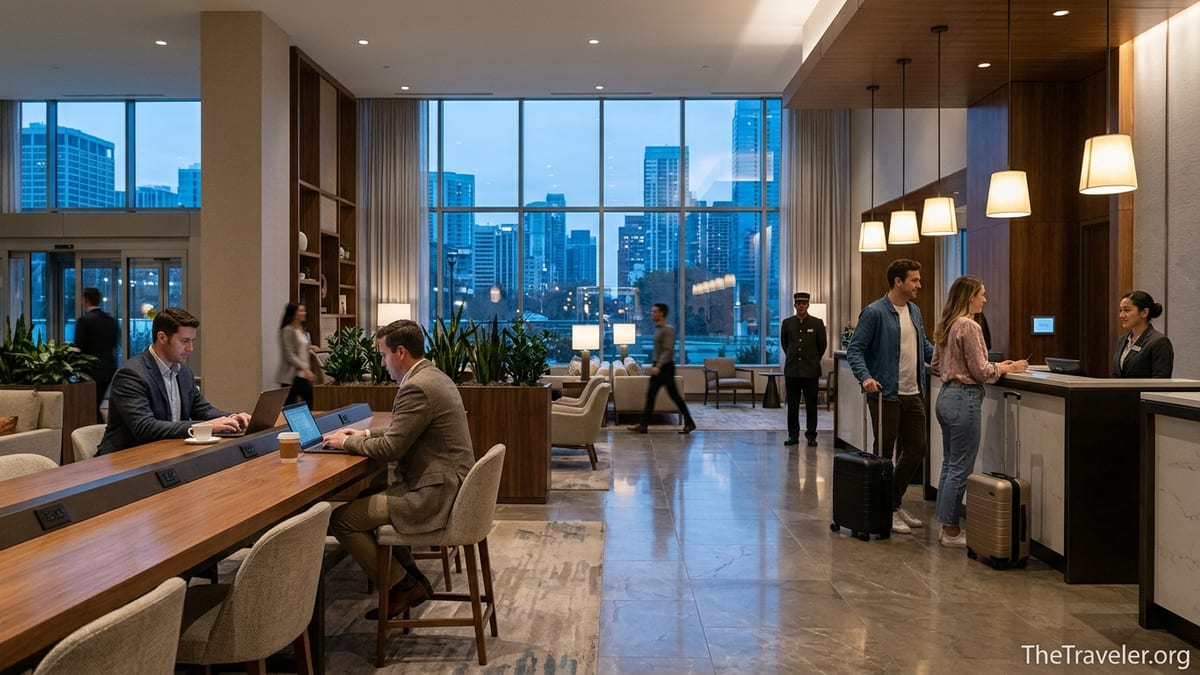
One clear advantage is meeting and work space. Most Westins are designed with sizable ballrooms, breakout rooms, and a variety of boardrooms, plus a business-friendly lobby layout with power outlets, semi-private seating, and often a dedicated grab-and-go coffee bar. A project team staying at a Westin in downtown Denver, for example, can debrief around a large communal table in the lobby, move into a reserved meeting room for a client-ready presentation, and still have quiet rooms upstairs for individual focused work calls.
Room design is another differentiator. Standard Westin rooms usually include a proper desk, ergonomic chair, and thoughtful lighting, along with outlets near the bed for charging phones and laptops. For a sales manager who needs to catch up on proposals after a client dinner, working from a full-size desk with good task lighting is significantly more comfortable than hunching over a laptop at a small side table. Many Westins have upgraded bathrooms with walk-in showers, better water pressure, and higher-quality bath products, which add up when you are on the road 60 nights a year.
Marriott Bonvoy integration also matters. A mid-level or high-level Bonvoy elite guest can expect room upgrades when available, late checkout that can stretch to 4 p.m. in many properties, and bonus points on spending. For a frequent traveler who earns those points on business trips, the ability to later redeem them for a beachfront Westin stay in Hawaii or Mexico is a tangible long-term benefit. In contrast, a stay at a non-affiliated independent hotel might be slightly cheaper on a given night but offers no comparable earning potential.
Vacations and Resorts: How Westin Compares on Leisure Stays
For leisure travelers, the Westin question often shows up when comparing a beachfront or ski resort to alternatives that range from large all-inclusive complexes to smaller boutique hotels. In Cancun, for instance, Westin resorts can price in the 250 to 450 dollar range per night in high season for a standard room, while nearby all-inclusive properties may advertise seemingly comparable nightly rates that cover food and drinks. On paper the all-inclusive looks like a better deal, but the value equation depends heavily on your travel style.
At a Westin resort, guests typically enjoy a quieter atmosphere, a la carte dining, and more space to spread out around the pools and beach. The design tends to feel more contemporary and less themed, with neutral palettes and natural materials. For a couple on a long weekend who plan to explore local restaurants in town, visit archaeological sites, or spend a day on a boat excursion, paying only for the meals they actually eat on property can make more sense than an all-inclusive bracelet they rarely use.
Wellness-centric amenities can also matter more on vacation. Many Westin resorts have expansive fitness centers with windows facing the sea or gardens, full-service spas offering massage and body treatments, and programming like guided runs or yoga classes. At a property in Hawaii, a guest might start the morning with a run along a coastal path mapped by the hotel, followed by a smoothie bar breakfast and a late checkout that allows a shower before an evening red-eye flight back to the mainland.
Families, however, should look closely at specific inclusions. Some Westin resorts run kids’ clubs and family-friendly activity schedules, while others are more adult-focused. Daily resort fees are common at beach and ski properties and can add 30 to 50 dollars per night, sometimes including items like Wi-Fi, fitness classes, or bike rentals that business travelers might see as basic. Evaluating whether you will actually use those amenities is key to deciding if a Westin resort represents strong value for your particular trip.
Price, Consistency, and Where Westin Falls Short
Despite its strengths, Westin is not always the obvious best choice. One frequent criticism from experienced travelers is inconsistency across the portfolio. A renovated Westin in a major gateway city might feel fresh and genuinely premium, while an older property that has not yet undergone a full refurbishment can feel closer to an upper-midscale hotel in layout and finishes. That becomes a problem when both hotels charge similar nightly rates.
Price sensitivity is another concern, especially for self-funded business travelers and families paying out of pocket. When a downtown Westin in a secondary business city pushes above 300 dollars on a standard Tuesday night while a nearby Hilton Garden Inn or Courtyard sits closer to 190 dollars, the premium has to be justified by noticeable upgrades in sleep quality, workspace, service, and amenities. If your main priority is simply a clean room, strong Wi-Fi, and convenient location, those less expensive alternatives may deliver 80 to 90 percent of the experience for significantly less money.
Service levels can also vary. Some flagship Westins are known for polished front-desk teams, proactive housekeeping, and efficient room service. Others, particularly franchised properties, receive more mixed feedback on responsiveness to maintenance issues or elite recognition. Because Westin operates under a global brand standard but with individual owners and management companies, your experience in Boston can differ noticeably from your experience in a smaller market in the same year.
Finally, while Westin positions itself as wellness-forward, not every traveler values those touches equally. A guest who never visits the gym and mainly uses the hotel to sleep might not see much additional benefit from an expanded fitness center, infused-water stations in the lobby, or thoughtfully designed public spaces, especially when these elements contribute indirectly to higher room rates.
How Westin Stacks Up Against Key Competitors
To decide whether Westin is worth it, it helps to compare the brand directly with common alternatives that business and leisure travelers actually see in search results. In the business segment, Courtyard by Marriott and Hilton Garden Inn are regular competitors. These brands often offer lower rates, basic but reliable rooms, smaller fitness centers, and limited-service food and beverage outlets. A Courtyard near a suburban office park might run around 150 to 220 dollars per night during a busy conference week, while the nearest Westin in the downtown core could easily be 250 to 350 dollars.
The trade-off is that Westin is more likely to provide a central location in the heart of the city, full-service dining, stronger elite-benefit recognition, and a more polished overall environment. For a senior manager holding client dinners and needing meeting space, that difference may justify the premium. For a field technician visiting a satellite office with a tight per diem, a Courtyard or Hilton Garden Inn is often the rational pick.
In the leisure and resort space, Hyatt Regency, some Hilton resorts, and upper-upscale independents are frequent comparators. Many of these competitors are solid choices, with their own strengths in loyalty programs and property design. Westin can stand out when its wellness emphasis aligns with your personal priorities, such as wanting excellent sleep, strong fitness options, and calmer pool areas. On the other hand, if your main goal is an all-inclusive experience with unlimited dining and entertainment without worrying about the bill at checkout, a well-reviewed all-inclusive next door might feel like a better fit than a Westin that charges separately for meals and cocktails.
Location-specific examples illustrate the nuance. In a city like Seattle, the Westin’s central downtown placement can cut commute time to corporate offices and convention centers, which is valuable for short business trips. In a resort area like Los Cabos, a Westin perched on a quieter stretch of coastline may suit couples and wellness-focused travelers, while families seeking water slides and kids’ clubs may gravitate toward a different full-service resort brand.
The Takeaway
So is Westin worth choosing for business trips and vacations? The answer depends on how much you personally value Westin’s sleep quality, wellness amenities, and typically central locations, and whether those benefits line up with your budget and travel goals. For many frequent business travelers with Marriott Bonvoy status, Westin can hit a sweet spot: more comfortable and feature-rich than select-service properties, but widely available and often more reasonably priced than top-tier luxury brands.
On vacations, Westin tends to appeal most to travelers who want a refined, wellness-oriented stay without all-inclusive crowds, and who are willing to pay separately for meals and experiences in exchange for quieter pools, better fitness facilities, and more thoughtful room design. If you plan to spend long days exploring and only return to the hotel to sleep and shower, a simpler property might represent better value. If you see the hotel itself as a key part of the trip, Westin’s concept is more likely to pay off.
Practically, the best approach is to compare specific properties and dates rather than assuming all Westins are automatically premium or automatically overpriced. Look at recent guest photos, note whether the hotel has been renovated within the last few years, compare nightly rates to nearby competitors, and factor in your Marriott Bonvoy earning and redemption strategy. In situations where those elements line up, Westin can offer a strong combination of comfort, wellness, and location that makes it very much worth choosing.
FAQ
Q1. Is Westin considered a luxury hotel brand?
Westin is generally categorized as an upscale or upper-upscale brand rather than true luxury. It usually offers more services and amenities than select-service hotels, but sits below ultra-luxury brands like St. Regis or Ritz-Carlton in room finishes, personalized service, and exclusivity.
Q2. Are Westin hotels good for business travelers on a budget?
Westin can be a stretch for tight budgets, since rates often run higher than midscale brands in the same area. However, if you value features like better fitness centers, full-service restaurants, and more comfortable workspaces, the slightly higher cost can be justifiable, especially when booked at negotiated corporate rates.
Q3. How do Westin beds really compare to other hotel mattresses?
Many guests report that the Heavenly Bed offers noticeably better comfort and support than typical hotel mattresses, especially for back and side sleepers. That said, mattress preference is personal, and while some travelers go so far as to buy the mattress for home use, others simply find it comparable to other high-quality hotel beds.
Q4. Do all Westin hotels have strong fitness and wellness amenities?
Most Westin properties emphasize fitness and wellness, but the extent of facilities varies. Large city and resort locations often have spacious gyms, spa services, and wellness programming, while smaller or older properties may offer more modest facilities. Checking recent photos and descriptions for a specific hotel is the best way to confirm.
Q5. Is Westin a good choice for family vacations?
Westin can work well for families who value calmer pools, comfortable rooms, and access to local restaurants rather than all-inclusive activities. Some resorts have kids’ clubs and family programming, while others feel more adult-focused, so it is important to review amenities at the particular property you are considering.
Q6. How does Westin compare to Courtyard by Marriott or Hilton Garden Inn?
Compared with Courtyard or Hilton Garden Inn, Westin usually offers larger lobbies, more complete restaurants and bars, better-equipped fitness centers, and more polished room design. Those advantages often come with higher nightly rates, so the choice depends on whether you need the extra services or simply want a clean, convenient place to sleep.
Q7. Are Westin resorts worth the extra cost over all-inclusive hotels?
Westin resorts can be worth the premium if you prefer a quieter atmosphere, a la carte dining, and wellness-focused amenities. If your priority is maximizing included food and entertainment for a fixed price, a well-reviewed all-inclusive resort may offer better value for your style of travel.
Q8. Does staying at Westin help me earn or use Marriott Bonvoy points effectively?
Yes. Westin participates fully in Marriott Bonvoy, so you earn points and elite-night credits on paid stays and can redeem points for free or discounted nights. For frequent travelers, the ability to earn points on business trips and redeem them at desirable resort locations can significantly improve Westin’s overall value.
Q9. Are all Westin properties renovated to the same standard?
No. While Marriott enforces brand standards, individual Westin hotels can be at different stages of renovation. Some feel very modern and fresh, while others reflect older design schemes. Looking at traveler photos and recent reviews is the most reliable way to gauge current condition.
Q10. When is Westin not the best choice?
Westin may not be ideal when your budget is very tight, when you expect to spend minimal time at the hotel, or when a nearby competitor offers a significantly lower rate with similar cleanliness and convenience. In those cases, a midscale or select-service property is often a more efficient use of money or points.